
Barton Biggs (1932–2012)
Author of Hedgehogging
About the Author
Barton Biggs spent thirty years at Morgan Stanley. In that time, he formed the firm's number one-ranked research department, was chairman of the investment management firm, and then became the firm's leading global strategist. He was often ranked as the number-one U.S. investment strategist by the show more Institutional Investor magazine poll and then, from 1996 to 2003, as the top global strategist. In 2003, Biggs left Morgan Stanley and, with two other colleagues, formed Traxis Partners. Traxis now has well over a billion dollars under its management. Biggs's previous book, Hedgehoogging, is an international success. show less
Image credit: Pragmatic Capitalism
Works by Barton Biggs
Tagged
Common Knowledge
- Canonical name
- Biggs, Barton
- Legal name
- Biggs, Barton Michael
- Birthdate
- 1932-11-26
- Date of death
- 2012-07-14
- Gender
- male
- Education
- Yale College (1955)
New York University - Occupations
- investor
- Organizations
- Morgan Stanley
- Nationality
- USA
- Birthplace
- New York, New York, USA
- Place of death
- Greenwich, Connecticut, USA
- Associated Place (for map)
- USA
Members
Reviews
Wednesday, June 25, 2008
Historical Support for the Wisdom of Crowds
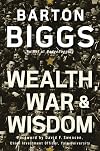
Wealth, War & Wisdom
by Barton Biggs
Hardcover: 358 pages
Publisher: Wiley (February 4, 2008)
ISBN-10: 0470223073
ISBN-13: 978-0470223079
Rating – 5 stars
It is an age-old notion. The investing public provides liquidity to the “smart money.” A mainstay on every investor’s bookshelf, Charles Mackay’s Extraordinary Popular Delusions and the Madness of Crowds, argues “men … think in herds.”
Barton Biggs, former chief show more global strategist at Morgan Stanley before leaving in 2003 to form hedge fund Traxis Partners, questions this conventional and prejorative notion in Wealth, War & Wisdom. Using World War II as a backdrop, he shows the equity markets in the United States, Britain, Germany and Japan identified the conflict’s turning points with uncanny precision.
The stock market, he argues, represents the collective conclusion of multiple motivated judgment of a diverse, independent and decentralized sample. He joins James Surowiecki in The Wisdom of Crowds and Michael Maubossian in More Than You Know: Finding Financial Wisdom in Unconventional Places, to plead a powerful case for paying attention to the markets’ underlying message.
Biggs is no historian. He is, however, well-read and a deep thinker. He weaves military history, market action, maps and charts to illustrate his moral. Hardly radical, it is detailed and convincingly argued: A long-term strategy is the best way for ordinary investors to build and maintain wealth.
This is a book every serious investor should read and ponder. It is an original, absorbing and thought-provoking primer on wealth creation. Today’s actions aggregated with others provide powerful clues to your financial future.
Penned by the Pointed Pundit
June 25, 2008
9:58:40 AM show less
Historical Support for the Wisdom of Crowds
Wealth, War & Wisdom
by Barton Biggs
Hardcover: 358 pages
Publisher: Wiley (February 4, 2008)
ISBN-10: 0470223073
ISBN-13: 978-0470223079
Rating – 5 stars
It is an age-old notion. The investing public provides liquidity to the “smart money.” A mainstay on every investor’s bookshelf, Charles Mackay’s Extraordinary Popular Delusions and the Madness of Crowds, argues “men … think in herds.”
Barton Biggs, former chief show more global strategist at Morgan Stanley before leaving in 2003 to form hedge fund Traxis Partners, questions this conventional and prejorative notion in Wealth, War & Wisdom. Using World War II as a backdrop, he shows the equity markets in the United States, Britain, Germany and Japan identified the conflict’s turning points with uncanny precision.
The stock market, he argues, represents the collective conclusion of multiple motivated judgment of a diverse, independent and decentralized sample. He joins James Surowiecki in The Wisdom of Crowds and Michael Maubossian in More Than You Know: Finding Financial Wisdom in Unconventional Places, to plead a powerful case for paying attention to the markets’ underlying message.
Biggs is no historian. He is, however, well-read and a deep thinker. He weaves military history, market action, maps and charts to illustrate his moral. Hardly radical, it is detailed and convincingly argued: A long-term strategy is the best way for ordinary investors to build and maintain wealth.
This is a book every serious investor should read and ponder. It is an original, absorbing and thought-provoking primer on wealth creation. Today’s actions aggregated with others provide powerful clues to your financial future.
Penned by the Pointed Pundit
June 25, 2008
9:58:40 AM show less
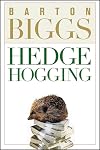
While I thought the anecdotes were interesting, I'm not sure it wouldn't have been better served with more personal stories about the work Barton Biggs did in setting up his fund and less on the "and here's another guy who also failed." The last chapter on John Maynard Keynes was also by far the most engrossing - bringing that up front would have set a more interesting tone...
I would expect more insights from someone like Biggs, whose research pieces at Morgan Stanley were always thought-provoking. Nonethesless, it is one of the few books with insiders' stories of the hedge fund industry.
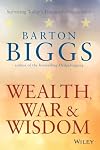
Quite good, but as I had just read a detailed history of WWII this book didn't add much for me in that regard. As for his thesis about the market picking the turning points in the war before they are spotted by pundits... it's all very well but of no practical use if you are in the situation because at that time you don't know the market is in the process of reversing and will not see those lows again. The distinction on the wisdom of crowds as distinct from the mob was almost interesting.. show more The best part of the book was in the closing chapters with his observations about the protection of wealth against extreme adversity and the warning that you never know when it may come... show less
Awards

You May Also Like


Statistics
- Works
- 7
- Members
- 457
- Popularity
- #53,729
- Rating
- 3.3
- Reviews
- 7
- ISBNs
- 28
- Languages
- 1