
Hobson Woodward
Author of A Brave Vessel
About the Author
Works by Hobson Woodward
Associated Works
Tagged
Common Knowledge
Members
Reviews
A Brave Vessel: The True Tale of the Castaways Who Rescued Jamestown and Inspired Shakespeare'sThe Tempest by Hobson Woodward

This book tells the story of William Strachey, an obscure contemporary of Shakespeare who wanted to make a name for himself as a writer. He went to the Jamestown colony to earn money, and the fleet he traveled in was hit by a hurricane. His ship was shipwrecked on the Bermudas, and they all survived on the Bermudas for a while before building a new ship to take them to Jamestown. Strachey wrote an account of their wreck and life on the island, which circulated back in England. This letter show more was probably an inspiration for Shakespeare's 'The Tempest.'
All in all, the information recounted in this book is really fascinating - it's amazing that the crew survived the shipwreck, and that they were lucky enough to land in the lush Bermudas where survival was relatively easy.
I think the book falls flat in its discussion of the relationship of these events to 'The Tempest.' Woodward sets this up as the climax and crux of his book. The chapters describing the shipwreck and Strachey's time in the New World are very factual, based on accounts by Strachey and others, and Woodward makes it very clear when he is hypothesizing. But then we get to the part of the book that Woodward has designated as the most important part, and he has very little evidence to base his conjectures on. He describes Shakespeare's creative process as if he had a way of knowing how Shakespeare got the ideas for his plays. Then he describes what Strachey's reaction to the play might have been, but he doesn't make it clear whether or not we know whether Strachey actually saw the play, and Woodward's depiction of Strachey's reaction is pure conjecture.
Also disappointing is the fact that the connections Woodward draws between Strachey's account and Shakespeare's play seem pretty tenuous. I am willing to accept, based on the evidence, that Shakespeare had read Strachey's account, but there was an opportunity here for Woodward to devote a chapter or more to a discussion of Shakespeare's relationships to his sources throughout his corpus, and to Elizabethan ideas of authorship and ownership. Today, Strachey would sue Shakespeare for stealing his ideas, but Elizabethan ideas of authorship were very different - this would have been an interesting topic for the book. show less
All in all, the information recounted in this book is really fascinating - it's amazing that the crew survived the shipwreck, and that they were lucky enough to land in the lush Bermudas where survival was relatively easy.
I think the book falls flat in its discussion of the relationship of these events to 'The Tempest.' Woodward sets this up as the climax and crux of his book. The chapters describing the shipwreck and Strachey's time in the New World are very factual, based on accounts by Strachey and others, and Woodward makes it very clear when he is hypothesizing. But then we get to the part of the book that Woodward has designated as the most important part, and he has very little evidence to base his conjectures on. He describes Shakespeare's creative process as if he had a way of knowing how Shakespeare got the ideas for his plays. Then he describes what Strachey's reaction to the play might have been, but he doesn't make it clear whether or not we know whether Strachey actually saw the play, and Woodward's depiction of Strachey's reaction is pure conjecture.
Also disappointing is the fact that the connections Woodward draws between Strachey's account and Shakespeare's play seem pretty tenuous. I am willing to accept, based on the evidence, that Shakespeare had read Strachey's account, but there was an opportunity here for Woodward to devote a chapter or more to a discussion of Shakespeare's relationships to his sources throughout his corpus, and to Elizabethan ideas of authorship and ownership. Today, Strachey would sue Shakespeare for stealing his ideas, but Elizabethan ideas of authorship were very different - this would have been an interesting topic for the book. show less
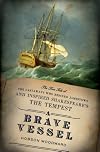
We just got back from a fabulous cruise to Bermuda with our extended family. Bermuda is a beautiful island and we had a great time - the beaches in particular are lovely. As I often do, I searched for a book based in Bermuda for the trip. The pickings were sort of slim, but I found this nonfiction account of the first colonists on Bermuda and it ended up being really interesting.
In 1609, the Sea Venture and several other smaller ships made a crossing from England to Jamestown to reinforce show more the settlers there. On the way they encountered a hurricane which split them up. Most of the fleet actually made it to Jamestown (where everyone was starving, by the way) and the Sea Venture ended up at Bermuda. Bermuda was a known island, the Spanish had discovered it and tried to use it as a stopping point - they even introduced wild pigs hoping to use them as food, but no one had settled there and there was no indigenous population. The main reason it was still uninhabited is that there are shallow coral reefs surrounding the island and only a few places where the shore is anywhere near approachable by a large vessel. Luckily, the Sea Venture ended up at one of these relatively deep approaches.
Once on the island, the normal issues arise - differences of opinions on how to run things, how and if to get off the island, etc. Luckily there was plenty of food and water on the island. Some end up going to Jamestown and some stay on the island.
Woodward pairs this story with Shakespeare's writing of the Tempest, which he probably used as inspiration. This part of the book was weaker for me. I was much more interested in the settlers' experience than an analysis of The Tempest, but nonetheless this was a really good book that fit my vacation very well. show less
In 1609, the Sea Venture and several other smaller ships made a crossing from England to Jamestown to reinforce show more the settlers there. On the way they encountered a hurricane which split them up. Most of the fleet actually made it to Jamestown (where everyone was starving, by the way) and the Sea Venture ended up at Bermuda. Bermuda was a known island, the Spanish had discovered it and tried to use it as a stopping point - they even introduced wild pigs hoping to use them as food, but no one had settled there and there was no indigenous population. The main reason it was still uninhabited is that there are shallow coral reefs surrounding the island and only a few places where the shore is anywhere near approachable by a large vessel. Luckily, the Sea Venture ended up at one of these relatively deep approaches.
Once on the island, the normal issues arise - differences of opinions on how to run things, how and if to get off the island, etc. Luckily there was plenty of food and water on the island. Some end up going to Jamestown and some stay on the island.
Woodward pairs this story with Shakespeare's writing of the Tempest, which he probably used as inspiration. This part of the book was weaker for me. I was much more interested in the settlers' experience than an analysis of The Tempest, but nonetheless this was a really good book that fit my vacation very well. show less
A Brave Vessel: The True Tale of the Castaways Who Rescued Jamestown and Inspired Shakespeare'sThe Tempest by Hobson Woodward
The “hook” that had me running to the bookstore as soon as I read the review of this book in the San Francisco Chronicle was the promise that here we would find out where Shakespeare got his inspiration for his play The Tempest and about the man who actually wrote the account of the events and whose words were often adapted to the play. Woodward, indeed, delivers on that promise, even if some of what he relates is based on speculation. In the first part of the book we learn about William show more Strachey, a friend of John Donne and a hanger on with a literary crowd in London who has aspirations to become a great author and poet. Having little success and squandering most of his resources he signs on to be part of a large contingent that will sail to Jamestown, Virginia in order to strengthen that colony. He is on the flag ship, Sea Venture, the largest of a fleet of nine vessels and containing the men who will become the new leaders of the struggling community. Unfortunately, the fleet runs into a hurricane and the Sea Venture is run aground on one of the islands of Bermuda. Strachey keeps records of what happens during their sojourn on Bermuda and when they finally manage to escape and travel to Jamestown he becomes the secretary who keeps the records of the events in Jamestown.
The last third of the book Woodward gives a thorough account of the episodes in Shakespeare’s play, The Tempest, that were undoubtedly inspired by the account of his sojourn that Strachey mailed to England in a letter to a woman he hoped would become his literary patron and sponsor the book about his experiences he hoped to publish . These two portions of the story provide a very interesting account, not only of the history of the castaways on Bermuda and how they survived for so long, but also giving us insight into how Shakespeare was accustomed to adapt material from outside sources to create his dramas that have stood the test of time.
A surprising bonus this book provides is the middle portion of the story. Woodward, using many sources written by several of the colonists during that time, gives us an incredible account of life in Jamestown starting just after the winter called “the starving time” until Strachey leaves to return to England. We see how the colony was governed, what daily life was like, the problems with the natives, and the attempts to expand and create other settlements. Although I had a few quibbles with Woodward’s speculations, especially with his describing Strachey’s reaction to Shakespeare’s play (entirely speculative!) I enjoyed this book immensely. It is not an academic report but written for the entertainment of the average reader. It succeeds admirably in what it set out to do. show less
The last third of the book Woodward gives a thorough account of the episodes in Shakespeare’s play, The Tempest, that were undoubtedly inspired by the account of his sojourn that Strachey mailed to England in a letter to a woman he hoped would become his literary patron and sponsor the book about his experiences he hoped to publish . These two portions of the story provide a very interesting account, not only of the history of the castaways on Bermuda and how they survived for so long, but also giving us insight into how Shakespeare was accustomed to adapt material from outside sources to create his dramas that have stood the test of time.
A surprising bonus this book provides is the middle portion of the story. Woodward, using many sources written by several of the colonists during that time, gives us an incredible account of life in Jamestown starting just after the winter called “the starving time” until Strachey leaves to return to England. We see how the colony was governed, what daily life was like, the problems with the natives, and the attempts to expand and create other settlements. Although I had a few quibbles with Woodward’s speculations, especially with his describing Strachey’s reaction to Shakespeare’s play (entirely speculative!) I enjoyed this book immensely. It is not an academic report but written for the entertainment of the average reader. It succeeds admirably in what it set out to do. show less
A Brave Vessel: The True Tale of the Castaways Who Rescued Jamestown and Inspired Shakespeare's The Tempest by Hobson Woodward
Hobson Woodward’s A Brave Vessel: The True Tale of the Castaways Who Rescued Jamestown and Inspired Shakespeare’s ‘The Tempest’ recounts the adventure of William Strachey, a passenger on the Sea Venture, who survived the vessel’s shipwreck at Bermuda en route to Virginia. Strachey embarked on his journey in order to seek his fortune amid his troubled career as a writer, recording his account in a letter home and eventually becoming the clerk of the Jamestown colony, which afforded show more him the opportunity to create a record of events in the colony as well as an invaluable list of Powhatan words. Strachey brilliantly dramatizes the events of his study, brining to life the struggle of the colonists as well as the Native American perspective. He juxtaposes Strachey with William Shakespeare, whose Tempest drew upon Strachey and other accounts of the Sea Venture for inspiration. The result is remarkable work of scholarship that will appeal to historians and non-academics alike. show less
Awards


You May Also Like


Associated Authors
Statistics
- Works
- 2
- Also by
- 1
- Members
- 277
- Popularity
- #83,812
- Rating
- 3.5
- Reviews
- 8
- ISBNs
- 3