
Samuel M. Katz (1914–2008)
Author of Battleground: Fact & Fantasy in Palestine
About the Author
Samuel M. Katz is an expert on Middle East security issues, international terrorism, and military special operations and counter-terrorism. He is the former editor-in-chief of Special Operations Report. He has written several books including Soldier Spies: Israeli Military Intelligence, Anytime, show more Anywhere: On Patrol with the NYPD's Emergency Service Unit, Relentless Pursuit: The DSS and the Manhunt for the Al-Qaeda Terrorists, The Hunt for the Engineer: How Israeli Agents Tracked the Hamas Master Bomber, and Under Fire: The Untold Story of the Attack in Benghazi. (Bowker Author Biography) show less
Image credit: Beitar organization
Series
Works by Samuel M. Katz
The Hunt for the Engineer: How Israeli Agents Tracked the Hamas Master Bomber (1990) — Author — 50 copies
The Ghost Warriors: Inside Israel's Undercover War Against Suicide Terrorism (2016) 33 copies, 1 review
Jihad in Brooklyn: The NYPD Raid That Stopped America's First Suicide Bombers (2004) 21 copies, 1 review
The Architect of Espionage: The Man Who Built Israel's Mossad into the World's Boldest Intelligence Force (2025) 16 copies, 1 review
Operation Restore Hope and UNOSOM: The International Military Mission of Mercy in Somalia (1993) 12 copies
AMERICA'S MOUNTAIN SOLDIERS: 10TH MOUNTAIN DIVISION (LIGHT INFANTRY) (CONCORD COLOUR 3000 S.) (1995) 11 copies
The Jewish presence in Palestine 3 copies
Today's Green Berets: US Army Special Forces Groups (Airborne) (Concord Color Series No 3006) (1995) 3 copies
De geheime eenheid het ware verhaal van Israëls elite-eenheid : de meest effectieve contraterreurbrigade ter wereld (1999) 2 copies
Unidades de élite de Israel 1 copy
Associated Works
Tagged
Common Knowledge
- Other names
- Katz, Schmuel
Katz, Mooki - Birthdate
- 1914-12-09
- Date of death
- 2008-05-09
- Gender
- male
- Occupations
- historian
journalist
editor
politician - Organizations
- Knesset
Betar
Irgun [Etzel]
Herut
Movement for Greater Israel
Americans for a Safe Israel {AFSI] (show all 7)
The Jewish Standard - Nationality
- South Africa
Israel - Birthplace
- Johannesburg, South Africa
- Places of residence
- South Africa
British Mandate of Palestine
Israel - Associated Place (for map)
- Johannesburg, South Africa
Members
Reviews
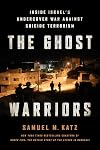
There are countless books regaling the exploits of the Mossad and the IDF special forces. This one instead focuses on the Ya"mas, the elite yet often overlooked undercover commando unit of Israel's paramilitary border police, primarily during the Second Intifada. We get to know some of the characters involved in this shadowy and dangerous world, with many interesting operational details that didn't make it into the news accounts at the time.
The writing is better suited to a cheesy military show more thriller, with over the top descriptions of actual people such as "hard as steel and sharp as a razor." But worse than that is the way the book is organized. Rather than follow a chronological account, the book is divided into three parts to match the command structure of the Ya"sam with separate units in the West Bank, Jerusalem, and Gaza. Thus major events are repeated three times (or more, as some of them are also mentioned in the introduction and the conclusion) and it's hard to line up what actually happened when, as the timeline resets each time we enter a new area. As a result, the book ends up describing a series of daring independent exploits, rather than shed light on what should have been a strategic campaign.
In addition to sensationalizing the violence and ignoring the legality of summary execution by death squads, never once is the effectiveness of the policy questioned. The targets that Ya"mas pursues are identified by the Shin Bet as "terrorists", and that's all the evidence needed for the "wanted dead or alive" operations. The potential futility of playing "whack-a-mole" in which each slain terrorist leads to two more taking his place seemingly never crosses the author's mind, even as he recounts instances in which the operations he describes lead directly to deadly reprisal attacks. show less
The writing is better suited to a cheesy military show more thriller, with over the top descriptions of actual people such as "hard as steel and sharp as a razor." But worse than that is the way the book is organized. Rather than follow a chronological account, the book is divided into three parts to match the command structure of the Ya"sam with separate units in the West Bank, Jerusalem, and Gaza. Thus major events are repeated three times (or more, as some of them are also mentioned in the introduction and the conclusion) and it's hard to line up what actually happened when, as the timeline resets each time we enter a new area. As a result, the book ends up describing a series of daring independent exploits, rather than shed light on what should have been a strategic campaign.
In addition to sensationalizing the violence and ignoring the legality of summary execution by death squads, never once is the effectiveness of the policy questioned. The targets that Ya"mas pursues are identified by the Shin Bet as "terrorists", and that's all the evidence needed for the "wanted dead or alive" operations. The potential futility of playing "whack-a-mole" in which each slain terrorist leads to two more taking his place seemingly never crosses the author's mind, even as he recounts instances in which the operations he describes lead directly to deadly reprisal attacks. show less

**.5
A brief collection of annotated photos of soldiers and their equipment, during the time when Dan Shomron was chief of staff (1987-1991).
It's interesting to see how things have progressed since 1990 when the book was written. Class 4 ceramic body armour integrated into modern "ephod" (vest) is now standard, and just about every other item has been updated with modern materials and lightweight ergonomic designs. A far cry from the Vietnam era leftovers that were still in use at the time, show more with traditional canvas and wool instead of ballistic nylon and insulated polyester.
However, the book is rather haphazardly organized, and doesn't do a good job of comparing the load-outs of the various types of forces. The navy and air force barely get a mention, and neither do the special forces. The majority of the photos are of the traditional combat units: Paratroopers, Golani, Givati, Nahal.
The few women soldiers appear to have all been selected based on how attractive they are, which if not already obvious is explicitly stated in the captions. Although the IDF was relatively progressive for the time, the blatant sexism is abhorrent by modern standards. show less
A brief collection of annotated photos of soldiers and their equipment, during the time when Dan Shomron was chief of staff (1987-1991).
It's interesting to see how things have progressed since 1990 when the book was written. Class 4 ceramic body armour integrated into modern "ephod" (vest) is now standard, and just about every other item has been updated with modern materials and lightweight ergonomic designs. A far cry from the Vietnam era leftovers that were still in use at the time, show more with traditional canvas and wool instead of ballistic nylon and insulated polyester.
However, the book is rather haphazardly organized, and doesn't do a good job of comparing the load-outs of the various types of forces. The navy and air force barely get a mention, and neither do the special forces. The majority of the photos are of the traditional combat units: Paratroopers, Golani, Givati, Nahal.
The few women soldiers appear to have all been selected based on how attractive they are, which if not already obvious is explicitly stated in the captions. Although the IDF was relatively progressive for the time, the blatant sexism is abhorrent by modern standards. show less
The Architect of Espionage: The Man Who Built Israel's Mossad into the World's Boldest Intelligence Force by Samuel M. Katz
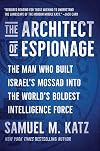
I found this to be a very interesting dive into the history of Israeli intelligence, and of some of the unclassified missions that they have undertaken. At times exciting, at times very informative, and occasionally a bit dull, the book is well written and presented. There is a reason that Israel still exists, even in the face of continued hatred and biases. I think the reason is the effectiveness and superiority of their intelligence services. Love them or hate them, one has to admit that show more they are a level high above other intelligence services. After reading this book, I find my admiring of them to be even greater. show less
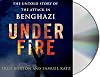
The Islamist militant attack on the U.S. mission in Benghazi on September 11, 2012 had become such a politicized issue, so the opportunity to read the Fred Burton and Samuel Katz book "Under Fire, The Untold Story of the Attack in Benghazi" seemed like a good opportunity to gain an understanding of the true story of the attack. After all the claims and counter claims by the warring political parties in Washington, and talking heads in the media, I was relieved to finally have a show more non-political, detailed account of the attack. Burton and Katz ignored the political arguments, and did an excellent job of describing the heroism of the individuals responsible for security and protection of the U.S. Ambassador in Libya, and of the horrific attack which occurred that night. They also detailed the lack of government control in the area, the number of militia groups vying for control in Benghazi at the time, and the total failure of the local militia contract to provide protection for the mission.
After initially hearing that the attack may have been prompted in protest to an anti-Muslim film titled "Muhammad's Trial", and then having that story dismissed, I did find it interesting to hear a little more about the basis of that initial possibility. In fact, on the day of the attack, there was a protest of thousands in Egypt in from the the U.S. Embassy to protest the film, and another several days later in the Sudan. At least six other diplomatic missions in the Middle East, Asia, and Europe were subject to protests and violent attacks in response to this inflammatory video, so there clearly was a backlash in Muslim Countries resulting from the film. However, as it was later shown, the attack in Benghazi was a well planned, coordinated attack by Islamist militants intended to kill American "infidels". The debate continues to this day as to whether the militant group was an Al Qaeda linked group or not, but once the shooting started, I don't imagine the security detail felt that was the most important issue they had to face at that moment. show less
After initially hearing that the attack may have been prompted in protest to an anti-Muslim film titled "Muhammad's Trial", and then having that story dismissed, I did find it interesting to hear a little more about the basis of that initial possibility. In fact, on the day of the attack, there was a protest of thousands in Egypt in from the the U.S. Embassy to protest the film, and another several days later in the Sudan. At least six other diplomatic missions in the Middle East, Asia, and Europe were subject to protests and violent attacks in response to this inflammatory video, so there clearly was a backlash in Muslim Countries resulting from the film. However, as it was later shown, the attack in Benghazi was a well planned, coordinated attack by Islamist militants intended to kill American "infidels". The debate continues to this day as to whether the militant group was an Al Qaeda linked group or not, but once the shooting started, I don't imagine the security detail felt that was the most important issue they had to face at that moment. show less
Lists
Awards


You May Also Like


Associated Authors
Statistics
- Works
- 90
- Also by
- 1
- Members
- 1,260
- Popularity
- #20,361
- Rating
- 3.8
- Reviews
- 11
- ISBNs
- 127
- Languages
- 4
- Favorited
- 3