
Steven J. Zaloga
Author of Poland 1939 : The Birth of Blitzkrieg
About the Author
Steven J Zaloga charts the little-known history of the T-80, covering the initial construction, through the development to the subsequent variants - the T-84 and Russia's enigmatic "Black Eagle Tank." Accompanying detailed cutaway artwork illustrates the unusual design features that made the T-80 show more so controversial. show less
Series
Works by Steven J. Zaloga
Blitzkrieg: Armor Camouflage & Markings, 1939-1940 (Belgium, France, Germany, Italy, Netherlands, Poland, Soviet Union) - Specials series (6101) (1990) 69 copies
T-80 Standard Tank: The Soviet Army’s Last Armored Champion (New Vanguard) (2009) 54 copies, 2 reviews
Red Thrust: Attack on the Central Front, Soviet Tactics and Capabilities in the 1990s (1989) 52 copies, 1 review
Spanish Civil War Tanks: The Proving Ground for Blitzkrieg (New Vanguard) (2010) 49 copies, 1 review
Soviet Tanks in Combat 1941-1945: The T-28, T-34, T-34-85 and T-44 Medium Tanks (1997) 47 copies, 2 reviews
French Tanks of World War II (1): Infantry and Battle Tanks (New Vanguard) (2014) 43 copies, 2 reviews
US Infantryman vs German Infantryman: European Theater of Operations 1944 (Combat) (2016) 39 copies, 1 review
The Kremlin's Nuclear Sword: The Rise and Fall of Russia's Strategic Nuclear Forces, 1945-2000 (2002) — Author — 36 copies, 3 reviews
Armored Attack 1944: U. S. Army Tank Combat in the European Theater from D-Day to the Battle of Bulge (2011) 34 copies, 1 review
Armored Victory 1945: U.S. Army Tank Combat in the European Theater from the Battle of the Bulge to Germany's Surrender (2012) 33 copies, 1 review
Inside the Blue Berets: A Combat History of Soviet and Russian Airborne Forces, 1930-1995 (1995) 27 copies, 1 review
Panzergrenadier vs US Armored Infantryman: European Theater of Operations 1944 (Combat) (2017) 27 copies
Smashing Hitler's Panzers: The Defeat of the Hitler Youth Panzer Division in the Battle of the Bulge (2018) 25 copies, 1 review
German Guided Missiles of World War II: Fritz-X to Wasserfall and X4 (New Vanguard) (2019) 24 copies, 1 review
Ploesti 1943: The great raid on Hitler's Romanian oil refineries (Air Campaign) (2019) 24 copies, 2 reviews
Tanks at the Iron Curtain 1975–90: The ultimate generation of Cold War heavy armor (New Vanguard, 323) (2023) 23 copies, 2 reviews
Tanks at the Iron Curtain 1946–60: Early Cold War armor in Central Europe (New Vanguard) (2021) 21 copies, 1 review
Panzers In the Gunsights: German AFVs in the ETO 1944-45 in US Army Photos (2004) 19 copies, 1 review
The French 75: The 75mm M1897 field gun that revolutionized modern artillery (New Vanguard) (2020) 18 copies
Tanks of D-Day 1944: Armor on the beaches of Normandy and southern France (New Vanguard) (2021) 17 copies
German Tanks in France 1940: Armor in the Wehrmacht's greatest Blitzkrieg victory (New Vanguard, 327) (2024) 17 copies, 1 review
German Tanks in Normandy 1944: The Panzer, Sturmgeschütz and Panzerjäger forces that faced the D-Day invasion (New Vanguard) (2021) 17 copies
Panzer in the Gunsights [2]: German AFVs and Artillery in the ETO 1944-45 in US Army Photos (2006) 16 copies
Superguns 1854-1991: Extreme artillery from the Paris Gun and the V-3 to Iraq's Project Babylon (New Vanguard) (2018) 15 copies, 1 review
Tanks in Operation Bagration 1944: The demolition of Army Group Center (New Vanguard, 318) (2023) 14 copies
The Oil Campaign 1944–45: Draining the Wehrmacht's lifeblood (Air Campaign) (2022) 14 copies, 1 review
Beutepanzers of World War II: Captured tanks and AFVs in German service (New Vanguard, 332) (2024) 12 copies
Russian Falcons the New Wave of Russian Combat Aircraft (Concord Colour 4000) (1993) 11 copies, 1 review
Tanks in the Philippines 1944–45: The biggest armored clashes of the Pacific War (2024) 9 copies, 1 review
The Blue Helmets Under Fire: 50 Years of U.N. Peacekeeping Missions (Concord Colour 4000) (1996) 8 copies
America's One-Two Punch: The Abrams and Bradley Series of Armored Fighting Vehicles (2000) 5 copies, 1 review
Omaha Beach : Día D, junio de 1944. 2 copies
Utah beach 2 copies
German Marders of World War II: The Wehrmacht's prime tank destroyers: 350 (New Vanguard) (2026) 2 copies
Carros soviéticos modernos 1 copy
Na linha siegfried 1 copy
La via per Roma 1 copy
El ejército polaco 1 copy
El Ejército Rojo 1 copy
La invasión de Polonia 1 copy
Operazione Bagration : Bielorussia, giugno-agosto 1944 - La disfatta del Gruppo di Armate Centro 1 copy
Panzers en la niebla 1 copy
Tagged
Common Knowledge
- Legal name
- Zaloga, Steven Joseph
- Other names
- Zaloga, Steve
Zaloga, Steve J. - Birthdate
- 1952-02-01
- Gender
- male
- Education
- Union College (BA|History)
Columbia University (MA) - Occupations
- Historian
Military Historian
Defense Consultant - Organizations
- Armor Modeling and Preservation Society
Teal Group - Nationality
- USA
- Birthplace
- Pittsfield, Massachusetts, USA
- Places of residence
- Abingdon, Maryland, USA
- Associated Place (for map)
- USA
Members
Reviews
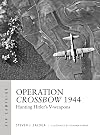
Steven Zaloga is almost always worth reading, but he's particularly interesting when he's dealing with his professional area of expertise, the analysis of air defense systems. This booklet is packed with everything you might want to know about the first guided-missile campaign, a matter that has lost no relevance in the light of the conduct of drone warfare in the ongoing Russo-Ukrainian war.
The most salient matter is that Zaloga uses this as a jumping-off point to consider the Allied versus show more the German conduct of war. As while the German "Vengeance Weapon" offensive was late in starting, expensive, and accomplished little of operational value, the combined Anglo-American bomber offensive was a mixed bag once the large built-up installations had been destroyed. Frankly, the Allied ground war in Northwest Europe, which put the German missile launchers out of range, was the most effective response, though the recalcitrance of the Anglo-American air commanders to demonstrate some operational flexibility was not a good look.
Zaloga ends this study with some contemplation of the German "death-camp" industry that was building most of the German weapons. Though not noted by Zaloga, it is said that the "Dora" Works probably killed more prisoners in the course of the production process than victims of the actual use of the weapons. show less
The most salient matter is that Zaloga uses this as a jumping-off point to consider the Allied versus show more the German conduct of war. As while the German "Vengeance Weapon" offensive was late in starting, expensive, and accomplished little of operational value, the combined Anglo-American bomber offensive was a mixed bag once the large built-up installations had been destroyed. Frankly, the Allied ground war in Northwest Europe, which put the German missile launchers out of range, was the most effective response, though the recalcitrance of the Anglo-American air commanders to demonstrate some operational flexibility was not a good look.
Zaloga ends this study with some contemplation of the German "death-camp" industry that was building most of the German weapons. Though not noted by Zaloga, it is said that the "Dora" Works probably killed more prisoners in the course of the production process than victims of the actual use of the weapons. show less
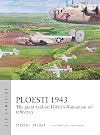
When I first started reading military history as a kid in the mid-1960s, the cult of air power and the United States Air Force was still in full swing, but even then, the 1943 raid on Ploesti seemed to inspire reservations, if only for the heavy casualties incurred. Flash forward to the mid-21st century, and this whole exercise seems even more dubious, as one now has access to intelligence information that was denied to the first generation of authors who wrote about this raid.
What it mostly show more comes down to is radio, as the commanders of the raid mandated radio silence as a means of gaining surprise, thus forfeiting hands-on control, not realizing that the German air defense system was aware that the American force was on its way basically the moment Operation "Tidal Wave" crossed into the Balkans from North Africa. The result being that a third of the force was lost, everyone was decorated for their gallantry, and the commander of IX Bomber Command was made a scapegoat and sent back to the United States. Whatever else was learned from this action, it's that the Axis oil industry could only be shut down with sustained effort; not a big one-time raid. Apart from that this is another excellent number in one of the best series that Osprey has come up in recent years. show less
What it mostly show more comes down to is radio, as the commanders of the raid mandated radio silence as a means of gaining surprise, thus forfeiting hands-on control, not realizing that the German air defense system was aware that the American force was on its way basically the moment Operation "Tidal Wave" crossed into the Balkans from North Africa. The result being that a third of the force was lost, everyone was decorated for their gallantry, and the commander of IX Bomber Command was made a scapegoat and sent back to the United States. Whatever else was learned from this action, it's that the Axis oil industry could only be shut down with sustained effort; not a big one-time raid. Apart from that this is another excellent number in one of the best series that Osprey has come up in recent years. show less
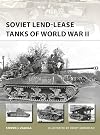
By this point in time, I suspect that Steve Zaloga can write these booklets in his sleep, though I personally appreciate the time he takes to explain his archival research and sources; more of Osprey's authors should take this step. As for the topic itself, the overarching question is how essential were the AFV's Washington and London supplied Moscow, as opposed to the fleets of trucks that helped motorize the Red Army. Short answer: Anything that Stalin could get for the defense of Moscow show more was valued. Once domestic production ramped up again, American and British tanks fell in the category of nice to have but not essential. From there, Zaloga digs deeper in what the Soviet assessment of each type they received, and how the vehicles were distributed. Most interesting to me was that the single Allied type that was most appreciated by the Soviets was the Valentine, which was actually used as a scout. This was closely followed by the diesel-powered M4A2 Sherman, most valued for its automotive reliability, and a commentary on the lack of durability of Soviet wartime production tanks. show less
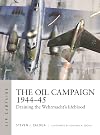
Although I probably should have read Zaloga's number in this series on Operation "Tidal Wave" first, this is a crisp analysis of the gutting of the German war effort in 1944-1945 by shutting off the fuel, while at the same time grinding the Luftwaffe into powder. I became more interested in this booklet once I found out that Zaloga's day job involves air defense technology and analysis, and he covers matters of command and control, and what actually worked, as much as he does the course of show more the campaign. I wrapped up this work feeling more depressed by the pity of it all than I normally do: Whatever else strategic air war is it's a brutal slug-fest, and Zaloga does a good job of telling the story with numbers. show less
Lists
You May Also Like


Associated Authors
Statistics
- Works
- 319
- Members
- 9,857
- Popularity
- #2,417
- Rating
- 3.9
- Reviews
- 136
- ISBNs
- 616
- Languages
- 10
- Favorited
- 7