
Edward L. Ferman
Author of The Best From Fantasy and Science Fiction: The Fiftieth Anniversary Anthology
About the Author
Image credit: Publicity Shot, from long ago
Series
Works by Edward L. Ferman
The Best From Fantasy and Science Fiction: The Fiftieth Anniversary Anthology (1999) — Editor — 128 copies, 3 reviews
The Magazine of Fantasy & Science Fiction: A 30-Year Retrospective (1980) — Editor — 94 copies, 1 review
The Best from Fantasy and Science Fiction: A Special 25th Anniversary Anthology (1974) — Editor — 84 copies, 2 reviews
The Best Fantasy Stories from the Magazine of Fantasy & Science Fiction (1985) — Editor — 77 copies, 2 reviews
The Best Horror Stories from The Magazine of Fantasy & Science Fiction (1988) — Editor — 52 copies, 1 review
Oi, robot : competitions and cartoons from The Magazine of fantasy & science fiction (1995) 39 copies, 1 review
The Magazine of Fantasy and Science Fiction October 1979, Vol. 57, No. 4 (1979) — Editor — 37 copies, 2 reviews
The Best Horror Stories from the Magazine of Fantasy & Science Fiction, Vol. I (1989) — Editor — 27 copies
The Magazine of Fantasy and Science Fiction December 1990, Vol. 79, No. 6 (1990) — Editor — 25 copies
The Magazine of Fantasy and Science Fiction October 1976, Vol. 51, No. 4 (1976) — Editor — 21 copies
The Magazine of Fantasy and Science Fiction November 1974, Vol. 47, No. 5 (1974) — Editor — 21 copies
The Magazine of Fantasy and Science Fiction May 1980, Vol. 58, No. 5 (1980) — Editor — 20 copies, 2 reviews
The Magazine of Fantasy and Science Fiction October 1990, Vol. 79, No. 4 (1990) — Editor — 20 copies, 1 review
The Magazine of Fantasy and Science Fiction February 1978, Vol. 54, No. 2 (1978) — Editor — 20 copies
The Best Horror Stories from the Magazine of Fantasy & Science Fiction, Vol. II (1990) — Editor — 20 copies
The Magazine of Fantasy and Science Fiction October 1981, Vol. 61, No. 4 (1981) — Editor — 19 copies
The Magazine of Fantasy and Science Fiction October 1970, Vol. 39, No. 4 (1970) — Editor — 19 copies
The Magazine of Fantasy and Science Fiction February 1972, Vol. 42, No. 2 (1972) — Editor — 19 copies
The Magazine of Fantasy and Science Fiction January 1970, Vol. 38, No. 1 (1970) — Editor — 18 copies
The Magazine of Fantasy and Science Fiction October 1983, Vol. 65, No. 4 (1983) — Editor — 18 copies
The Magazine of Fantasy and Science Fiction November 1975, Vol. 49, No. 5 (1975) — Editor — 18 copies
The Magazine of Fantasy and Science Fiction January 1991, Vol. 80, No. 1 (1991) — Editor — 18 copies
The Magazine of Fantasy and Science Fiction November 1980, Vol. 59, No. 5 (1980) — Editor — 17 copies
The Magazine of Fantasy and Science Fiction October 1972, Vol. 43, No. 4 (1972) — Editor — 17 copies
The Magazine of Fantasy and Science Fiction November 1976, Vol. 51, No. 5 (1976) — Editor — 17 copies
The Magazine of Fantasy and Science Fiction February 1975, Vol. 48, No. 2 (1975) — Editor — 17 copies
The Magazine of Fantasy and Science Fiction October 1982, Vol. 63, No. 4 (1982) — Editor — 16 copies
The Magazine of Fantasy and Science Fiction January 1974, Vol. 46, No. 1 (1974) — Editor — 16 copies
The Magazine of Fantasy and Science Fiction February 1979, Vol. 56, No. 2 (1979) — Editor — 16 copies
The Magazine of Fantasy and Science Fiction January 1969, Vol. 36, No. 1 (1969) — Editor — 16 copies
The Magazine of Fantasy and Science Fiction November 1969, Vol. 37, No. 5 (1969) — Editor — 15 copies
The Magazine of Fantasy and Science Fiction December 1985, Vol. 69, No. 6 (1985) — Editor — 15 copies
The Magazine of Fantasy and Science Fiction February 1981, Vol. 60, No. 2 (1981) — Editor — 15 copies
The Magazine of Fantasy and Science Fiction October 1971, Vol. 41, No. 4 (1971) — Editor — 14 copies
The Magazine of Fantasy and Science Fiction September 1982, Vol. 63, No. 3 (1982) — Editor — 14 copies
The Magazine of Fantasy and Science Fiction September 1977, Vol. 53, No. 3 (1977) — Editor — 14 copies
The Magazine of Fantasy and Science Fiction January 1990, Vol. 78, No. 1 (1990) — Editor — 14 copies
The Magazine of Fantasy and Science Fiction October 1968, Vol. 35, No. 4 (1968) — Editor — 14 copies
The Magazine of Fantasy and Science Fiction February 1980, Vol. 58, No. 2 (1980) — Editor — 14 copies
The Magazine of Fantasy and Science Fiction December 1978, Vol. 55, No. 6 (1978) — Editor — 14 copies
The Magazine of Fantasy and Science Fiction January 1979, Vol. 56, No. 1 (1979) — Editor — 13 copies
The Magazine of Fantasy and Science Fiction October 1966, Vol. 31, No. 4 (1966) — Editor — 13 copies
The Magazine of Fantasy and Science Fiction September 1988, Vol. 75, No. 3 (1988) — Editor — 13 copies
The Magazine of Fantasy and Science Fiction December 1967, Vol. 33, No. 6 (1967) — Editor — 13 copies
The Magazine of Fantasy and Science Fiction November 1981, Vol. 61, No. 5 (1981) — Editor — 13 copies
The Magazine of Fantasy and Science Fiction January 1989, Vol. 76, No. 1 (1989) — Editor — 13 copies
The Magazine of Fantasy and Science Fiction March 1999, Vol. 96, No. 3 (1999) — Contributor — 13 copies
The Magazine of Fantasy and Science Fiction February 1985, Vol. 68, No. 2 (1985) — Editor — 13 copies
The Magazine of Fantasy and Science Fiction November 1978, Vol. 55, No. 5 (1987) — Editor — 13 copies
The Magazine of Fantasy and Science Fiction January 1968, Vol. 34, No. 1 (1968) — Editor — 13 copies
The Magazine of Fantasy and Science Fiction November 1982, Vol. 63, No. 5 (1982) — Editor — 13 copies
The Magazine of Fantasy and Science Fiction December 1988, Vol. 75, No. 6 (1988) — Editor — 13 copies
The Magazine of Fantasy and Science Fiction January 1982, Vol. 62, No. 1 (1982) — Editor — 13 copies
The Magazine of Fantasy and Science Fiction February 1966, Vol. 30, No. 2 (1966) 13 copies, 1 review
The Magazine of Fantasy and Science Fiction November 1986, Vol. 71, No. 5 (1986) — Editor — 12 copies, 1 review
The Magazine of Fantasy and Science Fiction November 1968, Vol. 35, No. 5 (1968) — Editor — 12 copies
The Magazine of Fantasy and Science Fiction December 1983, Vol. 65, No. 6 (1983) — Editor — 11 copies
The Magazine of Fantasy and Science Fiction November 1987, Vol. 73, No. 5 (1987) — Editor — 11 copies
The Magazine of Fantasy and Science Fiction February 1983, Vol. 64, No. 2 (1983) — Editor — 11 copies
The Magazine of Fantasy and Science Fiction November 1988, Vol. 75, No. 5 (1988) — Editor — 10 copies
The Magazine of Fantasy and Science Fiction December 1982, Vol. 63, No. 6 (1982) — Editor — 10 copies
The Magazine of Fantasy and Science Fiction February 1987, Vol. 72, No. 2 (1987) 10 copies, 1 review
The Magazine of Fantasy and Science Fiction September 1980, Vol. 59, No. 3 (1980) — Editor — 10 copies
The Magazine of Fantasy and Science Fiction February 1967, Vol. 32, No. 2 (1967) — Editor — 9 copies
The Magazine of Fantasy and Science Fiction September 1983, Vol. 65, No. 3 (1983) — Editor — 9 copies
P. S. v01n01 [1966-04] 1 copy
P. S. v01n02 [1966-06] 1 copy
מדע בדיוני ופנטסיה 1 copy
Associated Works
Tagged
Common Knowledge
- Canonical name
- Ferman, Edward L.
- Legal name
- Ferman, Edward Lewis
- Birthdate
- 1937-03-06
- Gender
- male
- Education
- Middlebury College (BA|1958)
- Occupations
- editor
publisher - Organizations
- Mercury Press
- Awards and honors
- Hugo (Professional Editor, 1981)
Hugo (Professional Editor, 1982)
Hugo (Professional Editor, 1983)
SF Hall Of Fame (2009) - Relationships
- Ferman, Joseph W. (father)
- Short biography
- biography in The Best from Fantasy and Science Fiction, a special 25th anniversary anthology (Doubleday, 1974).
- Nationality
- USA
- Birthplace
- New York, New York, USA
- Places of residence
- Cornwall, Connecticut, USA
- Associated Place (for map)
- USA
Members
Reviews
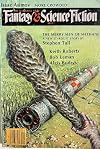
These old issues tend to be more miss than hit for me. This isn't simply because of the white dude hero theme, but the writing style--the slowness is very evident to me. Computers have radically changed the ease of editing.
Such is the case in this issue from May 1980, when I was a mere baby. I was intrigued by several of the stories. "Window" by Bob Leman starts off like sci-fi but ends on a note of profound horror--really, this story will stay with me a while! I enjoyed the concept of show more "Others' Eyes," about a child who is blind except when family is in close proximity, though the ending by modern standards would be egregiously ableist. However, I ended up skimming most of the other works. The cover novelette of "The Merry Men of Methane" not only made me want to pull out a red pen (these are the best scientists around? really?) but the heavy-handed emphasis on the prettiness of the wife and the way she is described is being 'smart by accident' made me gnash by teeth.
Issues like this really highlight for me how genre short fiction has advanced in recent decades; I mean, this issue has ads in the back for Oriental and Mexican mail order brides! Yikes. The modern run of F&SF is highly readable and inclusive, and I'm incredibly grateful for that. (No ads for mail order brides, either.) show less
Such is the case in this issue from May 1980, when I was a mere baby. I was intrigued by several of the stories. "Window" by Bob Leman starts off like sci-fi but ends on a note of profound horror--really, this story will stay with me a while! I enjoyed the concept of show more "Others' Eyes," about a child who is blind except when family is in close proximity, though the ending by modern standards would be egregiously ableist. However, I ended up skimming most of the other works. The cover novelette of "The Merry Men of Methane" not only made me want to pull out a red pen (these are the best scientists around? really?) but the heavy-handed emphasis on the prettiness of the wife and the way she is described is being 'smart by accident' made me gnash by teeth.
Issues like this really highlight for me how genre short fiction has advanced in recent decades; I mean, this issue has ads in the back for Oriental and Mexican mail order brides! Yikes. The modern run of F&SF is highly readable and inclusive, and I'm incredibly grateful for that. (No ads for mail order brides, either.) show less
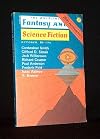
I'm spoiled by the modern F&SF. There's no way to mince around--this was a difficult read, and I ended up skimming through the end of several stories. A lot of golden age sci-fi (and this is largely sci-fi or weird) rubs me the wrong way, not just because of how women and other cultures are portrayed, but because of the slow pace.
My favorite story was actually the first in the magazine, "The Custodians" by Richard Cowper, wherein a monastic order guards a special insight into the future. show more "The Pearcey Boy" by R. Bretnor was a tragic piece of horror. The movie review for the issue was Monty Python and the Holy Grail! I also enjoyed Asimov's nonfiction column about elements.
There were also curious artifacts of 1975. I was also amazed by the full-color cigarette ad in the middle on the magazine, and the back page included classified ads for mail order brides from Japan and Mexico. Yikes. show less
My favorite story was actually the first in the magazine, "The Custodians" by Richard Cowper, wherein a monastic order guards a special insight into the future. show more "The Pearcey Boy" by R. Bretnor was a tragic piece of horror. The movie review for the issue was Monty Python and the Holy Grail! I also enjoyed Asimov's nonfiction column about elements.
There were also curious artifacts of 1975. I was also amazed by the full-color cigarette ad in the middle on the magazine, and the back page included classified ads for mail order brides from Japan and Mexico. Yikes. show less

Science fiction and fantasy, like all other literary genres, are subject to trends. In the January 1987 issue of Fantasy & Science Fiction, the trend seems to have been trepidation, fear, and melencholy. Leavened only by a handful of stories that break the pattern, this issue of F & SF is full of stories that evoke trepidation about the future, sadness for the past, and fear for the present. Despite this theme, or perhaps because of it, this is a strong issue of the magazine, and full of show more stories that remain as relevant now as they were when they were first published.
The Order of the Peacock Angel by Cooper McLaughlin is set in what is presumably an alternative version of England during the Napoleonic Wars. A military officer is informed that he has inherited a title and estates when his uncle is unexpectedly killed, but when he goes to claim his inheritance, he discovers that he has been left far more than that. he soon discovers the existence of a secret war that may determine the future of the human race. The story is full of twists and turns, and several characters turn out to be more than they seem to be at first glance. The story is basically a reasonably well-crafted science fiction action adventure with an unusual setting.
The future earth setting of The Temporary King by Paul J. McAuley reminded me to a certain extent of the future Earth setting of the Gordon R. Dickson novella Call Him Lord, in which a technologically advanced interstellar civilization keeps the Earth as a non-technological backwater. The most substantive difference in the stories is that this one is told from the perspective of on the the denizens of the primitive Earth confronted by the intrusion of a man from the stars. It becomes clear that the newcomer is not all that he seems to be, and the villagers move from worship to hatred as his layers are peeled away. The action of the story is more or less predictable, but the seeds that the newcomer plants simply through his disruptive presence have far ranging and somewhat unexpected consequences for the protagonist, and it is on this layer that the story truly shines.
After the box office success of Coccoon, it is perhaps inevitable that science fiction featuring aliens making geriatic humans young again would be in vogue for a while. The Greening of Mrs. Edminston by Robin Scott Wilson is a decent, if fairly pedestrian story in this vein. Two residents at a nursing home discover a miniature alien spacecraft, help them repair their ship, and in compensation have the aging process reversed. The story doesn't go any further than that, which is a shame, as the patronizing attitude that the nursing home staff have for the residents is fairly well-established and it would have been nice to see some examination made into how they react to two of their charges unexpectedly recovering their health, or some similar plot development in the story. As it is, the story is adequate, but could have been much better.
Set in a depressing future in which garbage has become a valued commodity, Salvage Rites by Ian Watson is another story that appears in the magazine that seems to be a little too close to modern reality for comfort. Having emptied out their spare room a couple takes their junk to the local dump, and when they get there they discover that they are expected to donate a little more than they bargained for. A combination of science fiction and horror, Salvage Rites is brutal and riveting, although the ending is pretty much a horror genre cliche. Also set in a bleak future, but with a more humorous bent is Addrict by Avram Davidson and Grania Davis, a story which follows an addict on Christmas Eve as he tries to locate funds to fuel his addiction. The story is told in a sort of sing-song slang, and reveals the nature of the dystopian future the addict lives in only slowly until the final punchline reveals just how restrictive the world has become. The story is something of a long set-up for the big reveal at the end, but the writing is good enough that one doesn't mind.
The Million-Dollar Wound by Dean Whitlock is a Vietnam War inspired look at the application of advanced medical technology to warfare, and how the ability to return wounded soldiers to duty no matter how damaged their bodies might get in the field might take a deadly toll on the mental health of those soldiers. In 1987, this was science fiction. In 2010, where soldiers with prosthetic limbs are eligible to return to active duty and participate in a seemingly endless guerilla war in the Middle-East, the story seems too real for comfort.
Published after the author's death, What Bleak Land by Robert F. Young is a sad time travel story, told by an old man spurred by the discovery of a strange object on his property into reminiscing about a stranger who lived with his family decades before during the Depression era. Given the title, one might think that the "bleak land" of the story is the cold autumnal landscape of rural America in which the narrator and his family struggle to make ends meet, working long hours for little compensation. The tale takes a turn when one of the children in the family asks their visitor about the classic H.G. Wells story The Time Machine, and the reader begins to realize that the world the characters live in may not be such a bleak one after all. The story is powerful, clearly written by a man facing his mortality, and is laced with melancholy and regret. Sitting at the exact opposite thematic end of the time travel story is The Man Who Wrote Shakespeare by E. Bertrand Loring, a comic story about a genius from the future chosen to be the first traveler back through time, and whose mission is to meet William Shakespeare. Things don't go quite like he assumed they would, with comical and for the traveler, disastrous results. The story is silly comic relief, and much needed in an issue loaded with weighty and sad stories.
The final story in the issue is the Hitchcock-esque Friend's Best Man by Jonathan Carroll. The story starts with the main character losing his leg while saving his dog named Friend from being crushed by a train. While recovering, Egan meets a crippled young girl in the hospital who claims she gets messages from Friend, and conveying the methods that Friend proposed to thank the narrator for saving his life. The story moves through Egans recovery and then a love match with his neighbor blossoms. At this point, the story takes a very sharp left turn into territory that would be familiar to those who have seen The Birds. The seeming supernatural elements in the story are just vague enough that one can understand the conflicting emotions Egan has in the final passage of the book, making for a disturbing and interesting story.
Featured on the cover, the Isaac Asimov penned science fact article Opposite! is an brief guided tour through the history of the physics of antiparticles, from the discovery of the 'antielectron" or positron, to the discovery of the antiproton, the antineutron and so on. The article is pretty straightforward, and probably would not have been mentioned on the cover had it not been an Asimov piece. Although Asimov does muse on the possibility of entire star systems or galaxies comrpised of antimatter, a possibility that was discarded as an option by most scientists, he engages in little speculation concerning antimatter in science fiction or even whether it might have practical real value. Asimov does state that he intends to discuss practical uses of antimatter in his next column, which will probably be interesting, but it does leave this article as little more than a fairly dry history lesson.
Despite the odd choice for an article to feature on the cover, this remains a strong issue of Fantasy & Science Fiction. Perhaps the issue is so strong because the editors were unafraid of allowing the issue to be dominated by what most would consider to be depressing stories. These stories are, however, almost all so good that despite the sad topic, they are able to evoke emotional responses int he reader without causing the issue as a whole to drag, which is always a danger when you have numerous melencholy stories in a row. As is expected by those familiar with F & SF, this is a fine selection of strong stories and well worth reading.
This review has also been posted to my blog Dreaming About Other Worlds. show less
The Order of the Peacock Angel by Cooper McLaughlin is set in what is presumably an alternative version of England during the Napoleonic Wars. A military officer is informed that he has inherited a title and estates when his uncle is unexpectedly killed, but when he goes to claim his inheritance, he discovers that he has been left far more than that. he soon discovers the existence of a secret war that may determine the future of the human race. The story is full of twists and turns, and several characters turn out to be more than they seem to be at first glance. The story is basically a reasonably well-crafted science fiction action adventure with an unusual setting.
The future earth setting of The Temporary King by Paul J. McAuley reminded me to a certain extent of the future Earth setting of the Gordon R. Dickson novella Call Him Lord, in which a technologically advanced interstellar civilization keeps the Earth as a non-technological backwater. The most substantive difference in the stories is that this one is told from the perspective of on the the denizens of the primitive Earth confronted by the intrusion of a man from the stars. It becomes clear that the newcomer is not all that he seems to be, and the villagers move from worship to hatred as his layers are peeled away. The action of the story is more or less predictable, but the seeds that the newcomer plants simply through his disruptive presence have far ranging and somewhat unexpected consequences for the protagonist, and it is on this layer that the story truly shines.
After the box office success of Coccoon, it is perhaps inevitable that science fiction featuring aliens making geriatic humans young again would be in vogue for a while. The Greening of Mrs. Edminston by Robin Scott Wilson is a decent, if fairly pedestrian story in this vein. Two residents at a nursing home discover a miniature alien spacecraft, help them repair their ship, and in compensation have the aging process reversed. The story doesn't go any further than that, which is a shame, as the patronizing attitude that the nursing home staff have for the residents is fairly well-established and it would have been nice to see some examination made into how they react to two of their charges unexpectedly recovering their health, or some similar plot development in the story. As it is, the story is adequate, but could have been much better.
Set in a depressing future in which garbage has become a valued commodity, Salvage Rites by Ian Watson is another story that appears in the magazine that seems to be a little too close to modern reality for comfort. Having emptied out their spare room a couple takes their junk to the local dump, and when they get there they discover that they are expected to donate a little more than they bargained for. A combination of science fiction and horror, Salvage Rites is brutal and riveting, although the ending is pretty much a horror genre cliche. Also set in a bleak future, but with a more humorous bent is Addrict by Avram Davidson and Grania Davis, a story which follows an addict on Christmas Eve as he tries to locate funds to fuel his addiction. The story is told in a sort of sing-song slang, and reveals the nature of the dystopian future the addict lives in only slowly until the final punchline reveals just how restrictive the world has become. The story is something of a long set-up for the big reveal at the end, but the writing is good enough that one doesn't mind.
The Million-Dollar Wound by Dean Whitlock is a Vietnam War inspired look at the application of advanced medical technology to warfare, and how the ability to return wounded soldiers to duty no matter how damaged their bodies might get in the field might take a deadly toll on the mental health of those soldiers. In 1987, this was science fiction. In 2010, where soldiers with prosthetic limbs are eligible to return to active duty and participate in a seemingly endless guerilla war in the Middle-East, the story seems too real for comfort.
Published after the author's death, What Bleak Land by Robert F. Young is a sad time travel story, told by an old man spurred by the discovery of a strange object on his property into reminiscing about a stranger who lived with his family decades before during the Depression era. Given the title, one might think that the "bleak land" of the story is the cold autumnal landscape of rural America in which the narrator and his family struggle to make ends meet, working long hours for little compensation. The tale takes a turn when one of the children in the family asks their visitor about the classic H.G. Wells story The Time Machine, and the reader begins to realize that the world the characters live in may not be such a bleak one after all. The story is powerful, clearly written by a man facing his mortality, and is laced with melancholy and regret. Sitting at the exact opposite thematic end of the time travel story is The Man Who Wrote Shakespeare by E. Bertrand Loring, a comic story about a genius from the future chosen to be the first traveler back through time, and whose mission is to meet William Shakespeare. Things don't go quite like he assumed they would, with comical and for the traveler, disastrous results. The story is silly comic relief, and much needed in an issue loaded with weighty and sad stories.
The final story in the issue is the Hitchcock-esque Friend's Best Man by Jonathan Carroll. The story starts with the main character losing his leg while saving his dog named Friend from being crushed by a train. While recovering, Egan meets a crippled young girl in the hospital who claims she gets messages from Friend, and conveying the methods that Friend proposed to thank the narrator for saving his life. The story moves through Egans recovery and then a love match with his neighbor blossoms. At this point, the story takes a very sharp left turn into territory that would be familiar to those who have seen The Birds. The seeming supernatural elements in the story are just vague enough that one can understand the conflicting emotions Egan has in the final passage of the book, making for a disturbing and interesting story.
Featured on the cover, the Isaac Asimov penned science fact article Opposite! is an brief guided tour through the history of the physics of antiparticles, from the discovery of the 'antielectron" or positron, to the discovery of the antiproton, the antineutron and so on. The article is pretty straightforward, and probably would not have been mentioned on the cover had it not been an Asimov piece. Although Asimov does muse on the possibility of entire star systems or galaxies comrpised of antimatter, a possibility that was discarded as an option by most scientists, he engages in little speculation concerning antimatter in science fiction or even whether it might have practical real value. Asimov does state that he intends to discuss practical uses of antimatter in his next column, which will probably be interesting, but it does leave this article as little more than a fairly dry history lesson.
Despite the odd choice for an article to feature on the cover, this remains a strong issue of Fantasy & Science Fiction. Perhaps the issue is so strong because the editors were unafraid of allowing the issue to be dominated by what most would consider to be depressing stories. These stories are, however, almost all so good that despite the sad topic, they are able to evoke emotional responses int he reader without causing the issue as a whole to drag, which is always a danger when you have numerous melencholy stories in a row. As is expected by those familiar with F & SF, this is a fine selection of strong stories and well worth reading.
This review has also been posted to my blog Dreaming About Other Worlds. show less

The April 1987 issue of Fantasy & Science Fiction is very uneven in terms of quality. While the issue has a number of very good science fiction dystopias, and a couple of appropriately disturbing horror tales, it also has a couple of rather disappointing fantasy stories and an annoyingly intentionally incomplete science fact article.
The issue also features several dystopian science fiction stories. The first is a story that seems to be set just outside of reality, Cage 37 by Wayne Wightman, show more in which a high school student devoted to actual science struggles in a world in which the school system appears to have adopted creationism as its science cirriculum. Even his own science project, hunting for ghosts, has a clear unreal element to it, while he must navigate the familiar teen pitfalls of beautiful women with musclebound boyfriends and a best friend who he really should pay more attention to. The bizarre world surrounding the protagonist is eventually explained to a certain extent, but the story leaves plenty open to interpretation. In the end, the insanity makes a sort of certain twisted sense, and the protagonist winds up in decent shape. The story is funny and enjoyable.
The second piece of dystopian science fiction is Behind the Night by George Zebrowski, which imagines a future in which fertility in the United States has fallen to next to nothing, leaving an aging population rattling around by the thousands in cities originally built for millions. With a depleted population struggling to survive, let alone find a cure, the President must decide how to deal with impending waves of immigrants, choosing either to repel them or accept them. The third dystopian story is a cyberpunk tale titled Agents by Paul Di Filippo in which the world is divided into the "haves" who are able to access the world wide information stream via their virtual agent, and the "have nots" who are shut out of the system. The stories of a desperate "have not", a criminal "have", and a police investigator all flow together and result in some interesting implications for the future of the world depicted in the narrative. Despite the stark nature of both settings, each of the two stories is quite good, and both end on a hopeful note.
The final dystopian story is Ballads in 3/4 Time by Robert Charles Wilson, featuring a pair of genetically engineered people who, rather than being built as superhuman, have been designed with severe limitations and are regarded as little more than property. While one might argue that making one's living as a barroom floozy is as good a profession as any, the story presents the disturbing prospect of a world in which technology is used to construct and condition certain people specifically and solely for that purpose, regardless of what other hopes and dreams they might harbor. Although the central characters manage to find their way to a kind of happiness, the horrific regime that effectively enslaved them is still in place, giving the entire resolution a kind of Pyrrhic air. Alternately sad, touching, and violent, the story is one of the best in the issue.
The fantastic horror Olida by Bob Leman is set in a rural county dominated by a wealthy family whose members end up confronting the creepy Selkirks, a family of seemingly insane hillbillies that live in the county hinterlands. One of the scions of propriety in the county has become entangled with a Selkirk woman, and the others try to come riding to his rescue. The story draws the central characters further and further into the bizarre and frightening domain of the Selkirks, their own scary mirror image in the hills. The story builds to an appropriate climax, and then takes an even scarier left turn, making for a very satisfying, and yet simultaneously disquieting story. Also creepy in a very disturbing way is the story Letters to Mother by Chet Williamson featuring a daughter obsessed with her dead mother and the father she doesn't think treasures his dead spouse's memory quite enough. Technology allows for her fixation to manifest itself in a way that is both touching and truly frightening at the same time. Though it is quite short, the story packs a lot of punch into its handful of pages.
While I generally like his fiction, The Thunderer by Alan Dean Foster seems to be little more than a paint-by-numbers folk tale featuring modern day characters. A bunch of geologists in search of oil venture into the Louisiana swamps and run afoul of a Cajun legend, which is pretty much the sum total of the story. Also disappointing was Lucius Shepard's The Glassblower's Dragon, featuring two people in the midst of a disintegrating love affair. A highly symbolic magic glass dragon is produced, but the story sort of tails off without going anywhere.
The science fact article in the issue is The Light-Bringer by Isaac Asimov, which focuses first on the discovery and isolation of various chemical elements, and then switches to primarily discussing phosphorous and the development of usable matches. As usual, Asimov presents the history of the development of chemistry quite well, but also manages to make the invention and evolution of matches interesting too. Like many of his science fact articles, Asimov stops at what seems to be about the halfway point of his full train of through with a promise to complete the article in the next issue. While this is probably good policy in a regular column in a monthly publication, it is somewhat annoying nonetheless. In Harlan Ellison's Watching, his regular column about movies, Ellison discusses the then contentious issue of movie colorization (a technology whose fad seems to have thankfully passed). The column is mostly noteworthy for the obvious glee that Ellison takes in correctly thumbing his nose at movie directors whining about how their artistic vision is being violated by the process, pointing out that movie directors have been trampling on the artistic vision of writers for the better part of a century. As Ellison notes, turnabout is fair play, and he has limited sympathy for the wounded pride of movie directors who finally get a taste of their own medicine.
Despite the somewhat disappointing contributions by Foster and Shepard and the maddeningly incomplete article by Asimov, the balance of the issue is full of good stories that are variously creepy, depressing, and hopeful. Add to the mix a column from Ellison that is deliciously full of his sharp-tongued vitriol and the end result is a pretty good issue. In the end, the good stuff outweighs the weak material in the issue, but only slightly, so this edition of Fantasy & Science Fiction gets a modest recommendation.
This review has also been posted to my blog Dreaming About Other Worlds. show less
The issue also features several dystopian science fiction stories. The first is a story that seems to be set just outside of reality, Cage 37 by Wayne Wightman, show more in which a high school student devoted to actual science struggles in a world in which the school system appears to have adopted creationism as its science cirriculum. Even his own science project, hunting for ghosts, has a clear unreal element to it, while he must navigate the familiar teen pitfalls of beautiful women with musclebound boyfriends and a best friend who he really should pay more attention to. The bizarre world surrounding the protagonist is eventually explained to a certain extent, but the story leaves plenty open to interpretation. In the end, the insanity makes a sort of certain twisted sense, and the protagonist winds up in decent shape. The story is funny and enjoyable.
The second piece of dystopian science fiction is Behind the Night by George Zebrowski, which imagines a future in which fertility in the United States has fallen to next to nothing, leaving an aging population rattling around by the thousands in cities originally built for millions. With a depleted population struggling to survive, let alone find a cure, the President must decide how to deal with impending waves of immigrants, choosing either to repel them or accept them. The third dystopian story is a cyberpunk tale titled Agents by Paul Di Filippo in which the world is divided into the "haves" who are able to access the world wide information stream via their virtual agent, and the "have nots" who are shut out of the system. The stories of a desperate "have not", a criminal "have", and a police investigator all flow together and result in some interesting implications for the future of the world depicted in the narrative. Despite the stark nature of both settings, each of the two stories is quite good, and both end on a hopeful note.
The final dystopian story is Ballads in 3/4 Time by Robert Charles Wilson, featuring a pair of genetically engineered people who, rather than being built as superhuman, have been designed with severe limitations and are regarded as little more than property. While one might argue that making one's living as a barroom floozy is as good a profession as any, the story presents the disturbing prospect of a world in which technology is used to construct and condition certain people specifically and solely for that purpose, regardless of what other hopes and dreams they might harbor. Although the central characters manage to find their way to a kind of happiness, the horrific regime that effectively enslaved them is still in place, giving the entire resolution a kind of Pyrrhic air. Alternately sad, touching, and violent, the story is one of the best in the issue.
The fantastic horror Olida by Bob Leman is set in a rural county dominated by a wealthy family whose members end up confronting the creepy Selkirks, a family of seemingly insane hillbillies that live in the county hinterlands. One of the scions of propriety in the county has become entangled with a Selkirk woman, and the others try to come riding to his rescue. The story draws the central characters further and further into the bizarre and frightening domain of the Selkirks, their own scary mirror image in the hills. The story builds to an appropriate climax, and then takes an even scarier left turn, making for a very satisfying, and yet simultaneously disquieting story. Also creepy in a very disturbing way is the story Letters to Mother by Chet Williamson featuring a daughter obsessed with her dead mother and the father she doesn't think treasures his dead spouse's memory quite enough. Technology allows for her fixation to manifest itself in a way that is both touching and truly frightening at the same time. Though it is quite short, the story packs a lot of punch into its handful of pages.
While I generally like his fiction, The Thunderer by Alan Dean Foster seems to be little more than a paint-by-numbers folk tale featuring modern day characters. A bunch of geologists in search of oil venture into the Louisiana swamps and run afoul of a Cajun legend, which is pretty much the sum total of the story. Also disappointing was Lucius Shepard's The Glassblower's Dragon, featuring two people in the midst of a disintegrating love affair. A highly symbolic magic glass dragon is produced, but the story sort of tails off without going anywhere.
The science fact article in the issue is The Light-Bringer by Isaac Asimov, which focuses first on the discovery and isolation of various chemical elements, and then switches to primarily discussing phosphorous and the development of usable matches. As usual, Asimov presents the history of the development of chemistry quite well, but also manages to make the invention and evolution of matches interesting too. Like many of his science fact articles, Asimov stops at what seems to be about the halfway point of his full train of through with a promise to complete the article in the next issue. While this is probably good policy in a regular column in a monthly publication, it is somewhat annoying nonetheless. In Harlan Ellison's Watching, his regular column about movies, Ellison discusses the then contentious issue of movie colorization (a technology whose fad seems to have thankfully passed). The column is mostly noteworthy for the obvious glee that Ellison takes in correctly thumbing his nose at movie directors whining about how their artistic vision is being violated by the process, pointing out that movie directors have been trampling on the artistic vision of writers for the better part of a century. As Ellison notes, turnabout is fair play, and he has limited sympathy for the wounded pride of movie directors who finally get a taste of their own medicine.
Despite the somewhat disappointing contributions by Foster and Shepard and the maddeningly incomplete article by Asimov, the balance of the issue is full of good stories that are variously creepy, depressing, and hopeful. Add to the mix a column from Ellison that is deliciously full of his sharp-tongued vitriol and the end result is a pretty good issue. In the end, the good stuff outweighs the weak material in the issue, but only slightly, so this edition of Fantasy & Science Fiction gets a modest recommendation.
This review has also been posted to my blog Dreaming About Other Worlds. show less
Awards


You May Also Like


Associated Authors
Statistics
- Works
- 371
- Also by
- 1
- Members
- 5,997
- Popularity
- #4,106
- Rating
- 3.3
- Reviews
- 35
- ISBNs
- 115
- Languages
- 4