
Lat
Author of Kampung Boy
About the Author
Image credit: By Davie Gan, CC BY-SA 3.0, https://commons.wikimedia.org/w/index.php?curid=16027247
Series
Works by Lat
LOS ANGELES TIMES MAGAZINE - .SPECIAL EDITION 2023 - SPIDER-MAN (COVER) AMERICA'S FAVORITE SUPERHERO 2 copies
Lat the Early Years 1 copy
Healing the Sick 1 copy
Lat's lot 1 copy
Lat's Lot 1 copy
Associated Works
Tagged
Common Knowledge
- Canonical name
- Lat
- Legal name
- Khalid, Mohammad Nor
- Other names
- Khalid, Datuk Mohd Nor
Mohammad Khalid, Datuk Mohammad Nor - Birthdate
- 1951-03-05
- Gender
- male
- Occupations
- cartoonist
- Awards and honors
- Fukuoka Asian Culture Prize (2002)
- Relationships
- Mamat Khalid (brother)
- Nationality
- Malaysia
- Birthplace
- Kota Baru, Perak, Malaysia
- Places of residence
- Kuala Lumpur, Malaysia
- Associated Place (for map)
- Malaysia
Members
Reviews
Kampung Boy by Lat
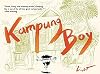
Lat takes us on a journey of his childhood growing up in the Kitna Valley in Perak in the 1950’s. Lat is master storyteller as he takes us down the wandering path of his memories showing us the ceremonies that were still practiced--such as asking the local teacher to take on students, the feeling of swimming in a river as the cool water washes over you, and the warmth and somewhat craziness of family--like the dad that takes off his shirt to scratch his back on the pole when he gets home show more from work, caring for siblings, and the discussions of future. But the modern world is gradually approaching with tin dredges and trains and automobiles. And Lat is about to head off to school in another town away from his family.
This book is done in a sketchbook style, with written descriptions of the events and illustrations accompanying them. The deceptively simple illustrations are compelling and catch that slice of life that seem to be missing in many modern comics. He doesn’t hesitate to illustrate what life was really like growing up for him, even if it means depicting his own backside as he and his friends strip down to take a swim in the river. Most importantly even though Lat illustrates how things are different in his world, there is much that is similar to our own way of life. The time spent with family and friends, the time spent at school..the more things seem to be different the more there is that is the same.
I highly recommend this book and it's sequel (Town Boy) to anyone and everyone, but particularly to the younger generation. Not just as a chance to illustrate the differences between cultures, but a chance to illustrate the similarities between them. show less
This book is done in a sketchbook style, with written descriptions of the events and illustrations accompanying them. The deceptively simple illustrations are compelling and catch that slice of life that seem to be missing in many modern comics. He doesn’t hesitate to illustrate what life was really like growing up for him, even if it means depicting his own backside as he and his friends strip down to take a swim in the river. Most importantly even though Lat illustrates how things are different in his world, there is much that is similar to our own way of life. The time spent with family and friends, the time spent at school..the more things seem to be different the more there is that is the same.
I highly recommend this book and it's sequel (Town Boy) to anyone and everyone, but particularly to the younger generation. Not just as a chance to illustrate the differences between cultures, but a chance to illustrate the similarities between them. show less

In his native Malaysia, Lat is a phenomenon. A cartoonist since age 9, he's been enormously popular for the last thirty years, and was even commissioned to draw the artwork for AirAsia jets. Of course, he's practically unknown here in the United States, but First Second Press (publishers of American Born Chinese) are introducing him to American audiences by publishing two autobiographical volumes, Kampung Boy and Town Boy.
I haven't read the first volume, but that was no handicap at all. This show more book starts off when Lat's family moves from a village (or kampung) to the town of Ipoh, and follows the exploits of Lat and his friends through their first (age 10) and last (age 17) years of school together. They discover rock 'n' roll, cheat on the cross country race, perform in the marching band, and dream about pretty girls.
The striking thing about this kind of story is the mix of similarities and differences from what I would find familiar. While all the subplots could (and probably would) be found in an American memoir from the same generation, the setting shows some tremendous cultural differences. Malaysia is a very diverse country, and the English edition of the book includes some aspects of Malaysian English (notably the multi-purpose particle lah) as well as bits of dialogue in Bahasa Malaysia, Chinese, and what I believe is Tamil. Also, the schools are boys only, and the British-derived educational system makes some of the school scenes difficult to understand completely.
Despite the foreignness of the Malaysian setting, though, the overall feeling is of the warmth of friends and family. Lat has fond memories of childhood fun and mischief, an engaging storyteller's style, and a wicked caricaturist's sense of humor. I look forward to reading Volume 1.
Original post on "All The Things I've Lost" show less
I haven't read the first volume, but that was no handicap at all. This show more book starts off when Lat's family moves from a village (or kampung) to the town of Ipoh, and follows the exploits of Lat and his friends through their first (age 10) and last (age 17) years of school together. They discover rock 'n' roll, cheat on the cross country race, perform in the marching band, and dream about pretty girls.
The striking thing about this kind of story is the mix of similarities and differences from what I would find familiar. While all the subplots could (and probably would) be found in an American memoir from the same generation, the setting shows some tremendous cultural differences. Malaysia is a very diverse country, and the English edition of the book includes some aspects of Malaysian English (notably the multi-purpose particle lah) as well as bits of dialogue in Bahasa Malaysia, Chinese, and what I believe is Tamil. Also, the schools are boys only, and the British-derived educational system makes some of the school scenes difficult to understand completely.
Despite the foreignness of the Malaysian setting, though, the overall feeling is of the warmth of friends and family. Lat has fond memories of childhood fun and mischief, an engaging storyteller's style, and a wicked caricaturist's sense of humor. I look forward to reading Volume 1.
Original post on "All The Things I've Lost" show less
Lat has the ability to draw and tell a very simple tale in the most profound and moving way. American readers will see much that resonates with American teens in this Malaysian coming of age story: parents who do not like loud music, obsession with breasts, the struggle to find artistic expression (often in the face of academic discouragement), the social awkwardness (notice the boys and girls at the dance), trying to find a girlfriend, friends drifting apart, and more. Readers also show more experience vast differences, both historical and cultural, in this Malaysian community. Along the way, Lat spices the pages with just the right amount of political commentary. I nominated Lat’s Kampung Boy (also by First Second) for BBYA last year; I am happy to vote yes on this title because it is even more accessible to teens, even those not necessarily in love with the graphic format. I am only sorry that someone beat me to this nomination this year. Perfect for both middle school and high school libraries! show less
Kampung Boy by Lat
Loved this for the details of village life in Malaysia the 1950s--things you can't get elsewhere, you can get in this graphic novel. Pictures of how a kitchen is set up, or a hammock rigged up so that Lat can rock his baby sister--or, later, a picture of him pulling his little brother along on a palm leaf frond. His dad shows him a weaver bird nest and says that weaver birds put fireflies in them to light up the insides. I checked this out online, and it's a widespread belief--people say show more this in India, too--but I guess it's something ornithologist have never actually seen, not for real. But anyway, little stories like that, I love. I liked everything about this book. show less
Lists
Awards


You May Also Like


Associated Authors
Statistics
- Works
- 33
- Also by
- 2
- Members
- 726
- Popularity
- #34,982
- Rating
- 3.9
- Reviews
- 40
- ISBNs
- 50
- Languages
- 5
- Favorited
- 1