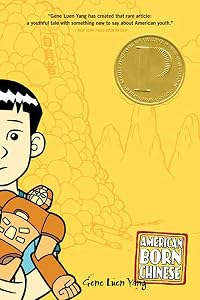
American Born Chinese
by Gene Luen Yang
On This Page
Description
Alternates three interrelated stories about the problems of young Chinese Americans trying to participate in the popular culture. Presented in comic book format.Tags
Recommendations

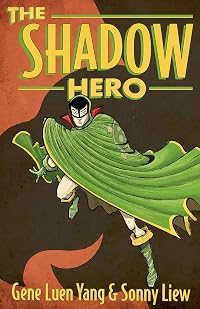

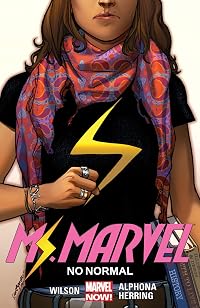
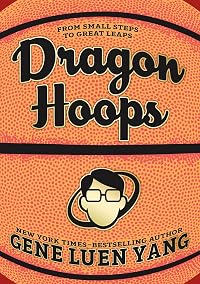
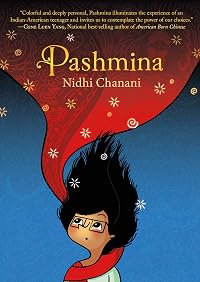
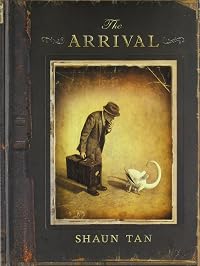
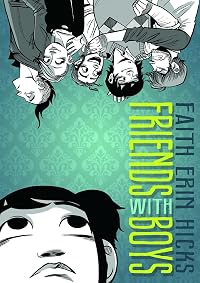
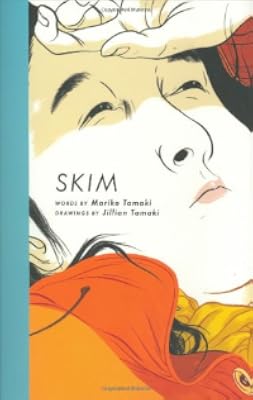
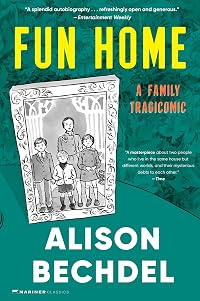


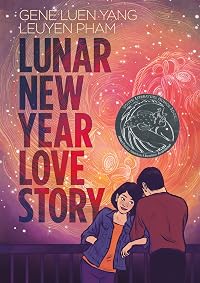
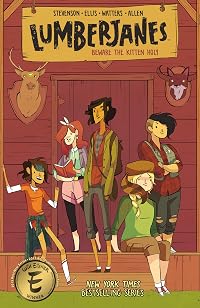
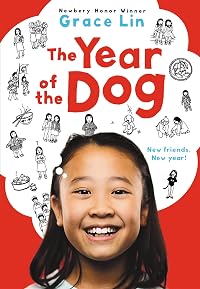
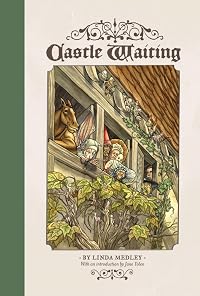

Member Recommendations
by libron
Member Reviews
A fantastic graphic novel about identity and the desire to belong.
Yang weaves three separate story lines together in surprising ways with an interesting intersection at the end. Jin Wang is a schoolboy who wants nothing more than to fit in with his classmates. He's willing to go to great lengths to have a bestfriend and a girlfriend. The Monkey King is snubbed at a gathering of the gods and denies his true self in an attempt to be accepted. His rebellion, punishment, and redemption are taken from the 16th-century Chinese novel, Journey to the West. Chin-kee is the embodiment of negative stereotype Americans have about the Chinese. Together these three stories explore what it means to be different.
In his afterword the author writes about show more the overwhelming response he has had from people.
"What I've found is that the outsider's experience is nearly universal. Almost all of us have a story about not fitting in. It's so common that, ironically, it can be a way for us to understand and connect with one another. The outsider's experience can be our common ground." show less
Yang weaves three separate story lines together in surprising ways with an interesting intersection at the end. Jin Wang is a schoolboy who wants nothing more than to fit in with his classmates. He's willing to go to great lengths to have a bestfriend and a girlfriend. The Monkey King is snubbed at a gathering of the gods and denies his true self in an attempt to be accepted. His rebellion, punishment, and redemption are taken from the 16th-century Chinese novel, Journey to the West. Chin-kee is the embodiment of negative stereotype Americans have about the Chinese. Together these three stories explore what it means to be different.
In his afterword the author writes about show more the overwhelming response he has had from people.
"What I've found is that the outsider's experience is nearly universal. Almost all of us have a story about not fitting in. It's so common that, ironically, it can be a way for us to understand and connect with one another. The outsider's experience can be our common ground." show less
A very, very clever book, American Born Chinese combines a cartoonish, light-hearted art style with a much heavier statement on what it means to be from a different culture. The story is separated into three parts, that of Jin Wang, a young Chinese boy who feels like an outsider and isolated from his American classmates; Danny, the all-American boy with an embarrassing cousin from China; and the Monkey King, who is denied entry from a dinner party in heaven due to his being... well, a monkey.
The clean, colorful artwork manages to support both the jokes (quite a few panels and lines had me laughing out loud) and the message - and actually emphasizes the message. Gene Yang's story is subtle, using stereotypes and parables to allow his show more meaning to come through, but never veers into preachy. More serious moments, like when two idiots from the school loudly make racial slurs in front of Jin Wang and his friends, are wedged so tightly between the jokes that it actually gives the scene more weight.
The story of Jin Wang, in particular, reminded me of Anya's Ghost. Similarly, the main characters from both feel pressure to be more "American" and ignore their cultural heritage (Chinese and Russian, respectively), to the point that when a new classmate joins in who is not as Americanized, they actively avoid associating with them. I will say that Anya's Ghost perhaps was more true to kids and their often not particularly mature reactions, but where American Born Chinese really shines is making the three intersecting story-lines the focus: it leads to a tightly-woven, funny, and very smart story about what it feels like to be the outsider because of your culture. show less
The clean, colorful artwork manages to support both the jokes (quite a few panels and lines had me laughing out loud) and the message - and actually emphasizes the message. Gene Yang's story is subtle, using stereotypes and parables to allow his show more meaning to come through, but never veers into preachy. More serious moments, like when two idiots from the school loudly make racial slurs in front of Jin Wang and his friends, are wedged so tightly between the jokes that it actually gives the scene more weight.
The story of Jin Wang, in particular, reminded me of Anya's Ghost. Similarly, the main characters from both feel pressure to be more "American" and ignore their cultural heritage (Chinese and Russian, respectively), to the point that when a new classmate joins in who is not as Americanized, they actively avoid associating with them. I will say that Anya's Ghost perhaps was more true to kids and their often not particularly mature reactions, but where American Born Chinese really shines is making the three intersecting story-lines the focus: it leads to a tightly-woven, funny, and very smart story about what it feels like to be the outsider because of your culture. show less
Terrific story, cutting between the life of Chinese American boy Jin Wang, a folktale of the Monkey King, and a sitcom about Danny and his cousin "Chin-Kee" (an offensive racist stereotype). The three storylines begin to resonate against each other, finally coming together in a way that is jarring but satisfying. Worth repeated reading.
In American Born Chinese, Gene Luen Yang alternates between a fictionalized account of his youth, the story of the Monkey King from Wu Cheng’en’s Journey to the West, and a satirical account of Chin-Kee, who represents the unkind way that Anglo-Americans view Chinese and Asian immigrants as well as personifying the identity that Chinese-Americans seek to repudiate in order to be seen as more than their ethnicity. His use of humor and dynamic character designs will help this story reach all audiences and give them a greater understanding of the immigrant and first-generation experience, though filtered through Yang’s unique perspective. Disney+ recently adapted this series, but they left out Chin-Kee. Even though the character show more fulfills a valuable narrative purpose, such an overtly racist caricature would not work well for a corporate streaming service’s production. show less
21. American Born Chinese by Gene Luen Yang (2006, 233 page paperback, Read Mar 18)
Yang mixes his experiences being raised in the United States by Chinese-born and culturally Chinese parents with stories from Chinese mythology. Not knowing anything about Chinese mythology, I thought the combined effect was terrific. He includes a brutal picture of how American culture portrays Chinese in America.
It's funny how things work, but while reading I really enjoyed the Chinese mythology aspect, but in hindsight I mainly remember the racist aspect. Yang creates a virtual sitcom where a "normal" American adolescent boy in a perfect little world is visited and horrified by his Chinese cousin who fits every Chinese racial extreme - smiling, talking show more funny, eating disgusting food and knowing everything, all marked by canned laughter. This sitcom story is just randomly mixed in between the stories of a monkey god kicked out of heaven and of something that probably closely resembles Yang's actual adolescence. Then at the end Yang puts together how both the "normal" boy and the Chinese boy are both aspects of his self image - of what he wants to be and what he fears. And his inability to deal with or understand who he is.
I don't think I actually expected to like this. Instead I found it a terrific graphic novel that I expect I will remember.
2015
https://www.librarything.com/topic/185746#5112787 show less
Yang mixes his experiences being raised in the United States by Chinese-born and culturally Chinese parents with stories from Chinese mythology. Not knowing anything about Chinese mythology, I thought the combined effect was terrific. He includes a brutal picture of how American culture portrays Chinese in America.
It's funny how things work, but while reading I really enjoyed the Chinese mythology aspect, but in hindsight I mainly remember the racist aspect. Yang creates a virtual sitcom where a "normal" American adolescent boy in a perfect little world is visited and horrified by his Chinese cousin who fits every Chinese racial extreme - smiling, talking show more funny, eating disgusting food and knowing everything, all marked by canned laughter. This sitcom story is just randomly mixed in between the stories of a monkey god kicked out of heaven and of something that probably closely resembles Yang's actual adolescence. Then at the end Yang puts together how both the "normal" boy and the Chinese boy are both aspects of his self image - of what he wants to be and what he fears. And his inability to deal with or understand who he is.
I don't think I actually expected to like this. Instead I found it a terrific graphic novel that I expect I will remember.
2015
https://www.librarything.com/topic/185746#5112787 show less
this book is my reward for not giving up on the graphic format. it is so well done and poignant, and the drawings are simple (mostly; well, i just mean not super intricate) but convey a lot. the three separate stories overlap thematically in a way that adds depth to each of them. i didn't expect them to come together the way they did - or at all, really, since i thought it was more of a parallel theme kind of thing. but bringing it all together that way wrapped it up nicely, and showed the way folktale and dreams can integrate into real life in a nice way.
this is a powerful and impressive story about fitting in, about not being in the dominant culture, about what you might give up to be accepted by that culture. also about adolescence show more in general and how much friendship can mean.
this is really, really good. show less
this is a powerful and impressive story about fitting in, about not being in the dominant culture, about what you might give up to be accepted by that culture. also about adolescence show more in general and how much friendship can mean.
this is really, really good. show less
I once asked at a cartoon workshop how to make non-caricatured looking Asians and no one had an answer. This one does. This graphic novel intertwines a Chinese myth of the Monkey King who trains himself in kung fu so he will not be seen as a monkey, an American stereotype of squinty eyed buffoon, an a teenager struggling with girls. He seems to suggest more overt racism than I recall experiencing, but it does reflect the issue of relationships are a political statement, which people who see themselves reflected in mainstream media do not often seem to recognize.
Members
- Recently Added By
Published Reviews
ThingScore 100
School Library Journal Review
Starred Review. Gr 7 Up Graphic novels that focus on nonwhite characters are exceedingly rare in American comics. Enter American Born Chinese, a well-crafted work that aptly explores issues of self-image, cultural identity, transformation, and self-acceptance. In a series of three linked tales, the central characters are introduced: Jin Wang, a teen who meets with show more ridicule and social isolation when his family moves from San Francisco s Chinatown to an exclusively white suburb; Danny, a popular blond, blue-eyed high school jock whose social status is jeopardized when his goofy, embarrassing Chinese cousin, Chin-Kee, enrolls at his high school; and the Monkey King who, unsatisfied with his current sovereign, desperately longs to be elevated to the status of a god. Their stories converge into a satisfying coming-of-age novel that aptly blends traditional Chinese fables and legends with bathroom humor, action figures, and playground politics. Yang s crisp line drawings, linear panel arrangement, and muted colors provide a strong visual complement to the textual narrative. Like Toni Morrison s The Bluest Eye and Laurence Yep s Dragonwings, this novel explores the impact of the American dream on those outside the dominant culture in a finely wrought story that is an effective combination of humor and drama. Philip Charles Crawford, Essex High School, Essex Junction, VT Copyright © Reed Business Information, a division of Reed Elsevier Inc. All rights reserved. From: Reed Elsevier Inc. Copyright Reed Business Information show less
added by stephippen
Lists

Recommended Comics / Graphic Novels
595 works; 122 members

Best Stand-Alone Graphic Novels
107 works; 19 members
Club Read's Graphic Stories Recommendations
127 works; 2 members

NPRs Ultimate Backseat Bookshelf: 100 Must-Reads for kids 9-14
222 works; 30 members

Modern Books for Young Adults
87 works; 11 members

Asian American Literature
46 works; 6 members

Most Popular Young Adult Lit on LT
100 works; 4 members

Racial identity
13 works; 1 member

Banned or Challenged Books
400 works; 41 members

Books Read in 2021
5,361 works; 114 members
Best Graphic Novel Nonfiction
199 works; 101 members

Books recommended by Calgary Public Library staff
1,588 works; 4 members
Author Information

182+ Works 21,996 Members
Gene Luen Yang was born on August 9, 1973 in California. He graduated from the University of California, Berkeley, where he majored in computer science and minored in creative writing. After graduating in 1995, he worked as a computer engineer for two years. He decided that he was meant to teach and left his job as an engineer to teach computer show more science at Bishop O'Dowd High School in Oakland, California. He is a writer of graphic novels and comics. His first published comic, Gordon Yamamoto and the King of the Geeks, was published in 1997 and won the Xeric Grant, a self-publishing grant for comic book creators. His other works include Loyola Chin and the San Peligran Order and Avatar: The Last Airbender. He won the Michael L. Printz Award in 2006 for American Born Chinese and the Eisner Award for best short story in 2009 for Eternal Smile. (Bowker Author Biography) show less
All Editions
Awards and Honors
Awards
Distinctions
Notable Lists
Work Relationships
Has the adaptation
Was inspired by
Has as a student's study guide
Common Knowledge
- Canonical title
- American Born Chinese
- Original title
- American Born Chinese
- Original publication date
- 2006
- People/Characters
- Jin Wang; Suzy Nakamura; Wei-Chen Sun; Chin-Kee; Danny; Sun Wu Kong (show all 9); Tze-Yo-Tzuh; Amelia Harris; Wong Lai-Tsao
- Important places
- San Francisco, California, USA; California, USA; China
- Related movies
- American Born Chinese (2023 | IMDb)
- Dedication
- To Ma,
for her stories of the Monkey King
And Ba,
for his stories of Ah-Tong, the Taiwanese village boy - First words
- One bright and starry night, the Gods the Goddesses, the demons, and the spirits gathered in heaven for a dinner party.
- Last words
- (Click to show. Warning: May contain spoilers.)That'd be cool.
- Blurbers
- Kim, Derek Kirk
- Original language
- English
Classifications
- Genres
- Graphic Novels & Comics, Teen, Tween
- DDC/MDS
- 741.5973 — Arts & recreation Drawing & decorative arts Drawing Comic books, graphic novels, fotonovelas, cartoons, caricatures, comic strips History, geographic treatment, biography North American United States (General)
- LCC
- PN6727 .Y36 .A54 — Language and Literature Literature (General) Literature (General) Collections of general literature Comic books, strips, etc.
- BISAC
Statistics
- Members
- 5,756
- Popularity
- 2,271
- Reviews
- 355
- Rating
- (3.95)
- Languages
- 8 — English, French, German, Italian, Korean, Norwegian, Portuguese, Spanish
- Media
- Paper, Ebook
- ISBNs
- 36
- ASINs
- 15