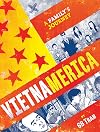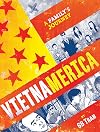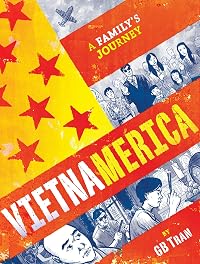
Vietnamerica: A Family's Journey
by GB Tran
On This Page
Description
A memoir in graphic novel format about the author's experiences as the son of Vietnamese immigrants who fled to America during the fall of Saigon describes how he learned his tragic ancestral history and the impact of the Vietnam War on his family while visiting their homeland years later.Tags
Recommendations
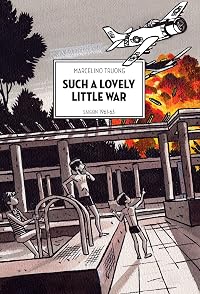
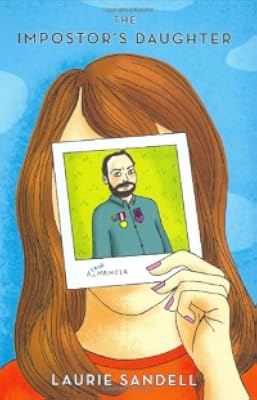
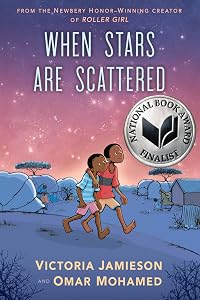
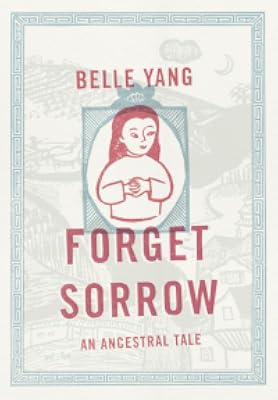


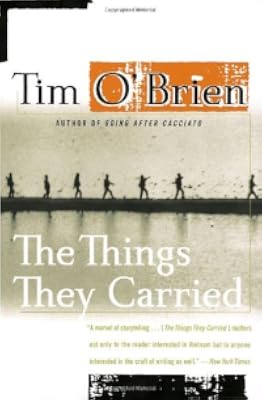
Member Recommendations
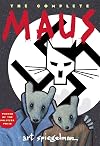

Member Reviews
The good folks at War is Boring described Vietnameria as Maus for the Vietnam War. I'm not sure if that's true; I don't generally read comix and Maus isn't even on the pile. What I can say is that this is a book about identity and trauma, about survival and family. The story follows G.B. Tran's family, starting with the funerals of grandparents, moving through the childhoods of his parents, the escalating war, and then G.B. coming to grips with his almost unknown family. The story is tragic, most especially G.B.'s father, Tri Huu Tran, who was an artist, teacher, and intellectual in South Vietnam, and who seemed to have lost all those things in his flight to America, leaving a shell of authoritarianism and resentment (although the show more alternative was several years in a prison camp, so...) Some of the art is quite evocative: busy cityscapes, or refugees trying to climb out of an abyss in the shape of Vietnam. show less
Born a year after his parents fled the fall of Saigon, G.B. Tran spent his life ignorant to the hardships endured by his family during French-occupied Vietnam and then the American presence that led to the war. He never had much interest in learning his family history despite his parents' coaxing. However, his grandmother has just died and he must return to Vietnam to pay respects. It is this unfortunate event that ignites his curiosity in his family history, and he takes the reader on a visual journey detailing the events of his grandmothers' lives, how they impacted the lives of his parents and their eventual decision to escape Vietnam.
Vietnamerica offers an interesting glimpse into the Vietnamese side of events during the mid-20th show more century. Additionally, Tran's maternal and paternal grandmothers came from fairly different upbringings and engaged in different lifestyles, which further enhances the uniqueness of the storytelling. It was a little difficult keeping some of the story lines separate as Tran utilizes a series of flashbacks to tell the various events of his family members. I think a lot of this was due to my lack of familiarity with the Vietnamese names, but Tran provides a family tree illustrated on the inside cover and adjoining fly leaf which really helped my understanding. At the same time, this mixture of flashbacks makes for a thoroughly engrossing reading experience. Ultimately, I appreciated the variety of Vietnamese perspectives as I've mostly only read American soldiers' accounts in any works on Vietnam. It serves as a sober reminder of the daily struggle endured in the lives of civilians in a war-torn country and that war is never black and white. show less
Vietnamerica offers an interesting glimpse into the Vietnamese side of events during the mid-20th show more century. Additionally, Tran's maternal and paternal grandmothers came from fairly different upbringings and engaged in different lifestyles, which further enhances the uniqueness of the storytelling. It was a little difficult keeping some of the story lines separate as Tran utilizes a series of flashbacks to tell the various events of his family members. I think a lot of this was due to my lack of familiarity with the Vietnamese names, but Tran provides a family tree illustrated on the inside cover and adjoining fly leaf which really helped my understanding. At the same time, this mixture of flashbacks makes for a thoroughly engrossing reading experience. Ultimately, I appreciated the variety of Vietnamese perspectives as I've mostly only read American soldiers' accounts in any works on Vietnam. It serves as a sober reminder of the daily struggle endured in the lives of civilians in a war-torn country and that war is never black and white. show less
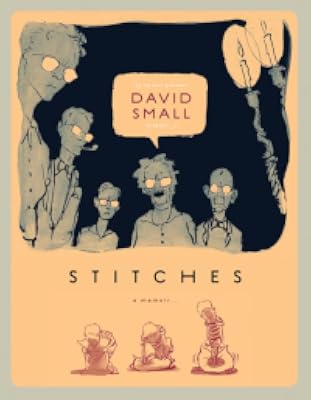
One of the things that I’ve always liked about the graphic novel format is that it can work really well for telling some biographical stories that wouldn’t work well in print, such as Maus, Persepolis, and Stitches. Each of these artists illustrates their stories in a way that enhances the story. Maus in written format wouldn’t be as powerful and the mental connections that we make to the story would be lost. And I think that GB Tran’s Vietnamerica can also be added to that list. Tran brings to life his parents escape from Vietnam, shortly before its borders were closed. In this book he explores and shares his own ignorance of the past, his thoughts on his family, and the pain that so many experienced.
GB Tran is a young show more Vietnamese American artist who is largely ignorant of his family’s history. Although he knew they fled Vietnam during the fall of Saigon, he himself was born in the states and has never been to visit the country…until now. When his last two surviving grandparents die within a few months of each other GB heads back with his family to honor and celebrate his grandparents life, and to learn the history of why his family escaped from their homeland. Along the way he finds out why his father is often distant, why his mother has stayed in the marriage, and connects with his parents families and family friends that haven’t been seen in years.
For me the best thing about this book is the personal experiences that Tran shares with us. He’s open and honest about his own indifference to where his family came from, even though it was a short time since his parents came to the States. He also shares with us tender and private family moments, his mother discovering lost pearls or the frank discussion on how difficult Tran’s father is; his own realization that one day both of his parents will be gone and that it is important for him to learn about his past. He lets us, the reader, take a front seat ride with him as he finds out about his family’s past, the secrets, the pain, the horror of the war. It has a nice Maus/Persepolis kinda vibe to it.
My one issue with this book, and other reviewers have noticed it as well, is that the pacing and layout of the story is a bit difficult to follow at times. It’s told in a non-linear format, sometimes showing moments after the war began, then going back to the current visit in Vietnam, and then going back to his parent’s childhood. If it wasn’t for the handy family tree at the front of the book I wouldn’t know who I was looking at or what time period I was in. The layout is also inconsistent at times. For example, on some pages there’s a big panel that takes up the top half of both pages, but then the panels underneath are read vertically instead of horizontally. It makes for a somewhat difficult reading experience at times. But…after thinking about it for a bit I wonder if this how he learned his family’s history, in this piecemeal fashion and thus he’s relaying it to us as how he heard it, letting us feel like we’re riding next to him. While it doesn’t make for easy reading, it makes some sense.
Tran’s artstyle, watercolors overlayed in pen and ink, are perfect for giving readers that sense of going back in time…giving us the gritty feel of being in a prison camp, of being in the south where everything is roasting, and the hectic airport while folks are trying to escape. He captures the movements and expressions of his family and makes them come alive and let’s the reader feel like they’re standing in those same places. We can pictures ourselves sweating with Tran on a hot day, feel the crowd at the airport while everyone is trying to escape.
Overall this is one of those books that everyone should read at least once. And then go back and read it again to see what you missed. If you’re a fan of autobiographical comics, history, war, or different cultures then this is something that you’ll want to pick up and read. show less
GB Tran is a young show more Vietnamese American artist who is largely ignorant of his family’s history. Although he knew they fled Vietnam during the fall of Saigon, he himself was born in the states and has never been to visit the country…until now. When his last two surviving grandparents die within a few months of each other GB heads back with his family to honor and celebrate his grandparents life, and to learn the history of why his family escaped from their homeland. Along the way he finds out why his father is often distant, why his mother has stayed in the marriage, and connects with his parents families and family friends that haven’t been seen in years.
For me the best thing about this book is the personal experiences that Tran shares with us. He’s open and honest about his own indifference to where his family came from, even though it was a short time since his parents came to the States. He also shares with us tender and private family moments, his mother discovering lost pearls or the frank discussion on how difficult Tran’s father is; his own realization that one day both of his parents will be gone and that it is important for him to learn about his past. He lets us, the reader, take a front seat ride with him as he finds out about his family’s past, the secrets, the pain, the horror of the war. It has a nice Maus/Persepolis kinda vibe to it.
My one issue with this book, and other reviewers have noticed it as well, is that the pacing and layout of the story is a bit difficult to follow at times. It’s told in a non-linear format, sometimes showing moments after the war began, then going back to the current visit in Vietnam, and then going back to his parent’s childhood. If it wasn’t for the handy family tree at the front of the book I wouldn’t know who I was looking at or what time period I was in. The layout is also inconsistent at times. For example, on some pages there’s a big panel that takes up the top half of both pages, but then the panels underneath are read vertically instead of horizontally. It makes for a somewhat difficult reading experience at times. But…after thinking about it for a bit I wonder if this how he learned his family’s history, in this piecemeal fashion and thus he’s relaying it to us as how he heard it, letting us feel like we’re riding next to him. While it doesn’t make for easy reading, it makes some sense.
Tran’s artstyle, watercolors overlayed in pen and ink, are perfect for giving readers that sense of going back in time…giving us the gritty feel of being in a prison camp, of being in the south where everything is roasting, and the hectic airport while folks are trying to escape. He captures the movements and expressions of his family and makes them come alive and let’s the reader feel like they’re standing in those same places. We can pictures ourselves sweating with Tran on a hot day, feel the crowd at the airport while everyone is trying to escape.
Overall this is one of those books that everyone should read at least once. And then go back and read it again to see what you missed. If you’re a fan of autobiographical comics, history, war, or different cultures then this is something that you’ll want to pick up and read. show less
http://andalittlewine.blogspot.com/2012/07/vietnamerica-by-gb-tran-book-review.h...
I read graphic novels in hopes of finding ones as good as GB Tran's Vietnamerica.
Vietnamerica is not an easy read, visually nor narratively. I suspect that is why it didn't win the Eisner Award it was nominated for at Comic-Con earlier this week.
Tran's drawing style is broad, really
too universal. In Understanding Comics, Scott McCloud argues that drawn characters fall on a matrix ranging from the universal (think of a smiley face, that could represent anyone) to the specific (imagine a photo-realistic image of someone you know). Tran's characters weren't quite distinct enough to tell apart at times, especially as the story swirls around in time from the show more French occupation of Vietnam, to the American invasion, to the present day. I loved the way Tran wove together the generational decisions that led him to his American life, but I doubt that most readers have my patience for being confused.
Some of this confusion mirrored a disconnectedness that Tran admits feeling- because his family was not a family of story-tellers, much of the background that colors the decision making is lost to time.
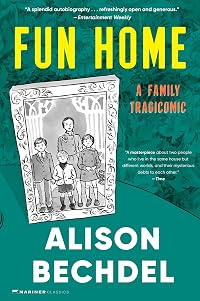
The part of Vietnamerica I enjoyed the most was its open-endedness. I had a choir teacher who used to say "Art is like what life is like." Most acclaimed graphic novel memoirs (I thinking of you, Maus and FunHome and Persepolis) feature some sort of guiding structure, a motif that gives order to reminiscence. Tran's structure is his family, as their words and actions circle back to us: choices were made so the family could survive. We start the book with that reality, and there are no big revelations later on. Vietnamerica reinforces that simple truth over and over again. show less
I read graphic novels in hopes of finding ones as good as GB Tran's Vietnamerica.
Vietnamerica is not an easy read, visually nor narratively. I suspect that is why it didn't win the Eisner Award it was nominated for at Comic-Con earlier this week.
Tran's drawing style is broad, really
too universal. In Understanding Comics, Scott McCloud argues that drawn characters fall on a matrix ranging from the universal (think of a smiley face, that could represent anyone) to the specific (imagine a photo-realistic image of someone you know). Tran's characters weren't quite distinct enough to tell apart at times, especially as the story swirls around in time from the show more French occupation of Vietnam, to the American invasion, to the present day. I loved the way Tran wove together the generational decisions that led him to his American life, but I doubt that most readers have my patience for being confused.
Some of this confusion mirrored a disconnectedness that Tran admits feeling- because his family was not a family of story-tellers, much of the background that colors the decision making is lost to time.
The part of Vietnamerica I enjoyed the most was its open-endedness. I had a choir teacher who used to say "Art is like what life is like." Most acclaimed graphic novel memoirs (I thinking of you, Maus and FunHome and Persepolis) feature some sort of guiding structure, a motif that gives order to reminiscence. Tran's structure is his family, as their words and actions circle back to us: choices were made so the family could survive. We start the book with that reality, and there are no big revelations later on. Vietnamerica reinforces that simple truth over and over again. show less
Excellent Vietnamese immigration story -- breaks down many complex factors and tells many stories. Sometimes difficult to follow (thank goodness for the careful naming of the main protagonists), because the shifting in time and perspectives can be hard to follow. Nonetheless a heartbreaking and well done personal narrative.
I'm still getting used to the Graphic Novel style and, for me, it will never replace regular novels. But GB Tran is a great artist (a trait he inherited from his father who was just getting recognition in Vietnam when they had to flee) and his visuals do add to the story.
GB was born in the US, the only child in his family who was. He travelled to Vietnam with his parents as a 30 year old and there he discovered many things about his family that he had never known. For instance, his paternal grandfather was a hero of the Communist army even though his parents left Vietnam because they were friendly with the American forces. What he learned convinced GB to draw this book and it is fascinating. I have a friend who grew up in Vietnam after show more the Communist takeover. His parents lived through that time but he says they never talk about it. I wish that he could learn about that time as GB did.
I found it confusing when GB switched from his mother's family to his father's sometimes in the middle of one page. I eventually figured out that the different backgrounds were a clue but it would have been nice if there had been an explanation at the beginning. show less
GB was born in the US, the only child in his family who was. He travelled to Vietnam with his parents as a 30 year old and there he discovered many things about his family that he had never known. For instance, his paternal grandfather was a hero of the Communist army even though his parents left Vietnam because they were friendly with the American forces. What he learned convinced GB to draw this book and it is fascinating. I have a friend who grew up in Vietnam after show more the Communist takeover. His parents lived through that time but he says they never talk about it. I wish that he could learn about that time as GB did.
I found it confusing when GB switched from his mother's family to his father's sometimes in the middle of one page. I eventually figured out that the different backgrounds were a clue but it would have been nice if there had been an explanation at the beginning. show less
Some familiarity with the history of Vietnam and the Vietnam War is helpful to understanding what takes place in this graphic novel. Time shifts between past and present and the complex family tree confused me at times. And much of the small print challenged my aging vision. Overall though, it's an intense work that inspires empathy and brings to life the horrors and tragedies that Vietnamese families faced during the long conflicts in their country. A timely read for me, given what is happening in Syria and refugees trying to escape to Europe the past year.
Members
- Recently Added By
Published Reviews
ThingScore 100
Engaging, challenging, and disturbing, Tran’s family memoir belongs in all public and academic libraries; older teens and up for occasionally strong language and violence. The swirly, jagged color art fits the story perfectly
added by sduff222
Lists

Unshelved Book Clubs
579 works; 5 members
Author Information
2+ Works 253 Members
Awards and Honors
Distinctions
Common Knowledge
- Original publication date
- 2011-01-25
- People/Characters
- Gia-Bao "GB" Tran
- Important events
- Vietnam War
- Dedication
- For Mom and Dad
- First words
- You know what your father was doing at your age?
- Last words
- (Click to show. Warning: May contain spoilers.)Can I still go to Vietnam with you?
Classifications
Statistics
- Members
- 251
- Popularity
- 129,207
- Reviews
- 19
- Rating
- (3.88)
- Languages
- English, French, Spanish
- Media
- Paper, Ebook
- ISBNs
- 4
- ASINs
- 2