

Bruce H. Lipton
Author of The Biology of Belief: Unleashing the Power of Consciousness, Matter, & Miracles
About the Author
Bruce H. Lipton, Ph.D., is an internationally recognized leader in bridging science and spirit and a leading voice in new biology. A cell biologist by training, he taught cell biology at the University of Wisconsin's School of Medicine and later performed pioneering studies at Standford show more University's School of Medicine. He has been a guest speaker on hundreds of TV and radio shows as well as keynote presenter for national and international conference. Website: www brucelipton.com show less
Works by Bruce H. Lipton
The Biology of Belief: Unleashing the Power of Consciousness, Matter, & Miracles (2005) 1,304 copies, 16 reviews
Spontaneous Evolution: Our Positive Future and a Way to Get There From Here (2008) 197 copies, 3 reviews
Evolucao Espontanea 3 copies
Beyond Darwin: How Epigenetics, Quantum Science, and Cooperation Shape Humanity's Future (2026) 2 copies
La biologia delle credenze. Come il pensiero influenza il DNA e ogni cellula. Ediz. ampliata (2019) 2 copies
A Guide to the Biology of Belief: An Original Author Adaptation on the Power of Consciousness, Matter & Miracles (2021) 1 copy
Spontaneous Evolution Our Positive Future by Lipton Ph.D., Bruce H., Bhaerman, Steve [Hay House,2009] (Hardcover) (2009) 1 copy
A biologia da cren ca: a liberta c♯ao do poder da consci©encia, da mat℗eria e dos milagres (2015) 1 copy
Evolutie spontana - vol. 2 1 copy
Evolutie spontana - vol. 1 1 copy
Tagged
Common Knowledge
- Gender
- male
Members
Reviews
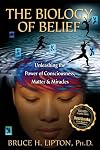
As I come to review this book I am wondering what made by buy it in the first place? Normally, I'm fairly careful about the books I buy and I check the contents, some of the other reviewer comments (and weigh up how much weight I should give to them). But in this case, I'm relieved to report that I only paid $2 for this book at some second hand bookstall for charity. It has a sticker on the dust jacket proclaiming it as a "Best Book, 2006 awards...and around the rim of the seal are the words show more "Best science book". I must check this out further because I can't believe it. It is a most unscientific book. My initial attraction was due to the title. "The Biology of Belief". I have long been interested in the philosophy of values and one of the issues I came up against was the difference between belief and values. Most writers never bothered with trying to define what they meant by "belief"...And Bruce Lipton is no exception. We all think we know what a belief is until one is asked to define it ..and then it becomes a bit more complicated. The "Biology" part of the title looked to me like I was going to learn about the neurochemistry of the brain and how it caused or interacted with beliefs. Perhaps how beliefs could be changed by changing the chemistry of the brain. Alas, I was to be disappointed. Lipton spends a good deal of the first part of the book explaining his personal journey and his eureka moment when he realised that the cell membrane played a large role in biological outcomes. Now this may be true but most of the book relates to Lipton's personal journey and culminates in a sales pitch to embrace PSYCH-K...."making use of left brain/right brain integration techniques effect swift and long lasting changes". We are even referred to a web site for further information. Somewhere along the long journey of Lipton's intellectual development we have morphed from more straightforward descriptions of the cell membrane to Lipton's conversion to a "spiritual scientist". To my mind that is a contradiction in terms. The book certainly did not deliver what the title promised to me. I would not recommend this book. Oh, and by the way, I checked out the publishers, Hay House USA and found that they publish widely across the fields of; "Oracle Cards", "Past Life Regression", "Crystals", "Shamanism" and "Energy Healing"....to name but a few. Now maybe these have their place ...but to my mind they are not leading contenders for peer reviewed science or even for the scientific method. Bottom line.....don't waste your time ...or money...even if you pick it up for $2 at a book sale like I did. show less
Lipton is a cell biologist whose “study of cells turned [him] into a spiritual person.” This is a highly readable science book, defining how beliefs control behavior and gene activity, and consequently the unfolding of our lives. It’s a fun learning tool that doesn’t dig too deeply, with an uplifting message.
Belief truly is biological. One interesting topic that Lipton addresses is the placebo effect. It “is quickly glossed over in medical schools so that students can get to the show more real tools of modern medicine like drugs and surgery. This is a giant mistake. The placebo affect should be a major topic of study in medical school.” Of course, Lipton is a realist; he realizes placebo pills are a threat to the pharmaceutical industry, as well as the scalpel holders, and Lipton is not one to mince words.
It should be pointed out that this is no dry textbook; it borders in places on metaphysical and holistic speculation. But the book is so darn fun. In this light, do not ignore the epilogue; it’s the best part of the book, where Lipton deals with speculative conclusions regarding our “me-ness” and the power of the mind that transformed him into a bubbly, optimistic believer. His “aha” moment was the realization that every protein in our bodies is a physical/electromagnetic complement to something in the environment … that environment being the universe, or to many, God. As we are inextricably intertwined with the divine, survival of the fittest turns out to mean survival of the most loving. show less
Belief truly is biological. One interesting topic that Lipton addresses is the placebo effect. It “is quickly glossed over in medical schools so that students can get to the show more real tools of modern medicine like drugs and surgery. This is a giant mistake. The placebo affect should be a major topic of study in medical school.” Of course, Lipton is a realist; he realizes placebo pills are a threat to the pharmaceutical industry, as well as the scalpel holders, and Lipton is not one to mince words.
It should be pointed out that this is no dry textbook; it borders in places on metaphysical and holistic speculation. But the book is so darn fun. In this light, do not ignore the epilogue; it’s the best part of the book, where Lipton deals with speculative conclusions regarding our “me-ness” and the power of the mind that transformed him into a bubbly, optimistic believer. His “aha” moment was the realization that every protein in our bodies is a physical/electromagnetic complement to something in the environment … that environment being the universe, or to many, God. As we are inextricably intertwined with the divine, survival of the fittest turns out to mean survival of the most loving. show less
The Biology Of Belief: Unleashing The Power Of Consciousness, Matter And Miracles by Bruce H. Lipton
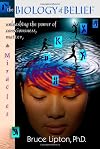
The biology of Belief: unleashing the power of consciousness, matter, and miracles
By Bruce Lipton
not really biology but more metaphysics and maybe odd ball spiritualism.
It's an odd book, hard to classify, even harder to grasp the big picture for which the author argues passionately and rather well. The genre is akin to such books as: The Tao of Physics, Dancing Wu-Li Masters, except the science being rewritten is biology rather than physics.The author uses the words: "new biology" show more consciously to refer to a new paradigm, a system that is more holistic, much less reductionist, more consciousness, less matter in motion. The author is best described, i think, as a teacher that learns his first and most important lessons from looking at himself, much of the book is prompted by inner turmoil, cognitive dissonance and his attempts to reconcile his experience and his scientific education. As such it makes the book not really about biology, although there is lots of it, but rather about how this man looks out from inside his head and sees the reflection of his consciousness in the world. And from there tries to explain what he has found in terms of modern molecular biochemistry but finds that this is just the beginning and so much more is left unexplored because modern science is blinded by a materialist paradigm that depreciates consciousness.
I think that the book is best read like a detective novel, from the 1st page to the last, with an occasional glance at the end of the chapter to see who-dun-it. The personal nature of the writing makes it difficult just to take a chapter out of context and read it for informational content, although one might be tempted to because of the extensiveness of the science. This would be a mistake because the science is not self contained but rather is being used by the author as an explantory way to unify what often appear to be spiritual issues and questions and finding their potential answer in biology.
For example, chapter 3: the magical membrane. The first paragraph is: "Now that we've looked at the protein assembly machinery of the cell, debunked the notion that the necleus is the brain of the cellular operation, and recognized that crucial role the environment plays in the operation of the cell, we're on to the good stuff-the stuff that can make sense of your life and give your insight into ways of changing it." pg75 This is one of the major themes of the book, the cell is not controlled and run exclusively by the nucleus and it's DNA but rather is a complex interaction of the environment and the cell, mediated by receptors in the membrane. Which is a microcosm of the theme of the book, which appears in the last paragraph of this chapter: "which put the control of our lives not in the genetic roll of the dice at conception, but in our own hands" pg 94 This is consistent with the book's theme that the mind-body division is fundamentally wrong, reflected in the division of physics into Newtonian and Quantum, and biology as fixing machinery versus straightening out mental or even spiritual issues, this is where the idea that the quantum revolution in physics needs to be carried out in modern biology and seeing the importance of energy vs matter.
I've stumbled trying to write this review for weeks. I finished the book the day after i checked it out of the library(it is a good read, the analogy to a mystery is true), but here it sits, the review unfinished weeks later. Why is it so hard to review? What makes it such an odd book?
It is my difficulty in separating the garbage of the new age movement from it's treasure. My problem of differentiating what is good in the book, what is worth pursuing and learning more about, from the general spiritualist, god is in everything pantheism that the author is heading towards (apparently).
I like the science he presents, i appreciate the goals of reducing the reductionism, dematerializing the gross materialism, and spiritualizing the sciences, but i am concerned that the content of his spirituality is very different and in competition with my orthodox conservative Christianity. It is this loggerheads that makes an analysis of the ideas in the book so hard. I am not a pan or a panentheist, God is not part of His creation but wholely other. And to deify creation, to find our consciousness, our imago dei in the physical universe is not the right way to go. But it is a useful thing to see how someone with this author's spiritual sensitivity walk us through his adventures and share with us his journey. This is a good thing and makes the book a high recommendation for me. I'm just afraid that anything i say about what the book is about will really be more about me and my reaction than that of the author, rats.
Biology has missed the crucial contribution of the environment. This is chapter 2, "It's the environment, stupid". As no man is an island, no cell in an organism, no organism in it's lifetime, no community, is an island, separated from the rest of life. The next chapter,"the magical membrane" is his scientific analysis of why DNA is not the king of the cell controlling everything and responsible for all, but he looks at the membrane as the communication center from the cell to it's environment. Here he is probably not only right but a good antidote to the nucleus-centric thinking that dominates cell and molecular biology. The 4th chapter, "the new physics" is a quick analysis of energy and quantum mechanics as a new physics paradigm that basically says something like: energy is all, matter is but energy in a different form. This chapter is the one most like the Tao of Physics and that genre. The next chapter, "biology and belief" makes the analogy of energy to spirit and matter to physical world and tries to drawn a new biology akin to the new physics. IF you can only read a few pages, pick this chapter, it is the key ideas of the book.
Is it true, does our mind control the physics around us? is it true that god is energy and spirit and accessible to the mind of man? how much of the new biology is the old pagan spirituality, the worship of mother earth and the forces of nature? i don't know. but i'm interesting in reading more. show less
By Bruce Lipton
not really biology but more metaphysics and maybe odd ball spiritualism.
It's an odd book, hard to classify, even harder to grasp the big picture for which the author argues passionately and rather well. The genre is akin to such books as: The Tao of Physics, Dancing Wu-Li Masters, except the science being rewritten is biology rather than physics.The author uses the words: "new biology" show more consciously to refer to a new paradigm, a system that is more holistic, much less reductionist, more consciousness, less matter in motion. The author is best described, i think, as a teacher that learns his first and most important lessons from looking at himself, much of the book is prompted by inner turmoil, cognitive dissonance and his attempts to reconcile his experience and his scientific education. As such it makes the book not really about biology, although there is lots of it, but rather about how this man looks out from inside his head and sees the reflection of his consciousness in the world. And from there tries to explain what he has found in terms of modern molecular biochemistry but finds that this is just the beginning and so much more is left unexplored because modern science is blinded by a materialist paradigm that depreciates consciousness.
I think that the book is best read like a detective novel, from the 1st page to the last, with an occasional glance at the end of the chapter to see who-dun-it. The personal nature of the writing makes it difficult just to take a chapter out of context and read it for informational content, although one might be tempted to because of the extensiveness of the science. This would be a mistake because the science is not self contained but rather is being used by the author as an explantory way to unify what often appear to be spiritual issues and questions and finding their potential answer in biology.
For example, chapter 3: the magical membrane. The first paragraph is: "Now that we've looked at the protein assembly machinery of the cell, debunked the notion that the necleus is the brain of the cellular operation, and recognized that crucial role the environment plays in the operation of the cell, we're on to the good stuff-the stuff that can make sense of your life and give your insight into ways of changing it." pg75 This is one of the major themes of the book, the cell is not controlled and run exclusively by the nucleus and it's DNA but rather is a complex interaction of the environment and the cell, mediated by receptors in the membrane. Which is a microcosm of the theme of the book, which appears in the last paragraph of this chapter: "which put the control of our lives not in the genetic roll of the dice at conception, but in our own hands" pg 94 This is consistent with the book's theme that the mind-body division is fundamentally wrong, reflected in the division of physics into Newtonian and Quantum, and biology as fixing machinery versus straightening out mental or even spiritual issues, this is where the idea that the quantum revolution in physics needs to be carried out in modern biology and seeing the importance of energy vs matter.
I've stumbled trying to write this review for weeks. I finished the book the day after i checked it out of the library(it is a good read, the analogy to a mystery is true), but here it sits, the review unfinished weeks later. Why is it so hard to review? What makes it such an odd book?
It is my difficulty in separating the garbage of the new age movement from it's treasure. My problem of differentiating what is good in the book, what is worth pursuing and learning more about, from the general spiritualist, god is in everything pantheism that the author is heading towards (apparently).
I like the science he presents, i appreciate the goals of reducing the reductionism, dematerializing the gross materialism, and spiritualizing the sciences, but i am concerned that the content of his spirituality is very different and in competition with my orthodox conservative Christianity. It is this loggerheads that makes an analysis of the ideas in the book so hard. I am not a pan or a panentheist, God is not part of His creation but wholely other. And to deify creation, to find our consciousness, our imago dei in the physical universe is not the right way to go. But it is a useful thing to see how someone with this author's spiritual sensitivity walk us through his adventures and share with us his journey. This is a good thing and makes the book a high recommendation for me. I'm just afraid that anything i say about what the book is about will really be more about me and my reaction than that of the author, rats.
Biology has missed the crucial contribution of the environment. This is chapter 2, "It's the environment, stupid". As no man is an island, no cell in an organism, no organism in it's lifetime, no community, is an island, separated from the rest of life. The next chapter,"the magical membrane" is his scientific analysis of why DNA is not the king of the cell controlling everything and responsible for all, but he looks at the membrane as the communication center from the cell to it's environment. Here he is probably not only right but a good antidote to the nucleus-centric thinking that dominates cell and molecular biology. The 4th chapter, "the new physics" is a quick analysis of energy and quantum mechanics as a new physics paradigm that basically says something like: energy is all, matter is but energy in a different form. This chapter is the one most like the Tao of Physics and that genre. The next chapter, "biology and belief" makes the analogy of energy to spirit and matter to physical world and tries to drawn a new biology akin to the new physics. IF you can only read a few pages, pick this chapter, it is the key ideas of the book.
Is it true, does our mind control the physics around us? is it true that god is energy and spirit and accessible to the mind of man? how much of the new biology is the old pagan spirituality, the worship of mother earth and the forces of nature? i don't know. but i'm interesting in reading more. show less
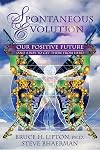
I didn't find this the most readable of books initially, as I couldn't tell where it was going. But when I really got into it, I began to appreciate it. The subject-matter of the book affects all our personal lives - the very existence of the planet, and in fact has broad metaphysical ramifications. I haven't previously read any book quite like it.
The authors examine various myths entrenched in the basic beliefs of our civilization and challenge 1) the main tenets of Newtonian philosophy, show more basically that the only reality is physical matter 2) Charles Darwin's theory of evolution and the necessity for us to fight for our survival - survival of the fittest 3) the theory that we have all blindly accepted for years that we are controlled and limited by our genes and 4) that evolution and everything else that happens to us is random. Actually all these four premises have been proved by modern science to be fallacious, but our society is still acting on them as though they were true.
It is explained that evolution did not occur gradually but in great leaps. Single cells developed into single cell communities. These developed into multicellular organisms, which in turn developed into societal organizations.
That is, we did not evolve through competition and fighting but through cooperation and banding (bonding) together.
The crazy self-destructive way our human society is run is compared to the way the cells in our body run the show. Our cells don't fight and kill each other but pool their resources and work together for the health of the greater whole.
It's all explained at a very high level, and I would need to have read the book a couple of times more to even begin to give an adequate representation of the details or even all the main precepts of the book.
But what I got out of it was that at this critical juncture when when both our living planet and ourselves are on the brink of a new evolutionary leap, we need to change our basic thinking, cooperate instead of fight, love instead of hate. In other words we need to follow the example of our own cells, and realize that we humans are also all part of one body, Gaia - and if we are to survive we must accept all other beings as necessary parts of ourselves, or our greater Self.
The key word to the success of this evolutionary leap is LOVE.
And when I read this book I felt the love and the high consciousness energy of the authors flowing from the pages, and I myself was helped in achieving a higher vibration. It is a book that contributes to harmonizing the head with the heart, which will be a necessary pre-condition for the survival of our civilization.
I strongly recommend this book to every thinking and loving person, and to all those who aspire to be such. show less
The authors examine various myths entrenched in the basic beliefs of our civilization and challenge 1) the main tenets of Newtonian philosophy, show more basically that the only reality is physical matter 2) Charles Darwin's theory of evolution and the necessity for us to fight for our survival - survival of the fittest 3) the theory that we have all blindly accepted for years that we are controlled and limited by our genes and 4) that evolution and everything else that happens to us is random. Actually all these four premises have been proved by modern science to be fallacious, but our society is still acting on them as though they were true.
It is explained that evolution did not occur gradually but in great leaps. Single cells developed into single cell communities. These developed into multicellular organisms, which in turn developed into societal organizations.
That is, we did not evolve through competition and fighting but through cooperation and banding (bonding) together.
The crazy self-destructive way our human society is run is compared to the way the cells in our body run the show. Our cells don't fight and kill each other but pool their resources and work together for the health of the greater whole.
It's all explained at a very high level, and I would need to have read the book a couple of times more to even begin to give an adequate representation of the details or even all the main precepts of the book.
But what I got out of it was that at this critical juncture when when both our living planet and ourselves are on the brink of a new evolutionary leap, we need to change our basic thinking, cooperate instead of fight, love instead of hate. In other words we need to follow the example of our own cells, and realize that we humans are also all part of one body, Gaia - and if we are to survive we must accept all other beings as necessary parts of ourselves, or our greater Self.
The key word to the success of this evolutionary leap is LOVE.
And when I read this book I felt the love and the high consciousness energy of the authors flowing from the pages, and I myself was helped in achieving a higher vibration. It is a book that contributes to harmonizing the head with the heart, which will be a necessary pre-condition for the survival of our civilization.
I strongly recommend this book to every thinking and loving person, and to all those who aspire to be such. show less
Lists
Awards

You May Also Like


Statistics
- Works
- 34
- Members
- 1,719
- Popularity
- #14,941
- Rating
- 3.9
- Reviews
- 20
- ISBNs
- 82
- Languages
- 15
- Favorited
- 4