
William R. Forstchen
Author of One Second After
About the Author
Writer and educator William R. Forstchen was born in New Jersey in 1950. He received a B.A. from Rider College in Lawrenceville, New Jersey and a M.A. in European history and a Ph.D. in military history from Purdue University. Forstchen teaches at Montreat College in Asheville, North Carolina. show more Forstchen uses his knowledge of military history to create science fiction stories of other universes and societies. His series include Gamestar Wars, Ice Prophet, and The Lost Regiment. He is also the co-author with Newt Gingrich of 1945, an alternative history of World War II. His other stand-alone novels include The Four Magics, Doctors of the Night, One Second After and its sequel, One Year After which hit the New York Times Bestseller list in September 2015. (Bowker Author Biography) show less
Image credit:
www.vjbooks.com
Series
Works by William R. Forstchen
To Try Men's Souls: A Novel of George Washington and the Fight for American Freedom (2009) 350 copies, 12 reviews
Would You? {short story} 1 copy
Associated Works
If the Allies Had Fallen : Sixty Alternate Scenarios of World War II (2010) — Introduction — 423 copies, 4 reviews
Don't Forget Your Spacesuit, Dear: The Mother of All Anthologies (1996) — Contributor — 229 copies, 5 reviews
A Date Which Will Live in Infamy: An Anthology of Pearl Harbor Stories That Might Have Been (2001) — Contributor — 16 copies
Tagged
Common Knowledge
- Canonical name
- Forstchen, William R.
- Legal name
- Forstchen, William Robert
- Birthdate
- 1950-10-11
- Gender
- male
- Education
- Purdue University (PhD)
Rider College - Occupations
- professor
historian
author
novelist - Organizations
- Montreat College
- Short biography
- William R. Forstchen has a Ph.D. from Purdue University with specializations in Military History and the History of Technology. He is a Faculty Fellow and Professor of History at Montreat College. He is the author of fifty books including the New York Times bestselling series One Second After, the Lost Regiment series, and the award-winning young adult novel, We Look Like Men of War. He has also authored numerous short stories and articles about military history and military technology.
Dr. Forstchen's interests include the Civil War, archaeological research on sites in Mongolia, and the potential of space exploration. As a pilot he owns and flies an original World War II "recon bird." Dr. Forstchen resides near Asheville, North Carolina with his dog Maggie. - Nationality
- USA
- Birthplace
- Millburn, New Jersey, USA
- Places of residence
- Millburn, New Jersey, USA (birth)
Black Mountain, North Carolina, USA - Associated Place (for map)
- USA
Members
Discussions
Found: A sci-fi series where civil war soldiers are portaled to another planert in Name that Book (June 2021)
Reviews
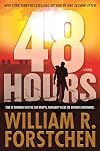
William Forstchen has carved out a niche for himself as one of the best writers of apocalyptic fiction. After warning of the dangers of an EMP attack in the One Second After series, Fortschen is back with another what if story. This time, what if the sun was preparing to launch a massive solar flare directly towards earth, and what if we only had 48 hours to prepare?
Richard Carrington is a solar scientist working for NASA and a direct descendant of the Carrington who originally discovered show more solar flares and connected them to impacts on earth. He discovers activity on the sun that, due to an unfortunate confluence of circumstances, could impact the earth in a way that is potentially as deadly as the asteroid strike that wiped out the dinosaurs. An earlier coronal mass ejection has already left parts of the country without electricity. Now a potentially larger strike, nicknamed Sauron’s Eye, has developed on the sun and could be headed our way. And there are only 48 hours to get ready.
The action is split between an underground storage facility in Missouri and the White House.
In Missouri, Darren Brooks provides security for an underground storage facility that he learns has supplies that could feed thousands for months but is designated for use by the Missouri government which the military is on its way to secure. Along with his wife, they must decide what is the best use for the facility and how to make sure that happens. Meanwhile, at the White House, Carrington must brief the president on what’s happening with the sun and what the implications are as the president decides how much and when to inform the rest of the country.
Fortschen takes you through the preparations that are being made in each place. He creates a large cast of mostly sympathetic characters. He excels both in walking through the technical difficulties posed by a solar flare as well as the moral consequences of an event that, at its worst, could result in very high casualties. Fortschen brings you close enough that you feel the same stress his characters feel. There is no emotional distance, you are right there with them.
The compressed timeline of the book keeps events moving at a fast clip. As the zero hour approaches, things reach a climax as people on both sides become more desperate. People will either rise to the occasion or abandon their humanity. Fortschen keeps you guessing all the way to the end. This is a great book for any fan of apocalyptic thrillers, and one of Fortschen’s best books. Highly recommended.
I was provided a copy of this book by the publisher. show less
Richard Carrington is a solar scientist working for NASA and a direct descendant of the Carrington who originally discovered show more solar flares and connected them to impacts on earth. He discovers activity on the sun that, due to an unfortunate confluence of circumstances, could impact the earth in a way that is potentially as deadly as the asteroid strike that wiped out the dinosaurs. An earlier coronal mass ejection has already left parts of the country without electricity. Now a potentially larger strike, nicknamed Sauron’s Eye, has developed on the sun and could be headed our way. And there are only 48 hours to get ready.
The action is split between an underground storage facility in Missouri and the White House.
In Missouri, Darren Brooks provides security for an underground storage facility that he learns has supplies that could feed thousands for months but is designated for use by the Missouri government which the military is on its way to secure. Along with his wife, they must decide what is the best use for the facility and how to make sure that happens. Meanwhile, at the White House, Carrington must brief the president on what’s happening with the sun and what the implications are as the president decides how much and when to inform the rest of the country.
Fortschen takes you through the preparations that are being made in each place. He creates a large cast of mostly sympathetic characters. He excels both in walking through the technical difficulties posed by a solar flare as well as the moral consequences of an event that, at its worst, could result in very high casualties. Fortschen brings you close enough that you feel the same stress his characters feel. There is no emotional distance, you are right there with them.
The compressed timeline of the book keeps events moving at a fast clip. As the zero hour approaches, things reach a climax as people on both sides become more desperate. People will either rise to the occasion or abandon their humanity. Fortschen keeps you guessing all the way to the end. This is a great book for any fan of apocalyptic thrillers, and one of Fortschen’s best books. Highly recommended.
I was provided a copy of this book by the publisher. show less
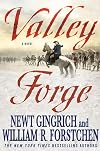
I've only read a few historical novels, but this one did a great job of bringing you into the horrors and miracle of Valley Forge. As a student of the American Revolution, there wasn't much I learned, but I felt the authors did a fantastic job of illustrating the plight of the American soldier during those frigid months in 1778. They did an equally great job describing the march to Monmouth during a heat wave (estimated temps around 105) where many a soldier, both American and British, were show more dropping like flies due to heat exhaustion.
I didn't realize "Valley Forge" was book 2 of a trilogy. I will go back and read books 1 and 3 given the quality of the prose and research of this one. show less
I didn't realize "Valley Forge" was book 2 of a trilogy. I will go back and read books 1 and 3 given the quality of the prose and research of this one. show less

This nerve-wracking sci-fi thriller set in the not-too-distant future begins three weeks after a big solar storm - a Coronal Mass Ejection (CME) - hit the earth. The damage was immense: some 25,000 had died from exposure, lack of medicine, and lack of clean water. But it turned out to be only the beginning.
At the Goddard Space Flight Center, scientists were monitoring the sun closely. The sun had thrown off another CME which was due to arrive soon and which would again peel back the show more Earth’s magnetosphere. The magnetosphere generally protects the Earth from solar emissions. Some 48 hours after the next CME, however, an additional and even more dangerous solar event was expected to erupt: a Coronal Proton Ejection, or CPE. (Scientists also call this a Solar Proton Event or SPE.) If this high-energy, lethal burst of radiation hit the earth without the protection of the magnetosphere, it could create what scientists call an Extinction Level Event, or ELE.
[Unfortunately, all of these events are actual scientific phenomena, not just fictional creations. Usually a CME and CPE do not occur in the sequence happening in this novel, however. If a CPE hit without a CME or before a CME, the Earth would still have protection. But given the cycles of solar events and the rotation of both the Earth and the Sun, it is not impossible for the sequence to happen in reverse, and in fact scientists think such a "perfect storm" might have happened earlier in the history of the Earth.]
The rest of the book is devoted to considerations of what to do about it, and specifically, who will get admitted into the shelters deep in the earth that have been prepared for government officials in the event of catastrophes.
[Again, this premise in the book is not made up. In fact, both the federal and state governments have what are called “continuity of government” (CG) plans involving secret bunkers stocked with supplies. They began to be built during the Cold War in the late 1940s, and received renewed effort and enthusiasm after the 9/11 attacks. For example, in the book Raven Rock: The Story Of The U.S. Government's Secret Plan To Save Itself - While The Rest Of Us Die by Garrett Graff, you can read about a facility not far from Camp David in Pennsylvania called the Raven Rock Bunker. It is a massive hollowed-out mountain stocked with food, medical facilities, and other necessities that can hold as many as 5,000 people in the event of an emergency.]
So who gets access to these survival facilities? In the novel, one of the characters explains the protocol [again, similar to that in place in real life] to two of the main protagonists, Darren and Darla Brooks:
“Come on, you two, wake up! Anyone who has pull, a friend, a connection gets in to the deep shelters. Big donors to the right party, political friends, friends of their friends, mistresses, lots and lots of self-important bureaucrats, we all know the type. They get in, then the doors get closed. Do you read me on that?”
Darren asks what will happen to the rest of the population. His information source says:
“Fuck ‘em. . . . Darren, did you hear me? Extinction-level event. The select have already been selected. If this thing is as bad as I’m being told, those with the right tickets will scramble in and then lock the doors. . . . This ain’t some Titanic fantasy of lifeboats for women and children first. This is captain and crew and their families first, then afterward tell everyone else the ship is sinking. The rationale, the balm on their souls? Why, it’s all about continuity of government and ‘Gee, sorry, folks, no more room down here; just head to your basements, or dig a hole, or sit back on the surface and have lots of 100 SPF sunblock.”
[Of course, neither basements nor sunblock would help protect life on earth from solar radiation without the magnetosphere to blunt the effects. Under those circumstances, when a CPE hits, everyone on the surface of the Earth would die within minutes.]
Those with knowledge of the coming events, including the President of the United States, grapple with deciding on the best course of action. There is always a chance that the timing of the solar explosions would differ from projections, and that most of the energy from the sun would not hit the Earth. As they discuss options among themselves and pray, they are reminded of the story of Sodom and Gomorrah. In that chapter of the Bible, Abraham argued with God:
"What if there are fifty righteous people in the city? Will you really sweep it away and not spare the place for the sake of the fifty righteous people in it? . . . What if only ten can be found there?' [God] answered, 'For the sake of ten, I will not destroy it."
How do they reconcile a possible destruction of the Earth with their faith? Are there not even ten righteous people [above ground at any rate] to save? And what about the fact that those who do get in the shelters are not necessarily the "righteous"? As everyone struggles to handle the news, the tension in this thriller accelerates tremendously. And as one character commented, “In the hours ahead, we are all going to see the best and the worst of what we are as a species.”
Evaluation: This is a frightening cautionary tale, but also a gripping, exciting read that gives you plenty to think about. What would you do if you believed you had only some two days yet to live? show less
At the Goddard Space Flight Center, scientists were monitoring the sun closely. The sun had thrown off another CME which was due to arrive soon and which would again peel back the show more Earth’s magnetosphere. The magnetosphere generally protects the Earth from solar emissions. Some 48 hours after the next CME, however, an additional and even more dangerous solar event was expected to erupt: a Coronal Proton Ejection, or CPE. (Scientists also call this a Solar Proton Event or SPE.) If this high-energy, lethal burst of radiation hit the earth without the protection of the magnetosphere, it could create what scientists call an Extinction Level Event, or ELE.
[Unfortunately, all of these events are actual scientific phenomena, not just fictional creations. Usually a CME and CPE do not occur in the sequence happening in this novel, however. If a CPE hit without a CME or before a CME, the Earth would still have protection. But given the cycles of solar events and the rotation of both the Earth and the Sun, it is not impossible for the sequence to happen in reverse, and in fact scientists think such a "perfect storm" might have happened earlier in the history of the Earth.]
The rest of the book is devoted to considerations of what to do about it, and specifically, who will get admitted into the shelters deep in the earth that have been prepared for government officials in the event of catastrophes.
[Again, this premise in the book is not made up. In fact, both the federal and state governments have what are called “continuity of government” (CG) plans involving secret bunkers stocked with supplies. They began to be built during the Cold War in the late 1940s, and received renewed effort and enthusiasm after the 9/11 attacks. For example, in the book Raven Rock: The Story Of The U.S. Government's Secret Plan To Save Itself - While The Rest Of Us Die by Garrett Graff, you can read about a facility not far from Camp David in Pennsylvania called the Raven Rock Bunker. It is a massive hollowed-out mountain stocked with food, medical facilities, and other necessities that can hold as many as 5,000 people in the event of an emergency.]
So who gets access to these survival facilities? In the novel, one of the characters explains the protocol [again, similar to that in place in real life] to two of the main protagonists, Darren and Darla Brooks:
“Come on, you two, wake up! Anyone who has pull, a friend, a connection gets in to the deep shelters. Big donors to the right party, political friends, friends of their friends, mistresses, lots and lots of self-important bureaucrats, we all know the type. They get in, then the doors get closed. Do you read me on that?”
Darren asks what will happen to the rest of the population. His information source says:
“Fuck ‘em. . . . Darren, did you hear me? Extinction-level event. The select have already been selected. If this thing is as bad as I’m being told, those with the right tickets will scramble in and then lock the doors. . . . This ain’t some Titanic fantasy of lifeboats for women and children first. This is captain and crew and their families first, then afterward tell everyone else the ship is sinking. The rationale, the balm on their souls? Why, it’s all about continuity of government and ‘Gee, sorry, folks, no more room down here; just head to your basements, or dig a hole, or sit back on the surface and have lots of 100 SPF sunblock.”
[Of course, neither basements nor sunblock would help protect life on earth from solar radiation without the magnetosphere to blunt the effects. Under those circumstances, when a CPE hits, everyone on the surface of the Earth would die within minutes.]
Those with knowledge of the coming events, including the President of the United States, grapple with deciding on the best course of action. There is always a chance that the timing of the solar explosions would differ from projections, and that most of the energy from the sun would not hit the Earth. As they discuss options among themselves and pray, they are reminded of the story of Sodom and Gomorrah. In that chapter of the Bible, Abraham argued with God:
"What if there are fifty righteous people in the city? Will you really sweep it away and not spare the place for the sake of the fifty righteous people in it? . . . What if only ten can be found there?' [God] answered, 'For the sake of ten, I will not destroy it."
How do they reconcile a possible destruction of the Earth with their faith? Are there not even ten righteous people [above ground at any rate] to save? And what about the fact that those who do get in the shelters are not necessarily the "righteous"? As everyone struggles to handle the news, the tension in this thriller accelerates tremendously. And as one character commented, “In the hours ahead, we are all going to see the best and the worst of what we are as a species.”
Evaluation: This is a frightening cautionary tale, but also a gripping, exciting read that gives you plenty to think about. What would you do if you believed you had only some two days yet to live? show less
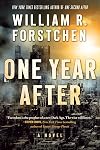
I read the first book in this series during the Cannonball two years ago, so I went back to read my review before writing this one. Sadly, it seems that in the years that have passed between these novels, Mr. Forstchen has gotten more hyper-militaristic in his writing and a bit more willing to express a few bigoted viewpoints as well. And he continues to either relegate women to periphery roles, or, when granting higher-profile roles (the President is apparently a woman, the former Secretary show more of Health and Human Services – because of course, that’s the only cabinet-level position a woman would hold, right?), making them incompetent. Mr. Fortschen is all about guns, guys, and glory, and it’s obnoxious as hell.
A refresher: two years ago some EMPs were detonated in the US and other parts of the world, rending all electronics inoperable. Towns were cut off, people had to fend for themselves. The federal government was nowhere to be seen, and lead military vet John Matherson saved the day, but lost his daughter to lack of insulin. Pretty good, but also pretty militaristic.
Hoo boy, if Mr. Fortschen didn’t crank that up to 11 for this book. The thing is, so much potential lies in this story. And at times, I get a glimpse into what an awesome book he could have written. There are really interesting discussions about treating the wounded of the ‘enemy’ and of the morality of certain actions during war. But it all gets lost in some of the more absurd comments.
I recognize that authors can create characters that include complexities, but I also don’t think Mr. Fostchen is talented enough to infuse his main character with those complexities and not have them reflect the author’s true views. John finds the racism of his Civil War-loving buddies endearing, and scoffs at sexism while characterizing it as “basic politeness.” Ew. At one point, he gets really indignant about the federal government referring to people like HIM (a white dude) as terrorists, and waxes nostalgic about how this is just the outcome of the “political correctness” that kept the US from calling “real” terrorists (read: Muslims) terrorists after 9/11. Double ew.
But the real topper on this shit cake of ‘patriotism’ is when John complains about how much things have changed, and how much better the US was at being moral during war, especially during the Iraq and Afghanistan fights. If I’d been drinking, I’d have done a spit take. Perhaps the fact that the US just bombed an MSF hospital last week is coloring my vision, but this idea that the US is some moral arbiter when it comes to war and the military is just absurd, and I can’t stomach it even in a novel.
If there’s a third book, I won’t be reading it. And I’m guessing the author would be fine with it, because I’m pretty sure he’s not a fan of my kind (a woman, a pacifist, someone who isn’t a blind lover of all things USA). show less
A refresher: two years ago some EMPs were detonated in the US and other parts of the world, rending all electronics inoperable. Towns were cut off, people had to fend for themselves. The federal government was nowhere to be seen, and lead military vet John Matherson saved the day, but lost his daughter to lack of insulin. Pretty good, but also pretty militaristic.
Hoo boy, if Mr. Fortschen didn’t crank that up to 11 for this book. The thing is, so much potential lies in this story. And at times, I get a glimpse into what an awesome book he could have written. There are really interesting discussions about treating the wounded of the ‘enemy’ and of the morality of certain actions during war. But it all gets lost in some of the more absurd comments.
I recognize that authors can create characters that include complexities, but I also don’t think Mr. Fostchen is talented enough to infuse his main character with those complexities and not have them reflect the author’s true views. John finds the racism of his Civil War-loving buddies endearing, and scoffs at sexism while characterizing it as “basic politeness.” Ew. At one point, he gets really indignant about the federal government referring to people like HIM (a white dude) as terrorists, and waxes nostalgic about how this is just the outcome of the “political correctness” that kept the US from calling “real” terrorists (read: Muslims) terrorists after 9/11. Double ew.
But the real topper on this shit cake of ‘patriotism’ is when John complains about how much things have changed, and how much better the US was at being moral during war, especially during the Iraq and Afghanistan fights. If I’d been drinking, I’d have done a spit take. Perhaps the fact that the US just bombed an MSF hospital last week is coloring my vision, but this idea that the US is some moral arbiter when it comes to war and the military is just absurd, and I can’t stomach it even in a novel.
If there’s a third book, I won’t be reading it. And I’m guessing the author would be fine with it, because I’m pretty sure he’s not a fan of my kind (a woman, a pacifist, someone who isn’t a blind lover of all things USA). show less
Lists
THE WAR ROOM (2)
War Literature (1)
Awards


You May Also Like


Associated Authors
Statistics
- Works
- 61
- Also by
- 10
- Members
- 14,235
- Popularity
- #1,618
- Rating
- 3.6
- Reviews
- 314
- ISBNs
- 338
- Languages
- 10
- Favorited
- 7
