
About the Author
Works by Arika Okrent
In the Land of Invented Languages: Esperanto Rock Stars, Klingon Poets, Loglan Lovers, and the Mad Dreamers Who Tried to Build A Perfect Language (2006) 944 copies, 33 reviews
Highly Irregular: Why Tough, Through, and Dough Don't Rhyme―And Other Oddities of the English Language (2021) 134 copies, 4 reviews
Associated Works
The Public Domain Review: Selected Essays, The First Three Years, 2011-2013 (2014) — Contributor — 33 copies, 2 reviews
Tagged
Common Knowledge
- Canonical name
- Okrent, Arika
- Gender
- female
- Education
- University of Chicago (PhD|Linguistics and Cognition and Cognitive Neuroscience)
- Occupations
- linguist
- Awards and honors
- LSA Linguistics Journalism Award (2015)
- Relationships
- Okrent, Daniel (uncle)
- Nationality
- USA
- Birthplace
- Chicago, Illinois, USA
- Places of residence
- Philadelphia, Pennsylvania, USA
- Associated Place (for map)
- USA
Members
Reviews
Highly Irregular: Why Tough, Through, and Dough Don't Rhyme―And Other Oddities of the English Language by Arika Okrent

I have been really enjoying Arika Okrent's new book on the weird and wonderful (did I mention weird?) little nooks and crannies of our English tongue.
If you ever wondered why a thing can be "uncouth" but never "couth", why we can name someone the "Sexiest Man Alive" but not the Sexiest Man 'Blond' and why "could", "would" and "should" have those silly silent L's -- this is a book for you.
The book is subtitled, "What the Hell, English?" and the tone ranges from wryly exasperated to down show more right "WTF?". The charming little cartoon illustrations add a lot.
A Fun book to pick and read at random or to sit down and read right through it, which is what I did.
Why Clifford is a Big, Red, Dog and not a Red, Big Dog is covered in here too. (And try explaining THAT to a non native speaker!).
For Word Nerds. I suspect there are a lot of us around here. show less
If you ever wondered why a thing can be "uncouth" but never "couth", why we can name someone the "Sexiest Man Alive" but not the Sexiest Man 'Blond' and why "could", "would" and "should" have those silly silent L's -- this is a book for you.
The book is subtitled, "What the Hell, English?" and the tone ranges from wryly exasperated to down show more right "WTF?". The charming little cartoon illustrations add a lot.
A Fun book to pick and read at random or to sit down and read right through it, which is what I did.
Why Clifford is a Big, Red, Dog and not a Red, Big Dog is covered in here too. (And try explaining THAT to a non native speaker!).
For Word Nerds. I suspect there are a lot of us around here. show less
In the Land of Invented Languages: Adventures in Linguistic Creativity, Madness, and Genius by Arika Okrent

I have been waiting to read this one ever since I first heard of it—a book devoted to all the languages that have been created by other people. Everyday languages are organic: they have no real inventor but time and culture. These things shape the way we talk about the world and express ourselves. But someone had to sit down and invent Esperanto, to compose Klingon, to shape the way that Loglan works. These languages were created for many reason, but the main one seems to be so that people show more of different nationalities and cultures could finally communicate with one another. Arika Okrent’s In the Land of Invented Languages explores the rich history of those people who tried (and ultimately failed) to create a single language that all of humanity could use. And along the way, she reveals what little truth in contained in language, and how that reflects on us as language’s users.
Over the last nine hundred years, approximately nine hundred language have been artificially created. They come in bursts, though. After Hildegard von Bingen composed Lingua Ignota in the twelfth century, it was three hundred years before Muhyi-I Gulseni created Balaibalan. The last two centuries have been the heyday for language creation, with some 470 documented new languages. Okrent’s tour through language creation hits the highlights, from Wilkin’s Philosophical Language (1668) to Schleyer’s Volapuk (1879) to Zamenhof’s incredibly popular Esperanto (1887) and even to the modern-day tussles over Klingon.
Her investigations of these languages talk about whether language can ever truly represent ideas, how we perceive and classify the physical and metaphysical world, and if the rules of spoken language can ever really be made simple. Many languages, once invented and released into the “wild,” change radically, serving the needs of the speakers rather than the rulebooks of the inventors (much to the chagrin of the inventors). James Cooke Brown lost control of Loglan much like C. K. Bliss could not tolerate the changes made to his Blissymbolics.
As a language nut, I really enjoyed this book. Okrent’s joyful attitude towards language and grammar speaks to her background as a linguist. She whole-heartedly immerses herself in contemporary artificial languages, hoping to find one that both fun to learn and follows more rules than the others. What she does find, however, are groups of people so enamored with the communities that new languages create, that sometimes it doesn’t really matter if you can’t understand each other. Simply the act of trying to communicate is all you need to bring people together. And perhaps also a dictionary. A quick and fun book. show less
Over the last nine hundred years, approximately nine hundred language have been artificially created. They come in bursts, though. After Hildegard von Bingen composed Lingua Ignota in the twelfth century, it was three hundred years before Muhyi-I Gulseni created Balaibalan. The last two centuries have been the heyday for language creation, with some 470 documented new languages. Okrent’s tour through language creation hits the highlights, from Wilkin’s Philosophical Language (1668) to Schleyer’s Volapuk (1879) to Zamenhof’s incredibly popular Esperanto (1887) and even to the modern-day tussles over Klingon.
Her investigations of these languages talk about whether language can ever truly represent ideas, how we perceive and classify the physical and metaphysical world, and if the rules of spoken language can ever really be made simple. Many languages, once invented and released into the “wild,” change radically, serving the needs of the speakers rather than the rulebooks of the inventors (much to the chagrin of the inventors). James Cooke Brown lost control of Loglan much like C. K. Bliss could not tolerate the changes made to his Blissymbolics.
As a language nut, I really enjoyed this book. Okrent’s joyful attitude towards language and grammar speaks to her background as a linguist. She whole-heartedly immerses herself in contemporary artificial languages, hoping to find one that both fun to learn and follows more rules than the others. What she does find, however, are groups of people so enamored with the communities that new languages create, that sometimes it doesn’t really matter if you can’t understand each other. Simply the act of trying to communicate is all you need to bring people together. And perhaps also a dictionary. A quick and fun book. show less
In the Land of Invented Languages: Esperanto Rock Stars, Klingon Poets, Loglan Lovers, and the Mad Dreamers Who Tried to Build A Perfect Language by Arika Okrent
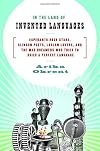
I love love love this book! I've been fascinated with language since... well, since as far back as I can remember having language. I don't have the requisite gifts to hack it as a linguist, but my fascination and delight in language is no less for that.
And delight is was makes this book so enjoyable. The author's intelligence and expertise are obvious - her conclusions about language and culture are spot-on. But it's her sense of humor and the joy she takes in the material that make this show more book utterly compelling! I never would have thought that a book about language, written by a linguist, could make me laugh out loud. But this one did - more than once!
Anyone who is even slightly interested in the nature and workings of language should read this book! show less
And delight is was makes this book so enjoyable. The author's intelligence and expertise are obvious - her conclusions about language and culture are spot-on. But it's her sense of humor and the joy she takes in the material that make this show more book utterly compelling! I never would have thought that a book about language, written by a linguist, could make me laugh out loud. But this one did - more than once!
Anyone who is even slightly interested in the nature and workings of language should read this book! show less
Highly Irregular: Why Tough, Through, and Dough Don't Rhyme―And Other Oddities of the English Language by Arika Okrent
The book is structured as a hodgepodge: six broad sections with pithy titles as "Blame the Barbarians" or "Blame the Printing Press", each comprising 5-15 essays. Essays are short and focus on a puzzling aspect of standard English given other, more generally applicable rules. For instance, it's unquestionably proper English to say "ate" and not "eated", yet many verbs employ the -ed suffix for the past tense, so "ate" draws attention. From the hodgepodge, however, emerges the outline of the show more Story of English. I don't recall it after reading this book any better than after reading others, but this one is extremely entertaining. I'll likely dip into it again.
All she leaves out is the influence of Barbarians and of Latin, unless she nodded to that with "French" and "snobs".
Latin influenced English in two waves separated by 100 years: Viking incursions (Old Norse) predominated in the interval, and I was surprised at the observation that Celtic languages had little to no influence on English. The first wave of Latin was characterised by Roman conquest which left the subjugated peoples to speak their own language, so had less impact than the second, which focused on converting them and so employed Roman alphabet for local languages in writing. (Seemingly a third wave is arguable, noted below.)
Again to my surprise, the Norman invasion's influence on English was not because ruling classes imposed French upon the lower classes, but because the Francophone aristocracy eventually adopted English as their own, subsequently imposing French language rules for spelling and such. Evidently this is when (?) Ecclesiastic Latin made its mark, as well. show less
The answer to most "Why does English do this?" questions will be a variation on things we have already seen here: old habits getting reinforced while new habits take over, unnoticeable slow drifts in pronunciation, the practice of extending or borrowing or creating in order to get something useful, reusing materials at hand in new ways, the drive to get more emotional impact, the need to look smart, impress, send social signals, express national pride. It will be because of the old Germanic layer, the French upheaval, the consolidating force of the printing press, the purposeful manipulation done by snobs, or the natural tendencies of our human language endowment. [143-44]
All she leaves out is the influence of Barbarians and of Latin, unless she nodded to that with "French" and "snobs".
Latin influenced English in two waves separated by 100 years: Viking incursions (Old Norse) predominated in the interval, and I was surprised at the observation that Celtic languages had little to no influence on English. The first wave of Latin was characterised by Roman conquest which left the subjugated peoples to speak their own language, so had less impact than the second, which focused on converting them and so employed Roman alphabet for local languages in writing. (Seemingly a third wave is arguable, noted below.)
Again to my surprise, the Norman invasion's influence on English was not because ruling classes imposed French upon the lower classes, but because the Francophone aristocracy eventually adopted English as their own, subsequently imposing French language rules for spelling and such. Evidently this is when (?) Ecclesiastic Latin made its mark, as well. show less
Lists
Awards

You May Also Like


Associated Authors
Statistics
- Works
- 2
- Also by
- 1
- Members
- 1,078
- Popularity
- #23,855
- Rating
- 4.0
- Reviews
- 37
- ISBNs
- 8