

Margalit Fox
Author of The Riddle of the Labyrinth: The Quest to Crack an Ancient Code
About the Author
Margalit Fox is a reporter for The New York Times. She holds bachelor's and master's degrees in linguistics from Stony Brook University and a master's degree from the Columbia University Graduate School of Journalism
Works by Margalit Fox
Conan Doyle for the Defense: The True Story of a Sensational British Murder, a Quest for Justice, and the World's Most Famous Detective Writer (2018) 349 copies, 18 reviews
The Confidence Men: How Two Prisoners of War Engineered the Most Remarkable Escape in History (2021) 247 copies, 11 reviews
The Talented Mrs. Mandelbaum: The Rise and Fall of an American Organized-Crime Boss (2024) 160 copies, 10 reviews
Tagged
Common Knowledge
- Birthdate
- 1961-04-25
- Gender
- female
- Education
- Columbia University (MA - Journalism)
State University of New York at Stony Brook (BA - Linguistics, MA - Linguistics) - Occupations
- reporter
- Relationships
- Robinson, George (husband)
- Nationality
- USA
- Birthplace
- Glen Cove, New York, USA
- Places of residence
- Manhattan, New York, USA
- Map Location
- USA
Members
Reviews

“The aim of the department store…was to foment desire,” Margalit Fox writes in The Talented Mrs. Mandlebaum, creating an “epidemic of longing” fueled by advertisements. The American housewife not only longed for a showplace home, it was socially required. But how could a middle class income support such a lifestyle?
Criminals stole goods and fenced them, and then they were sold at discount. The public was happy, and the criminal organization was very happy.
One of the most successful show more criminal operations was run by Mrs. Fredericka Mandelbaum in whose drawing room could be found the wealthy and priviledged class. She was a remarkable woman, beloved by her family, a philanthropist, involved in her synagogue; a successful business woman and crime boss with a loyal cadre of thieves who called her ‘Marm’–mother.
Margalit Fox takes readers deep into Marm Mandelbaum’s life and world, from her specially designed shopfront with hidden rooms for stolen goods to her luxurious black silk dresses dripping with diamonds. It took decades, but the Pinkertons finally introduced a mole into her operation to get evidence of wrongdoing. Then, she fled and lived for decades in Canada!
A large, imposing woman, characterized in cartoons and newspaper illustrations with grotesque Jewish characteristics, her intelligence must have been remarkable. As a German immigrant in the late 19th c. her options for providing for her family was limited. But I can imagine that had she been a man, she could have been anything–perhaps a tycoon of industry, a Pinkerton detective, or a political boss.
True crime lovers will relish this biography of a forgotten, once infamous, crime boss.
Thanks to the publisher for a free book. show less
Criminals stole goods and fenced them, and then they were sold at discount. The public was happy, and the criminal organization was very happy.
One of the most successful show more criminal operations was run by Mrs. Fredericka Mandelbaum in whose drawing room could be found the wealthy and priviledged class. She was a remarkable woman, beloved by her family, a philanthropist, involved in her synagogue; a successful business woman and crime boss with a loyal cadre of thieves who called her ‘Marm’–mother.
Margalit Fox takes readers deep into Marm Mandelbaum’s life and world, from her specially designed shopfront with hidden rooms for stolen goods to her luxurious black silk dresses dripping with diamonds. It took decades, but the Pinkertons finally introduced a mole into her operation to get evidence of wrongdoing. Then, she fled and lived for decades in Canada!
A large, imposing woman, characterized in cartoons and newspaper illustrations with grotesque Jewish characteristics, her intelligence must have been remarkable. As a German immigrant in the late 19th c. her options for providing for her family was limited. But I can imagine that had she been a man, she could have been anything–perhaps a tycoon of industry, a Pinkerton detective, or a political boss.
True crime lovers will relish this biography of a forgotten, once infamous, crime boss.
Thanks to the publisher for a free book. show less
Riddle of the Labyrinth: The Quest to Crack an Ancient Code and the Uncovering of a Lost Civilisation by Margalit Fox
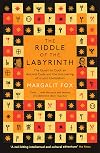
When, in 1900, Arthur Evans dug up a load of clay tablets stashed in a bathtub under a field in Crete, there didn't seem much hope that the writing on them would ever be understood. The people who wrote it had been ancient history by Homer's time, and the characters on the tablets looked nothing like any other writing system known in the Mediterranean, or elsewhere – stylised symbols, some of them clearly iconographic, and others resembling bizarre geometric shapes or obscure show more implements.
Evans, who was familiar with the cuneiform script used by ancient Sumerians, called the Cretan writing ‘linear’ in contrast – meaning just that it consisted of lines rather than wedges. There were two main classes of this writing, which became known, unimaginatively, as Linear A and Linear B, the latter of which constituted the vast majority of what turned up in Evans's digs.
Deciphering unknown writing is hard. Sometimes you know the writing is being used to represent a known language, which helps; other times, you might have an idea what the characters sound like, but no idea what the sounds mean. The ‘Minoan’ writing of Crete was the worst of both worlds – no one knew what the characters sounded like, and no one knew what language they were trying to represent. It was a holy grail of linguistics – and OK, the French had cracked Egyptian hieroglyphs in the nineteenth century, but that was a parlour game by comparison: they had the Rosetta Stone to work from.
It took half a century, but Linear B was finally deciphered in 1952 by a quite remarkable armchair linguist – then working as an architect – called Michael Ventris. This book celebrates his achievement, but it also argues that much of the credit for the solution should really go to the American academic Alice Kobler, whose role in the story has previously been somewhat under-appreciated. (Well, I had never heard of her at any rate.)
Kobler spent years and years meticulously categorising every character used in Linear B – not just listing them all, but recording which characters were most likely to appear together, whether they were more likely to appear at the front of words or at the back of them, what variant forms they might have – and all of this while holding down a full-time teaching job and working with the extremely meagre resources that Evans had allowed to be released publicly.
It was by analysing this home-assembled mass data that Kobler eventually realised that Linear B must show an inflected language. She spotted recurring patterns in the endings of words such as:
𐀬𐀑𐀴𐀊
𐀬𐀑𐀴𐀍
𐀬𐀑𐀵
or
𐀒𐀜𐀯𐀊
𐀒𐀜𐀯𐀍
𐀒𐀜𐀰
which, she thought, could well be the equivalent to related forms in a language like Latin: dominus, dominum, domini. These patterns were the key to how the language was eventually deciphered. From the number of symbols used, everyone knew that Linear B was a syllabary rather than an alphabet – each character represented a syllable like "ba" or "lo" rather than an individual ‘letter’. If the words did indeed show inflectional endings, then this was a clue about which characters were linked. Consider if the Linear B examples were coding the Latin words I mentioned, with each character representing a different syllable:
𐀬𐀑𐀴𐀊 — do-mi-nu-suh
𐀬𐀑𐀴𐀍 — do-mi-nu-muh
𐀬𐀑𐀵 — do-mi-ni
Well, this would explain why the Linear B shows an alternation between 𐀴 and 𐀵 in the third character, and it would strongly suggest that those two characters represent the same initial consonant but with different vowels.
Using a combination of such inferences, Kobler put together a grid of related syllables, without ever speculating on what the actual phonetic values might be. This was in itself rather an inspirational idea, since everyone else working on the problem began by postulating sound values (usually based on some theory about how Linear B must be related to Etruscan or Basque or something), and then came up with a grid later. That was the wrong way round; and when Ventris finally made his own breakthrough, it was firmly based on what he called ‘Kobler's triplets’.
The author of this book reckons that, had Kobler lived a little longer (she died at 43, while deeply involved in the problem), she may well have got the solution first. That's debatable, but it's nice to read a summary of this story that has an argument to make, and the case for Kobler is very well put here, based on a cache of her private papers which, apparently, no one had really looked into before.
The big leap that Ventris himself made came when he realised that some of the words in Linear B appeared only on the tablets from Crete, and were not found in any of the writing that had been dug up subsequently on the Greek mainland. Perhaps, he reasoned, that was because they were local place-names. This turned out to be the case, and after some trial-and-error guesswork he eventually found the sound values that would make this work. (𐀬𐀑𐀵, in fact, is ru-ki-to or Lyktos, while 𐀒𐀜𐀰, ko-no-so, is Knossos itself.)
Working with these sounds, it soon became clear that the Linear B material was an extremely archaic form of Ancient Greek, now known as Mycenaean Greek. This was a shock to everyone, not least Michael Ventris, who was convinced that the Greeks had come to the area centuries later.
Most of what is on the tablets is objectively fairly dry – bureaucratic records of crop storage, taxation, censuses. But that's for the ethnologists and historians to worry about. From a linguistic point of view, the whole story is a phenomenal example of how ruthless logic and leaps of inspiration can combine to produce solutions that seemed almost miraculous. Cracking Linear B must be one of the most amazing intellectual achievements of the century, and it sounds silly, but my heart was racing in parts of this like I was reading a detective story. Not so much whodunnit, but howthehelltheydunnit. show less
Evans, who was familiar with the cuneiform script used by ancient Sumerians, called the Cretan writing ‘linear’ in contrast – meaning just that it consisted of lines rather than wedges. There were two main classes of this writing, which became known, unimaginatively, as Linear A and Linear B, the latter of which constituted the vast majority of what turned up in Evans's digs.
Deciphering unknown writing is hard. Sometimes you know the writing is being used to represent a known language, which helps; other times, you might have an idea what the characters sound like, but no idea what the sounds mean. The ‘Minoan’ writing of Crete was the worst of both worlds – no one knew what the characters sounded like, and no one knew what language they were trying to represent. It was a holy grail of linguistics – and OK, the French had cracked Egyptian hieroglyphs in the nineteenth century, but that was a parlour game by comparison: they had the Rosetta Stone to work from.
It took half a century, but Linear B was finally deciphered in 1952 by a quite remarkable armchair linguist – then working as an architect – called Michael Ventris. This book celebrates his achievement, but it also argues that much of the credit for the solution should really go to the American academic Alice Kobler, whose role in the story has previously been somewhat under-appreciated. (Well, I had never heard of her at any rate.)
Kobler spent years and years meticulously categorising every character used in Linear B – not just listing them all, but recording which characters were most likely to appear together, whether they were more likely to appear at the front of words or at the back of them, what variant forms they might have – and all of this while holding down a full-time teaching job and working with the extremely meagre resources that Evans had allowed to be released publicly.
It was by analysing this home-assembled mass data that Kobler eventually realised that Linear B must show an inflected language. She spotted recurring patterns in the endings of words such as:
𐀬𐀑𐀴𐀊
𐀬𐀑𐀴𐀍
𐀬𐀑𐀵
or
𐀒𐀜𐀯𐀊
𐀒𐀜𐀯𐀍
𐀒𐀜𐀰
which, she thought, could well be the equivalent to related forms in a language like Latin: dominus, dominum, domini. These patterns were the key to how the language was eventually deciphered. From the number of symbols used, everyone knew that Linear B was a syllabary rather than an alphabet – each character represented a syllable like "ba" or "lo" rather than an individual ‘letter’. If the words did indeed show inflectional endings, then this was a clue about which characters were linked. Consider if the Linear B examples were coding the Latin words I mentioned, with each character representing a different syllable:
𐀬𐀑𐀴𐀊 — do-mi-nu-suh
𐀬𐀑𐀴𐀍 — do-mi-nu-muh
𐀬𐀑𐀵 — do-mi-ni
Well, this would explain why the Linear B shows an alternation between 𐀴 and 𐀵 in the third character, and it would strongly suggest that those two characters represent the same initial consonant but with different vowels.
Using a combination of such inferences, Kobler put together a grid of related syllables, without ever speculating on what the actual phonetic values might be. This was in itself rather an inspirational idea, since everyone else working on the problem began by postulating sound values (usually based on some theory about how Linear B must be related to Etruscan or Basque or something), and then came up with a grid later. That was the wrong way round; and when Ventris finally made his own breakthrough, it was firmly based on what he called ‘Kobler's triplets’.
The author of this book reckons that, had Kobler lived a little longer (she died at 43, while deeply involved in the problem), she may well have got the solution first. That's debatable, but it's nice to read a summary of this story that has an argument to make, and the case for Kobler is very well put here, based on a cache of her private papers which, apparently, no one had really looked into before.
The big leap that Ventris himself made came when he realised that some of the words in Linear B appeared only on the tablets from Crete, and were not found in any of the writing that had been dug up subsequently on the Greek mainland. Perhaps, he reasoned, that was because they were local place-names. This turned out to be the case, and after some trial-and-error guesswork he eventually found the sound values that would make this work. (𐀬𐀑𐀵, in fact, is ru-ki-to or Lyktos, while 𐀒𐀜𐀰, ko-no-so, is Knossos itself.)
Working with these sounds, it soon became clear that the Linear B material was an extremely archaic form of Ancient Greek, now known as Mycenaean Greek. This was a shock to everyone, not least Michael Ventris, who was convinced that the Greeks had come to the area centuries later.
Most of what is on the tablets is objectively fairly dry – bureaucratic records of crop storage, taxation, censuses. But that's for the ethnologists and historians to worry about. From a linguistic point of view, the whole story is a phenomenal example of how ruthless logic and leaps of inspiration can combine to produce solutions that seemed almost miraculous. Cracking Linear B must be one of the most amazing intellectual achievements of the century, and it sounds silly, but my heart was racing in parts of this like I was reading a detective story. Not so much whodunnit, but howthehelltheydunnit. show less
Conan Doyle for the Defense: How Sherlock Holmes's Creator Turned Real-Life Detective and Freed a Man Wrongly Imprisoned for Murder by Margalit Fox
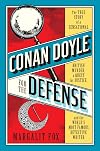
The dramatic title and the true crime billing do this book somewhat of an injustice. Margalit Fox isn't writing in the traditional true crime genre, not being particularly interested in solving the 1908 murder of the elderly Scottish spinster Marion Gilchrist. (Indeed, while a brutal crime, Gilchrist's murder is perhaps just as horrifying in its banality—were it not for Arthur Conan Doyle's later involvement, her name would long since be forgotten.)
Fox is far more interested in exploring show more what the subsequent trial of Gilchrist's alleged killer tells us about Edwardian Britain, which Fox presents as a transitional period between "the twilight of nineteenth-century gentility and the upheavals of twentieth-century modernity." Oscar Slater was convicted of Gilchrist's murder and sentenced to death (later commuted to life and hard labour) although it was patently obvious that Slater was innocent, the charges against him trumped up because he was a foreigner and a Jew. It would take 20 years and the intervention of Arthur Conan Doyle—best known as the creator of Sherlock Holmes—to secure Slater's release from prison.
Don't go into this expecting a page-turning procedural, but as an exploration of how prejudice leads to miscarriages of justice, Conan Doyle for the Defense is quite engaging. show less
Fox is far more interested in exploring show more what the subsequent trial of Gilchrist's alleged killer tells us about Edwardian Britain, which Fox presents as a transitional period between "the twilight of nineteenth-century gentility and the upheavals of twentieth-century modernity." Oscar Slater was convicted of Gilchrist's murder and sentenced to death (later commuted to life and hard labour) although it was patently obvious that Slater was innocent, the charges against him trumped up because he was a foreigner and a Jew. It would take 20 years and the intervention of Arthur Conan Doyle—best known as the creator of Sherlock Holmes—to secure Slater's release from prison.
Don't go into this expecting a page-turning procedural, but as an exploration of how prejudice leads to miscarriages of justice, Conan Doyle for the Defense is quite engaging. show less
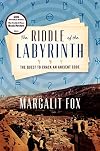
I, academically speaking, basically grew up on tales of Linear B. I mean I distinguished myself on the residency interview trail by being the only medical student to have spent several semesters TAing cryptography; meeting Simon Singh is one of the highlights of my life. And Linear B is basically the epitome of a code-breaking story: elegant statistics, linguistic analysis and finally, a successful decryption.
And at the same time, there is something so deep in the human experience about show more decrypting a language, rather than just a code. I am a deep believer in the idea that written language, more so even than DNA, is the heritable code of humanity, and Linear B is one of the very first written human languages. This is a beautiful portal to 3,500 years ago. It turns out that people 3,500 years ago were people. They recorded things, they thought, they counted, the preserved themselves for us -- how freaking amazing is that?
I've never read anything by Margalit Fox before, but she really does justice to these compelling ideas. She never walks away from the "riddle" part of Linear B -- she drops tantalizing hints. Nothing compels reading like hearing: "and this tablet would be the key to solving the puzzle, 20 years later." Her narrative really reads like a mystery.
Finally, Fox is the first author to give Alice Kober her full due in the decryption and Fox does not give short shrift to the gender issues that have prevented Kober from being fully recognized until now. Fox obviously feels deeply for Kober, who died prematurely, likely of cancer -- she tells the story as a tragedy, and certainly that adds another layer of this story about learning of the humanity of our ancestors. show less
And at the same time, there is something so deep in the human experience about show more decrypting a language, rather than just a code. I am a deep believer in the idea that written language, more so even than DNA, is the heritable code of humanity, and Linear B is one of the very first written human languages. This is a beautiful portal to 3,500 years ago. It turns out that people 3,500 years ago were people. They recorded things, they thought, they counted, the preserved themselves for us -- how freaking amazing is that?
I've never read anything by Margalit Fox before, but she really does justice to these compelling ideas. She never walks away from the "riddle" part of Linear B -- she drops tantalizing hints. Nothing compels reading like hearing: "and this tablet would be the key to solving the puzzle, 20 years later." Her narrative really reads like a mystery.
Finally, Fox is the first author to give Alice Kober her full due in the decryption and Fox does not give short shrift to the gender issues that have prevented Kober from being fully recognized until now. Fox obviously feels deeply for Kober, who died prematurely, likely of cancer -- she tells the story as a tragedy, and certainly that adds another layer of this story about learning of the humanity of our ancestors. show less
Lists
Awards


You May Also Like


Associated Authors
Statistics
- Works
- 6
- Members
- 1,813
- Popularity
- #14,179
- Rating
- 3.9
- Reviews
- 87
- ISBNs
- 46
- Languages
- 5