
Jacques Steinberg
Author of The Gatekeepers: Inside the Admissions Process of a Premier College
About the Author
Jacques Steinberg has been a staff reporter for The New York Times for more than ten years and currently is a national education correspondent. He lives in New York.
Works by Jacques Steinberg
You Are an Ironman: How Six Weekend Warriors Chased Their Dream of Finishing the World's Toughest Triathlon (2011) 68 copies, 3 reviews
Tagged
Common Knowledge
- Canonical name
- Steinberg, Jacques
- Birthdate
- 1966
- Gender
- male
- Education
- Dartmouth College
- Occupations
- journalist
- Organizations
- The New York Times
- Nationality
- USA
- Map Location
- USA
Members
Reviews
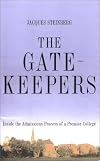
This is probably one of the most depressing books I've ever read. Although Steinberg seems to have no particular mission for this work, it is truly an expose in the arbitrary decisions that are made by college admissions committees.
Perhaps the saddest part is the coda, wherein two students who were accepted despite mediocre grades and SAT scores were unable to handle the academic work and had to take time off from college, whereas two students who were rejected despite great SAT scores show more soared at their back up schools. It really highlights how unfair the process has been to both sets of students.
I'll admit that I was emotionally invested from the beginning. Like Jordan in the book, I had dream grades, SAT scores, AP classes & the works. Like Jordan, everyone assured me that I would get into Brown...and I didn't. So, like Jordan, I want to a mid-tier liberal arts college that was anxious to snap up the Ivy League's remnants (although unlike Jordan, I was savvy enough to choose one that gave me a substantial merit scholarship). Unlike Jordan, I never got over Brown, and deeply resent the four years I spent with coursework that failed to challenge me, and classmates who were not my intellectual equals. (For others in the same boat, take heart: despite going to a mid-rung college, I managed to get into a top-tier medical school, and thereafter a top-tier residency. Work hard and make the best of it; the rest of the world is not as fickle as undergrad admissions.) show less
Perhaps the saddest part is the coda, wherein two students who were accepted despite mediocre grades and SAT scores were unable to handle the academic work and had to take time off from college, whereas two students who were rejected despite great SAT scores show more soared at their back up schools. It really highlights how unfair the process has been to both sets of students.
I'll admit that I was emotionally invested from the beginning. Like Jordan in the book, I had dream grades, SAT scores, AP classes & the works. Like Jordan, everyone assured me that I would get into Brown...and I didn't. So, like Jordan, I want to a mid-tier liberal arts college that was anxious to snap up the Ivy League's remnants (although unlike Jordan, I was savvy enough to choose one that gave me a substantial merit scholarship). Unlike Jordan, I never got over Brown, and deeply resent the four years I spent with coursework that failed to challenge me, and classmates who were not my intellectual equals. (For others in the same boat, take heart: despite going to a mid-rung college, I managed to get into a top-tier medical school, and thereafter a top-tier residency. Work hard and make the best of it; the rest of the world is not as fickle as undergrad admissions.) show less
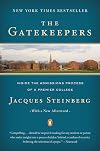
Unlike other college books that are intended to be "how to's", The Gatekeepers puts human faces on both the kids and the college admissions personnel who have vested interests in the process. Beginning in 1999, Jacques Steinberg of the New York Times, was given unfettered access to both a select group of high school seniors and the admissions department of Wesleyan University. It is through their eyes that he observes the selection process for that year.
What is most moving about this book is show more that way that Steinberg shows us how agonizing and personal the process is for both sides of this process. Steinberg is a terrific writer and gives us the back stories of each "character". In doing so, his book makes for captivating reading. We want to know more about these individuals.I found myself rooting for some of these kids as they begin to struggle for a place in the world. More than anything else, the book reinforces that this is a very human process, in which individuals on both sides of the "gate" bring his or her own hopes and dreams.
By shining a very personal light on the applications process, the book also underscores the more universal concerns of both colleges and and students including access to education and the issue of fairness in the process.
I don't know that I would have read the book if the issue wasn't something that was close to home right now, but it is a compelling read and there were many occasions when I had to control the lump in my throat.
The edition of the book I read contains an afterword that updates us on all the individuals who were profiled (both the admissions personnel and the students) and after we had come to know these people during this fixed time period of their lives, it was heartwarming to read about their place in the world today. show less
What is most moving about this book is show more that way that Steinberg shows us how agonizing and personal the process is for both sides of this process. Steinberg is a terrific writer and gives us the back stories of each "character". In doing so, his book makes for captivating reading. We want to know more about these individuals.I found myself rooting for some of these kids as they begin to struggle for a place in the world. More than anything else, the book reinforces that this is a very human process, in which individuals on both sides of the "gate" bring his or her own hopes and dreams.
By shining a very personal light on the applications process, the book also underscores the more universal concerns of both colleges and and students including access to education and the issue of fairness in the process.
I don't know that I would have read the book if the issue wasn't something that was close to home right now, but it is a compelling read and there were many occasions when I had to control the lump in my throat.
The edition of the book I read contains an afterword that updates us on all the individuals who were profiled (both the admissions personnel and the students) and after we had come to know these people during this fixed time period of their lives, it was heartwarming to read about their place in the world today. show less
This book was highly entertaining--I even stayed up late to finish--but at the end I felt a little manipulated and soiled. So much was sloppy. What happened to the applicant in an early chapter who could sing and who got put in the "defer" pile? How much did the author make up, after hasty shallow interviews, about people's decision-making and their feelings about the college search? Because the whole thing felt a little bit off, a little bit forced, a little bit false.
You Are an Ironman: How Six Weekend Warriors Chased Their Dream of Finishing the World's Toughest Triathlon by Jacques Steinberg
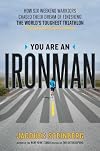
This is a non-fiction account of six "regular people" who decided to participate in an Ironman: that's 2.4 miles of swimming, followed by 112 miles of biking, and then a marathon, all to be completed within 17 hours. I wanted to read this book as soon as I saw it, because I find it encouraging to read accounts of fairly normal people who manage to do impressive things. For a while, though, I was putting it off because I own another book by this author that I still haven't gotten around to show more reading: The Gatekeepers, about the college admissions process. It seemed sort of silly to pick up another book when I still had the first one waiting, even though the topics are completely different.
Since I had a major endurance event coming up this past weekend, though--my first half marathon, which I finished in 2:30:24, yay!--I thought I could use some inspiration. What I was about to do was pretty insignificant compared to the craziness of the Ironman, and I found that reassuring.
The book itself was interesting and fast-paced, and pretty much what you'd expect from this sort of thing. I enjoyed reading the stories of these people, who they were, what had led them to the Ironman, how they faced the ups and downs of training, etc. There were some moments at first when I found it a bit difficult to keep track of who was who, but that didn't actually hinder the reading experience, and I eventually managed to connect the names with the stories: "oh, he's the teacher; he's the heart-attack guy; he's the double-lung-transplant recipient".
It was also interesting to find out about the more detailed workings of an Ironman race. For example, I was a bit surprised to hear that in addition to the overall 17-hour cut-off, there are multiple fairly aggressive cut-offs throughout that result in disqualification if they aren't met. Several of the competitors in the book had issues with the swim (goggle problems, or just being very very cold at the end of it) and almost missed the cut-off there, but ended up finishing the overall race with more than an hour to spare, and it made me wonder why the intermediate targets weren't a bit more relaxed. The biking has to be done with 6.5 hours to spare for the marathon, which seems like a very generous time, so that a lot of walking in the marathon isn't a problem--but just getting to the run start in time can be a big challenge. Anyway, it just made me wonder about how they decided these things.
In the end, I came away from this book feeling calmer about my own half-marathon, and also a bit inspired: I'd definitely like to try a triathlon at some point (though at a much shorter distance!), but the logistics of it mean that it won't be happening any time soon. Just getting a decent bike would be an issue when I move between three or four different locations in the course of every year, and finding opportunities to swim in open water is non-trivial... not to mention that I'm a terrible swimmer! Still, the seed has been sown....
I'd recommend this book to people who like reading about this sort of thing; you know who you are. If you don't generally read about or participate in endurance sports, I'd suggest starting with Born to Run instead, for a very inspirational and potentially life-changing read. show less
Since I had a major endurance event coming up this past weekend, though--my first half marathon, which I finished in 2:30:24, yay!--I thought I could use some inspiration. What I was about to do was pretty insignificant compared to the craziness of the Ironman, and I found that reassuring.
The book itself was interesting and fast-paced, and pretty much what you'd expect from this sort of thing. I enjoyed reading the stories of these people, who they were, what had led them to the Ironman, how they faced the ups and downs of training, etc. There were some moments at first when I found it a bit difficult to keep track of who was who, but that didn't actually hinder the reading experience, and I eventually managed to connect the names with the stories: "oh, he's the teacher; he's the heart-attack guy; he's the double-lung-transplant recipient".
It was also interesting to find out about the more detailed workings of an Ironman race. For example, I was a bit surprised to hear that in addition to the overall 17-hour cut-off, there are multiple fairly aggressive cut-offs throughout that result in disqualification if they aren't met. Several of the competitors in the book had issues with the swim (goggle problems, or just being very very cold at the end of it) and almost missed the cut-off there, but ended up finishing the overall race with more than an hour to spare, and it made me wonder why the intermediate targets weren't a bit more relaxed. The biking has to be done with 6.5 hours to spare for the marathon, which seems like a very generous time, so that a lot of walking in the marathon isn't a problem--but just getting to the run start in time can be a big challenge. Anyway, it just made me wonder about how they decided these things.
In the end, I came away from this book feeling calmer about my own half-marathon, and also a bit inspired: I'd definitely like to try a triathlon at some point (though at a much shorter distance!), but the logistics of it mean that it won't be happening any time soon. Just getting a decent bike would be an issue when I move between three or four different locations in the course of every year, and finding opportunities to swim in open water is non-trivial... not to mention that I'm a terrible swimmer! Still, the seed has been sown....
I'd recommend this book to people who like reading about this sort of thing; you know who you are. If you don't generally read about or participate in endurance sports, I'd suggest starting with Born to Run instead, for a very inspirational and potentially life-changing read. show less
Lists
Awards


You May Also Like


Statistics
- Works
- 3
- Members
- 467
- Popularity
- #52,671
- Rating
- 3.7
- Reviews
- 9
- ISBNs
- 17