

About the Author
Daniel Golden is Deputy Bureau Chief at the Boston bureau of The Wall Street Journal, where he has covered education since 1999.
Image credit: Courtesy of the Pulitzer Prizes.
Works by Daniel Golden
The Price of Admission: How America's Ruling Class Buys Its Way into Elite Colleges -- and Who Gets Left Outside the Gates (2006) 210 copies, 4 reviews
Spy Schools: How the CIA, FBI, and Foreign Intelligence Secretly Exploit America's Universities (2017) 107 copies, 12 reviews
Tagged
Common Knowledge
- Birthdate
- 1957
- Gender
- male
- Education
- Harvard College
- Occupations
- journalist
- Organizations
- The Boston Globe
The Wall Street Journal - Awards and honors
- Pulitzer Prize (Beat Reporting, 2004)
- Nationality
- USA
- Associated Place (for map)
- USA
Members
Reviews
The Price of Admission (Updated Edition): How America's Ruling Class Buys Its Way into Elite Colleges--and Who Gets Left Outside the Gates by Daniel Golden
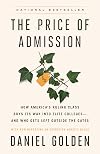
Daniel Golden’s The Price of Admission is a powerful, well-researched exposé that pulls back the curtain on how wealth, legacy, and privilege influence who gets into America’s most prestigious universities—and who doesn’t. This updated edition expands on his original findings with new cases and further analysis, making the book even more relevant in the wake of high-profile admissions scandals like Varsity Blues.
Golden, a Pulitzer Prize-winning journalist, documents in clear and show more often shocking detail how elite colleges reserve doors for the children of donors, celebrities, politicians, and alumni, creating a separate—and highly privileged—track for the wealthy. The book lays bare how these advantages are often unofficial but institutionalized, undermining the idea of meritocracy in higher education.
What makes the book especially compelling is its human element: Golden profiles both those who benefit from backdoor admissions and the talented, deserving students—often from underrepresented or low-income backgrounds—who are pushed aside. His reporting is both fact-driven and empathetic, illustrating how inequality is baked into the admissions system at the very institutions that claim to be engines of upward mobility.
Golden also explores:
• The role of legacy admissions and development (donor influence)
• How standardized testing and athletic recruitment are gamed
• The impact on racial, socioeconomic, and geographic diversity
• The silence and complicity of universities in maintaining this imbalance show less
Golden, a Pulitzer Prize-winning journalist, documents in clear and show more often shocking detail how elite colleges reserve doors for the children of donors, celebrities, politicians, and alumni, creating a separate—and highly privileged—track for the wealthy. The book lays bare how these advantages are often unofficial but institutionalized, undermining the idea of meritocracy in higher education.
What makes the book especially compelling is its human element: Golden profiles both those who benefit from backdoor admissions and the talented, deserving students—often from underrepresented or low-income backgrounds—who are pushed aside. His reporting is both fact-driven and empathetic, illustrating how inequality is baked into the admissions system at the very institutions that claim to be engines of upward mobility.
Golden also explores:
• The role of legacy admissions and development (donor influence)
• How standardized testing and athletic recruitment are gamed
• The impact on racial, socioeconomic, and geographic diversity
• The silence and complicity of universities in maintaining this imbalance show less
Spy Schools: How the CIA, FBI, and Foreign Intelligence Secretly Exploit America's Universities by Daniel Golden
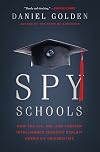
As a child of the 1960s and a college student in the 1980s, I'm used to a more open view of academia - and the distance between the intelligence community and universities. But the reality is that except for a relatively short time (that I happened to fall in), universities and their faculty worked pretty closely with those trying to gather intelligence or prevent other nations from doing that. Danial Golden's Spy Schools is a well-researched account of some specific instance of both sides: show more intelligence gathering, in our schools by other nations, and in foreign countries by our side.
Golden is a journalist, and the writing shows his journalistic roots. While it's a good book, it often comes across as a set of interconnected news articles rather than a single work, and this detracts from the work. On the other hand, it's an important subject, and Spy Schools is worth a look as we hear more and more about issues like US universities expanding into other countries. show less
Golden is a journalist, and the writing shows his journalistic roots. While it's a good book, it often comes across as a set of interconnected news articles rather than a single work, and this detracts from the work. On the other hand, it's an important subject, and Spy Schools is worth a look as we hear more and more about issues like US universities expanding into other countries. show less
 This review was written for LibraryThing Early Reviewers.
Spy Schools: How the CIA, FBI, and Foreign Intelligence Secretly Exploit America's Universities by Daniel Golden
I guess I am naive in my view of politics, but I thought spies went away with the Cold War. Not that much thought has gone to it, but I thought most governmental interaction and progress came from people sitting around a long table or negotiating peace after an "incident." This book has definitely opened my eyes. Not only do spies and human assets used for intelligence gathering still exist, they are being recruited, groomed or even installed as undergraduates, graduate students and even show more professors. And the motivations are so wide ranging! Always assumed it was a sense of patriotism or sense of adventure that would cause people to choose this lifestyle, and for some it is, but for others it's just money, or medical care for family members, or freedom from oppressive governments or, and this one surprised me most(although thinking of really bright and successful business people it shouldn't have) ego.
At any rate, definitely worth checking out. I'd loan you my copy, but I already have multiple requests to borrow it. show less
At any rate, definitely worth checking out. I'd loan you my copy, but I already have multiple requests to borrow it. show less
This review was written for LibraryThing Early Reviewers.The Price of Admission: How America's Ruling Class Buys Its Way into Elite Colleges -- and Who Gets Left Outside the Gates by Daniel Golden

It's a bit dry at times, but it really does expose just one more privilege that upper class, famous, well-connected white people have. My favorite part of the book is the chapter about Caltech, Cooper Union and Berea colleges. They are all 100% merit based and turn a totally blind eye to all other factors, and how they still get donations and they don't struggle financially whatsoever.
The book is good, it's actually made me feel almost guilty at being a legacy myself. Although I didn't go to show more an elite school by any stretch of the imagination, and I am more than certain I would have gotten into my alma mater regardless (I was in the top 15% of my HS class and got great scores on the SAT and ACT), but, still, I wonder about the blank on the application form where I wrote in my dad's name and class year.
Thinking about all of the privileges that the upper class is privy to makes my blood boil as well, especially the few times I made the mistake of reading the Weekend section of the Wall Street Journal. show less
The book is good, it's actually made me feel almost guilty at being a legacy myself. Although I didn't go to show more an elite school by any stretch of the imagination, and I am more than certain I would have gotten into my alma mater regardless (I was in the top 15% of my HS class and got great scores on the SAT and ACT), but, still, I wonder about the blank on the application form where I wrote in my dad's name and class year.
Thinking about all of the privileges that the upper class is privy to makes my blood boil as well, especially the few times I made the mistake of reading the Weekend section of the Wall Street Journal. show less
Lists
Awards

You May Also Like


Associated Authors
Statistics
- Works
- 3
- Members
- 376
- Popularity
- #64,174
- Rating
- 3.6
- Reviews
- 16
- ISBNs
- 14
