
William Deresiewicz
Author of A Jane Austen Education: How Six Novels Taught Me About Love, Friendship, and the Things That Really Matter
About the Author
William Deresiewicz was an associate professor of English at Yale University from 1998 to 2008. He is a contributing writer for The Nation and a contributing editor for The New Republic and The American Scholar. His work has also appeared in several publications including The New York Times, The show more Atlantic, and The Chronicle of Higher Education. He has won the Hiett Prize in the Humanities and the Balakian Citation for Excellence in Reviewing. He is the author of several books including A Jane Austen Education: How Six Novels Taught Me About Love, Friendship, and the Things That Really Matter and Excellent Sheep: The Miseducation of the American Elite and the Way to a Meaningful Life. (Bowker Author Biography) show less
Image credit: William Deresiewicz
Works by William Deresiewicz
A Jane Austen Education: How Six Novels Taught Me About Love, Friendship, and the Things That Really Matter (2011) 740 copies, 47 reviews
Excellent Sheep: The Miseducation of the American Elite and the Way to a Meaningful Life (2014) 580 copies, 7 reviews
The Death of the Artist: How Creators Are Struggling to Survive in the Age of Billionaires and Big Tech (2020) 88 copies, 2 reviews
Solitude and Leadership 1 copy
Associated Works
Tagged
Common Knowledge
- Birthdate
- 1964
- Gender
- male
- Education
- Columbia University (PhD)
- Occupations
- professor
book reviewer
literary critic - Organizations
- Yale University
- Awards and honors
- National Magazine Award. Nominee (2008)
National Magazine Award. Nominee (2009)
National Book Critics Circle. Nona Balakian Citation for Excellence in Reviewing. Nominee (2010) - Agent
- Elyse Cheney
- Short biography
- William Deresiewicz was an associate professor of English at Yale University until 2008 and is a widely published literary critic. His reviews and essays have appeared in The New York Times, The New Republic, The Nation, Bookforum, and The American Scholar. He was nominated for National Magazine Award in 2008 and 2009 and the National Book Critics Circle's Nona Balakian Citation for Excellence in Reviewing in 2010. [from A Jane Austen Education: How Six Novels Taught Me About Love, Friendship, and the Things That Really Matter (2011)]
- Nationality
- USA
- Birthplace
- Englewood, New Jersey, USA
- Places of residence
- New York, New York, USA
Brooklyn, New York, USA
Portland, Oregon, USA - Associated Place (for map)
- USA
Members
Discussions
A Jane Austen Education in Tattered but still lovely (March 2015)
Reviews

The End of Solitude by William Deresiewicz is an insightful collection of essays that insists on the reader engaging with the ideas.
While the essays run from general and more abstract to the very specific in place and time they all address how we are living and interacting in this moment in history. For readers who read for more than simply understanding the essay these also offer many avenues into considering how we view and participate in our society.
What I think I appreciate the most is show more that even when I might wonder whether I agree with parts of what he says, I never feel that I have to either accept every nuance or dismiss him entirely. Fortunately, I found far more common ground than disagreement, partly because he presents these ideas as open for discussion rather than him telling us what to believe.
Though we will all find different elements that will send us off on our own tangents, I will mention a couple that gave me the opportunity to think beyond, but in conversation with, the text. In one early essay he states the Sartre line (without attribution) hell is other people. This was in a discussion of how people today position themselves in the world. Which immediately brought Sartre's concept of The Look to mind, how we become objects rather than subjects once we realize we are being watched. In the age of social media, it has become less a case of "being watched" than of "presenting oneself to be watched." We become far less subject and even when thinking of ourselves, we are thinking of ourselves as objects. In fact, objects we create for the consumption of those we get to watch us. My tangent led me right back around to his essay, which makes the same basic point.
The other place that stands out for me is when he tosses off the last sentence in Orwell's Animal Farm. In addition to the specific historical moment Orwell was writing to, and the related political applications many later readers consider, I started thinking about the way the idea applies just as easily to smaller situations, from organizations to interpersonal relationships. Then, back to government, I thought about how it can be taken in so many ways. If the pigs are like people and the people pigs, then is change even worth the effort? I certainly think so. I go to the other extreme, however. I think it shows that trying to make change from within when the system is corrupt won't work, I think a major overhaul is necessary. In the US, trying to make incremental change not only hasn't worked, but has shifted the center so far to the right that what was once liberal is now extreme left. Which puts me way out to the left since I am far left of liberal. Any means necessary!
What I hope my rambling has shown is that this book helps a reader to think deeper about things that matter to them. My thoughts don't reflect Deresiewicz's views or political opinions, they are my part of my discussion with the book. Your discussion will be whatever his words spark in your mind. Read this book actively and dynamically and you will be rewarded. Even if you don't, you'll still enjoy the writing and his ideas, but that is just half of what he is offering you.
Reviewed from a copy made available by the publisher via NetGalley. show less
While the essays run from general and more abstract to the very specific in place and time they all address how we are living and interacting in this moment in history. For readers who read for more than simply understanding the essay these also offer many avenues into considering how we view and participate in our society.
What I think I appreciate the most is show more that even when I might wonder whether I agree with parts of what he says, I never feel that I have to either accept every nuance or dismiss him entirely. Fortunately, I found far more common ground than disagreement, partly because he presents these ideas as open for discussion rather than him telling us what to believe.
Though we will all find different elements that will send us off on our own tangents, I will mention a couple that gave me the opportunity to think beyond, but in conversation with, the text. In one early essay he states the Sartre line (without attribution) hell is other people. This was in a discussion of how people today position themselves in the world. Which immediately brought Sartre's concept of The Look to mind, how we become objects rather than subjects once we realize we are being watched. In the age of social media, it has become less a case of "being watched" than of "presenting oneself to be watched." We become far less subject and even when thinking of ourselves, we are thinking of ourselves as objects. In fact, objects we create for the consumption of those we get to watch us. My tangent led me right back around to his essay, which makes the same basic point.
The other place that stands out for me is when he tosses off the last sentence in Orwell's Animal Farm. In addition to the specific historical moment Orwell was writing to, and the related political applications many later readers consider, I started thinking about the way the idea applies just as easily to smaller situations, from organizations to interpersonal relationships. Then, back to government, I thought about how it can be taken in so many ways. If the pigs are like people and the people pigs, then is change even worth the effort? I certainly think so. I go to the other extreme, however. I think it shows that trying to make change from within when the system is corrupt won't work, I think a major overhaul is necessary. In the US, trying to make incremental change not only hasn't worked, but has shifted the center so far to the right that what was once liberal is now extreme left. Which puts me way out to the left since I am far left of liberal. Any means necessary!
What I hope my rambling has shown is that this book helps a reader to think deeper about things that matter to them. My thoughts don't reflect Deresiewicz's views or political opinions, they are my part of my discussion with the book. Your discussion will be whatever his words spark in your mind. Read this book actively and dynamically and you will be rewarded. Even if you don't, you'll still enjoy the writing and his ideas, but that is just half of what he is offering you.
Reviewed from a copy made available by the publisher via NetGalley. show less
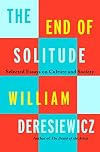
What is the Internet doing to us? What is college for? What are the myths and metaphors we live by? What is the purpose of art, and what can we learn from the past?
These are the questions that William Deresiewicz has been pursuing over the course of his award-winning career. In "The Disadvantages of an Elite Education," his viral piece from 2008, he sounded the alarm about the Ivy League admissions frenzy and the kind of student it produces. In "Solitude and Leadership," his 2009 address at show more West Point, he issued an early warning about the threats from social media to our inner lives. In "On Political Correctness," from 2017, he dissected the culture of ideological intolerance that has spread, since then, from campus to society at large.
The End of Solitude brings together these and more than forty other essays from such publications as Harper's and the Atlantic and introduces four that are published here for the first time. Drawing on the past, they ask how we got where we are. Scrutinizing the present, they seek to understand how we can live more mindfully, more meaningfully, more freely. Behind their questions lies a fundamental one: What does it mean to be an individual, and how can we sustain our individuality in an age of networks and groups? show less
These are the questions that William Deresiewicz has been pursuing over the course of his award-winning career. In "The Disadvantages of an Elite Education," his viral piece from 2008, he sounded the alarm about the Ivy League admissions frenzy and the kind of student it produces. In "Solitude and Leadership," his 2009 address at show more West Point, he issued an early warning about the threats from social media to our inner lives. In "On Political Correctness," from 2017, he dissected the culture of ideological intolerance that has spread, since then, from campus to society at large.
The End of Solitude brings together these and more than forty other essays from such publications as Harper's and the Atlantic and introduces four that are published here for the first time. Drawing on the past, they ask how we got where we are. Scrutinizing the present, they seek to understand how we can live more mindfully, more meaningfully, more freely. Behind their questions lies a fundamental one: What does it mean to be an individual, and how can we sustain our individuality in an age of networks and groups? show less
Excellent Sheep: The Miseducation of the American Elite and the Way to a Meaningful Life by William Deresiewicz
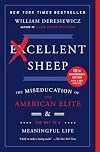
Read this book! It's only partly about education - it's about how our approach to the "entitled mediocrity" the education industry produces, to "success," to childrearing, and thus to leadership, business, government, and values have taken us astray. It's about the myriad ways performance has come to be only about quantity and accuracy, never quality, creativity, and breakthrough thinking. It's about the ways technocracy (the trade-school approach to education) has replaced critical show more thinking, creativity, and independent thought. It's about how the ruling classes have replaced service with self-service as their leadership model. It helps explain why we have a culture that produces amazing technology (and ever more ways to get healthy food to the wealthy), while the economy and political system race to the bottom.
It flags a little in the middle third, but keep at it - it's a tremendous book. show less
It flags a little in the middle third, but keep at it - it's a tremendous book. show less
Amazing collection of essays, from sociological to personal, and a lot more in between. Analyzing this generation's sense of loneliness because of social media and devices making us addicted: "If six hours of television a day creates the aptitude for boredom, the inability to sit still, a hundred instant messages a day creates the aptitude for loneliness, the inability to be by yourself."
Our loss of actual friendships, comparing them to the romantic and modern era of the definition of that show more word: "As for the moral content of classical friendship, its commitment to virtue and mutual improvement, that, too, has been lost... We seem to be terribly fragile today. A friend fulfills her duty, we suppose, by taking our side - validating our feelings, supporting our decisions, helping us feel good about ourselves."
The loss of value for culture and the humanities, everybody choosing a career so they can get a job as quickly as possible, damaging the next generations of students: "Science speaks to our relationship with the material world, which can be known and mastered. That is what technology is. Culture speaks to our relationship to one another, who cannot be mastered and cannot be known - not, at least, in any stable or final way. That is what society is."
He analyzes the advantages of higher public education, and the fact that it's disappearing: "Public higher education is a bulkwark against hereditary privilege and an engine of social mobility."
The extremes of political correctness: "The assumption, on elite college campuses, is that we are already in full possession of the moral truth. This is a religious attitude. It is certainly not a scholarly or intellectual attitude."
And a bunch of other stuff. The only two essays that didn't do anything for me were about performative dancing, which I could give a frog's fat ass about. But they were well written nontheless, as everything else. show less
Our loss of actual friendships, comparing them to the romantic and modern era of the definition of that show more word: "As for the moral content of classical friendship, its commitment to virtue and mutual improvement, that, too, has been lost... We seem to be terribly fragile today. A friend fulfills her duty, we suppose, by taking our side - validating our feelings, supporting our decisions, helping us feel good about ourselves."
The loss of value for culture and the humanities, everybody choosing a career so they can get a job as quickly as possible, damaging the next generations of students: "Science speaks to our relationship with the material world, which can be known and mastered. That is what technology is. Culture speaks to our relationship to one another, who cannot be mastered and cannot be known - not, at least, in any stable or final way. That is what society is."
He analyzes the advantages of higher public education, and the fact that it's disappearing: "Public higher education is a bulkwark against hereditary privilege and an engine of social mobility."
The extremes of political correctness: "The assumption, on elite college campuses, is that we are already in full possession of the moral truth. This is a religious attitude. It is certainly not a scholarly or intellectual attitude."
And a bunch of other stuff. The only two essays that didn't do anything for me were about performative dancing, which I could give a frog's fat ass about. But they were well written nontheless, as everything else. show less
Lists
Awards


You May Also Like


Associated Authors
Statistics
- Works
- 14
- Also by
- 3
- Members
- 1,528
- Popularity
- #16,835
- Rating
- 4.0
- Reviews
- 66
- ISBNs
- 32
- Languages
- 4
- Favorited
- 1

