
Samuel K. Cohn, Jr.
Author of The Black Death and the Transformation of the West
About the Author
Samuel K. Cohn, Jr., is Professor of Medieval History at the University of Glasgow. Among his books are The Cult of Remembrance and the Black Death and Women in the Streets: Essays on Sex and Power in the Italian Renaissance
Works by Samuel K. Cohn, Jr.
Lust for Liberty: The Politics of Social Revolt in Medieval Europe, 1200-1425 (2006) 49 copies, 1 review
The Black Death Transformed: Disease and Culture in Early Renaissance Europe (Arnold Publication) (2002) 33 copies
The Cult of Remembrance and the Black Death: Six Renaissance Cities in Central Italy (1992) 26 copies
Associated Works
Power, Violence and Mass Death in Pre-Modern and Modern Times (2004) — Contributor, some editions — 4 copies
Tagged
Common Knowledge
- Canonical name
- Cohn, Samuel K., Jr.
- Legal name
- Cohn, Samuel Kline, Jr.
- Birthdate
- 1949-04-13
- Gender
- male
- Education
- Harvard University (Ph.D|1978)
University of Wisconsin (MA|1972)
Union College (BA|1971) - Occupations
- professor
historian
medievalist - Organizations
- University of Glasgow
Brandeis University
Wesleyan University - Awards and honors
- Royal Society of Edinburgh (Fellow)
- Nationality
- USA
- Birthplace
- Birmingham, Alabama, USA
- Associated Place (for map)
- Alabama, USA
Members
Reviews
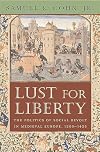
Cohn has looked through thousands of chronicles and court records to document thousands of medieval peasant revolts. He discusses the pros and cons of various ways of classifying these rebellions. He notes a major increase in number and scale of rebellions after the Black Death, and argues (a little weakly, I think) that what unites the post-plague rebellions is the peasants' desire for liberty - that is, there are certain rights (which Cohn never defines very well) that the peasants want. show more If the conclusion is a little weak, the rest of the book is quite strong, and really puts these rebellions into perspective. show less

A good, short review (~200 pages) of the Black Death of the late 1340's, written in 1985. Herlihy makes the point that the actual culprit microbe is unknown. It could be Y. pestis, or it could be cholera. Some people spoke of buboes, while others of lenticulae, or freckles.
He also hypothesizes that the plague mothered inventions, including the printing press, brought on a distrust of experts, doctors, and Jews, intensified the use of capital, the use of of Christian Saints' names, ended show more feudalism and ended medievalism. show less
He also hypothesizes that the plague mothered inventions, including the printing press, brought on a distrust of experts, doctors, and Jews, intensified the use of capital, the use of of Christian Saints' names, ended show more feudalism and ended medievalism. show less
Lists
Awards

You May Also Like


Statistics
- Works
- 16
- Also by
- 1
- Members
- 530
- Popularity
- #46,960
- Rating
- 3.6
- Reviews
- 2
- ISBNs
- 45
- Languages
- 1