
Frances Gies (1915–2013)
Author of Life in a Medieval Castle
About the Author
Series
Works by Frances Gies
Cathedral, Forge, and Waterwheel: Technology and Invention in the Middle Ages (1994) — Author — 1,115 copies, 13 reviews
Tagged
Common Knowledge
- Canonical name
- Gies, Frances
- Legal name
- Gies, Frances Elizabeth Carney
- Other names
- Carney Gies, Frances (Nom d'alliance)
ギース , フランシス
Gīsu, Furansisu
Carney, Frances Elizabeth (birth) - Birthdate
- 1915-06-10
- Date of death
- 2013-12-18
- Gender
- female
- Education
- University of Michigan (BA|1937|MA|1938)
- Occupations
- historian
scholar
author
teacher - Organizations
- High school English in Caro, Michigan (Teacher, 19 40 | 19 42)
- Relationships
- Gies, Joseph (husband)
Carney, Robert John (father) - Short biography
- Frances Gies, née Carney, was born in Ann Arbor, Michigan, a daughter of Prof. Robert John Carney and his wife Frances Gibson Carney. She graduated Phi Beta Kappa from the University of Michigan in 1937 with a B.A. degree, and in 1938 earned an M.A. in English and a teacher’s certificate. In 1940, after teaching high school English in Caro, Michigan, for two years, she went to New York City. There she married Joseph Gies, a writer who also hailed from Ann Arbor, with whom she had three children. Frances worked as a reader for the story department of 20th Century-Fox, while her husband was an editor at This Week Magazine, the Sunday magazine of the New York Herald Tribune. During World War II, he served in the U.S. Army in France and Germany. After the war, they began a new career as historians and writers collaborating on a dozen books about life in the Middle Ages, including Women in the Middle Ages, Life in a Medieval City, Life in a Medieval Castle, Life in a Medieval Village, and Cathedral, Forge, and Waterwheel. She also wrote individual works, including Joan of Arc: The Legend and the Reality, and The Knight in History.
- Nationality
- USA
- Birthplace
- Ann Arbor, Michigan, USA
- Places of residence
- Ann Arbor, Michigan, USA
New York, New York, USA
Hempstead, New York, USA
Wilton, Connecticut, USA
Barrington, Illinois, USA
Oakton, Virginia, USA - Place of death
- Auburn, Maine, USA
- Map Location
- USA
Members
Reviews
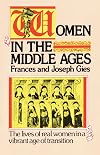
Yes, this is the type of nonfiction that I devour. Daily life history woven around stories of real life people. The details are grounding while the narratives are exciting. It's succinct yet brimming with vibrancy of these women's lives. I found myself caring about all of these women, and that interest made me want to keep reading. This book was hard to put down! What really sets this book apart is the attention to detail and that lens being turned on all walks of life in the medieval ages. show more Readers learn about nuns with Abbess Hildegarde of Bingen, royal women with Blanche of Castile and Eleanor de Montfort, peasant women and Agnes li Patiniere, and then upper-middle class women in Margherita Dating and Margaret Paston. It's a very comprehensive view of medieval life, and I loved it.
With such fascinating women, the book was constantly interesting. The only time it really faltered was when it was discussing peasant women, and that is because there is a dearth of information regarding medieval peasants, in general. Gies had to get her information from manorial court records and church books of major life events. Even so, it was interesting reading about the guildswomen and the struggles they went through. Their fight for workers' rights echoed today's struggles, and it makes them seem more human. These weren't just mindless people going about their work, but people with thoughts and feelings who demanded justice.
I will say that some sections were more focused on the historical figures than the life of all women of that status, which made sense. There were a lot of nuns, so Hildegard's life was mostly glossed over in favor of revealing convent life to readers. Meanwhile, the lives of Blanche of Castile and Eleanor de Montfort took center stage in their sections. As royal women, their lives were certainly more unique, but no less fascinating.
Honestly, the standout for me was Margherita Datini. She is sort of the Italian Margaret Paston, in that historians understand a lot about medieval life from her letters to her husband, which have survived centuries. Additionally, Margherita taught herself to read and write as an adult woman so that she could correspond with her husband in private while Margaret relied on others to write her letters for her, and I just think that is the sweetest and neatest detail.
There aren't any battles or treaties in this book. In fact, it's as different from Gies's The Knight in History as you can get. Nevertheless, this is a must read for anyone interested in medieval history or women's history. I happen to love both, so I was in heaven reading this book, and I would totally read it again. show less
With such fascinating women, the book was constantly interesting. The only time it really faltered was when it was discussing peasant women, and that is because there is a dearth of information regarding medieval peasants, in general. Gies had to get her information from manorial court records and church books of major life events. Even so, it was interesting reading about the guildswomen and the struggles they went through. Their fight for workers' rights echoed today's struggles, and it makes them seem more human. These weren't just mindless people going about their work, but people with thoughts and feelings who demanded justice.
I will say that some sections were more focused on the historical figures than the life of all women of that status, which made sense. There were a lot of nuns, so Hildegard's life was mostly glossed over in favor of revealing convent life to readers. Meanwhile, the lives of Blanche of Castile and Eleanor de Montfort took center stage in their sections. As royal women, their lives were certainly more unique, but no less fascinating.
Honestly, the standout for me was Margherita Datini. She is sort of the Italian Margaret Paston, in that historians understand a lot about medieval life from her letters to her husband, which have survived centuries. Additionally, Margherita taught herself to read and write as an adult woman so that she could correspond with her husband in private while Margaret relied on others to write her letters for her, and I just think that is the sweetest and neatest detail.
There aren't any battles or treaties in this book. In fact, it's as different from Gies's The Knight in History as you can get. Nevertheless, this is a must read for anyone interested in medieval history or women's history. I happen to love both, so I was in heaven reading this book, and I would totally read it again. show less
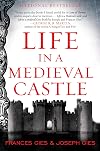
Quite enjoyed this accessible history. I liked how it explained broadly but also had the thread of one castle that we followed through every chapter.

First published in 1991, this one held up as well as can be expected. In the 90s, the myth of the "Dark Ages" hadn't quite been debunked. Historians, like the Gies, set out to undo years of revisionism. It's no easy task to condense such a massive breadth of information and research into a general overview.
What early historians vainly sought in the "Dark Ages" was an era on par with their own Industrial Revolution. Changing perspective, it's instead an era of social change, economical show more reorganization and unique adaptation. For example, Europe couldn't claim the invention of the gristmill or castle, but both transformed into a symbol of feudalism. On the other hand, watermills, fairs, and family holdings proved population growth. Europeans did not invent dikes, but the Netherlands were completely transformed because of them. Lowly wooden churches became massive, stone cathedrals. Over time, guilds, trade agreements, and the emergence of the "urban" center resulted in a Commercial Revolution in the High Middle Ages.
I expected factual errors, of course, but my issue is that, structurally, it's meanders, and they needed to double down on their premise. The authors, in their enthusiasm for Greek and Roman technology make medieval advancements an afterthought. They're certainly in agreement that China, India, and the Arabian Peninsula were far more developed, that's indisputable. But they kept back-tracking on their own argument. Europe receiving "hand-me-downs," isn't any different than describing it as the "Dark Ages." However the chapters on the Mid- to Late Middle Ages do hold up decently.
I understand it is a classic in its own right, and I appreciate the authors' attempt in making medieval history accessible. You could definitely use this work as a reference for fictional writing, but not as an academic resource. show less
What early historians vainly sought in the "Dark Ages" was an era on par with their own Industrial Revolution. Changing perspective, it's instead an era of social change, economical show more reorganization and unique adaptation. For example, Europe couldn't claim the invention of the gristmill or castle, but both transformed into a symbol of feudalism. On the other hand, watermills, fairs, and family holdings proved population growth. Europeans did not invent dikes, but the Netherlands were completely transformed because of them. Lowly wooden churches became massive, stone cathedrals. Over time, guilds, trade agreements, and the emergence of the "urban" center resulted in a Commercial Revolution in the High Middle Ages.
I expected factual errors, of course, but my issue is that, structurally, it's meanders, and they needed to double down on their premise. The authors, in their enthusiasm for Greek and Roman technology make medieval advancements an afterthought. They're certainly in agreement that China, India, and the Arabian Peninsula were far more developed, that's indisputable. But they kept back-tracking on their own argument. Europe receiving "hand-me-downs," isn't any different than describing it as the "Dark Ages." However the chapters on the Mid- to Late Middle Ages do hold up decently.
I understand it is a classic in its own right, and I appreciate the authors' attempt in making medieval history accessible. You could definitely use this work as a reference for fictional writing, but not as an academic resource. show less
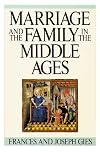
I have read just about every book by the Gies couple, and I have to say that this book, Marriage and the Family in the Middle Ages is by far their most academic book. What I mean by this is that there is a lot of meta discussion about what is a family, what makes up a family, what makes a marriage, etc. Oftentimes, this book feels philosophical in its delivery. Ultimately, once I got through the first couple of chapters, I really settled into its cadence and really fell in love with it.
The show more first couple chapters focus on what 'measurements' (for lack of a better term) Gies will use to identify and characterize families. After that, there is, what felt like, a hefty chapter on the late Roman Empire and the families during this time period. Again, it felt like Gies was trying to characterize what the medieval family was not. Honestly, I didn't find this particularly helpful and almost distracting. In picking up the book, I'm aware that I'm going to learn about medieval societies. I don't particularly care about what preceded them. I don't think it did much in setting up the backdrop for the medieval era, personally.
Once I got past this section, the book started getting more interesting. What impressed me was the breadth this book covered. Most of Gies' books cover English, French, and sometimes German medieval societies. Here, there were distinctions made for Spanish and Italian communities in various eras. There was a sense of hegemony between all of the eras but also a sense of uniqueness that made me want to pay attention so that I didn't miss anything.
When possible, Gies pulled from particular families to contextualize her facts, which I appreciated. The Pastons made an appearance, as they do in every book, but there were also Carolingian and Florentine families that managed to stick out of the crowd. When the spotlight was on these families, the facts really made sense. I finally understood how siblings were affected by primogeniture and how dowries evolved.
Yes, this book details the beginning of primogeniture, the entail, and the jointure in England. If you've read any historical book or watched a period drama set before 1910, then you know what these things are. I couldn't help getting excited during these sections, because it gave context to all of the Victorian and Regency novels I love to read. Honestly, this was probably the most exciting part for me, and I would venture to say it's the most recognizable or familiar part to readers, as well.
Overall, I highly recommend this book. It's more difficult to read through than Gies' other books, but it's well worth it. You must read it if you hope to get a complete picture of medieval history. I can definitely see myself referencing it in future, though it might be ambitious to say I would re-read the whole thing again. show less
The show more first couple chapters focus on what 'measurements' (for lack of a better term) Gies will use to identify and characterize families. After that, there is, what felt like, a hefty chapter on the late Roman Empire and the families during this time period. Again, it felt like Gies was trying to characterize what the medieval family was not. Honestly, I didn't find this particularly helpful and almost distracting. In picking up the book, I'm aware that I'm going to learn about medieval societies. I don't particularly care about what preceded them. I don't think it did much in setting up the backdrop for the medieval era, personally.
Once I got past this section, the book started getting more interesting. What impressed me was the breadth this book covered. Most of Gies' books cover English, French, and sometimes German medieval societies. Here, there were distinctions made for Spanish and Italian communities in various eras. There was a sense of hegemony between all of the eras but also a sense of uniqueness that made me want to pay attention so that I didn't miss anything.
When possible, Gies pulled from particular families to contextualize her facts, which I appreciated. The Pastons made an appearance, as they do in every book, but there were also Carolingian and Florentine families that managed to stick out of the crowd. When the spotlight was on these families, the facts really made sense. I finally understood how siblings were affected by primogeniture and how dowries evolved.
Yes, this book details the beginning of primogeniture, the entail, and the jointure in England. If you've read any historical book or watched a period drama set before 1910, then you know what these things are. I couldn't help getting excited during these sections, because it gave context to all of the Victorian and Regency novels I love to read. Honestly, this was probably the most exciting part for me, and I would venture to say it's the most recognizable or familiar part to readers, as well.
Overall, I highly recommend this book. It's more difficult to read through than Gies' other books, but it's well worth it. You must read it if you hope to get a complete picture of medieval history. I can definitely see myself referencing it in future, though it might be ambitious to say I would re-read the whole thing again. show less
Lists
Awards

You May Also Like


Associated Authors
Statistics
- Works
- 13
- Members
- 8,231
- Popularity
- #2,935
- Rating
- 3.7
- Reviews
- 67
- ISBNs
- 82
- Languages
- 3
- Favorited
- 1
