

Georges Duby (1919–1996)
Author of A History of Private Life, Volume 1: From Pagan Rome to Byzantium
About the Author
Georges Duby was a member of the Academie Francaise, and taught for many years at the College de France
Image credit: Georges Duby à Paris le 22 juin 1987, France
Series
Works by Georges Duby
A History of Private Life, Volume 1: From Pagan Rome to Byzantium (1985) — General Editor; Editor — 1,785 copies, 15 reviews
A History of Private Life, Volume 2: Revelations of the Medieval World (1985) — Editor; Editor; General Editor — 1,713 copies, 6 reviews
A History of Private Life, Volume 4: From the Fires of Revolution to the Great War (1987) 745 copies, 3 reviews
The Knight, the Lady and the Priest: The Making of Modern Marriage in Medieval France (1981) 489 copies, 4 reviews
A History of Women in the West, Volume I: From Ancient Goddesses to Christian Saints (1992) — Editor; Series Editor — 433 copies, 3 reviews
The Early Growth of the European Economy: Warriors and Peasants from the Seventh to the Twelfth Century (1973) 296 copies, 3 reviews
A History of Women in the West, Volume IV: Emerging Feminism from Revolution to World War (1993) — Editor; Series Editor — 247 copies, 2 reviews
A History of Women in the West, Volume V: Toward a Cultural Identity in the Twentieth Century (1992) — Series Editor — 232 copies, 2 reviews
The Legend of Bouvines: War, Religion, and Culture in the Middle Ages (1973) — Author — 159 copies, 4 reviews
Women of the Twelfth Century, Volume 3: Eve and the Church (Women of 12th Century) (1996) 63 copies, 1 review
Geschiedenis van het persoonlijk leven. Dl. 6: De gemeenschap, de staat en het gezin, 1600-1800 (1986) 24 copies
Sculpture: From Antiquity to the Present (Jumbo Series , 4 vols, burgundy cloth bound) (1996) 23 copies
Geschiedenis van het persoonlijk leven. Dl. 9: De twintigste eeuw: de verovering van de persoonlijke ruimte (1987) 15 copies
Sculpture : the Great Art of the Middle Ages from the Fifth Century to the Fifteenth Century (1990) 13 copies
Historia de las mujeres (edición estuche): La Antigüedad | La Edad Media | Del Renacimiento a la Edad Moderna | El siglo XIX | El siglo XX (2018) 10 copies
Histoire de la France urbaine, tome 1 : La Ville antique (1980) — Director; Contributor; Editor — 9 copies
Ville de L'Ge Industriel. Le Cycle Haussmannien(la) (English and French Edition) (1983) — Director — 8 copies, 1 review
Histoire de la France urbaine : La ville aujourd'hui - Mutations urbaines, décentralisation et crise du citadin (1985) — Director — 8 copies
Histoire de la France rurale. Tome 1/4 : La formation des campagnes françaises des origines au XIVe siècle (1975) — Editor; Director — 5 copies
Historia de las mujeres, Tome 8 : El siglo XIX. Cuerpo, trabajo y modernidad (Spanish Edition) (1994) 4 copies
Historia de las Mujeres 7: El Siglo XIX: La ruptura política y los nuevos modelos sociales (1994) 3 copies
Historia de la civilización francesa 3 copies
Storia della Francia Vol I 2 copies
Evul mediu masculin 2 copies
Histoire de France Hachette 2 copies
Terra e nobiltà nel Medioevo 2 copies
Discours de reception de Georges Duby a l'Academie francaise et reponse d'Alain Peyrefitte: Suivis des allocutions prono (1988) 2 copies
Storia della Francia. 1: Nascita di una nazione, dinastie e rivoluzioni dalle origini al 1852 (2001) 2 copies
Historia e nova historia 1 copy
Katedraalide aeg 1 copy
HISTORIA E FRANCËS 1 copy
Anul 1000 1 copy
Idade Média na França 1 copy
La Vita Privata Il Novecento 1 copy
Guerreiros e camponeses os primórdios do crescimento económico europeu do séc. VII ao séc. XII 1 copy
L`art et La Ville 1 copy
A Europa na Idade Média 1 copy
La storia e altre passioni 1 copy
Le cattedrali di Biancaneve. I tesori meravigliosi delle chiese medievali. Ediz. illustrata (2015) 1 copy
Guerreiros e camponeses os primórdios do crescimento económico europeu do séc. VII ao séc. XII 1 copy
Czasy katedr 1 copy
Associated Works
A History of Private Life, Volume 3: Passions of the Renaissance (1985) — General editor — 866 copies, 2 reviews
A History of Private Life, Volume 5: Riddles of Identity in Modern Times (1987) — General editor — 602 copies
A History of Women in the West, Volume II: Silences of the Middle Ages (1992) — Series Editor — 394 copies, 3 reviews
A History of Women in the West, Volume III: Renaissance and the Enlightenment Paradoxes (1991) — Series Editor — 335 copies, 2 reviews
The Development of the Family and Marriage in Europe (Past and Present Publications) (1983) — Preface, some editions — 94 copies
The transformation of the year one thousand : the village of Lournand from antiquity to feudalism (1989) — Preface, some editions — 41 copies
Robert of Arbrissel: Sex, Sin, And Salvation in the Middle Ages (1985) — Preface, some editions — 30 copies
Histoire de la vie privée. Tome V. De la Première Guerre mondiale à nos jours (1999) — Director — 12 copies
The Palace of the Popes (Special Issue of Beaux Arts Magazine) (2006) — Preface, some editions — 10 copies
Histoire de la France rurale, tome 4 : La Fin de la France paysanne - De 1914 à nos jours (1975) — Director — 9 copies
La Edad Media la expansión de Oriente y el nacimiento de la civilización occidental (1980) — Contributor — 6 copies
Histoire de la France rurale. Tome 2/4 : L'âge classique des paysans de 1340 à 1789 (1975) — Director — 5 copies
Histoire de la France rurale, tome 3 : Apogée et crise de la civilisation paysanne (1975) — Director — 3 copies
L'aube du Moyen Age: la vie religieuse des laïcs dans l'Europe carolingienne, 750-900 (1991) — Afterword, some editions — 2 copies
La croissance agricole du Haut Moyen âge. Chronologie, modalités, géographie (1990) — Contributor — 1 copy
Tagged
Common Knowledge
- Canonical name
- Duby, Georges
- Legal name
- Duby, Georges Michel Claude
- Birthdate
- 1919-10-07
- Date of death
- 1996-12-03
- Gender
- male
- Education
- University of Lyon (BA|1942)
The Sorbonne, Paris (Ph.D|1952) - Occupations
- historian
medievalist
Chair of the History of Medieval Society, Collège de France, Paris(1970-93)
professor - Organizations
- Collège de France
École des Annales
University of Aix-en-Provence - Awards and honors
- Académie française (1987)
Ordre national du Mérite (Grand Officier, 1995)
Palmes Académiques (Commandeur)
Ordre des Arts et des Lettres (Commandeur)
Ordre du Mérite Agricole (Chevalier)
American Philosophical Society (International Member, 1977) (show all 22)
Medieval Academy of America (Corresponding Fellow, 1970)
British Academy (Corresponding Fellow, 1970)
Royal Historical Society
Grand Prix Gobert (1977)
Prix des Ambassadeurs (1973)
Institute de France (1974)
Légion d'Honneur (Commandeur)
Lauréat du concours général
Conseil superieur de la langue francaise (1989)
Académie des Inscriptions et Belles-Lettres (1974)
Academie Royale de Langue et de littérature Françaises (1986)
Acadèmia de Bones Lletres de Barcelona
Hungarian Academy of Sciences
Lincean Academy
Order of Orange-Nassau (Officer)
Gobert Prize (1954, 1963) - Relationships
- Perrin, Charles-Edmond (Directeur de thèse)
Le Roy Ladurie, Emmanuel
Goubert, Pierre
Le Goff, Jacques
Le Blevec, Daniel (Doctorant)
Duby, Andrée (Epouse) (show all 7)
Braudel, Fernand - Short biography
- Prof. Duby was born into a Provençal family in Paris. He became one of the 20th century’s most prolific and influential historians of the Middle Ages. He held the chair in medieval history at the Collège de France from 1970 to 1993, and was elected to the French Academy. He is considered a member of the Annales school of history, which emphasized the importance of the daily lives of people in historical inquiry.
- Cause of death
- cancer
- Nationality
- France
- Birthplace
- Paris, Île-de-France, France
- Places of residence
- Paris, France
Le Tholonet, Bouches-du-Rhône, Provence-Alpes-Côte d'Azur, France - Place of death
- Le Tholonet, Bouches-du-Rhône, Provence-Alpes-Côte d'Azur, France
- Burial location
- Cimetière communal, Le Tholonet, Bouches-du Rhône, Provence-Alpes-Côte d'Azur, France
- Associated Place (for map)
- Provence-Alpes-Côte d'Azur, France
Members
Reviews
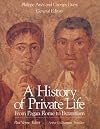
I found the chapters on Rome enlightening and fascinating. This book brings home the brutality of daily Roman life, especially with its descriptions of abandoned infants left to die by the side of the road. It is important when looking at the merits of the Greek and Roman cultures whose heritage we have inherited to take off our rose-colored glasses and see the flip-side as well. This book reveals a lot of history overlooked elsewhere.
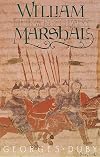
Who is ever alone at the beginning of the thirteenth century but the mad, the possessed--marginal figures who are hunted down? An orderly world requires that each man remains swathed in a fabric of solidarities, of friendships, in a corps.
A few detractors of this text cite that Duby appears more concerned with "the age of chivalry" rather than the specifics of Marshall's life. I suppose you can't please everyone. This is an astonishing portrait of the intensely intricate and complex set of show more social relations in the late 1200/early 1300s. As society became more complex, a fixed monetary system apparently flourished and social mobility became an increasing reality. This wasn't an option for most folks in this milieu. Thus the code of knightly honor and courtly love. Each is actually a sober response to set of unfair circumstances. William Marshall embodied this code to a fanatical end, despite ongoing menace he maintained an unyielding loyalty and was actually rewarded. Yes, he was an exceptional warrior. He was also rather lucky, not least by a healthy constitution which allowed him to outlive most of his royals, especially those sporting crowns.
This dovetailed nicely with the Plantagenets book I'm reading, and it wasn't a bad way to spend a frozen Sunday. Despite being 153 pages, the text does require concentration as well as an awareness of the various royal houses of the time. show less
A few detractors of this text cite that Duby appears more concerned with "the age of chivalry" rather than the specifics of Marshall's life. I suppose you can't please everyone. This is an astonishing portrait of the intensely intricate and complex set of show more social relations in the late 1200/early 1300s. As society became more complex, a fixed monetary system apparently flourished and social mobility became an increasing reality. This wasn't an option for most folks in this milieu. Thus the code of knightly honor and courtly love. Each is actually a sober response to set of unfair circumstances. William Marshall embodied this code to a fanatical end, despite ongoing menace he maintained an unyielding loyalty and was actually rewarded. Yes, he was an exceptional warrior. He was also rather lucky, not least by a healthy constitution which allowed him to outlive most of his royals, especially those sporting crowns.
This dovetailed nicely with the Plantagenets book I'm reading, and it wasn't a bad way to spend a frozen Sunday. Despite being 153 pages, the text does require concentration as well as an awareness of the various royal houses of the time. show less

Sometimes the source material is so strong and moving, that only a bit of editing is sufficient to present a great narrative and highlight the miscarriage of justice. Joan of Arc was clearly framed in a show trial process on extremely weak charges and after the church trial burned without a necessary civil judgment. The local bishop as well as the university of Paris were willing tools in the hands of the oppressors. The obsession of the judges and prosecutors with Joan's wearing of male show more dress is puzzling. Now, the cross-dresser is an official saint of the Catholic church!
"La passion de Jeanne d'Arc" (1928) is a moving must watch with outstanding b/w cinematography. I also like Milla Jovovich/Luc Besson's 1999 version "The Messenger". show less
"La passion de Jeanne d'Arc" (1928) is a moving must watch with outstanding b/w cinematography. I also like Milla Jovovich/Luc Besson's 1999 version "The Messenger". show less
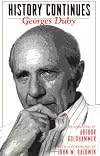
Georges Duby provided a charming yet scholarly account of his career as a historian. He generously shared important and insightful details of his professional life while remaining totally reticent on any personal points that were not germane to his being an academic.
Duby outlined his career in a chronological order, with occasional glimpses ahead or back to draw a parallel or make a point. He began with what he apparently considered his first major work, a detailed study of documents of the show more monastery at Cluny. He told how he came to choose the subject, how he narrowed and refined his scope, how he explored the information to elicit various kinds of questions to be answered. This narration of his approach to the material became a framework on which he draped his views on how one should approach history. Ever modest, he never blatantly extolled the virtues of his work; nor was he particularly critical of the shortcomings of others. He merely expressed what he did, what he liked about his work, where he felt he did an adequate job and what parts he would do differently if he were pursuing that study at the time of writing this memoir.
In chapters titled, “TreatmentâÂ?, âÂÂReadingâÂ?, and âÂÂConstructionâÂ? he elaborated on how he mined the Cluny documents for information. He showed that the historian is part detective, part logician and all-around student of human nature. He illustrated how the historian must often use educated inference to extract those elusive fragments of data lying beneath the surface of the obvious. The data must be connected, related and matched, then examined for what it does and does not reveal. From there, extrapolations may be proffered while being cautious to remain close to the sources. Duby did not suggest speculation for its own sake served any good purpose.
After the rather close examination of his earlier work, Duby moved on to touch on the high points of his career; he consistently presented the events of his life not so much as to commend what he accomplished rather to use the experience as a jumping off point to discuss some topic. For example, he referred to his work in television primarily to discuss his thoughts on how the medium can be used to further the study and pursuit of history. Similarly he mentioned his travels; but what he was most excited about was how he felt travel could expose the student of history to opportunities to expand his or her grasp of times past.
As he approached the end of his memoir and concentrated on recent or current projects, he revealed what he saw as his faults or omissions. He believed that women had been short-changed in their treatment by historians; he felt he should have observed that earlier and would strive to redeem this oversight in future work. Duby implied his current students would not be allowed to neglect disenfranchised groups or write the same type of Euro-centric history that he and his generation had done.
Duby avoided bragging and ostentation about his personal achievements yet his pride and loyalty to his countryâÂÂs band of scholars and their reputations was unequivocal. He admired the work of his earlier countrymen and yearned for French historians to retain or regain their place among the premiere practitioners in the field. He had no illusions about that place being taken for granted; he appeared to feel some vicarious embarrassment on behalf of some of his colleagues who behaved as if French historians held the top honors exclusively. One has the feeling that Duby was being very generous in refusing to abandon his countrymen, since there seemed to be no reason why he personally should not be held in the highest regard.
In this same gracious tone, he concluded by passing the torch to a younger generation of scholars. After surveying topics still to be explored and mistakes to be rectified, Duby remarked that it was more likely that they, not he, would be the ones to continue the challenge. Duby left one hoping that future historians can equal him, not only in scholarship, but in style and grace as well.
Alex Hunnicutt show less
Duby outlined his career in a chronological order, with occasional glimpses ahead or back to draw a parallel or make a point. He began with what he apparently considered his first major work, a detailed study of documents of the show more monastery at Cluny. He told how he came to choose the subject, how he narrowed and refined his scope, how he explored the information to elicit various kinds of questions to be answered. This narration of his approach to the material became a framework on which he draped his views on how one should approach history. Ever modest, he never blatantly extolled the virtues of his work; nor was he particularly critical of the shortcomings of others. He merely expressed what he did, what he liked about his work, where he felt he did an adequate job and what parts he would do differently if he were pursuing that study at the time of writing this memoir.
In chapters titled, “TreatmentâÂ?, âÂÂReadingâÂ?, and âÂÂConstructionâÂ? he elaborated on how he mined the Cluny documents for information. He showed that the historian is part detective, part logician and all-around student of human nature. He illustrated how the historian must often use educated inference to extract those elusive fragments of data lying beneath the surface of the obvious. The data must be connected, related and matched, then examined for what it does and does not reveal. From there, extrapolations may be proffered while being cautious to remain close to the sources. Duby did not suggest speculation for its own sake served any good purpose.
After the rather close examination of his earlier work, Duby moved on to touch on the high points of his career; he consistently presented the events of his life not so much as to commend what he accomplished rather to use the experience as a jumping off point to discuss some topic. For example, he referred to his work in television primarily to discuss his thoughts on how the medium can be used to further the study and pursuit of history. Similarly he mentioned his travels; but what he was most excited about was how he felt travel could expose the student of history to opportunities to expand his or her grasp of times past.
As he approached the end of his memoir and concentrated on recent or current projects, he revealed what he saw as his faults or omissions. He believed that women had been short-changed in their treatment by historians; he felt he should have observed that earlier and would strive to redeem this oversight in future work. Duby implied his current students would not be allowed to neglect disenfranchised groups or write the same type of Euro-centric history that he and his generation had done.
Duby avoided bragging and ostentation about his personal achievements yet his pride and loyalty to his countryâÂÂs band of scholars and their reputations was unequivocal. He admired the work of his earlier countrymen and yearned for French historians to retain or regain their place among the premiere practitioners in the field. He had no illusions about that place being taken for granted; he appeared to feel some vicarious embarrassment on behalf of some of his colleagues who behaved as if French historians held the top honors exclusively. One has the feeling that Duby was being very generous in refusing to abandon his countrymen, since there seemed to be no reason why he personally should not be held in the highest regard.
In this same gracious tone, he concluded by passing the torch to a younger generation of scholars. After surveying topics still to be explored and mistakes to be rectified, Duby remarked that it was more likely that they, not he, would be the ones to continue the challenge. Duby left one hoping that future historians can equal him, not only in scholarship, but in style and grace as well.
Alex Hunnicutt show less
Lists
Edad Media (1)
Maestros (1)
Awards


You May Also Like


Associated Authors
Statistics
- Works
- 236
- Also by
- 25
- Members
- 11,516
- Popularity
- #2,040
- Rating
- 3.9
- Reviews
- 91
- ISBNs
- 686
- Languages
- 21
- Favorited
- 8
