
Eileen Power (1889–1940)
Author of Medieval People
About the Author
Image credit: Professor Eileen Power (1899-1940)
Series
Works by Eileen Power
The Goodman of Paris (Le Menagier de Paris): A Treatise on Moral and Domestic Economy by A Citizen of Paris, c.1393 (2006) — Translator — 157 copies, 4 reviews
Gente de la Edad Media 2 copies
Vita nel Medioevo 1 copy
Associated Works
Tagged
Common Knowledge
- Legal name
- Power, Eileen Edna LePoer
- Birthdate
- 1889-01-09
- Date of death
- 1940-08-08
- Gender
- female
- Education
- Sorbonne University
University of Cambridge (Girton College) - Occupations
- historian
economic historian
medievalist
educator - Organizations
- Academic Freedom Committee (co-founder)
Union of Democratic Control
London School of Economics - Awards and honors
- Gilchrist Research Fellowship (1910)
- Relationships
- Power, Rhoda (sister)
Postan, Michael (husband) - Short biography
- Eileen Power was born in Altrincham (now part of Greater Manchester), England, the eldest daughter of a stockbroker and his wife. Her sister Rhoda Power became a children's writer and broadcaster. When Eileen was three, her father was arrested for fraud and went bankrupt, and the family moved to Bournemouth to live with her grandfather. Her mother died of tuberculosis when Power was 14, and she moved to Oxford with her two sisters to live with their aunt. Power was educated at Oxford High School for Girls, and won a scholarship to Cambridge University. After graduating, she spent 1910-1911 studying at the École des Chartres in Paris and began a Shaw fellowship, specializing in women's history, at the London School of Economics (LSE) in 1911. She became noted for her academic work in medieval history in the years after World War I, and her books on women's history were considered pioneering in their day. She was Director of Studies in History at her alma mater, Girton College, Cambridge in 1913–1921, Lecturer in Political Science at the LSE in 1921–1924, and Reader at the University of London in 1924–31. She wrote books and produced BBC radio broadcasts on history for children with her sister Rhoda Power. In 1931, Prof. Power was appointed to the Chair of Economic History at the LSE, Her most famous book, Medieval People, was published in 1924. In 1927, Prof. Power co-founded the Economic History Review. In 1933, she joined the head of LSE, William Beveridge, in creating the Academic Freedom Committee, an organization that helped academics fleeing from Nazi Germany. In 1937, she married her colleague and former student, historian Michael (M.M.) Postan, Professor of Economic History at Cambridge University. Her last book, The Wool Trade in English Medieval History (1941), was published posthumously, following her untimely death at age 51 in 1940.
- Nationality
- UK (birth)
- Birthplace
- Altrincham, Cheshire, England, UK
- Places of residence
- Altrincham, Cheshire, England, UK
Paris, France
London, England, UK
Bournemouth, Dorset, England, UK - Place of death
- Middlesex Hospital, London, England, UK
- Associated Place (for map)
- England, UK
Members
Reviews
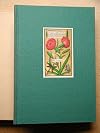
My interest in this book was primarily for the insight I might gain into daily life and household management in 14th century France. Thus I was not particularly interested in the long moralistic screeds, characteristic of many books of this era, that their authors seem to feel obliged to include. If I am to read the book again, I'll likely skip those parts. They offer little that I haven't already seen many times before.
The translator too has chosen to cut some of these out, as well as a show more chapter on falconry, which I'd not have minded reading.
Once I got through all that, I was not disappointed with the meat of the book. I learned about keeping household pests at bay, got tips for picking good produce and choosing household staff, and the crowning glory of the treatise is the collection of recipes and cooking tips.
Some of the recipes are probably clear enough to follow today. The biggest surprise was how common almond milk appeared in them - I had assumed this was a modern invention. My other main takeaway was that the "sewe", or water in which meat or vegetables have been cooked, should never be wasted.
As for the "Goodman" himself, I'm not fully decided. Wikipedia suggests he's fictional [citation needed], but the translator's notes treated him as real. The fact he refers to personal experiences that seem to "check out" historically would tend to support that notion.
The story behind this book is that the elderly Goodman wrote it as a guide for his young (16 year old I think?) wife, who asked him on their marriage night not to be cross with her if she made mistakes, but to let her know if she was doing anything wrong. His response was to begin writing out everything he could think of that might be useful to her not only in this marriage, but her next - since it was inevitable he would pass before her. I believe he intended to write even more, but for whatever reason we only have this incomplete version.
The premise will no doubt give many modern readers "the ick" (as they are wont to say these days), although apparently the Goodman was doing his young wife a favour by marrying her (she was an orphan or something, I forget). He seemed fairly understanding and supportive toward her, despite all his moralistic tales of obedient wives. As a woman, on the other hand, I don't see how I could have ever succeeded in the same situation. I like control over my own body, I'm not into old men (or most men at all), and I'm not sure I would be able to keep up with social expectations, nor would I be interested in prioritising a man's interests over my own. Even in this "best case" scenario, I think I'd be miserable! show less
The translator too has chosen to cut some of these out, as well as a show more chapter on falconry, which I'd not have minded reading.
Once I got through all that, I was not disappointed with the meat of the book. I learned about keeping household pests at bay, got tips for picking good produce and choosing household staff, and the crowning glory of the treatise is the collection of recipes and cooking tips.
Some of the recipes are probably clear enough to follow today. The biggest surprise was how common almond milk appeared in them - I had assumed this was a modern invention. My other main takeaway was that the "sewe", or water in which meat or vegetables have been cooked, should never be wasted.
As for the "Goodman" himself, I'm not fully decided. Wikipedia suggests he's fictional [citation needed], but the translator's notes treated him as real. The fact he refers to personal experiences that seem to "check out" historically would tend to support that notion.
The story behind this book is that the elderly Goodman wrote it as a guide for his young (16 year old I think?) wife, who asked him on their marriage night not to be cross with her if she made mistakes, but to let her know if she was doing anything wrong. His response was to begin writing out everything he could think of that might be useful to her not only in this marriage, but her next - since it was inevitable he would pass before her. I believe he intended to write even more, but for whatever reason we only have this incomplete version.
The premise will no doubt give many modern readers "the ick" (as they are wont to say these days), although apparently the Goodman was doing his young wife a favour by marrying her (she was an orphan or something, I forget). He seemed fairly understanding and supportive toward her, despite all his moralistic tales of obedient wives. As a woman, on the other hand, I don't see how I could have ever succeeded in the same situation. I like control over my own body, I'm not into old men (or most men at all), and I'm not sure I would be able to keep up with social expectations, nor would I be interested in prioritising a man's interests over my own. Even in this "best case" scenario, I think I'd be miserable! show less

Largely a dry, textbook-like social history, the author strives greatly and often succeeds in bringing to life working, medieval (West) Europeans (English, really) by detailing the lives and routines of specific individuals drawn from Geoffrey Chaucer's The Canterbury Tales, etc. These are a peasant, weaver (business with many looms, really), abbess, etc.

These are genuinely endearing stories of individuals of medieval Europe who were not royalty or aristocracy. Power gleans details of the lives of these people from numerous sources, and, at least in the case of the peasant, Bodo, uses these sources to create a composite character, due to the lack of sufficient historical information about any one historical person.
Powers describes the lives, homes, general living conditions and practices, the towns and villages, and the working and leasure show more time of her subjects. With varying degrees of success, Powers is able to bring three-dimensional figures to life, and at the end of this work, one feels like one is leaving new friends.
Highly recommended to anyone who enjoys cultural history or simply wants a better idea of medieval life.
Os. show less
Powers describes the lives, homes, general living conditions and practices, the towns and villages, and the working and leasure show more time of her subjects. With varying degrees of success, Powers is able to bring three-dimensional figures to life, and at the end of this work, one feels like one is leaving new friends.
Highly recommended to anyone who enjoys cultural history or simply wants a better idea of medieval life.
Os. show less
Taking a completely novel approach for it's time, this book profiled the everyday lives of normal people in the middle ages. It does include Marco Polo, but he's the only person of any note in the book. I was bowled when I read it 40 years ago to learn that history could be about something other than the lives of kings and who was fighting who. I think even today's readers, for whom this approach to history is normal, would find these portraits interesting.
Lists
You May Also Like


Associated Authors
Statistics
- Works
- 16
- Also by
- 2
- Members
- 2,282
- Popularity
- #11,245
- Rating
- 3.6
- Reviews
- 15
- ISBNs
- 97
- Languages
- 7
- Favorited
- 1
