
Jerry Root
Author of The Sacrament of Evangelism
About the Author
Jerry Root is Assistant Professor of Evangelism and Associate Director of the Institute for Strategic Evangelism at Wheaton College, and visiting Professor at Biola University and Talbot Graduate School of Theology, La Mirada, California.
Works by Jerry Root
The Soul of C. S. Lewis: A Meditative Journey through Twenty-Six of His Best-Loved Writings (2010) 58 copies, 4 reviews
C. S. Lewis and a Problem of Evil: An Investigation of a Pervasive Theme (Princeton Theological Monograph) (2009) 24 copies
The Neglected C.S. Lewis: Exploring the Riches of His Most Overlooked Books (2020) — Author — 23 copies
Associated Works
The Misquotable C.S. Lewis: What He Didn't Say, What He Actually Said, and Why It Matters (2018) — Foreword — 8 copies
Tagged
Common Knowledge
Members
Reviews
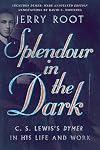
Summary: An annotated edition of C. S. Lewis’s Dymer and three presentations with responses given as part of the Hansen Lectureship series at Wheaton’s Marion E. Wade Center.
Many of us, including me, who are fans of the works of C. S. Lewis have never read Dymer, his book-length narrative poem. There may be several reasons for this. It is poetry, less popular with many than prose. It does not receive the circulation that many of Lewis’s works have. Also, it was written before Lewis’s show more return to faith. Also, as a work of his youth, most critics thought it wasn’t very good.
This work, a product of the Ken and Jean Hansen Lectureship may help make up for this on several fronts. The lectureship, taking place at Wheaton’s Marion E. Wade Center, which houses works and papers of Lewis, Tolkien, Sayers, and others in their literary circle, features scholarship on the Wade Center authors. Jerry Root is a Lewis scholar and author of several books. The book which includes the lectures by Root followed by responses, also opens with the poem, lightly annotated by David C. Downing, another Lewis scholar. Downing’s annotations are sparing, illuminating rather than distracting from the text. I recommend reading the poem first, followed by the lectures.
The poem was written in rhyme royal, a rhyme scheme used by Chaucer. The scheme is ABABBCC and the lines are in iambic pentameter. It consists of nine cantos, elaborating a narrative that had come to Lewis in his teens–and though written in his twenties, has that feel. A young man in the Perfect City is sitting in class, bored with lectures, gazes out the window, hears a lark, kills his lecturer and flees the city for nature. He wanders naked through a forest, finds a mansion-castle, wanders its halls, makes love with a woman he encounters, not knowing her name or remembering his face but knows that he loves her. After going out in the morning, he is barred from returning by an old crone who drives him away. In his wanderings he survives a narrow scrape with death, encounters a man suffering wounds from a revolt in the city that followed on Dymer’s actions led by a rebel named Bran. Perhaps as penance, he stays with the man until he dies, hears a lark, then a shot and comes upon a magician’s house and learned that the magician shot the lark. Drugged, Dymer dreams of his lover but recognizes these are dreams, awakens, cries for water, jumps through the window and escapes, being mortally wounded in the process. An angel comes, saying there is one more thing he must do–engage the beast laying waste to the land that is the offspring of his night in the castle. He does, he dies and the land springs to life.
Sounds like male adolescent imaginings to me! Yet there is also a journey into increasing insight, the shattering of illusions and a development from self-absorption to self-sacrifice. Sometimes the language seems stilted by the rhyme scheme, and at other times it soars.
All these things are acknowledged in the lectures and responses. Root argues that the big idea in this poem is that “reality is iconoclastic”–that it shatters idols, and that this poem was the place where Lewis first addressed this idea that recurs in Chronicles, Surprised by Joy, and other works all the way to Till We Have Faces. In his first lecture, Root retells the story (far better than my summary above) and traces the development of the idea. The second lecture focuses on the influences upon Lewis in writing the poem, mainly in mythology and the “Christina dream” of Samuel Butler’s The Way of All Flesh. The third lecture then shows how the idea that reality is iconoclastic and many of the images of the early poem recur in deeper and richer form in Lewis’s later works. If Dymer is not a great work, it is certainly one helpful in understanding Lewis’s journey back to faith and the artistic imagination, informed and deepened by his faith, evident in his later works.
One example of how Root connects the imagery of Dymer to later works is noting the use of the mirror. In Dymer, the character sees a naked, wild-eyed man in the mansion-castle, only to realize it is himself he is seeing in a mirror. This occurs in The Great Divorce in the bus ride from hell to heaven, with Eustace Scrubb in The Voyage of the Dawn Treader, and with Queen Orual in Till We Have Faces. Root notes that these iconoclastic experiences not only reveal the really real, but expose the true self and fuel a quest for meaning, one that would eventually lead Lewis back into the arms of Christian faith.
Both Jeffrey Davis and Mark Lewis remind us of the flaws of the work, and Davis thinks that Lewis’s failure as a poet may have been a good thing, given the later impact of his prose work. Miho Nonaka, though slightly more appreciative of Root’s efforts also finds that Lewis may have been too close to Dymer, despite Lewis’s disavowals, and also critiques the intrusion of the narrator’s voice in his children’s fiction.
Even given these criticisms, really more of Lewis, Jerry Root (and the Hansen Lectureship) have done us a great favor in bringing Dymer to our attention. As I mentioned, I knew of the work but had relegated it to Lewis’s atheist years, seeing it, as it were, the work of a different author. Root helps show us the continuity rather than discontinuity in this work, the idea that reality is iconoclastic that will recur in later works, and the reflection on Lewis’s own development. Root (and Downing) have done a great service to every Inkling in acquainting us with this work!
____________________________
Disclosure of Material Connection: I received a complimentary review copy of this book from the publisher in exchange for an honest review. The opinions I have expressed are my own. show less
Many of us, including me, who are fans of the works of C. S. Lewis have never read Dymer, his book-length narrative poem. There may be several reasons for this. It is poetry, less popular with many than prose. It does not receive the circulation that many of Lewis’s works have. Also, it was written before Lewis’s show more return to faith. Also, as a work of his youth, most critics thought it wasn’t very good.
This work, a product of the Ken and Jean Hansen Lectureship may help make up for this on several fronts. The lectureship, taking place at Wheaton’s Marion E. Wade Center, which houses works and papers of Lewis, Tolkien, Sayers, and others in their literary circle, features scholarship on the Wade Center authors. Jerry Root is a Lewis scholar and author of several books. The book which includes the lectures by Root followed by responses, also opens with the poem, lightly annotated by David C. Downing, another Lewis scholar. Downing’s annotations are sparing, illuminating rather than distracting from the text. I recommend reading the poem first, followed by the lectures.
The poem was written in rhyme royal, a rhyme scheme used by Chaucer. The scheme is ABABBCC and the lines are in iambic pentameter. It consists of nine cantos, elaborating a narrative that had come to Lewis in his teens–and though written in his twenties, has that feel. A young man in the Perfect City is sitting in class, bored with lectures, gazes out the window, hears a lark, kills his lecturer and flees the city for nature. He wanders naked through a forest, finds a mansion-castle, wanders its halls, makes love with a woman he encounters, not knowing her name or remembering his face but knows that he loves her. After going out in the morning, he is barred from returning by an old crone who drives him away. In his wanderings he survives a narrow scrape with death, encounters a man suffering wounds from a revolt in the city that followed on Dymer’s actions led by a rebel named Bran. Perhaps as penance, he stays with the man until he dies, hears a lark, then a shot and comes upon a magician’s house and learned that the magician shot the lark. Drugged, Dymer dreams of his lover but recognizes these are dreams, awakens, cries for water, jumps through the window and escapes, being mortally wounded in the process. An angel comes, saying there is one more thing he must do–engage the beast laying waste to the land that is the offspring of his night in the castle. He does, he dies and the land springs to life.
Sounds like male adolescent imaginings to me! Yet there is also a journey into increasing insight, the shattering of illusions and a development from self-absorption to self-sacrifice. Sometimes the language seems stilted by the rhyme scheme, and at other times it soars.
All these things are acknowledged in the lectures and responses. Root argues that the big idea in this poem is that “reality is iconoclastic”–that it shatters idols, and that this poem was the place where Lewis first addressed this idea that recurs in Chronicles, Surprised by Joy, and other works all the way to Till We Have Faces. In his first lecture, Root retells the story (far better than my summary above) and traces the development of the idea. The second lecture focuses on the influences upon Lewis in writing the poem, mainly in mythology and the “Christina dream” of Samuel Butler’s The Way of All Flesh. The third lecture then shows how the idea that reality is iconoclastic and many of the images of the early poem recur in deeper and richer form in Lewis’s later works. If Dymer is not a great work, it is certainly one helpful in understanding Lewis’s journey back to faith and the artistic imagination, informed and deepened by his faith, evident in his later works.
One example of how Root connects the imagery of Dymer to later works is noting the use of the mirror. In Dymer, the character sees a naked, wild-eyed man in the mansion-castle, only to realize it is himself he is seeing in a mirror. This occurs in The Great Divorce in the bus ride from hell to heaven, with Eustace Scrubb in The Voyage of the Dawn Treader, and with Queen Orual in Till We Have Faces. Root notes that these iconoclastic experiences not only reveal the really real, but expose the true self and fuel a quest for meaning, one that would eventually lead Lewis back into the arms of Christian faith.
Both Jeffrey Davis and Mark Lewis remind us of the flaws of the work, and Davis thinks that Lewis’s failure as a poet may have been a good thing, given the later impact of his prose work. Miho Nonaka, though slightly more appreciative of Root’s efforts also finds that Lewis may have been too close to Dymer, despite Lewis’s disavowals, and also critiques the intrusion of the narrator’s voice in his children’s fiction.
Even given these criticisms, really more of Lewis, Jerry Root (and the Hansen Lectureship) have done us a great favor in bringing Dymer to our attention. As I mentioned, I knew of the work but had relegated it to Lewis’s atheist years, seeing it, as it were, the work of a different author. Root helps show us the continuity rather than discontinuity in this work, the idea that reality is iconoclastic that will recur in later works, and the reflection on Lewis’s own development. Root (and Downing) have done a great service to every Inkling in acquainting us with this work!
____________________________
Disclosure of Material Connection: I received a complimentary review copy of this book from the publisher in exchange for an honest review. The opinions I have expressed are my own. show less
The Soul of C. S. Lewis: A Meditative Journey through Twenty-Six of His Best-Loved Writings by Jerry Root
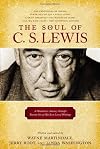
C. S. Lewis’ writing prowess is legendary—especially in Christian circles. His economy of language and knack for choosing the perfect metaphor to make any point made him one of my favourite authors from a young age. Now, after having read most of Lewis’ works at least twice, I discovered this book of meditations.
The Soul of C. S. Lewis is a collection of 240 one page meditations on Lewis’ works. His popular books are all here, but so are some of his lesser known works and essays. show more Lewis’ style lends itself perfectly to this sort of treatment. You can choose a line from almost any page of his written output to reflect upon.
The book has three writers/editors on the front cover, and ten author biographies in the front of the book. While the overall quality of the meditations is high, the diversity of authors shows through at times. Some meditations reach to the depths of Christian experience while others seem to pick the low-hanging fruit. Some meditations are tersely constructed mini-essays, while others are two stream-of-consciousness paragraphs strung together.
This is a substantial devotional for any believer, but almost required reading for a C. S. Lewis fan.
Disclaimer: A review copy of this book was provided for free by Tyndale Publishing House. show less
The Soul of C. S. Lewis is a collection of 240 one page meditations on Lewis’ works. His popular books are all here, but so are some of his lesser known works and essays. show more Lewis’ style lends itself perfectly to this sort of treatment. You can choose a line from almost any page of his written output to reflect upon.
The book has three writers/editors on the front cover, and ten author biographies in the front of the book. While the overall quality of the meditations is high, the diversity of authors shows through at times. Some meditations reach to the depths of Christian experience while others seem to pick the low-hanging fruit. Some meditations are tersely constructed mini-essays, while others are two stream-of-consciousness paragraphs strung together.
This is a substantial devotional for any believer, but almost required reading for a C. S. Lewis fan.
Disclaimer: A review copy of this book was provided for free by Tyndale Publishing House. show less
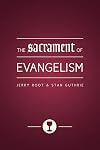
Root and Guthrie offer a way of looking at life that makes us open to God's presence everywhere. They then apply to evangelism. The result is an entirely different way of thinking about evangelism; it is not about us doing anything to God, but about allowing God to do things to us. It is about going out into the world, finding that God is already there, and engaging with His ongoing activity. Through four sections, each with five chapters, Root and Guthrie explain this world view, explore show more it's implications, and offer some practical advice on actually doing it.
Suffused with wisdom and humility, The Sacrament of Evangelism was an exhilarating read. It is evident that each section of this book seeks to open the readers eyes to God's presence and strengthen in the readers heart a desire for God. This combination perfectly illustrates what Root and Guthrie are after in using the word 'Sacrament.' Their view of evangelism, and life lived in the presence of God, is something you must think about and will benefit from adopting.
The best section of this book was the third: "The Gospel and Humanity." In it Root and Guthrie take a look at how our desires connect to God, the three desires we all share, and what place our other longings have. These become points at which we can help people see their own desire and need for God. In contrast, I was disappointed in the fourth section of this book. The practical advice seemed to lack the verve and quality of the rest of the book. Perhaps they missed something or, perhaps, this is because it is very difficult to give practical advice in this sort of thing, other than "go out and do it!" which Root and Guthrie begin saying at the beginning of the book and never stop. Either way, The Sacrament of Evangelism is an excellent book.
Conclusion: 4.5 of 5 Stars. Recommended. You should read this. Seriously. We all come to the discipline of evangelism with baggage; usually massive amounts of it. This book will not only help you sort through that, but give you something so much better in return. show less
Suffused with wisdom and humility, The Sacrament of Evangelism was an exhilarating read. It is evident that each section of this book seeks to open the readers eyes to God's presence and strengthen in the readers heart a desire for God. This combination perfectly illustrates what Root and Guthrie are after in using the word 'Sacrament.' Their view of evangelism, and life lived in the presence of God, is something you must think about and will benefit from adopting.
The best section of this book was the third: "The Gospel and Humanity." In it Root and Guthrie take a look at how our desires connect to God, the three desires we all share, and what place our other longings have. These become points at which we can help people see their own desire and need for God. In contrast, I was disappointed in the fourth section of this book. The practical advice seemed to lack the verve and quality of the rest of the book. Perhaps they missed something or, perhaps, this is because it is very difficult to give practical advice in this sort of thing, other than "go out and do it!" which Root and Guthrie begin saying at the beginning of the book and never stop. Either way, The Sacrament of Evangelism is an excellent book.
Conclusion: 4.5 of 5 Stars. Recommended. You should read this. Seriously. We all come to the discipline of evangelism with baggage; usually massive amounts of it. This book will not only help you sort through that, but give you something so much better in return. show less
The Soul of C. S. Lewis: A Meditative Journey through Twenty-Six of His Best-Loved Writings by Jerry Root
I appreciated the readability of each one-page reflection. I could read one or twenty in a sitting. I am also glad it included a wide variety of Lewis's works - it exposed me to some themes and genres he wrote on that I want to explore more. The final chapter, based around The Last Battle, got a little weird and touched on issues that need far more than one page to address with any nuance. But the Bible references after each reflection offer an opportunity to read more in context, if someone show more chooses to. show less
You May Also Like


Associated Authors
Statistics
- Works
- 14
- Also by
- 1
- Members
- 224
- Popularity
- #100,171
- Rating
- 4.2
- Reviews
- 7
- ISBNs
- 20
- Languages
- 1