
Sneed B. Collard III
Author of Animal Dads
About the Author
Image credit: Photo by Amy Ratzlaf
Works by Sneed B. Collard III
California Fire 153 copies
Pocket Babies And Other Amazing Marsupials (Junior Library Guild Selection) (2007) 74 copies, 1 review
Our Natural Homes: Exploring Terrestrial Biomes of North and South America (Our Perfect Planet) (1996) 38 copies
Animal Dazzlers: The Role of Brilliant Colors in Nature (First Books: Earth Science) (1998) 31 copies
Acting for Nature: What Young People Around the World Are Doing to Protect the Environment (1999) 29 copies, 1 review
Beaver and Otter Get Along...Sort of: A Story of Grit and Patience between Neighbors (2021) 23 copies, 1 review
Monteverde: Science and Scientists in a Costa Rican Cloud Forest (Venture - Science) (1997) 15 copies
Birding for Boomers: And Everyone Else Brave Enough to Embrace the World’s Most Rewarding and Frustrating Activity (2024) 8 copies
Tagged
Common Knowledge
- Canonical name
- Collard III, Sneed B.
- Legal name
- Collard III, Sneed Body
- Birthdate
- 1959-11-07
- Gender
- male
- Education
- University of California, Berkeley (BA), University of California, Santa Barbara (MS)
- Occupations
- writer
speaker - Awards and honors
- Washington PostChildren's Book Guild Children's Nonfiction Writer of the Year Award (2006)
AAAS/Subaru/Science Books & Films Prize for Excellence in Science Books (2006) - Short biography
- Born in Phoenix, Arizona, Sneed grew up in Santa Barbara, CA. After his parents divorced, he split his time between Santa Barbara, Woods Hole, Massachusetts, and Pensacola, Florida, where his biologist father lived. His love of travel and biology have guided his career. He graduated with Honors in marine biology from Berkeley, but immediately launched his writing career. His first thirty or so books all focused on science and the environment, and he traveled widely to research them. More recently, he's focused his efforts on fiction. His newest, Double Eagle, is a thriller inspired by a summer he spent with his father on Dauphin Island, Alabama.
Sneed Collard's first book,Sea Snakes, was published in 1993, and since then he has published over forty-five books for children, including the award winning A Platypus, Probably; Beaks!; Animal Dads;One Night in the Coral Sea; and The Prairie Builders Reconstructing America's Lost Grasslands, winner of 2006 AAAS/Subaru/Science Books & Films Prize for Excellence in Science Books. - Nationality
- USA
- Birthplace
- Phoenix, Arizona, USA
- Places of residence
- Montana, USA
- Associated Place (for map)
- USA
Members
Reviews
Beaver and Otter Get Along...Sort of: A Story of Grit and Patience Between Neighbors by Sneed Collard

This is a lovely and informative children’s book with beautiful, expressive, and scientifically accurate watercolour illustrations by the Rhode-Island-School-of-Design-trained artist Meg Sodano. The bulk of the book is dedicated to the story of Beaver’s arrival in a valley with a quick-moving stream. Over a period of a few weeks, he builds a dam, transforming the stream into a pond. He also constructs a lodge. In no time, a female beaver comes along . . . as does an otter . . . and then show more more otters. Other animals are also attracted to this hospitable new place.
In general, the other animals don’t much bother Beaver. But the otters? They’re a source of considerable irritation and extra work for him. The otters cavort on his lodge during the winter, sliding down its slopes on their backs. They also repeatedly create gaping holes in the dam, dropping the water level of the pond, forcing Beaver to come out multiple times to perform repair work. When the otters get too close to Beaver and his mate’s kits, he hisses and charges. The otters get the message—sort of, and Beaver learns to tolerate the otters—sort of.
The story of Beaver and the otters illustrates what is meant by a “commensal relationship” in nature, where animals, though occasionally annoyed by each other, ultimately get along, live and let live.
In the last few pages of the book, Collard describes some of the unique features of beavers and river otters. While I knew both could close their ears and nostrils while under water, I wasn’t aware that they have clear eyelids that serve as goggles when the animals are immersed. Collard also discusses the tails, feet, and teeth of these creatures, and the reasons for some of their behaviours. There’s even an explanation as to why otters create gaps in beaver dams. Ecological terms are also mentioned and explained: biodiversity, keystone species, and indicator species.
The book includes read-aloud guidance for parents and teachers, activities, websites, and a list of four other books for children to read.
Beaver and Otter Get Along . . . Sort Of is a gem. show less
In general, the other animals don’t much bother Beaver. But the otters? They’re a source of considerable irritation and extra work for him. The otters cavort on his lodge during the winter, sliding down its slopes on their backs. They also repeatedly create gaping holes in the dam, dropping the water level of the pond, forcing Beaver to come out multiple times to perform repair work. When the otters get too close to Beaver and his mate’s kits, he hisses and charges. The otters get the message—sort of, and Beaver learns to tolerate the otters—sort of.
The story of Beaver and the otters illustrates what is meant by a “commensal relationship” in nature, where animals, though occasionally annoyed by each other, ultimately get along, live and let live.
In the last few pages of the book, Collard describes some of the unique features of beavers and river otters. While I knew both could close their ears and nostrils while under water, I wasn’t aware that they have clear eyelids that serve as goggles when the animals are immersed. Collard also discusses the tails, feet, and teeth of these creatures, and the reasons for some of their behaviours. There’s even an explanation as to why otters create gaps in beaver dams. Ecological terms are also mentioned and explained: biodiversity, keystone species, and indicator species.
The book includes read-aloud guidance for parents and teachers, activities, websites, and a list of four other books for children to read.
Beaver and Otter Get Along . . . Sort Of is a gem. show less
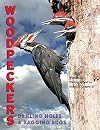
I like woodpeckers. I get downy woodpeckers at my birdfeeders sometimes, which is always fun. Also, did you know that woodpeckers and toucans belong to the same order, Piciformes? I learned that whilst cataloging! Enough dithering, on to the book.
In a casual, friendly manner, Collard talks about woodpeckers; the different types, their behaviors, effect on the environment, and current state of vulnerability. He makes mention of pop culture, like saying that you can't mistake a woodpecker's show more drumming unless you're absorbed in Shark Week or Minecraft. He talks about his own experiences with these fascinating birds - he and his son took the photos in the US and abroad. The photographs are occasionally blurry, but generally of a high, professional standard. The layout of the book is a large, picture book style with a lot of white space around the edge of the light font.
Back matter includes an author's note, encouraging readers to revisit the author's earlier book, a glossary, index, and photo bloopers.
The author is correct that there aren't many books for kids on woodpeckers and certainly nothing approaching narrative nonfiction, not since Hoose's Race to save the Lord God Bird in 2014. This accessible title combines humor and the author's friendly, down-to-earth text to create an informative, attractive volume on birds that should be better-known.
Verdict: A strong addition to middle grade nonfiction on animals; recommended.
ISBN: 9780984446094; Published May 2018 by Bucking Horse Books; Borrowed from another library in my consortium show less
In a casual, friendly manner, Collard talks about woodpeckers; the different types, their behaviors, effect on the environment, and current state of vulnerability. He makes mention of pop culture, like saying that you can't mistake a woodpecker's show more drumming unless you're absorbed in Shark Week or Minecraft. He talks about his own experiences with these fascinating birds - he and his son took the photos in the US and abroad. The photographs are occasionally blurry, but generally of a high, professional standard. The layout of the book is a large, picture book style with a lot of white space around the edge of the light font.
Back matter includes an author's note, encouraging readers to revisit the author's earlier book, a glossary, index, and photo bloopers.
The author is correct that there aren't many books for kids on woodpeckers and certainly nothing approaching narrative nonfiction, not since Hoose's Race to save the Lord God Bird in 2014. This accessible title combines humor and the author's friendly, down-to-earth text to create an informative, attractive volume on birds that should be better-known.
Verdict: A strong addition to middle grade nonfiction on animals; recommended.
ISBN: 9780984446094; Published May 2018 by Bucking Horse Books; Borrowed from another library in my consortium show less
I had seen Warblers & Woodpeckers listed on a bookseller website so it was on my radar when I happened across a copy. I have a thing for bird books, and over time started reading Big Year type bird stories which was why I picked this one up. But this wasn't what I expected at all. Generally Big Year birders tend to be fairly hardcore, and almost all having had considerable time under the belt spent birding; years and years and years often being the case. It is sort of like how you wouldn't show more expect to find a non-swimmer attempting to swim the English Channel, or a non-sailor attempting a solo around the world voyage.
Long story short, this is more about neophyte birders than it is a Big Year. It is also a father and son story. Collard doesn’t claim any different, but it is more a small big year than your typical Big Year tale.
It is lightweight and a good enough read. I was hooked in the first few pages, the first chapter which was hysterical, but then things dropped off and remained fairly staid throughout. But it is also a short book so it isn't too much work.
As I briefly touched on above, neither father nor son are significantly into birding in any way; however, that does change. The journey itself is a result of having watched the movie The Big Year starring Jack Black, Owen Wilson and Steve Martin. It's kind of like having watched the Clint Eastwood movie The Eiger Sanction, and then deciding that you are going to climb Mount Everest without ever having strapped on hiking boots let alone a backpack. Well, maybe not as bad as the extreme examples I listed, but along those lines.
In any case, father and son have an enjoyable year chasing and learning about birds in a handful of places in the US, and also squeeze in a side trip to the Galapagos (not counting those birds on their Big Year for some reason). There are some good insights, and the Collards are definitely kindred spirits.
One thing in particular jumped out at me; one of the primary hazards of birding is noise pollution which the Collards quickly found out (and duly noted):
"We slogged through the snow, trying to locate birds by sound, but a serious drawback to the location was that cars from nearby Highway 12 assaulted us with a steady stream of noise pollution - mostly from rigs pulling snowmobiles up to Lolo Pass."
[And at Placid Lake, looking for loons] "The woman directed us to a small parking area a couple of miles up the lakeshore, but the loons hadn't gotten the message to meet us there. What we did find were dozens of off-road vehicles, motorboats, and jet-skis roaring around and across the lake."
"'Why would you come out to this beautiful spot to thrash around on your gas-powered vehicles when you can enjoy just as much noise and craziness back in the city?' I said to the boys."
[He also succinctly summed up the problem (with most of the people on the planet).]
"It was a rhetorical question. Even at Braden's age I had never fathomed this concept of 'escaping town' only to make your camping experience as crazy, hectic, and noisy as your everyday life. Yet, more than ever, that was what millions of Americans considered to be the perfect vacation."
"Maybe I'm just not a good American."
[Yep, I've said the same a million or two times myself.] show less
Long story short, this is more about neophyte birders than it is a Big Year. It is also a father and son story. Collard doesn’t claim any different, but it is more a small big year than your typical Big Year tale.
It is lightweight and a good enough read. I was hooked in the first few pages, the first chapter which was hysterical, but then things dropped off and remained fairly staid throughout. But it is also a short book so it isn't too much work.
As I briefly touched on above, neither father nor son are significantly into birding in any way; however, that does change. The journey itself is a result of having watched the movie The Big Year starring Jack Black, Owen Wilson and Steve Martin. It's kind of like having watched the Clint Eastwood movie The Eiger Sanction, and then deciding that you are going to climb Mount Everest without ever having strapped on hiking boots let alone a backpack. Well, maybe not as bad as the extreme examples I listed, but along those lines.
In any case, father and son have an enjoyable year chasing and learning about birds in a handful of places in the US, and also squeeze in a side trip to the Galapagos (not counting those birds on their Big Year for some reason). There are some good insights, and the Collards are definitely kindred spirits.
One thing in particular jumped out at me; one of the primary hazards of birding is noise pollution which the Collards quickly found out (and duly noted):
"We slogged through the snow, trying to locate birds by sound, but a serious drawback to the location was that cars from nearby Highway 12 assaulted us with a steady stream of noise pollution - mostly from rigs pulling snowmobiles up to Lolo Pass."
[And at Placid Lake, looking for loons] "The woman directed us to a small parking area a couple of miles up the lakeshore, but the loons hadn't gotten the message to meet us there. What we did find were dozens of off-road vehicles, motorboats, and jet-skis roaring around and across the lake."
"'Why would you come out to this beautiful spot to thrash around on your gas-powered vehicles when you can enjoy just as much noise and craziness back in the city?' I said to the boys."
[He also succinctly summed up the problem (with most of the people on the planet).]
"It was a rhetorical question. Even at Braden's age I had never fathomed this concept of 'escaping town' only to make your camping experience as crazy, hectic, and noisy as your everyday life. Yet, more than ever, that was what millions of Americans considered to be the perfect vacation."
"Maybe I'm just not a good American."
[Yep, I've said the same a million or two times myself.] show less
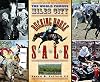
My dear mother-in-law used to chide me, "Honey, your cowgirl side is showing." Growing up in Oklahoma, I remember when the rodeo finals came to town, and it was full of stringy cowboys, people in chaps and big hats, beautiful horses, and the ugliest bulls I'd ever seen. I'd never heard of the Miles City Bucking Horse Sale, but boy, did I ever learn about it here. Miles City is in southeastern Montana, a place with lots of wide spaces and big ranches. The Sale originally started in 1951 as a show more way for ranchers to sell off their "spoiled" horses -- the ones that were too wild to be trained to use as working ranch stock. Over the years, it developed into a Western cultural event centered around various rodeo contests, and always a sale of horses now bred to buck and be part of the rodeo circuit. Collard uses his own photographs of Montana's scenery as well as historical photographs from universities and museums to take readers visually through the history of Miles City and the region, explain different rodeo contests and cowboy gear, and show how this is a family and community event. I liked how he included famous women rodeo champions who participated over the years, as well as how the fortunes of Miles City rose and fell, and now are on the rise again. I'm also a sucker for book designers who use maps as endpapers! Enjoyable to read and browse through, especially for our Connecticut Yankee kids who may not ever have seen a rodeo, and also great to share with a younger sibling who's doing that states report on Montana... show less
Lists
Science: Zoology (1)
Awards


The Prairie Builders: Reconstructing America's Lost Grasslands (Winner – Middle Grades Science Book – 2006)
Fire Birds: Valuing Natural Wildfires and Burned Forests (Commended – Middle Grades Science Book – 2016)


You May Also Like


Associated Authors
Statistics
- Works
- 89
- Members
- 4,235
- Popularity
- #5,936
- Rating
- 4.2
- Reviews
- 124
- ISBNs
- 231
- Languages
- 1
- Favorited
- 2
