

Luke Ross
Author of Captain America: The Man with No Face
Works by Luke Ross
Associated Works
The Amazing Spider-Man: The Gauntlet, Vol. 3 – Vulture & Morbius (2010) — Illustrator — 68 copies, 2 reviews
Tagged
Common Knowledge
- Other names
- Queiroz, Luciano (birth)
- Birthdate
- 1972-07-18
- Gender
- male
- Occupations
- comic book artist
penciller
inker - Nationality
- Brazil
- Birthplace
- São Paulo, Brazil
- Associated Place (for map)
- São Paulo, Brazil
Members
Reviews
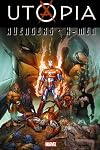
I don't read the X-Men series. All that I have read of the X-Men are through the lens of a Marvel crossover event, like House of M and Civil War. Therefore, I didn't have any issue with how this book holds up vis-á-vis the X-Men's own line. As a collection connected with Dark Reign, I thought it was excellent.
During Secret Invasion, Norman Osborn stole the information needed to kill the Skrull queen in order to set himself up as a hero. It worked perfectly. The resulting period is called show more the Dark Reign, when he becomes head of SHIELD né HAMMER and US national security. He creates his own team of "Dark Avengers," each a villain masquerading as a familiar hero. After riots break out in San Francisco between mutants and the anti-mutant "Humanity Now", Norman decides he needs a team of Dark X-Men to control the situation. Emma Frost seemingly betrays Scott Summers to join and lead Osborn's new team which includes: Daken, Cloak and Dagger, Namor, Omega Man and Mimic. Osborn is also working with a Dark Beast (from another dimension!) to nullify mutant powers. Emma's team is sent in to enforce martial law and curfew on the city. What follows, and covers the first half of the book, are some exceptionally well done battle sequences and the fulfillment of a master plan carefully orchestrated by Scott Summers. I've never been a big fan of Cyclops, but here he truly shines as a leader and strategist. Emma Frost also steps away from the one dimensional "White Queen" role and finally becomes interesting as a power player. Despite bringing his Avengers in, Norman can't get the mutants under control. There are several mutants I don't recognize among the students, but there were enough familiar faces, and just enough character development that it didn't impede my enjoyment of the story at all.
The second half of the book backtracks, which at first was confusing to me. It starts with the first part of a confession between Emma and Scott, which stops midway through and is picked up later, and then it jumps to Rogue and Gambit being summoned to San Francisco to aid Scott. Readers then get the previous event from their POV. Though this could have been better laid out, I still was able to follow what was happening, and it was strong material. The second half also includes the "origin" for each Dark X-Man, or how Osborn lured/coerced them onto the team. The book concludes with one recruit who got the better of Osborn and got away!
Overall, I thought this was an excellent collection, with some of the best action sequences I've read and a well done plot arc. Osborn and Summers play a deadly game of chess that has some nice twists and was very entertaining. And, the book adds to the overall big picture of the Dark Reign. Highly recommended. show less
During Secret Invasion, Norman Osborn stole the information needed to kill the Skrull queen in order to set himself up as a hero. It worked perfectly. The resulting period is called show more the Dark Reign, when he becomes head of SHIELD né HAMMER and US national security. He creates his own team of "Dark Avengers," each a villain masquerading as a familiar hero. After riots break out in San Francisco between mutants and the anti-mutant "Humanity Now", Norman decides he needs a team of Dark X-Men to control the situation. Emma Frost seemingly betrays Scott Summers to join and lead Osborn's new team which includes: Daken, Cloak and Dagger, Namor, Omega Man and Mimic. Osborn is also working with a Dark Beast (from another dimension!) to nullify mutant powers. Emma's team is sent in to enforce martial law and curfew on the city. What follows, and covers the first half of the book, are some exceptionally well done battle sequences and the fulfillment of a master plan carefully orchestrated by Scott Summers. I've never been a big fan of Cyclops, but here he truly shines as a leader and strategist. Emma Frost also steps away from the one dimensional "White Queen" role and finally becomes interesting as a power player. Despite bringing his Avengers in, Norman can't get the mutants under control. There are several mutants I don't recognize among the students, but there were enough familiar faces, and just enough character development that it didn't impede my enjoyment of the story at all.
The second half of the book backtracks, which at first was confusing to me. It starts with the first part of a confession between Emma and Scott, which stops midway through and is picked up later, and then it jumps to Rogue and Gambit being summoned to San Francisco to aid Scott. Readers then get the previous event from their POV. Though this could have been better laid out, I still was able to follow what was happening, and it was strong material. The second half also includes the "origin" for each Dark X-Man, or how Osborn lured/coerced them onto the team. The book concludes with one recruit who got the better of Osborn and got away!
Overall, I thought this was an excellent collection, with some of the best action sequences I've read and a well done plot arc. Osborn and Summers play a deadly game of chess that has some nice twists and was very entertaining. And, the book adds to the overall big picture of the Dark Reign. Highly recommended. show less

Holy cow! Not counting cover artists or editorial staff, 64 different people worked on this 368-page book. Even if you discount everything but the core story "Utopia," which has just one writer (Matt Fraction), there are still some nineteen artists at work on six issues. Oh, the American corporate comic book factory: how delightful.
Suffice it to say that I'd never ordinarily buy such a book (X-Men comics alienate me in general, and their gigantic crossover events even moreso), except show more that Paul Cornell has a few stories in it: three shorts that were part of a miniseries called Dark X-Men: The Beginning. Originally these were going to be published as their own book, but that ended up not happening and so I had to by this whole fershlugginer crossover just to get 20-something pages of Paul Cornell goodness. I hope you're happy Marvel! These stories see Cornell reunited with his Captain Britain and MI13 collaborator Leonard Kirk to tell the tales of superheroes recruited for Norman "Green Goblin" Osborn's government-sponsored X-Men team.
"Namor/Norman" is probably the best of the three, as Osborn attempts to figure why Namor, Prince of Atlantis, could possibly care about what's going on in the surface world. Given its placement in the book after the reader has learned the answer, it's a delightful example of two men out-out-thinking one another. I also enjoyed "Hidden Depth," where Emma Frost probes Namor's mind herself. The weakest was clearly "The Temptation of Cloak and Dagger," which didn't say anything that wasn't revealed in the earlier chapters of Utopia.
Utopia as whole is about X-Men leader Cyclops's attempt to keep the X-Men based in San Francisco in the face of growing anti-mutant hysteria and attacks by something called "Bio-Sentinels" whose origins are never explained, not to mention the arrival of Norman Osborn and his government-sponsored Avenger and X-Men teams. The first chapter is actually quite good, building a feeling of tension and unsettledness as the streets of San Francisco are filled with angry rioters, and no one's quite sure what to do. Reading it for the first time after "Occupy Wall Street," it actually feels very prescient. After that, though, the story stretches out too long through its last five chapters. The characters do interesting things, but we're not privy to their interiority enough to really experience them; Emma Frost must be really conflicted over what's going on, but the plot precludes us from discovering how she feels about her role until its over.
Terry Dodson's art was an unexpected delight, though: nice, clean, and vaguely cartoony. I got tired of Luke Ross's well-rounded butt shots, though, and the less said about Marc Silvestri's identical faces for women and poor story-telling skills, the better.
I was delighted to see Mike Carey here, after enjoying his work on Lucifer so much, and joined by Dustin Weaver, one of the better artists on Knights of the Old Republic, but their story (about what Rogue gets up to during the riots in the first chapter) feels like a pointless fill-in. Otherwise, I found the rest of this volume fairly disposable. show less
Suffice it to say that I'd never ordinarily buy such a book (X-Men comics alienate me in general, and their gigantic crossover events even moreso), except show more that Paul Cornell has a few stories in it: three shorts that were part of a miniseries called Dark X-Men: The Beginning. Originally these were going to be published as their own book, but that ended up not happening and so I had to by this whole fershlugginer crossover just to get 20-something pages of Paul Cornell goodness. I hope you're happy Marvel! These stories see Cornell reunited with his Captain Britain and MI13 collaborator Leonard Kirk to tell the tales of superheroes recruited for Norman "Green Goblin" Osborn's government-sponsored X-Men team.
"Namor/Norman" is probably the best of the three, as Osborn attempts to figure why Namor, Prince of Atlantis, could possibly care about what's going on in the surface world. Given its placement in the book after the reader has learned the answer, it's a delightful example of two men out-out-thinking one another. I also enjoyed "Hidden Depth," where Emma Frost probes Namor's mind herself. The weakest was clearly "The Temptation of Cloak and Dagger," which didn't say anything that wasn't revealed in the earlier chapters of Utopia.
Utopia as whole is about X-Men leader Cyclops's attempt to keep the X-Men based in San Francisco in the face of growing anti-mutant hysteria and attacks by something called "Bio-Sentinels" whose origins are never explained, not to mention the arrival of Norman Osborn and his government-sponsored Avenger and X-Men teams. The first chapter is actually quite good, building a feeling of tension and unsettledness as the streets of San Francisco are filled with angry rioters, and no one's quite sure what to do. Reading it for the first time after "Occupy Wall Street," it actually feels very prescient. After that, though, the story stretches out too long through its last five chapters. The characters do interesting things, but we're not privy to their interiority enough to really experience them; Emma Frost must be really conflicted over what's going on, but the plot precludes us from discovering how she feels about her role until its over.
Terry Dodson's art was an unexpected delight, though: nice, clean, and vaguely cartoony. I got tired of Luke Ross's well-rounded butt shots, though, and the less said about Marc Silvestri's identical faces for women and poor story-telling skills, the better.
I was delighted to see Mike Carey here, after enjoying his work on Lucifer so much, and joined by Dustin Weaver, one of the better artists on Knights of the Old Republic, but their story (about what Rogue gets up to during the riots in the first chapter) feels like a pointless fill-in. Otherwise, I found the rest of this volume fairly disposable. show less
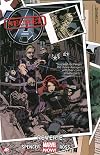
Secret Avengers is an excellent hybrid of the MCU (films) and the MU (comics). We have a Samuel L. Jackson -style AGENT Nick Fury (see 'Battle Scars' for where he came from), Agent Phil Coulson, Acting Director Maria Hill, Black Widow and Hawkeye derived from the film side of Marvel, seamlessly blending into the post-Dark Reign continuity with characters strictly from the Marvel Universe such as Daisy "Quake" Johnson from 'Secret Warriors' and Mockingbird. It's very well done and gives fans show more of the films a foothold in the comic world.
Though the title is Avengers, this is a SHIELD series. And it's dark and gritty as such a series should be. The hook here is that this team is sent on missions that they aren't even allowed to remember afterwards, via memory controlling nanite implants. This allows the characters to pop up in other Marvel Now series without any conflict. The story has a many twists and turns which keep it from being predictable. Plus, there is a power struggle between Daisy, the unconfirmed director, and the Acing Director, Maria Hill. I loved it!
Overall, fans of the films can easily jump into this series without reading anything else, but there's also a lot here for established comic fans. Note: this volume ends on a cliffhanger so you'll want to have Volume 2 handy! Highly recommended. show less
Though the title is Avengers, this is a SHIELD series. And it's dark and gritty as such a series should be. The hook here is that this team is sent on missions that they aren't even allowed to remember afterwards, via memory controlling nanite implants. This allows the characters to pop up in other Marvel Now series without any conflict. The story has a many twists and turns which keep it from being predictable. Plus, there is a power struggle between Daisy, the unconfirmed director, and the Acing Director, Maria Hill. I loved it!
Overall, fans of the films can easily jump into this series without reading anything else, but there's also a lot here for established comic fans. Note: this volume ends on a cliffhanger so you'll want to have Volume 2 handy! Highly recommended. show less
Fraction understands what comics should be. They are an adult genre--they publish "junior editions" for the kids these days, which I'm pretty sure nobody buys or reads--constrained and unbounded by the soap opera format, in which nobody ever really dies as long as their commercial potential can be mined again (the three canonical examples of "real death" in Marvel were always Cypher, Captain Marvel, and Spider-Man's Uncle Ben, I believe, and the return of the latter two has been played with show more very extensively, while Ramsey appears to be back for real as of this months issue of New Mutants). They also bring in elements of genre fiction from epic fantasy to police procedural to workplace romp to superheroes--because even modern "superhero" comics cannot really be considered to be "superheroic" in genre--pastel palette, two-dimensional morality, scapegoating, Pop Art realism--maybe no comic book that mattered has done that since Frank Miller's Daredevil. The comic genre also needs character moments--both the classic kind that are affecting or whatever, and the action-movie kind where Wolverine or whatever gets do demonstrate that he is awesome.
Anyway. Fraction gets all that, and this story fires really well on all those myriad levels. Osborn orchestrates mutant riots in San Francisco, uses it as an excuse to declare martial law, sends in his X-Men-under-duress helmed by Emma Frost to maintain order; Cyclops is one step ahead with many contingency plas, etc., so the Dark Avengers come in as backup, and are in their turn outmanoeuvred in novel ways. It is often surprising and delightful and at the end the mutants get their own country and you don't feel like you've seen it all before. Many little battles play themselves out, Iliad-style, and it made me enjoy characters that usually leave me a little cold, like Rogue. And the "confession" episode with Scott and Emma is practically DH Lawrence, only in an insane world of powers &c. I look forward to reading more of this Matt Fraction and his brave new mutant world. show less
Anyway. Fraction gets all that, and this story fires really well on all those myriad levels. Osborn orchestrates mutant riots in San Francisco, uses it as an excuse to declare martial law, sends in his X-Men-under-duress helmed by Emma Frost to maintain order; Cyclops is one step ahead with many contingency plas, etc., so the Dark Avengers come in as backup, and are in their turn outmanoeuvred in novel ways. It is often surprising and delightful and at the end the mutants get their own country and you don't feel like you've seen it all before. Many little battles play themselves out, Iliad-style, and it made me enjoy characters that usually leave me a little cold, like Rogue. And the "confession" episode with Scott and Emma is practically DH Lawrence, only in an insane world of powers &c. I look forward to reading more of this Matt Fraction and his brave new mutant world. show less
You May Also Like


Associated Authors
Statistics
- Works
- 22
- Also by
- 14
- Members
- 876
- Popularity
- #29,232
- Rating
- 3.6
- Reviews
- 41
- ISBNs
- 39
- Languages
- 5
- Favorited
- 1