
Brooks D. Simpson
Author of The Civil War: The First Year Told By Those Who Lived It
About the Author
Image credit: 2018 National Book Festival By Avery Jensen - Own work, CC BY-SA 4.0, https://commons.wikimedia.org/w/index.php?curid=72641780
Works by Brooks D. Simpson
Reconstruction: Voices from America's First Great Struggle for Racial Equality (2018) — Editor — 125 copies, 1 review
Gettysburg: A Battlefield Guide (This Hallowed Ground: Guides to Civil Wa) (1999) 118 copies, 1 review
Let Us Have Peace: Ulysses S. Grant and the Politics of War and Reconstruction, 1861-1868 (1991) 67 copies
The Civil War in the East: Struggle, Stalemate, and Victory (Reflections on the Civil War Era) (2011) 23 copies, 1 review
Advice After Appomattox: Letters to Andrew Johnson, 1865-1866 (Special Volume No 1 of the Papers of Andrew Jackson) (1988) 8 copies
Abraham Lincoln, the Gettysburg campaign, and the war in the East (Civil War commander series) (1998) 7 copies
Associated Works
Now for the Contest: Coastal and Oceanic Naval Operations in the Civil War (2004) — Introduction, some editions — 35 copies, 1 review
Tagged
Common Knowledge
- Birthdate
- 1957-08-04
- Gender
- male
- Education
- University of Virginia
University of Wisconsin-Madison - Occupations
- professor
- Organizations
- Arizona State University
- Short biography
- Brooks D. Simpson is a professor of history and humanities at Arizona State University. [adapted from The Myth of the Lost Cause and Civil War History (2000)]
- Nationality
- USA
- Birthplace
- Freeport, New York, USA
- Associated Place (for map)
- New York, USA
Members
Reviews
The Civil War in the East: Struggle, Stalemate, and Victory (Reflections on the Civil War Era) by Brooks D. Simpson
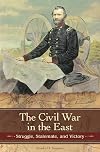
I just finished Brooks D. Simpson’s The Civil War in the East, and entered my notes into Zotero. This short work published by Praeger is a quick read and well worth it. Simpson argues that no matter how decisive historians view the western theater, Billy Yank and Johnny Reb’s contemporaries – ranging from concerned citizens to demanding newspapermen to the meddling presidents and government officers in the not too distant capitals -- always considered the eastern front to be the most show more important field of combat. Although this book is chockfull of interpretative nuggets I have two major takeaways that will shape how I teach the Civil War in my community college survey courses. First, Simpson argues that General-in-Chief Henry W. Halleck made a colossal blunder in recalling the Army of the Potomac from peninsula campaign in the summer of 1862. Simpson argues that Halleck should have done the opposite; that is, removed the incompetent commander and left the army on the peninsula where it could have threatened the rebel capital and altered the strategic calculus in the eastern theater. Instead, what followed was a series of bloody battles (some won by the Union and some by the rebels) that produced no decisive strategic outcome. Connected to this (and my second takeaway) is Simpson’s argument that the battle of Gettysburg was not a decisive, war altering event. High water mark of the rebellion notwithstanding, he considers it as yet another one in the series of bloody yet ultimately indecisive battles. Like other victories (Rebels at Second Bull Run and Union at Antietam) destroying the enemy force was beyond the grasp of the exhausted victors.
From my blog: http://gregshistoryblog.blogspot.com/2012/12/recent-reads-simpson-civil-war-in-e... show less
From my blog: http://gregshistoryblog.blogspot.com/2012/12/recent-reads-simpson-civil-war-in-e... show less
Reconstruction: Voices from America's First Great Struggle for Racial Equality (The Library of America) by Brooks D. Simpson
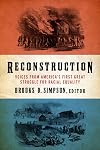
This was ultimately disappointing, and not just because of the subject matter of my country failing its obligations. The selections for this volume were heavily tilted towards congressmen and the like. The strongest LOA volumes, in my opinion, are more focused from the bottom up. The 1812 volume wasn't just James Madison's notes. The 'yearly' Civil War volumes were not General's memoirs. I was hoping to hear from the freemen, not their congressmen.
A reader would be better served by Foner's show more Reconstruction, or WEB DeBois Black Reconstruction. show less
A reader would be better served by Foner's show more Reconstruction, or WEB DeBois Black Reconstruction. show less
The Civil War: The First Year Told by Those Who Lived It (Library of America #212) by Brooks D. Simpson
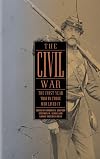
Superb collection of first hand accounts and memoirs of the first year of the ACW. Politicians, civilians, soldiers, slaves, all find their voices here.
The Civil War: The First Year Told by Those Who Lived It (Library of America #212) by Brooks D. Simpson

This is the first of a four volume series published by Library of America. The editors have done an excellent job in providing the reader with a diverse group of selections written by a varied group of contributors. Many of the selections are speeches and other official writings that you would expect to find. At least one-third are letters and diary entries from people whose names were never in the newspapers. At the back of the book the editors have provided a section of short biographies show more of all of the contributors. This was very helpful in providing a context for the selections by the writers I was unfamiliar with.
Reading through the book I felt like an amateur historian. Reading primary source materials was similar to going through archives hunting for the facts about different events. The selections fit together like pieces of a jigsaw puzzle and changed my understanding of many events. One good example was a speech by Senator John J. Crittenden. In early 1860 he introduced several measures to provide a compromise to secession. Reading about it on other occasions I felt he was just an old man holding on to the past. The text of the speech was full of passion for the Union and the desire to take any steps necessary to save it. The emotion that came through his words created a vivid memory.
One woman writing in her diary questions, "Is this the beginning of the Civil War we have heard about?" which gives a sense of the immediacy of events that were happening out of control. The irony is that the entry was written January 9 and the war didn't start until April 12.
Reading the selections I realized that history does not happen in nice and neat packages of events. History as it happens is a messy confluence of happenings that doesn't fit any pattern or theory. Very few people writing in the first year of the war thought it was possible it could last more than a year. Many Southerners thought they had won the war after The First Battle of Bull Run.
I enjoyed reading this book very much. It added a great deal to my understanding of what it was like to live through this time. Along with the biographies the book includes a chronology, notes on the texts and 50 pages of end notes. I look forward to the next volume. show less
Reading through the book I felt like an amateur historian. Reading primary source materials was similar to going through archives hunting for the facts about different events. The selections fit together like pieces of a jigsaw puzzle and changed my understanding of many events. One good example was a speech by Senator John J. Crittenden. In early 1860 he introduced several measures to provide a compromise to secession. Reading about it on other occasions I felt he was just an old man holding on to the past. The text of the speech was full of passion for the Union and the desire to take any steps necessary to save it. The emotion that came through his words created a vivid memory.
One woman writing in her diary questions, "Is this the beginning of the Civil War we have heard about?" which gives a sense of the immediacy of events that were happening out of control. The irony is that the entry was written January 9 and the war didn't start until April 12.
Reading the selections I realized that history does not happen in nice and neat packages of events. History as it happens is a messy confluence of happenings that doesn't fit any pattern or theory. Very few people writing in the first year of the war thought it was possible it could last more than a year. Many Southerners thought they had won the war after The First Battle of Bull Run.
I enjoyed reading this book very much. It added a great deal to my understanding of what it was like to live through this time. Along with the biographies the book includes a chronology, notes on the texts and 50 pages of end notes. I look forward to the next volume. show less
Lists
You May Also Like


Associated Authors
Statistics
- Works
- 21
- Also by
- 6
- Members
- 1,225
- Popularity
- #20,957
- Rating
- 3.8
- Reviews
- 8
- ISBNs
- 31
