
Marina Tsvetaeva (1892–1941)
Author of Selected Poems
About the Author
Marina Ivanovna Tsvetaeva, 1892-1941 Marina Ivanovna Tsvetaeva was born on October 8, 1892 in Moscow. Her first collection appeared in 1910, and she ranks among the major twentieth-century Russian poets. Her numerous lyrics and long poems are distinguished by great vigor and passion and an show more astonishing technical mastery. Her language and rhythms are highly innovative. In subject, her poetry varies greatly, often diary-like but also intensely concerned with the fate of her generation, of Russia, and of Europe. Tsvetaeva did not shy away from controversial topics, often opposing received dogma, be it Soviet or Russian emigre. She frequently subsumed herself in other characters, merging dramatic and lyrical elements. Particularly striking are her long poems Poem of the Mountain, Poem of the End, and Ratcatcher and her later collections Craft (1923) and After Russia (1928). After emigrating from the Soviet Union, Tsvetaeva also seriously turned to prose. (Bowker Author Biography) show less
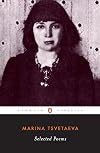
Image credit: Marina Tsvetaeva, dans les années 1910
Works by Marina Tsvetaeva
Earthly Signs: Moscow Diaries, 1917-1922 (New York Review Books Classics) (1988) 174 copies, 1 review
Ik loop over de sterren schetsen, dagboekfragmenten en brieven over de Russische Revolutie (2000) 13 copies
Стихотворения и поэмы (сборник) 4 copies
Театр : Сборник пьес 3 copies
Избранное 3 copies
Marina Tsvetaeva: Polnoe Sobranie Poezii, Prozy, Dramaturgii v Odnom Tome[Complete collection of poems, prose and dramas in one volume: ] (2008) 3 copies
Poésie lyrique (1912-1941) : Tome 1, Poèmes de Russie (1912-1920), suivi de La porte arrachée par Marina (2015) 3 copies
Sprookjespoëmen 1920-1922 2 copies
Indizi terrestri 2 copies
Marina Tsvetaeva : De Vie à Vie précédé de Ici-Haut & Poèmes de Maximilian Volochine (1991) 2 copies
Le poète et le temps 1 copy
Le poète et la critique 1 copy
O DIABO 1 copy
Las flagelantes 1 copy
La historia de Sóniechka 1 copy
El poeta y el tiempo 1 copy
Cartas de Wilno (1934-1935) 1 copy
Lichý střevíc 1 copy
Hodina duše 1 copy
Mijn verzen 1 copy
Царь-девица поэма-сказка 1 copy
Разлука ; Стихи к Блоку 1 copy
Повесть о Сонечке : Сборник 1 copy
Werken 1 copy
Мне имя - Марина 1 copy
Mit diesem Unmaß im Maß der Welt: Gedichte 1913 - 1939. zweisprachig. Aus dem Russischen von Erich Ahrndt (2011) 1 copy
La tosaerba 1 copy
Book 9791254760604 1 copy
il diavolo 1 copy
Twenty-four Poems 1 copy
Poésie lyrique (1912-1941) : Coffret 2 tomes : Poèmes de Russie (1912-1920) ; Poèmes de maturité (1921-1941) (2015) 1 copy
Сочинения в двух томах 1 copy
كبرياء جريح - قصائد مختارة 1 copy
Selected Poems 1 copy
Tsvetaeva, Marina Archive 1 copy
Избранное 1 copy
Стихи 1 copy
Автобиографическая проза. Дневниковые записи. Воспоминания о современниках. Эссе. Письма (2003) 1 copy
Gedichte 1 copy
Театр 1 copy
Il settimo sogno 1 copy
Ono što je bilo 1 copy
Sochinenija 1 copy
Uchenik 1 copy
О любви 1 copy
Associated Works
World Poetry: An Anthology of Verse from Antiquity to Our Time (1998) — Contributor — 499 copies, 2 reviews
Women in Praise of the Sacred: 43 Centuries of Spiritual Poetry by Women (1994) — Contributor — 385 copies, 5 reviews
Against Forgetting: Twentieth-Century Poetry of Witness (1993) — Contributor — 377 copies, 2 reviews
Queer: A Collection of LGBTQ Writing from Ancient Times to Yesterday (2021) — Contributor, some editions — 65 copies
The Bitter air of exile : Russian writers in the West, 1922-1972 (1977) — Contributor — 10 copies, 1 review
Tagged
Common Knowledge
- Canonical name
- Tsvetaeva, Marina
- Legal name
- Tsvetaeva, Marina Ivanovna
- Birthdate
- 1892-10-08
- Date of death
- 1941-08-31
- Gender
- female
- Education
- Sorbonne
- Occupations
- translator
poet
playwright
writer
essayist - Relationships
- Efron, Sergei (husband)
Efron, Ariadna (daughter)
Mandelstam, Osip (lover)
Tsvetaeva, Anastasia (sister) - Short biography
- Marina Ivanovna Tsvetaeva was born in Moscow, Russia, a daughter of Ivan Vladimirovich Tsvetaev, a professor of Fine Art at the University of Moscow, and his second wife Maria Alexandrovna, a concert pianist. Anastasia Tsvetaevna was her younger sister. The family traveled abroad and Marina attended schools in Switzerland and Germany, and studied history and literature at the Sorbonne. In 1910, she self-published her first collection of poems. In 1912, she married Sergei Efron, also a poet and a Russian military officer, with whom she would have three children. Her second collection of verses, Magic Lantern, also appeared in 1912. Between 1917 and 1922, she wrote a cycle of six plays in prose and verse. In 1919, in the aftermath of the Russian Revolution, in an attempt to save her two daughters from starvation, Marina placed them in a state orphanage, but Irina died there of malnutrition. Marina and her daughter Ariadna then left Russia in 1922 to join Efron in Berlin. They lived in Paris and Prague and had a son, Gregori. The family returned to Moscow in 1939. Efron and Ariadna were arrested on charges of espionage in 1941. He was executed, and Ariadna was sent to a forced labor camp. Marina Tsvetaeva committed suicide that year at age 48. Much of her work was re-published posthumously in the Soviet Union after 1961, and brought her international recognition as a major poet.
- Cause of death
- Suicide (Pendaison)
- Nationality
- Russia
- Birthplace
- Moscow, Russia
- Places of residence
- Nervi, Russia
Berlin, Germany
Paris, France
Prague, Czechoslovakia
Yelabuga, Russia - Place of death
- Yelabuga, USSR
- Map Location
- Russia
Members
Reviews
And overflowing their rims,
into the black earth, to nourish
the rushes unstoppably
without cure, gushes
verse
This was a necessary refuge, a raft where the sea's bed is murky. There is so much doubt, singed with hunger on these pages, yet there's a human exuberance. There's agency, not tr potlatch, no Cleopatra dissolving a priceless pearl in and drinking the dregs, as Calasso noted. There are quests and memorials. There is rapt ardor even when the soul's been steeped in grief. There's a show more determination to right the course when fate has proved abusive.
The last concept, of sense-making within the delirium of an overturned world is evidenced in the sublime An Attempt At Room, a poem which appears to me to be the analogy of making a home in a collapsing building.
For a rendezvous is a locality,
A list - calculation, sketch -
Of words that are not always apposite,
Of gestures all wrong, simply out of touch.
Reading her lines, one can inhale the ancient perseverance, the ability to manage the ignoble and the banal with no chance for posterity. There's a line in a novel I broached recently, an exile is a refugee with a library. show less
into the black earth, to nourish
the rushes unstoppably
without cure, gushes
verse
This was a necessary refuge, a raft where the sea's bed is murky. There is so much doubt, singed with hunger on these pages, yet there's a human exuberance. There's agency, not tr potlatch, no Cleopatra dissolving a priceless pearl in and drinking the dregs, as Calasso noted. There are quests and memorials. There is rapt ardor even when the soul's been steeped in grief. There's a show more determination to right the course when fate has proved abusive.
The last concept, of sense-making within the delirium of an overturned world is evidenced in the sublime An Attempt At Room, a poem which appears to me to be the analogy of making a home in a collapsing building.
For a rendezvous is a locality,
A list - calculation, sketch -
Of words that are not always apposite,
Of gestures all wrong, simply out of touch.
Reading her lines, one can inhale the ancient perseverance, the ability to manage the ignoble and the banal with no chance for posterity. There's a line in a novel I broached recently, an exile is a refugee with a library. show less
The poems collected here are rapturous and melancholic and very intense, and yet never feel excessive. Reading through them I couldn't help but feel that my mind was engaged with work shaped by immense talent. While reading I soon realized Tsvetaeva was going to be a writer I'd want to return to, and the desire to hold onto the words I'd just discovered, for as long as I can, conflicted with the urge to read and absorb the words as fast as I could. It isn't a new feeling, I've had this show more experience with other writers before, and certainly it isn't unique to myself.
Typically after I'm finished I want to read all the writer might've written, including the letters they sent and the journal entries they made–and where possible, the interviews they gave. And to discover facts about their life, both vital and mundane, and while I did a brief search of Marina I couldn't help but feel awed at the level of brilliant art created despite great pressures. I try not to romanticize struggles individuals, including the suffering of working artists, go through. But I couldn't help but feel sad about Marina's life troubles including a war fled, exile, poverty, turmoil in her personal relationships, state surveillance upon her return, losing those close to her, and opportunities drying up as doors were shut to her, and even familiar and once friendly backs turned from her, and all culminating in tragic death. I don't think anyone wouldn't be impressed knowing all that she went through and the incredible art produced in spite of it. show less
Typically after I'm finished I want to read all the writer might've written, including the letters they sent and the journal entries they made–and where possible, the interviews they gave. And to discover facts about their life, both vital and mundane, and while I did a brief search of Marina I couldn't help but feel awed at the level of brilliant art created despite great pressures. I try not to romanticize struggles individuals, including the suffering of working artists, go through. But I couldn't help but feel sad about Marina's life troubles including a war fled, exile, poverty, turmoil in her personal relationships, state surveillance upon her return, losing those close to her, and opportunities drying up as doors were shut to her, and even familiar and once friendly backs turned from her, and all culminating in tragic death. I don't think anyone wouldn't be impressed knowing all that she went through and the incredible art produced in spite of it. show less

Marina Tsvetaeva -- a writer that was always on the outskirts of my readings and studies of Russian literature. Oh we read some of her poems (short ones) and knew her sad biography in outline and even read excerpts from her prose, but I never really had occasion to delve into her writing until this book fell into my hands. I found "A Captive Spirit: Selected Prose" of Marina Tsvetaeva on the library bookstore free cart. It did have some pages about to fall out from the middle, but I relished show more the chance to read a generous selection of her prose in English and then go back and try it in Russian. Her writing did not disappoint -- a mixture of beauty and strangeness. Her writing most reminds me of Pasternak's prose, but more whimsical. Do all modernist Russian poets write like this? The world of the Russian Intelligentsia at the turn of the century (20th century) was indeed small for they were always running into each other, even half a world away from Russia. My father noted to me after watching the movie "Dr. Zhivago" (he never read the book) how impossible all those chance meetings were since Russia was such a vast country, but after reading autobiographies and memoirs of these writers, it seems that it was a given that Tsvetaeva would run into Bely in Germany or that Pasternak knew Mayakovsky. It was as if these writers and poets were magnetically drawn to each other wherever they were.
This collection is a lovely introduction both to her biography and her prose writing. It also shows the depth of her literary and cultural understanding with her analysis of Pushkin and a comparison of 2 translations of Schiller's poem "Der Erlkonig". Wonderful!
Contents:
A Living Word about a Living Man
Koktebel
Max and the Folk Tale
A Captive Spirit
An Otherworldly Evening
My Father and His Museum
Charlottenburg
The Uniform
The Laurel Wreath
The Opening of the Museum
The Intended
The Tower of Ivy
The House at Old Pimen
Mother and Music
The Devil
My Pushkin
Two Forest Kings
Pushkin and Pugachev show less
This collection is a lovely introduction both to her biography and her prose writing. It also shows the depth of her literary and cultural understanding with her analysis of Pushkin and a comparison of 2 translations of Schiller's poem "Der Erlkonig". Wonderful!
Contents:
A Living Word about a Living Man
Koktebel
Max and the Folk Tale
A Captive Spirit
An Otherworldly Evening
My Father and His Museum
Charlottenburg
The Uniform
The Laurel Wreath
The Opening of the Museum
The Intended
The Tower of Ivy
The House at Old Pimen
Mother and Music
The Devil
My Pushkin
Two Forest Kings
Pushkin and Pugachev show less
Love is flesh, it is a
flower flooded with blood.
Did you think it was just a
little chat across a table
a snatched hour and back home again
the way gentlemen and ladies
play at it? Either love is…
– A shrine?
– or else a scar.
flower flooded with blood.
Did you think it was just a
little chat across a table
a snatched hour and back home again
the way gentlemen and ladies
play at it? Either love is…
– A shrine?
– or else a scar.
Lists
Awards


You May Also Like


Associated Authors
Statistics
- Works
- 293
- Also by
- 18
- Members
- 2,324
- Popularity
- #11,042
- Rating
- 4.1
- Reviews
- 31
- ISBNs
- 385
- Languages
- 22
- Favorited
- 21

