
Laetitia Colombani
Author of The Braid
About the Author
Works by Laetitia Colombani
Un jour sans femme 1 copy
Tagged
Common Knowledge
- Canonical name
- Colombani, Laetitia
- Birthdate
- 1976
- Gender
- female
- Education
- Ecole Nationale Supérieure Louis Lumière (Diplôme, 19 98)
Cinésup, Nantes, France - Occupations
- director
screenwriter
actress - Nationality
- France
- Birthplace
- Bordeaux, Gironde, Nouvelle-Aquitaine, France
- Map Location
- France
Members
Reviews

If you thought the nineteenth-century evangelical social-problem novel had died with Charles Kingsley and Harriett Beecher Stowe, you would be wrong: it turns out that it's alive and well and flourishing in — of all unlikely spots — 21st century Paris!
Solène is forced to re-examine her life as a self-centred, careerist lawyer when the suicide of one of her clients provokes a nervous breakdown. She — rather reluctantly — follows the advice of her therapist and signs on to do some show more voluntary work, and finds herself assigned to writing letters for the residents of a women's hostel, the Salvation Army's Palais de la Femme. She meets a succession of the residents, who tell her their stories: each of them conveniently turns out to be an exemplar of a different social problem that we should know about (domestic violence, FGM, drugs, alcohol, long-term homelessness, prostitution, unemployment, mental health issues, and so on). And of course she feels an unexpected connection with their lives, is plunged into further depression when one of the women proves to be beyond the point where she can accept anyone's help, but then recovers when she finds herself in a position to engage personally with a young woman in trouble. And just in case we were wondering whether the total lack of irony in this story was itself deliberately ironic in some way, it all ends with a truly Dickensian Christmas lunch. No, really!
So it's not a very good novel. In fact it's a terrible novel, and it would perhaps never have got published if the author wasn't an actress who already had an undoubted bestseller to her credit. But I still found it very interesting, and I'm glad I came across it. The story of the Palais de la Femme and its residents is fascinating, and if the author had done what anyone else would have done with her research material and published it as a series of feature articles in a magazine, I would probably never have seen it.
And the message of the book, corny though it is, is an important one: we can't solve most social problems by sitting around talking about how they should be solved structurally and who would be the most competent people to do it; the people who really make a difference in the world are the ones who leap in, Salvation-Army-style, when they see that something is wrong, and do what they can to fix it in a way that makes a real difference for the individuals who are suffering. Whether or not they have any realistic hope of solving the problem. In her epigraph, Colombani quotes the famous closing lines of William Booth's 1912 address in the Royal Albert Hall: While women weep, as they do now, I’ll fight; while children go hungry, as they do now I’ll fight; while men go to prison, in and out, in and out, as they do now, I’ll fight; while there is a poor lost girl upon the streets, while there remains one dark soul without the light of God, I’ll fight, I’ll fight to the very end! show less
Solène is forced to re-examine her life as a self-centred, careerist lawyer when the suicide of one of her clients provokes a nervous breakdown. She — rather reluctantly — follows the advice of her therapist and signs on to do some show more voluntary work, and finds herself assigned to writing letters for the residents of a women's hostel, the Salvation Army's Palais de la Femme. She meets a succession of the residents, who tell her their stories: each of them conveniently turns out to be an exemplar of a different social problem that we should know about (domestic violence, FGM, drugs, alcohol, long-term homelessness, prostitution, unemployment, mental health issues, and so on). And of course she feels an unexpected connection with their lives, is plunged into further depression when one of the women proves to be beyond the point where she can accept anyone's help, but then recovers when she finds herself in a position to engage personally with a young woman in trouble. And just in case we were wondering whether the total lack of irony in this story was itself deliberately ironic in some way, it all ends with a truly Dickensian Christmas lunch. No, really!
So it's not a very good novel. In fact it's a terrible novel, and it would perhaps never have got published if the author wasn't an actress who already had an undoubted bestseller to her credit. But I still found it very interesting, and I'm glad I came across it. The story of the Palais de la Femme and its residents is fascinating, and if the author had done what anyone else would have done with her research material and published it as a series of feature articles in a magazine, I would probably never have seen it.
And the message of the book, corny though it is, is an important one: we can't solve most social problems by sitting around talking about how they should be solved structurally and who would be the most competent people to do it; the people who really make a difference in the world are the ones who leap in, Salvation-Army-style, when they see that something is wrong, and do what they can to fix it in a way that makes a real difference for the individuals who are suffering. Whether or not they have any realistic hope of solving the problem. In her epigraph, Colombani quotes the famous closing lines of William Booth's 1912 address in the Royal Albert Hall: While women weep, as they do now, I’ll fight; while children go hungry, as they do now I’ll fight; while men go to prison, in and out, in and out, as they do now, I’ll fight; while there is a poor lost girl upon the streets, while there remains one dark soul without the light of God, I’ll fight, I’ll fight to the very end! show less
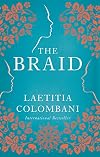
The book tells the story of three women in three different continents facing ncredible hardship and rising to the challenge. Smita an untouchable fighting for a better life for her and her daughter. Giulia who is facing the bankruptcy of the generational famiy business alone. And finally Sarah the driven lawyer hellbent on partner track who discovers she has breast cancer. Eventually their stories are woven or braided together.
I was very impressed by this book mainly because the descriptive show more details of the narrative and the characters' emotions made it feel very real. I was particularly moved by the hardships of the untouchables. I read it over three mornings with my coffee as it demanded full attention and appreciation. show less
I was very impressed by this book mainly because the descriptive show more details of the narrative and the characters' emotions made it feel very real. I was particularly moved by the hardships of the untouchables. I read it over three mornings with my coffee as it demanded full attention and appreciation. show less
[Das Haus der Frauen] takes place in Paris now and a hundred years ago. A hundred years ago a Salvation Army officer dreamt of a place where women could go to live safely. Today it is a community that brings new life, not just to the homeless and refugees, but also to Solène, who has everything she needs except a reason to live.
This doesn't seem to have been translated into English yet. I read it in German, but it was written in French. I can only say, read it as soon as you can get it in a show more language you can read. show less
This doesn't seem to have been translated into English yet. I read it in German, but it was written in French. I can only say, read it as soon as you can get it in a show more language you can read. show less
Le storie di 3 donne che vivono letteralmente agli antipodi ma che alla fine si legheranno indissolubilmente.
Una è un'intoccabile indiana che fa di tutto perché sua figlia abbia una vita migliore, la seconda è una ragazza siciliana che si troverà sulle giovani spalle l'azienda di famiglia, la terza una quarantenne canadese con una carriera perfetta che si troverà a combattere con la malattia.
Personalmente la storia che mi ha coinvolta di più è quella di Smita la donna indiana, mi show more lamento sempre del maschilismo culturale che c'è qui, ma lì la vita di una donna non vale nulla; confrontarsi con certe realtà aiuta a capire quanta strada c'è ancora da fare...
E' un libro medio, si legge agilmente, sembra perfetto per essere trasformato in un film... show less
Una è un'intoccabile indiana che fa di tutto perché sua figlia abbia una vita migliore, la seconda è una ragazza siciliana che si troverà sulle giovani spalle l'azienda di famiglia, la terza una quarantenne canadese con una carriera perfetta che si troverà a combattere con la malattia.
Personalmente la storia che mi ha coinvolta di più è quella di Smita la donna indiana, mi show more lamento sempre del maschilismo culturale che c'è qui, ma lì la vita di una donna non vale nulla; confrontarsi con certe realtà aiuta a capire quanta strada c'è ancora da fare...
E' un libro medio, si legge agilmente, sembra perfetto per essere trasformato in un film... show less
Lists
Awards


You May Also Like


Associated Authors
Statistics
- Works
- 13
- Members
- 873
- Popularity
- #29,325
- Rating
- 3.9
- Reviews
- 47
- ISBNs
- 99
- Languages
- 16


