
Miranda Carter
Author of George, Nicholas and Wilhelm: Three Royal Cousins and the Road to World War I
About the Author
Miranda Carter was educated at St Paul's Girls' School and Exeter College, Oxford. She worked as a publisher and journalist before beginning research on Anthony Blunt
Series
Works by Miranda Carter
George, Nicholas and Wilhelm: Three Royal Cousins and the Road to World War I (2009) 859 copies, 26 reviews
Tagged
Common Knowledge
- Canonical name
- Carter, Miranda
- Other names
- Carter, MJ
- Birthdate
- 1965-05-30
- Gender
- female
- Education
- Exeter College, University of Oxford (BA|1983)
- Occupations
- publisher
journalist
biographer
historian - Awards and honors
- Royal Society of Literature (Fellow, 2011)
Orwell Prize (2002)
The Royal Society of Literature Award (2002) - Relationships
- Lanchester, John (husband)
- Short biography
- Miranda Carter, biographer, was educated at St. Paul's Girls' School and Exeter College, Oxford. She worked as a publisher and journalist before beginning research on her biography of Anthony Blunt in 1994. She lives in London with her husband and two sons. Anthony Blunt: His lives (2001), her first book, won the Royal Society of Literature Award and the Orwell Prize, and was shortlisted for many other prizes, including the Guardian First Book Award and the Whitbread Biography Award. In the US it was chosen by the New York Times Book Review as one of the seven best books of 2002.
- Nationality
- UK
- Birthplace
- London, England, UK
- Places of residence
- London, England, UK
- Associated Place (for map)
- London, England, UK
Members
Reviews

One of the real joys of reading is discovering characters you love and having the opportunity to get to know them over time as new books featuring them come out. This is very much the case with Jeremiah Blake and William Avery, who were introduced to readers by M. J. Carter in last year’s The Strangler Vine.
Blake and Avery are one of those odd couples who can flourish in the world of detective fiction. When readers first met them, they were based in India. Blake was a British agent gone show more rogue, who had long since abandoned faith in the British cause in India. Avery was a young officer, still believing in the British cause, but increasingly disappointed with the lack of opportunities for advancement—and beginning to question much of the British story about the nation’s role in India.
The Infidel Stain takes place in 1841, three years after The Strangler Vine. Blake and Avery have returned to Britain, but fallen out of touch. Blake lives in a run-down apartment in an immigrant-rich neighborhood in London and eats at a kitchen for impoverished sailors returned from India. Avery is living a prosperous, if unengaging, life in the countryside. The two are reunited to investigate a series of murders of London printers. The police have shown little interest in the cases, but a wealthy philanthropist wants to see justice pursued and is willing to pay Blake and Avery to do the pursuing.
Like The Strangler Vine, The Infidel Stain offers a detailed portrait of a fascinating historical moment. Britain faces unrest brought on by the Chartist movement, a campaign to grant the vote to all men, regardless of property-holding status. The Chartists, while viewed as threats to the social order, are seen as sell-outs by the previous generation’s radicals, who sought the vote for women as well as men, and who questioned many assumptions about both faith and morality.
I admit to some disappointment at finding Blake and Avery out of India. I’d been looking forward to more of the portrait of colonialism that their adventures revealed, but they’re every bit as fascinating in London as they were while in India. The Infidel Stain is the kind of “meaty” mystery that offers far more than a puzzle at its center. Readers see life in 1840s Britain as it was lived by members of various social strata. While many characters operate with good intentions, real good is harder to define. The challenges—political, financial, moral—posed by London’s poor can’t be solved the way a particular set of crimes can be.
I’m eagerly waiting now for my next meeting with Blake and Avery, both because I want to spend time in their company and because I want to know more about the London in which they operate. show less
Blake and Avery are one of those odd couples who can flourish in the world of detective fiction. When readers first met them, they were based in India. Blake was a British agent gone show more rogue, who had long since abandoned faith in the British cause in India. Avery was a young officer, still believing in the British cause, but increasingly disappointed with the lack of opportunities for advancement—and beginning to question much of the British story about the nation’s role in India.
The Infidel Stain takes place in 1841, three years after The Strangler Vine. Blake and Avery have returned to Britain, but fallen out of touch. Blake lives in a run-down apartment in an immigrant-rich neighborhood in London and eats at a kitchen for impoverished sailors returned from India. Avery is living a prosperous, if unengaging, life in the countryside. The two are reunited to investigate a series of murders of London printers. The police have shown little interest in the cases, but a wealthy philanthropist wants to see justice pursued and is willing to pay Blake and Avery to do the pursuing.
Like The Strangler Vine, The Infidel Stain offers a detailed portrait of a fascinating historical moment. Britain faces unrest brought on by the Chartist movement, a campaign to grant the vote to all men, regardless of property-holding status. The Chartists, while viewed as threats to the social order, are seen as sell-outs by the previous generation’s radicals, who sought the vote for women as well as men, and who questioned many assumptions about both faith and morality.
I admit to some disappointment at finding Blake and Avery out of India. I’d been looking forward to more of the portrait of colonialism that their adventures revealed, but they’re every bit as fascinating in London as they were while in India. The Infidel Stain is the kind of “meaty” mystery that offers far more than a puzzle at its center. Readers see life in 1840s Britain as it was lived by members of various social strata. While many characters operate with good intentions, real good is harder to define. The challenges—political, financial, moral—posed by London’s poor can’t be solved the way a particular set of crimes can be.
I’m eagerly waiting now for my next meeting with Blake and Avery, both because I want to spend time in their company and because I want to know more about the London in which they operate. show less
 This review was written for LibraryThing Early Reviewers.
Note: Even though this is Book 2 in the series, it works just fine as a stand alone novel.
Set in Victorian England, Captain William Avery has made his way to London (leaving a pregnant wife behind in the countryside) to meet up with his former colleague Jeremiah Blake, who he befriended in India. Both are tasked by the Viscount Allington to look into the gruesome murder of a printer of questionable materials. As they dig into the matter, they discover the police reluctant to investigate and show more the locals are even less likely to talk to them about the incident. However, as more bodies pile up, the clues do as well.
This was the book I needed that I didn’t know I needed. It’s like finding out that your tongue and tummy really do want a curry when prior to actually putting curry in your mouth, you didn’t know you wanted it. When I started this book, I was a bit intrigued, yes, but not particularly excited. Then as I dug into it, I realized that this was indeed something special.
First off, I really like the chemistry between Blake and Avery. Blake has a shady past that we learn a little bit about as the story unfolds while Avery comes from a well-to-do family and has orbited all the right groups to stay respectable. Blake can definitely relate to many of the characters we meet as they investigate the murder of the printer. However, Avery has to set aside so many of his preconceived notions in order to wrap his head around the facts. Despite their social differences, there’s a deep respect between the two men and that friendship is one of the key things that keeps them alive.
I was half expecting a kind of stuffy English murder mystery where we might get 1 gruesome scene and then then a lot of innuendos about the seedier side of life. Thankfully, the author gives us more than that. I really appreciated that she didn’t sanitize the 1841 London: there’s cess pits, prostitutes, corrupt police, and pornographic printed materials. This made the story more real for me.
Then there’s some small references to advancements made in the time period. For example, the blue-coated ‘New Police’ are out in force. They’ve been established for at least a few years at this time, but not long enough for the locals to really appreciate them. Also, Avery is running around with one of the new fountain pens, so he doesn’t need an ink well to write down his thoughts. These little touches gave the book an educational feel to add to all the adventure and mystery.
There’s several side characters that were pretty interesting. For me, Mattie was the highlight. She works selling cheap vegetables and herbs out of her basket and running odd errands for the various shopkeepers along her road. She and her brother were orphaned when their parents died, though she did learn to read and write before then. She’s working hard to keep a place for the two of them, without becoming a prostitute. However, her brother has gotten into a bit of trouble and that comes into play later in the book. Captain Avery found her fascinating, mostly because he had such warring emotions concerning her life. It was very interesting to watch how her mere existence challenged so many of Avery’s notions of poor people and what their lives are like.
The mystery element was pretty entertaining as well. It looks a bit simple at first, but then gets more complicated. The various printers in the area are competitive. Then each has their private well-to-do customers who usually want some questionable reading materials. On top of that, there’s a large chunk of poor folks in London that are demanding the right to have a vote, specifically concerning certain grain taxes. Of course, our dear skeptical Blake wonders why Viscount Allington is interested in the case at all. Lots of strings for our investigating duo to pull.
Over all, I found this book gripping on several fronts. I really enjoyed Blake’s ability to blend in and Avery’s discomfort at being asked to do so as well. The side characters are lively and have their own agendas. The mystery was not nearly as straight forward as it seemed. I was thoroughly entertained by this one!
I received a copy of this book at no cost from the publisher (via LibraryThing) in exchange for an honest review.
Narration: Alex Wyndham was a great pick for this book. He had this great voice for Blake that was a bit gravelly and usually held a note of skepticism. I also liked his polite gentleman voice for Captain Avery. His female voices were well done as well, sounding feminine. He had a variety of English accents to help us all keep the characters straight. show less
Set in Victorian England, Captain William Avery has made his way to London (leaving a pregnant wife behind in the countryside) to meet up with his former colleague Jeremiah Blake, who he befriended in India. Both are tasked by the Viscount Allington to look into the gruesome murder of a printer of questionable materials. As they dig into the matter, they discover the police reluctant to investigate and show more the locals are even less likely to talk to them about the incident. However, as more bodies pile up, the clues do as well.
This was the book I needed that I didn’t know I needed. It’s like finding out that your tongue and tummy really do want a curry when prior to actually putting curry in your mouth, you didn’t know you wanted it. When I started this book, I was a bit intrigued, yes, but not particularly excited. Then as I dug into it, I realized that this was indeed something special.
First off, I really like the chemistry between Blake and Avery. Blake has a shady past that we learn a little bit about as the story unfolds while Avery comes from a well-to-do family and has orbited all the right groups to stay respectable. Blake can definitely relate to many of the characters we meet as they investigate the murder of the printer. However, Avery has to set aside so many of his preconceived notions in order to wrap his head around the facts. Despite their social differences, there’s a deep respect between the two men and that friendship is one of the key things that keeps them alive.
I was half expecting a kind of stuffy English murder mystery where we might get 1 gruesome scene and then then a lot of innuendos about the seedier side of life. Thankfully, the author gives us more than that. I really appreciated that she didn’t sanitize the 1841 London: there’s cess pits, prostitutes, corrupt police, and pornographic printed materials. This made the story more real for me.
Then there’s some small references to advancements made in the time period. For example, the blue-coated ‘New Police’ are out in force. They’ve been established for at least a few years at this time, but not long enough for the locals to really appreciate them. Also, Avery is running around with one of the new fountain pens, so he doesn’t need an ink well to write down his thoughts. These little touches gave the book an educational feel to add to all the adventure and mystery.
There’s several side characters that were pretty interesting. For me, Mattie was the highlight. She works selling cheap vegetables and herbs out of her basket and running odd errands for the various shopkeepers along her road. She and her brother were orphaned when their parents died, though she did learn to read and write before then. She’s working hard to keep a place for the two of them, without becoming a prostitute. However, her brother has gotten into a bit of trouble and that comes into play later in the book. Captain Avery found her fascinating, mostly because he had such warring emotions concerning her life. It was very interesting to watch how her mere existence challenged so many of Avery’s notions of poor people and what their lives are like.
The mystery element was pretty entertaining as well. It looks a bit simple at first, but then gets more complicated. The various printers in the area are competitive. Then each has their private well-to-do customers who usually want some questionable reading materials. On top of that, there’s a large chunk of poor folks in London that are demanding the right to have a vote, specifically concerning certain grain taxes. Of course, our dear skeptical Blake wonders why Viscount Allington is interested in the case at all. Lots of strings for our investigating duo to pull.
Over all, I found this book gripping on several fronts. I really enjoyed Blake’s ability to blend in and Avery’s discomfort at being asked to do so as well. The side characters are lively and have their own agendas. The mystery was not nearly as straight forward as it seemed. I was thoroughly entertained by this one!
I received a copy of this book at no cost from the publisher (via LibraryThing) in exchange for an honest review.
Narration: Alex Wyndham was a great pick for this book. He had this great voice for Blake that was a bit gravelly and usually held a note of skepticism. I also liked his polite gentleman voice for Captain Avery. His female voices were well done as well, sounding feminine. He had a variety of English accents to help us all keep the characters straight. show less
This review was written for LibraryThing Early Reviewers.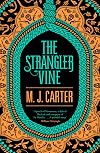
Author M.J. Carter brings colonial India to life in that period twenty years before the Great Mutiny of 1857. Life in Calcutta is exotic and expensive. Even a young soldier like Avery is expected to have a minimum of seven servants! To the British, every native of India is inferior-- and so are their language, their culture, their food, their architecture-- nothing escapes contempt. The East India Company is there to keep the peace so they can reap the ultimate in profits. That's the bottom show more line. The less contact with the natives the better.
At the same time, a fascinating and layered portrait of the Indian people is shown, from the lowest of the servant classes all the way to princes who hand out bags of rubies, sapphires, and diamonds as though they were an endless supply of chocolates. Whenever the political and financial aims of the East India Company differ from what is actually needed and expected in the country, explosive situations arise. The Strangler Vine delves into the devious means the East India Company used to bend everyone to their will.
All this is seen through the eyes of young William Avery, who at first is easily swayed by the company he keeps. Bored and impressionable, he does everything he's expected to do (including running up debts) and even begins to cultivate his own superior air when dealing with the natives. His assignment with Jeremiah Blake is the best possible thing that could have happened to him. Traveling with this taciturn man, Avery gets out into the country away from the stifling influence of the Company to see how the people really live. Blake and his second-in-command, Mir Aziz, are giving Avery an education, and I liked watching the young man change through various encounters both tame and deadly. There's just a touch of Holmes and Watson about Blake and Avery, and it's going to be interesting to see how this relationship grows in future books.
The only two things that detracted from the book for me were its pacing, which kept bogging down, and Avery's romance with Helen Larkbridge, which felt tacked on and unnecessary to the plot. However, The Strangler Vine's setting and its two main characters definitely make me anticipate more books in this new historical series. show less
At the same time, a fascinating and layered portrait of the Indian people is shown, from the lowest of the servant classes all the way to princes who hand out bags of rubies, sapphires, and diamonds as though they were an endless supply of chocolates. Whenever the political and financial aims of the East India Company differ from what is actually needed and expected in the country, explosive situations arise. The Strangler Vine delves into the devious means the East India Company used to bend everyone to their will.
All this is seen through the eyes of young William Avery, who at first is easily swayed by the company he keeps. Bored and impressionable, he does everything he's expected to do (including running up debts) and even begins to cultivate his own superior air when dealing with the natives. His assignment with Jeremiah Blake is the best possible thing that could have happened to him. Traveling with this taciturn man, Avery gets out into the country away from the stifling influence of the Company to see how the people really live. Blake and his second-in-command, Mir Aziz, are giving Avery an education, and I liked watching the young man change through various encounters both tame and deadly. There's just a touch of Holmes and Watson about Blake and Avery, and it's going to be interesting to see how this relationship grows in future books.
The only two things that detracted from the book for me were its pacing, which kept bogging down, and Avery's romance with Helen Larkbridge, which felt tacked on and unnecessary to the plot. However, The Strangler Vine's setting and its two main characters definitely make me anticipate more books in this new historical series. show less

The Infidel Stain, Carter’s second novel, is sophomoric in every sense of the word. It reads like bad fanfic, and that’s what I’d think it was if she weren’t credited as its author. The two protagonists, Blake and Avery, were intriguing and relatable in her first novel; in The Infidel Strain they are cartoonish and one dimensional. Not only do they fail to develop following their experiences in The Strangler Vine, they actually lose complexity in this outing. Worse still, Carter's show more laziness in this regard is like a big neon arrow pointing directly at all the character attributes and plot elements she's lifted from Arthur Conan Doyle.
But the novel’s worst sin by far is that it isn’t even a novel, but nonfiction masquerading as narrative. If you don’t believe me, add the words “He said” or “He continued” to the beginning of each paragraph in the book’s actual historical afterward and you won’t be able to tell the difference from the ostensible fiction that precedes it. No novel should have five-plus pages of straight exposition. No novel should ever have five-plus pages of straight exposition delivered as dialogue. Certainly, no novel should have its characters deliver actions scenes as exposition after the fact. But edit these elements out of The Infidel Stain, and you’d be left with about 50 pages of bona fide story, if that.
I have the sense that Carter, her publishers, or both wanted to publish this sequel as quickly as possible, and the book suffers tremendously for it. I immediately returned to The Strangler Vine upon finishing and was amazed by how much better it is – again, I can hardly believe the same author wrote both. Final verdict: The Infidel Stain may merit obligation reading when the third in the series comes out, but before that, do yourself a favor and stop after The Strangler Vine. show less
But the novel’s worst sin by far is that it isn’t even a novel, but nonfiction masquerading as narrative. If you don’t believe me, add the words “He said” or “He continued” to the beginning of each paragraph in the book’s actual historical afterward and you won’t be able to tell the difference from the ostensible fiction that precedes it. No novel should have five-plus pages of straight exposition. No novel should ever have five-plus pages of straight exposition delivered as dialogue. Certainly, no novel should have its characters deliver actions scenes as exposition after the fact. But edit these elements out of The Infidel Stain, and you’d be left with about 50 pages of bona fide story, if that.
I have the sense that Carter, her publishers, or both wanted to publish this sequel as quickly as possible, and the book suffers tremendously for it. I immediately returned to The Strangler Vine upon finishing and was amazed by how much better it is – again, I can hardly believe the same author wrote both. Final verdict: The Infidel Stain may merit obligation reading when the third in the series comes out, but before that, do yourself a favor and stop after The Strangler Vine. show less
Lists
Awards


You May Also Like


Statistics
- Works
- 5
- Members
- 2,096
- Popularity
- #12,281
- Rating
- 3.9
- Reviews
- 108
- ISBNs
- 65
- Languages
- 5
- Favorited
- 2
