
Larry Lieber
Author of Essential Avengers, Volume 1
About the Author
Series
Works by Larry Lieber
Marvel Masterworks, Volume 018: The Mighty Thor Volume 1 [Journey Into Mystery #83-100] (1991) — Scripter (83-91) — 122 copies, 3 reviews
Marvel Masterworks, Volume 059: Ant-Man/Giant-Man Volume 1 [Tales to Astonish #27 + 35-52] (2006) — Illustrator — 39 copies, 1 review
Marvel Masterworks, Volume 066: The Human Torch Volume 1 [Strange Tales #101-117 + Annual #2] (2006) 29 copies
Marvel Masterworks, Volume 091: Ant-Man/Giant-Man Volume 2 [Tales to Astonish #53-69] (2008) 22 copies
Marvel Masterworks, Volume 094: Atlas Era Tales to Astonish Volume 2 [#11-20] (2008) — Author — 20 copies
Mighty Marvel Masterworks: The Mighty Thor Vol. 1 – The Vengeance of Loki (2021) — Author — 18 copies
Monsters on the Prowl # 28 3 copies
Journey into Mystery with The Mighty Thor, Special King Size Annual! No. 1 (1965) 2 copies, 1 review
Monsters on the Prowl # 25 2 copies
Monsters On The Prowl #27 2 copies
Tales to Astonish (1959-1968) #13 2 copies
The Avengers, Vol. 1 #14 — Author — 1 copy
Monsters on the Prowl # 24 1 copy
Monsters on the Prowl # 21 1 copy
Siege of Camelot 1 copy
Tales of Suspense #40 1 copy
Rawhide Kid 6 1 copy
Chamber of Chills #17 1 copy
Chamber of Chills #5 1 copy
Night Of The Hunted! 1 copy
Monsters on the Prowl # 20 1 copy
Associated Works
Thor: The Mighty Avenger, Vol. 1: The God Who Fell to Earth (2010) — Contributor — 133 copies, 11 reviews
Marvel Masterworks, Volume 068: Atlas Era Tales of Suspense Volume 1 [#1-10] (2006) — Illustrator — 36 copies
Marvel Masterworks, Volume 098: Atlas Era Tales of Suspense Volume 2 [#11-20] (2008) — Contributor — 20 copies
Strange Tales (1951-1968) #111 — Illustrator — 4 copies
Tagged
Common Knowledge
- Gender
- male
- Relationships
- Lee, Stan (brother)
- Nationality
- USA
- Associated Place (for map)
- USA
Members
Reviews
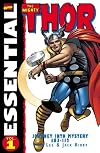
The best thing about this collection is seeing the massive growth over the years of its creation. About the time the Tales From Asgard feature kicks in, the series becomes something special. There aren't many really bright highlights beyond Tales From Asgard (setting up the best feature of Thor - the background and embracing of mythology and an ensemble cast. The Superman knock-offedness is painful for most of the origin issues, a drinking game based on mentions of "lame" and completely show more uninteresting. Donald Blake and Jane Foster are terrible (IMO). But to start getting into the groove with the cool thing Thor would become (a bridge between Conan, Superman, and early attempts to delve into contrary world-building based on ancient and futuristic elements - improved in Wakanda and then New Genesis/Apokolips), you can't skip it and feel like you've made the journey. show less

Disabled Dr. Donald Blake vacations in Norway and finds a walking stick in a cave, one that, once he handles it, turns into Mjölner and turns Blake into the Norse god of thunder, Thor. It's quite cheesy and the plots are super-hero-tastic, but it's really wonderfully enjoyable. I know being Swedish may have something to do with why I like Thor a little more than I ought to, but I don't care. Having Odin's big face appear in the sky with invaluable advice and having Loki come up with his show more loony schemes is just hilarious. For those who go for Kindle-versions, though, know that that edition contains 10 fewer issues than the equivalent paper-version. show less
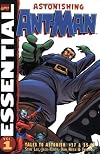
Ant-Man is a very early Marvel hero, first appearing in Tales To Astonish # 27 (January 1962). When scientist Henry Pym first tried his reducing solution, he shrank too fast and ended up in an ant hill. By means of judo, a friendly cat, a match lit by throwing a rock at it and a lasso from nowhere he managed to escape. The plot is ludicrous. He then discarded his potions and swore never to use them again. It was a typical ‘scientist learns better’ plot from Marvel’s early anthology show more magazines.
However, eight issues later, in Tales to Astonish # 35, Ant-Man appears as a super-hero. Weeks after his ant adventure, Henry Pym is fascinated by the little insects and now considers his serum a great discovery. He decides that ants use their antennae to communicate electronically and devises a cybernetic helmet that will enable him to chat to them. He also makes a protective outfit to protect himself from stings. Like the costumes of the Fantastic Four, it is made of unstable molecules so it can shrink, grow, burst into flames, turn invisible or do anything a hero does along with him. Henry Pym is recruited by the U.S. government to create a gas that will make people immune to radioactivity. Science, you may notice, was not Stan Lee’s strongest subject. Anyway, evil communist agents come to steal the gas recipe and Hank sees them off with his anty powers. It turns out that, even in his shrunken state, he retains the strength of a normal-size man and can hurl argumentative ants away as if they were…well, ants.
Communists were a common foe in the early days of Marvel, unsurprisingly, given the political climate in 1963. Moreover, many of the early comic creators were sons of east European immigrants and may have been genuinely dismayed by the rough red treatment of their ancestral homelands. Another commie rears his ugly head in Tales To Astonish # 36, ‘The Challenge Of Comrade X’. Ant-Man’s reputation has spread beyond the iron curtain and a secret agent is dispatched to learn his secrets. Quite a good story, actually. At this point, they were just thirteen pages long, the rest of the mag being filled with shorter tales of a more generally astonishing kind.
As ants are everywhere and can relay messages back to Hank whenever there is trouble he is equipped with a formicable, sorry, formidable communications network. They respond to certain ’verbal stimuli’, words like ’Ant-Man’, ’Protector’ and ’Jewellery’. I suppose, being American ants, they speak English. But what if some of them were commies? They live communally, sharing everything and have little individual ambition but work for the greater good of the colony. It seems to me that, if not for Ant-Man’s cybernetic control, they might have taken the Bolshevik side.
Their leanings are put to the test in Tales To Astonish # 38, when evil scientist Egghead learns their wavelength and tells them that he is their friend and Ant-Man is their enemy. Moreover, he informs them that with his help they can make Ant-Man their slave, to serve them the rest of their days. It’s not clear why they should want this. Egghead reasons that they will go along with his plan ‘for I have appealed to their greed and their vanity.’ The plot fails, as Ant-Man points out. ‘insects have no such emotions. Unfortunately, it is only we humans who possess such primitive traits.’ In fact, ants aren’t greedy because they are communists and if Henry Pym thinks we are more primitive than them, he really ought to go back to school and redo evolution. He also mentions that he doesn’t control them, they are his friends. Indubitably, he would have testified on their behalf had they been called up before a Senate hearing for Un-American ant activity.
In Tales To Astonish # 39, Ant-Man encounters the scarlet beetle that has become irradiated and developed a brain equal to that of a man. Now he plans to lead all the insects and conquer the world. Clearly, he has surpassed by far the usual beetle ambitions of mating and eating some dung. He uses Ant-Man’s growth gas to become man-sized and launches his war. ‘I’ll snuff out your life as I would a candle,’ he tells our hero dramatically, courtesy of scriptwriter Larry Leiber, who never paused to wonder how a beetle became acquainted with candles or indeed melodramatic clichés from bad movies. The plot was by Stan Lee, who often had his brother do the scripting chores in the early days. To be fair, they are pretty good.
The Wonderful Wasp is introduced in Tales To Astonish # 44, ‘The Creature From Kosmos’, in which another alien wants to conquer the world. Aliens, commies, South American dictators, evil scientists and so forth were par for the course in the early sixties. Henry Pym also acquired a rogues gallery of pretty second-rate villains like the Porcupine, the Human Top, Egghead, the Black Knight and the Magician. This story is better than the title makes it sound as we learn more of Henry Pym’s background and the art – Jack Kirby inked by Don Heck – is excellent. Every early issue of ‘Tales To Astonish’ has Ant-Man doing something amusing in it and I could summarize them one by one but the review would get very long. Suffice to say they are wonderfully awful and awfully wonderful, like the 1950s SF B-movies which inspired them. Or Them!
When Ant-Man became Giant-Man in Tales To Astonish # 49, he became less interesting for me, though he still got ant-sized quite often, usually to escape from traps. Giant-Man has an optimum height of twelve feet because after that he starts to get weaker. Some of the adventures aren’t bad. Egged on by misinformation from a villainous scientist, he attacks Spider-Man in Tales To Astonish # 57. In another small piece of lunacy, Spider-Man and the Wasp don’t like each other because of the natural antipathy of their insect counterparts. Clearly, a young man dressed as a spider will dislike a beautiful girl in a wasp costume! Two of the stories have potential invaders, Colossus and Attuma, give up their nefarious plans in the belief that all humans can change size and fight. This idea of bad guys wrongly generalising from one super-example was used in Asimov’s 1940s comedy tale ‘Victory Unintentional’ and probably in other stories, too.
Giant-Man tackles the Hulk in Tales To Astonish # 59, mostly as a prelude to the green one taking over the other half of ‘Tales To Astonish in issue # 60. In Tales To Astonish # 69, Giant-Man and the Wasp made their last appearance and the Sub-Mariner took over their half of the book with the following issue. The last few adventures have art by Carlos Burgos and Bob Powell who, I suspect, may have been pretty good illustrators but couldn’t adapt to the Marvel method. Not everyone could. Not everyone wanted to do more work, for the usual fee, so the writer could do less. Some of them, it is said, got quite grumpy about it.
I think this is worth getting for the early Marvel Kirby art and the dotty Ant-Man stories. If they are excluded, you’re left with a pretty average comic book of the early Silver Age. Don Heck’s drawings are interesting but Dick Ayers is very much an also-ran, though he was a good inker of Kirby. Really, Giant-Man deserved to be discontinued and, in any case, he lived on as a regular character in ‘The Mighty Avengers’, often as the focal point of some excellent Roy Thomas plot-lines. I can’t pretend this is the most essential of the ‘Marvel Essentials’. Even so, as long as you don’t take your comic books too seriously, it‘s worth a look.
Eamonn Murphy
This review first appeared at https://www.sfcrowsnest.info/ show less
However, eight issues later, in Tales to Astonish # 35, Ant-Man appears as a super-hero. Weeks after his ant adventure, Henry Pym is fascinated by the little insects and now considers his serum a great discovery. He decides that ants use their antennae to communicate electronically and devises a cybernetic helmet that will enable him to chat to them. He also makes a protective outfit to protect himself from stings. Like the costumes of the Fantastic Four, it is made of unstable molecules so it can shrink, grow, burst into flames, turn invisible or do anything a hero does along with him. Henry Pym is recruited by the U.S. government to create a gas that will make people immune to radioactivity. Science, you may notice, was not Stan Lee’s strongest subject. Anyway, evil communist agents come to steal the gas recipe and Hank sees them off with his anty powers. It turns out that, even in his shrunken state, he retains the strength of a normal-size man and can hurl argumentative ants away as if they were…well, ants.
Communists were a common foe in the early days of Marvel, unsurprisingly, given the political climate in 1963. Moreover, many of the early comic creators were sons of east European immigrants and may have been genuinely dismayed by the rough red treatment of their ancestral homelands. Another commie rears his ugly head in Tales To Astonish # 36, ‘The Challenge Of Comrade X’. Ant-Man’s reputation has spread beyond the iron curtain and a secret agent is dispatched to learn his secrets. Quite a good story, actually. At this point, they were just thirteen pages long, the rest of the mag being filled with shorter tales of a more generally astonishing kind.
As ants are everywhere and can relay messages back to Hank whenever there is trouble he is equipped with a formicable, sorry, formidable communications network. They respond to certain ’verbal stimuli’, words like ’Ant-Man’, ’Protector’ and ’Jewellery’. I suppose, being American ants, they speak English. But what if some of them were commies? They live communally, sharing everything and have little individual ambition but work for the greater good of the colony. It seems to me that, if not for Ant-Man’s cybernetic control, they might have taken the Bolshevik side.
Their leanings are put to the test in Tales To Astonish # 38, when evil scientist Egghead learns their wavelength and tells them that he is their friend and Ant-Man is their enemy. Moreover, he informs them that with his help they can make Ant-Man their slave, to serve them the rest of their days. It’s not clear why they should want this. Egghead reasons that they will go along with his plan ‘for I have appealed to their greed and their vanity.’ The plot fails, as Ant-Man points out. ‘insects have no such emotions. Unfortunately, it is only we humans who possess such primitive traits.’ In fact, ants aren’t greedy because they are communists and if Henry Pym thinks we are more primitive than them, he really ought to go back to school and redo evolution. He also mentions that he doesn’t control them, they are his friends. Indubitably, he would have testified on their behalf had they been called up before a Senate hearing for Un-American ant activity.
In Tales To Astonish # 39, Ant-Man encounters the scarlet beetle that has become irradiated and developed a brain equal to that of a man. Now he plans to lead all the insects and conquer the world. Clearly, he has surpassed by far the usual beetle ambitions of mating and eating some dung. He uses Ant-Man’s growth gas to become man-sized and launches his war. ‘I’ll snuff out your life as I would a candle,’ he tells our hero dramatically, courtesy of scriptwriter Larry Leiber, who never paused to wonder how a beetle became acquainted with candles or indeed melodramatic clichés from bad movies. The plot was by Stan Lee, who often had his brother do the scripting chores in the early days. To be fair, they are pretty good.
The Wonderful Wasp is introduced in Tales To Astonish # 44, ‘The Creature From Kosmos’, in which another alien wants to conquer the world. Aliens, commies, South American dictators, evil scientists and so forth were par for the course in the early sixties. Henry Pym also acquired a rogues gallery of pretty second-rate villains like the Porcupine, the Human Top, Egghead, the Black Knight and the Magician. This story is better than the title makes it sound as we learn more of Henry Pym’s background and the art – Jack Kirby inked by Don Heck – is excellent. Every early issue of ‘Tales To Astonish’ has Ant-Man doing something amusing in it and I could summarize them one by one but the review would get very long. Suffice to say they are wonderfully awful and awfully wonderful, like the 1950s SF B-movies which inspired them. Or Them!
When Ant-Man became Giant-Man in Tales To Astonish # 49, he became less interesting for me, though he still got ant-sized quite often, usually to escape from traps. Giant-Man has an optimum height of twelve feet because after that he starts to get weaker. Some of the adventures aren’t bad. Egged on by misinformation from a villainous scientist, he attacks Spider-Man in Tales To Astonish # 57. In another small piece of lunacy, Spider-Man and the Wasp don’t like each other because of the natural antipathy of their insect counterparts. Clearly, a young man dressed as a spider will dislike a beautiful girl in a wasp costume! Two of the stories have potential invaders, Colossus and Attuma, give up their nefarious plans in the belief that all humans can change size and fight. This idea of bad guys wrongly generalising from one super-example was used in Asimov’s 1940s comedy tale ‘Victory Unintentional’ and probably in other stories, too.
Giant-Man tackles the Hulk in Tales To Astonish # 59, mostly as a prelude to the green one taking over the other half of ‘Tales To Astonish in issue # 60. In Tales To Astonish # 69, Giant-Man and the Wasp made their last appearance and the Sub-Mariner took over their half of the book with the following issue. The last few adventures have art by Carlos Burgos and Bob Powell who, I suspect, may have been pretty good illustrators but couldn’t adapt to the Marvel method. Not everyone could. Not everyone wanted to do more work, for the usual fee, so the writer could do less. Some of them, it is said, got quite grumpy about it.
I think this is worth getting for the early Marvel Kirby art and the dotty Ant-Man stories. If they are excluded, you’re left with a pretty average comic book of the early Silver Age. Don Heck’s drawings are interesting but Dick Ayers is very much an also-ran, though he was a good inker of Kirby. Really, Giant-Man deserved to be discontinued and, in any case, he lived on as a regular character in ‘The Mighty Avengers’, often as the focal point of some excellent Roy Thomas plot-lines. I can’t pretend this is the most essential of the ‘Marvel Essentials’. Even so, as long as you don’t take your comic books too seriously, it‘s worth a look.
Eamonn Murphy
This review first appeared at https://www.sfcrowsnest.info/ show less

This collection is a bit of a mixed bag.
It starts with two story arcs from the Super Spider-Man and Captain Britain Weekly anthology title which were ok, but nothing special.
Then has a fantastic two-part Marvel Team-Up story by Chris Claremont and John Byrne where Captain Britain actually teams up with Spider-Man (as opposed to just sharing title duties on a book) and they face off against Arcade in his first appearance ever. It's amazing seeing how many of the classic Arcade story beats show more and iconic character points are present right from this first story.
Then, finally, we move to Hulk Comic (another anthology title) and its Black Knight stories because, after the cancellation of Super Spider-Man and Captain Britain Weekly, CB was not seen as a viable or interesting character. But editor Dez Skin, writer Steve Parkhouse and artists Paul Neary and John Stokes wanted to give CB another shot so reintroduced him as a side character in the Black Knight series. They grounded the character further into Arthurian legend and successfully set him up for the upcoming seminal run by Alan Moore and Alan Davis and the introduction of the Marvel-616 designation for the main Marvel universe as part of the Jasper Warp storyline (coming up in volume 4).
Overall, worth the read for the Arcade story in the middle and the Captain Britain backstory which helps setup the best X-book ever: Excalibur! show less
It starts with two story arcs from the Super Spider-Man and Captain Britain Weekly anthology title which were ok, but nothing special.
Then has a fantastic two-part Marvel Team-Up story by Chris Claremont and John Byrne where Captain Britain actually teams up with Spider-Man (as opposed to just sharing title duties on a book) and they face off against Arcade in his first appearance ever. It's amazing seeing how many of the classic Arcade story beats show more and iconic character points are present right from this first story.
Then, finally, we move to Hulk Comic (another anthology title) and its Black Knight stories because, after the cancellation of Super Spider-Man and Captain Britain Weekly, CB was not seen as a viable or interesting character. But editor Dez Skin, writer Steve Parkhouse and artists Paul Neary and John Stokes wanted to give CB another shot so reintroduced him as a side character in the Black Knight series. They grounded the character further into Arthurian legend and successfully set him up for the upcoming seminal run by Alan Moore and Alan Davis and the introduction of the Marvel-616 designation for the main Marvel universe as part of the Jasper Warp storyline (coming up in volume 4).
Overall, worth the read for the Arcade story in the middle and the Captain Britain backstory which helps setup the best X-book ever: Excalibur! show less
Awards

You May Also Like


Associated Authors
Statistics
- Works
- 50
- Also by
- 22
- Members
- 897
- Popularity
- #28,560
- Rating
- 3.8
- Reviews
- 14
- ISBNs
- 47
- Languages
- 1
- Favorited
- 1