
Michael Bracewell
Author of Re-make/Re-model: Becoming Roxy Music
About the Author
Image credit: Courtesy of Serpent's Tail Press
Works by Michael Bracewell
When Surface Was Depth: Death by Cappuccino and Other Reflections on Music and Culture in the 1990's (2002) 32 copies, 1 review
George Shaw: The Sly and Unseen Day: [BALTIC Centre for Contemporary Art, Exhibition Catalogue] (2011) 6 copies
Damien Hirst, The Complete Spot Paintings, 1986-2011 exhibition Catalog, Gagosian Gallery (2011) 2 copies
Christoph Schellberg: New Portraits 2 copies
Alessandro Raho 1 copy
The Art of Steven Campbell 1 copy
Associated Works
Tagged
Common Knowledge
- Birthdate
- 1958-08-07
- Gender
- male
- Education
- University of Nottingham, Nottingham, England, UK
- Occupations
- novelist
critic - Nationality
- UK
- Places of residence
- London, England, UK
- Associated Place (for map)
- England, UK
Members
Reviews
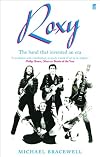
I picked this up thinking I'd already read it - as I've read almost everything else on Roxy music. I was absolutely wrong.
This fascinating book covers in exhaustive depth everything you never even imagined you wanted to know about the way Roxy Music came about. The artistic and aesthetic backgrounds of Bryan Ferry, Andy Mackay and Brian Eno are covered at considerable length. I learnt plenty I didn't know before about Art movements (specifically Pop Art), the evolution of Art Education in show more the 1950s and 1960s, and even the role of cybernetics and behaviourism in Art and Art Education theory. I thought I knew quite a lot about Reading University in the 60s and 70s. It turns out I didn't know anything like as much as I thought. Then there are the less academic "creatives" who also made a great contribution, and how crucial networks of people came to be acquainted with one another.
It's an absolute tour-de-force.
Like another of my favourite music books (Joe Jackson's "A Cure For Gravity"), this book goes up to the point at which success started, but then no further - an admirable principle. show less
This fascinating book covers in exhaustive depth everything you never even imagined you wanted to know about the way Roxy Music came about. The artistic and aesthetic backgrounds of Bryan Ferry, Andy Mackay and Brian Eno are covered at considerable length. I learnt plenty I didn't know before about Art movements (specifically Pop Art), the evolution of Art Education in show more the 1950s and 1960s, and even the role of cybernetics and behaviourism in Art and Art Education theory. I thought I knew quite a lot about Reading University in the 60s and 70s. It turns out I didn't know anything like as much as I thought. Then there are the less academic "creatives" who also made a great contribution, and how crucial networks of people came to be acquainted with one another.
It's an absolute tour-de-force.
Like another of my favourite music books (Joe Jackson's "A Cure For Gravity"), this book goes up to the point at which success started, but then no further - an admirable principle. show less
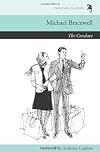
Michael Bracewell is a master stylist whose prose is so effortlessly charming, so balanced and finely-weighted, it's almost a different medium altogether. There's a razor-keen aesthetic sense, reminiscent perhaps of Denton Welch, but Bracewell's prose manages to be aware of its own (in a good way) preciousness and subtly to comment on it, without ever being po-faced. It's an extraordinarily versatile prose style which could tell any number of stories; but in "The Conclave" it has probably show more the ideal subject.
This is an essential novel of 1980's Britain which analyses consumerism as a quest for meaning/truth through beauty. It is a novel about money, but money is always a means, not the end in itself that so many 80's narratives make it. The members of "The Conclave" aren't braying loadsamoney types - those barely feature on the very periphery of the narrative - but ordinary imperfect individuals responding to a societal sea-change they are hardly aware of. Their addiction to credit and nice things isn't politicised; Thatcher is referred to only once or twice, obliquely. And by showing us how things were so quietly and immersively, Bracewell gives a better account of why things were than any number of Amises; in fact he does for this small segment of society what Waugh did for the bright young things of the 1930's.
There is simply no reason not to read this book. My only minor quibble is with the conclusion, which feels rushed - as though history caught up with the author before he was finished. But this must have been how it felt for the characters, too, when the clock ticked over into 1990. show less
This is an essential novel of 1980's Britain which analyses consumerism as a quest for meaning/truth through beauty. It is a novel about money, but money is always a means, not the end in itself that so many 80's narratives make it. The members of "The Conclave" aren't braying loadsamoney types - those barely feature on the very periphery of the narrative - but ordinary imperfect individuals responding to a societal sea-change they are hardly aware of. Their addiction to credit and nice things isn't politicised; Thatcher is referred to only once or twice, obliquely. And by showing us how things were so quietly and immersively, Bracewell gives a better account of why things were than any number of Amises; in fact he does for this small segment of society what Waugh did for the bright young things of the 1930's.
There is simply no reason not to read this book. My only minor quibble is with the conclusion, which feels rushed - as though history caught up with the author before he was finished. But this must have been how it felt for the characters, too, when the clock ticked over into 1990. show less
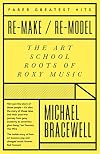
Roxy Music appeared to arrive out of nowhere or, possibly, outer space. Their electrifying 1972 debut album presented a fully formed vision which offered a new form of art pop. Or, if you prefer, a new form of pop art.
This books ends with the release of that classic record and is an exploration of the artistic and cultural milieu the band were shaped by and emerged from - art school, pop art, conceptual art, avant-garde music and high fashion.
The prime movers in Roxy were two fine arts show more graduates both called Bry(i)an. Ferry studied at Newcastle University where he fell under the influence of the British pop artist Richard Hamilton. Hamilton’s idea that an artist did not have to be committed to one particular style fed into the stylistic eclecticism of the band. Eno seems to have spent his time as an art student, at Ipswich and Winchester, assiduously not creating art but instead expounding elaborate theories about it (his immense facility for doing this has, in a sense, been the cornerstone of his subsequent music career).
Andy Mackay, who was to become the saxophonist and oboeist in Roxy Music, studied music and English at Reading University, and first came into contact with Eno through their shared interest in avant-garde music. The influence of composers like La Monte Young and Terry Riley was to provide a powerful counterpoint to Ferry’s more soul based and Great American Songbook approach. Last, but not least in terms of the evolution of Roxy Music, all three were dedicated dandies.
Bracewell has a tendency to treat Roxy Music as sui generis. They weren’t of course. The curious thing about his book is that he writes about the visual arts world Roxy emerged from at great length but says almost nothing about how they relate to the pop music scene they became part of. It detracts nothing from the brilliance of the band to point out that pop and art were bedfellows long before Roxy Music came along. As George Melly observed in his groundbreaking survey of sixties pop culture Revolt Into Style, published in 1970 when Bryan Ferry was still teaching ceramics at a girls school, the art schools were the great enablers of British pop music. John Lennon, Ray Davies, Pete Townshend and Syd Barrett all attended art schools and the experience informed their work in various ways. David Bowie, the other great practitioner of arty glam rock, didn’t go to art school, but you would certainly be forgiven for thinking that he had. Bowie receives no more than a few passing mentions in the book and the relationship between his work and that of Roxy Music is left unexplored.
Bracewell has interviewed all members of Roxy and all the other key players in the bands’ pre-history and early history. His prose style is rather dry and quasi-academic but, thankfully, regularly interspersed with extended quotations from his cast of characters. What they have to say is anything but dry and constitutes a fascinating oral history of the British art and fashion scene of the sixties and early seventies.
If you’re looking for a biography of Roxy Music this is not it - the book is almost over by the time the band is formed. Bracewell’s approach is extremely wide-ranging and, at times, Roxy Music are lost sight of. To some extent he uses Roxy as an entry point into a particular stretch of British cultural history. But for anyone interested in the symbiotic relationship between art and music that was a feature of this period, particularly in Britain, Re-make/Re-model is rewarding reading. show less
This books ends with the release of that classic record and is an exploration of the artistic and cultural milieu the band were shaped by and emerged from - art school, pop art, conceptual art, avant-garde music and high fashion.
The prime movers in Roxy were two fine arts show more graduates both called Bry(i)an. Ferry studied at Newcastle University where he fell under the influence of the British pop artist Richard Hamilton. Hamilton’s idea that an artist did not have to be committed to one particular style fed into the stylistic eclecticism of the band. Eno seems to have spent his time as an art student, at Ipswich and Winchester, assiduously not creating art but instead expounding elaborate theories about it (his immense facility for doing this has, in a sense, been the cornerstone of his subsequent music career).
Andy Mackay, who was to become the saxophonist and oboeist in Roxy Music, studied music and English at Reading University, and first came into contact with Eno through their shared interest in avant-garde music. The influence of composers like La Monte Young and Terry Riley was to provide a powerful counterpoint to Ferry’s more soul based and Great American Songbook approach. Last, but not least in terms of the evolution of Roxy Music, all three were dedicated dandies.
Bracewell has a tendency to treat Roxy Music as sui generis. They weren’t of course. The curious thing about his book is that he writes about the visual arts world Roxy emerged from at great length but says almost nothing about how they relate to the pop music scene they became part of. It detracts nothing from the brilliance of the band to point out that pop and art were bedfellows long before Roxy Music came along. As George Melly observed in his groundbreaking survey of sixties pop culture Revolt Into Style, published in 1970 when Bryan Ferry was still teaching ceramics at a girls school, the art schools were the great enablers of British pop music. John Lennon, Ray Davies, Pete Townshend and Syd Barrett all attended art schools and the experience informed their work in various ways. David Bowie, the other great practitioner of arty glam rock, didn’t go to art school, but you would certainly be forgiven for thinking that he had. Bowie receives no more than a few passing mentions in the book and the relationship between his work and that of Roxy Music is left unexplored.
Bracewell has interviewed all members of Roxy and all the other key players in the bands’ pre-history and early history. His prose style is rather dry and quasi-academic but, thankfully, regularly interspersed with extended quotations from his cast of characters. What they have to say is anything but dry and constitutes a fascinating oral history of the British art and fashion scene of the sixties and early seventies.
If you’re looking for a biography of Roxy Music this is not it - the book is almost over by the time the band is formed. Bracewell’s approach is extremely wide-ranging and, at times, Roxy Music are lost sight of. To some extent he uses Roxy as an entry point into a particular stretch of British cultural history. But for anyone interested in the symbiotic relationship between art and music that was a feature of this period, particularly in Britain, Re-make/Re-model is rewarding reading. show less
When Surface Was Depth: Death by Cappuccino and Other Reflections on Music and Culture in the 1990's by Michael Bracewell

Ostensibly about the lack of creative musical efforts in the 90s, these Bracewell essays are really about his preference of 80s media personalities over whomever came after.
Incredibly fluid writing which shows Bracewell's desire to associate all ideas and movements with a like-minded appreciative audience of readers. This probably isn't his most powerful literary statement but it does cover a lot of ground. Best sections included appraisals of Morrissey, Brian Eno, Roxy Music, and Malcolm show more McDowell. A treat to read from a stylist of great command. show less
Incredibly fluid writing which shows Bracewell's desire to associate all ideas and movements with a like-minded appreciative audience of readers. This probably isn't his most powerful literary statement but it does cover a lot of ground. Best sections included appraisals of Morrissey, Brian Eno, Roxy Music, and Malcolm show more McDowell. A treat to read from a stylist of great command. show less
Lists
culture (1)
Awards

You May Also Like


Associated Authors
Statistics
- Works
- 74
- Also by
- 2
- Members
- 825
- Popularity
- #30,924
- Rating
- 3.5
- Reviews
- 17
- ISBNs
- 97
- Languages
- 5