
Casper Silk
Author of You, Fascinating You
About the Author
Image credit: the author at her Mac
Works by Casper Silk
Associated Works
Sand in My Bra and Other Misadventures: Funny Women Write from the Road (2003) — Contributor — 310 copies, 9 reviews
Not So Funny When It Happened: The Best of Travel Humor and Misadventure (2000) — Contributor — 244 copies, 7 reviews
Tagged
Common Knowledge
- Gender
- female
Members
Reviews

As World War II looms, a young ballerina and a struggling musician fall in love. They marry and have a child before they are forced to separate because the young ballerina, and therefore her son, are Jewish. The subsequent closing of borders results in their separation for over 20 years. Eventually, they are reunited in Italy where it is revealed that the musician has remarried.
This story is gross. It's about a lying and manipulating man who marries a ballerina with the express intention of show more preventing her from going on with her career. At the time, the man is already married and has a child, but pretends otherwise. He succeeds and manages to keep her from traveling or dancing professionally ever again. He puts a baby in her so her body is ruined for ballet. She continues to practice at home, but he constantly discourages her.
Despite the prevailing political climate, he continues to ignore her worries about her Jewish heritage. He keeps telling her everything will be fine. Eventually, she is forced to flee Italy with her son. He doesn't even try to go with her. Just sends her off. The moment she reaches Hungary her passport is confiscated. Later she ends up in a concentration camp and her son in an orphanage. The whole time she's suffering, he's living it up in Italy. Writing music, getting famous, sleeping with all the women. He dies fat and happy with a multiplicity of wives and the ballerina cries for him. He leaves her nothing. He leaves his son nothing.
Despite this frankly appalling story, the author tries to spin it as a love story? Sorry, what part of this is romantic? He wrote a song about missing her, I guess? Even his proposal was awful. Don't go traveling with your dancing troop! Stay home and clean my house instead! I mean, what girl doesn't want to hear those words?
The execution also wasn't great. The author didn't manage to bring the characters to life and the sense of place just falls flat. She kept skipping over important events and including boring twaddle. Lots of this book was just tedious. show less
This story is gross. It's about a lying and manipulating man who marries a ballerina with the express intention of show more preventing her from going on with her career. At the time, the man is already married and has a child, but pretends otherwise. He succeeds and manages to keep her from traveling or dancing professionally ever again. He puts a baby in her so her body is ruined for ballet. She continues to practice at home, but he constantly discourages her.
Despite the prevailing political climate, he continues to ignore her worries about her Jewish heritage. He keeps telling her everything will be fine. Eventually, she is forced to flee Italy with her son. He doesn't even try to go with her. Just sends her off. The moment she reaches Hungary her passport is confiscated. Later she ends up in a concentration camp and her son in an orphanage. The whole time she's suffering, he's living it up in Italy. Writing music, getting famous, sleeping with all the women. He dies fat and happy with a multiplicity of wives and the ballerina cries for him. He leaves her nothing. He leaves his son nothing.
Despite this frankly appalling story, the author tries to spin it as a love story? Sorry, what part of this is romantic? He wrote a song about missing her, I guess? Even his proposal was awful. Don't go traveling with your dancing troop! Stay home and clean my house instead! I mean, what girl doesn't want to hear those words?
The execution also wasn't great. The author didn't manage to bring the characters to life and the sense of place just falls flat. She kept skipping over important events and including boring twaddle. Lots of this book was just tedious. show less
 This review was written for LibraryThing Early Reviewers.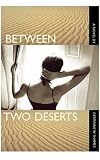
Between Two Deserts is the first of four novels Germaine Shames has written since 2002. A former foreign correspondent, Germaine took a scissors to her press pass when she realized reporting about international news in an imposed limited format made it impossible to describe for readers the complicated interaction of people caught up in daily existence, politics, and war. Nowhere is this more evident than in Jerusalem during the Palestinian Intifada (1987 to 1993) where describing events as show more news misses the mark in showing the world the importance of religion, land, tradition, money, family, and information to Jews and Arabs, Israelis and Palestinians. Ms. Shames’ first novel shows the reader that at individual and social levels, there are many strongly-held points of view that involve more questions than answers. As a writer of fiction, Ms. Shames also understands what E. M. Forster indicated in India during the British Raj, that writing novels about foreign locations is always given the most color when love relationships develop in unfamiliar and stressful circumstances.
The cast of characters in Between Two Deserts cluster around the lodestone, Eve Cavell, a young American Jew who travels to Jerusalem after the death of her grandfather. Two generations away from the holocaust, Eve is not a wide-eyed ingénue but rather a person with superficial attachments to Jewish tradition and feelings of the sanctity of the homeland. Showing an apparent weak identity with her heritage, Eve seems free of strong political views and social prejudice. She is vital in her open sexuality and general freedom of spirit, qualities that are suppressed in Jerusalem residents. Characters illustrating constricted views and behaviors on the unsettled stage of Jerusalem during the period of Palestinian uprising include: Mozes Koenig a professor of Middle East Studies from Budapest survivor of the Holocaust and author of a novel popular ten years ago in Jerusalem A Time for War, Salim Mahmoud a restless young Arab man whose family’s wealth was greatly decreased when the Israelis annexed East Jerusalem, engineer Jacob Halevi an orphan placed by the Jewish Agency on Kibbutz Sde Boker after surviving World War II, Jacob’s wife Leah a degreed psychologist in private practice, Sana Mahmoud director of an orphanage for Arab children whose goal was to raise the next generation of Palestinian nationalists.
The story involves Mozes’ controversial new novel, A Time for Peace, inspired by his wife Gizella who was shot dead in route to Dachau for singing a lullaby to a frightened child. Eve reminds him of his wife, his muse, giving him new insight into the Israeli/Palestinian problem making him think that peace is possible. Salim, Jacob, and Sana do not see eye to eye with Mozes or each other.
This is an excellent novel that I enjoyed reading as much as I did Ms. Shames’ other three novels: Hotel Noir and Echo Year (written as Casper Silk) and You, Fascinating You. I so admire her writing style. It captures the essence of the settings and the characters with poetic impact. In Between Two Deserts, Germaine reminds me of Lawrence Durrell and his novel, Justine. Jerusalem and Eve are the focus for Shames, and Alexandria and Justine are the focus for Durrell. As with Durrell, Germaine Shames writes with a great sense of time and timing. I highly recommend all four of Germaine Shames' novels. show less
The cast of characters in Between Two Deserts cluster around the lodestone, Eve Cavell, a young American Jew who travels to Jerusalem after the death of her grandfather. Two generations away from the holocaust, Eve is not a wide-eyed ingénue but rather a person with superficial attachments to Jewish tradition and feelings of the sanctity of the homeland. Showing an apparent weak identity with her heritage, Eve seems free of strong political views and social prejudice. She is vital in her open sexuality and general freedom of spirit, qualities that are suppressed in Jerusalem residents. Characters illustrating constricted views and behaviors on the unsettled stage of Jerusalem during the period of Palestinian uprising include: Mozes Koenig a professor of Middle East Studies from Budapest survivor of the Holocaust and author of a novel popular ten years ago in Jerusalem A Time for War, Salim Mahmoud a restless young Arab man whose family’s wealth was greatly decreased when the Israelis annexed East Jerusalem, engineer Jacob Halevi an orphan placed by the Jewish Agency on Kibbutz Sde Boker after surviving World War II, Jacob’s wife Leah a degreed psychologist in private practice, Sana Mahmoud director of an orphanage for Arab children whose goal was to raise the next generation of Palestinian nationalists.
The story involves Mozes’ controversial new novel, A Time for Peace, inspired by his wife Gizella who was shot dead in route to Dachau for singing a lullaby to a frightened child. Eve reminds him of his wife, his muse, giving him new insight into the Israeli/Palestinian problem making him think that peace is possible. Salim, Jacob, and Sana do not see eye to eye with Mozes or each other.
This is an excellent novel that I enjoyed reading as much as I did Ms. Shames’ other three novels: Hotel Noir and Echo Year (written as Casper Silk) and You, Fascinating You. I so admire her writing style. It captures the essence of the settings and the characters with poetic impact. In Between Two Deserts, Germaine reminds me of Lawrence Durrell and his novel, Justine. Jerusalem and Eve are the focus for Shames, and Alexandria and Justine are the focus for Durrell. As with Durrell, Germaine Shames writes with a great sense of time and timing. I highly recommend all four of Germaine Shames' novels. show less

You, Fascinating You is another excellent book by journalist, novelist, and screenwriter Germaine Shames. I have read and greatly enjoyed two of her previous novels, Hotel Noir and Echo Year, and a volume of short stories, Wars of the Flesh. In this novel, Ms. Shames writes a story of love and war based on the life of Margit Wolf, a ballerina trained in her art during the pre-World War II years in Budapest, Hungary. Margit, a beautiful woman from a Jewish family, narrates her life of dance show more and adventure beginning in the 1920s when she and three ballet friends were recruited in Budapest by an "impresario" with doubtful credentials to travel and dance in local musical shows in Italy. Her life goal was to dance ballet at La Scala in Milan and considered the opportunity to travel to Italy the first step in a wonderful career. Margit soon realized that there was a long road to her dancing goal. Although strong in character, Margit's dreams slowly faded as love, war, and persecution affected her along the road.
As a young dancer in Italy, Margit formed a relationship with an orchestra leader, Neapolitan Maestro Pasquale Frustaci. The love between the two was destined to last a lifetime, though most of the time the Jew and Gentile were separated by the edicts of war. Margit became restricted in travel out of Hungary while Pasquale returned to his family and career as composer/conductor in Naples. Margit describes her personal restrictive circumstances and the general increasingly deadly persecution of Jews in Hungary in the 1930s and 1940s. The will to live remained strong within Jewish families but the living conditions deteriorated during the War to bare survival. As time went by, Margit began to wonder if she, her son, and Pasquale would ever live together again.
Ms. Shames is a great story teller with a talent for giving life to characters while maintaining her distance from them. They do not speak her thoughts "out of character" as is the case with many novelists. I think of her talent as a "dissociative" approach to writing and believe it allows characters to experience their own genuine motivations and emotions. Another wonderful talent is Germaine's ability to represent time in her novels in a foreshortened manner that heightens the dramatic intensity of her stories. The reader notices a jump from one point of the narrative to a later one in terms of hours, days, and even years. By leaving out much of the daily circumstances and details of development over the years, the reader feels with high impact the excitement, contentment, boredom, and pain of the characters' lives as they return to the page after time has elapsed. The reader intuitively knows the important unwritten background details of their lives. Time itself is a character created by Ms. Shames (as it was with Proust and Joyce) allowing the reader to soar ahead of both the limits of ordinary and extraordinary experience of the characters. The reader can envision a play taken directly from the novel.
Well, that is exactly what Germaine Shames is doing, developing a musical play based on her novel. The title, You, Fascinating You, is a love song written by Pasquale lamenting the forced separation from Margit and their long period of separation. The reader anticipates a reunion, but given the circumstances, is it possible? I highly recommend this novel, and I plan to see the play when it is ready for the theater. show less
As a young dancer in Italy, Margit formed a relationship with an orchestra leader, Neapolitan Maestro Pasquale Frustaci. The love between the two was destined to last a lifetime, though most of the time the Jew and Gentile were separated by the edicts of war. Margit became restricted in travel out of Hungary while Pasquale returned to his family and career as composer/conductor in Naples. Margit describes her personal restrictive circumstances and the general increasingly deadly persecution of Jews in Hungary in the 1930s and 1940s. The will to live remained strong within Jewish families but the living conditions deteriorated during the War to bare survival. As time went by, Margit began to wonder if she, her son, and Pasquale would ever live together again.
Ms. Shames is a great story teller with a talent for giving life to characters while maintaining her distance from them. They do not speak her thoughts "out of character" as is the case with many novelists. I think of her talent as a "dissociative" approach to writing and believe it allows characters to experience their own genuine motivations and emotions. Another wonderful talent is Germaine's ability to represent time in her novels in a foreshortened manner that heightens the dramatic intensity of her stories. The reader notices a jump from one point of the narrative to a later one in terms of hours, days, and even years. By leaving out much of the daily circumstances and details of development over the years, the reader feels with high impact the excitement, contentment, boredom, and pain of the characters' lives as they return to the page after time has elapsed. The reader intuitively knows the important unwritten background details of their lives. Time itself is a character created by Ms. Shames (as it was with Proust and Joyce) allowing the reader to soar ahead of both the limits of ordinary and extraordinary experience of the characters. The reader can envision a play taken directly from the novel.
Well, that is exactly what Germaine Shames is doing, developing a musical play based on her novel. The title, You, Fascinating You, is a love song written by Pasquale lamenting the forced separation from Margit and their long period of separation. The reader anticipates a reunion, but given the circumstances, is it possible? I highly recommend this novel, and I plan to see the play when it is ready for the theater. show less
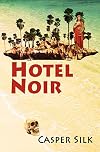
Hotel Noir isn’t a novel you can shamble through, intellect at half mast.
It commands your attention, draws you into the seedy and jaded environment of an island sliding from past glory into poverty and narcotic hell. Honestly, I found the characters revolting, even Francis with his twisted morality. I wanted to pounce on these apathetic lost souls and start by giving them a good wash.
That is how powerful the writing of Casper Silk is.
Don’t expect comfort. Don’t expect the meaning of show more life with a happy advertising jingle. This novel is saturated with loss, the heaviness of daily life and routine, addiction, prostitution, guilt and blackmail. Peel off that first layer to find more dirt underneath.
If you want a dark and turbulent read through the underbelly of an island’s lost dreams, this is it, exquisitely written. show less
It commands your attention, draws you into the seedy and jaded environment of an island sliding from past glory into poverty and narcotic hell. Honestly, I found the characters revolting, even Francis with his twisted morality. I wanted to pounce on these apathetic lost souls and start by giving them a good wash.
That is how powerful the writing of Casper Silk is.
Don’t expect comfort. Don’t expect the meaning of show more life with a happy advertising jingle. This novel is saturated with loss, the heaviness of daily life and routine, addiction, prostitution, guilt and blackmail. Peel off that first layer to find more dirt underneath.
If you want a dark and turbulent read through the underbelly of an island’s lost dreams, this is it, exquisitely written. show less
This review was written for LibraryThing Early Reviewers.Awards

You May Also Like
Associated Authors
Statistics
- Works
- 7
- Also by
- 3
- Members
- 85
- Popularity
- #214,930
- Rating
- 3.4
- Reviews
- 44
- ISBNs
- 12
