
Sylvia A. Johnson
Author of Silkworms (Lerner Natural Science Books)
About the Author
Series
Works by Sylvia A. Johnson
Tomatoes, Potatoes, Corn, and Beans: How the Foods of the Americas Changed Eating Arou (1997) 44 copies
Wolf pack 1 copy
Tagged
Common Knowledge
- Gender
- female
Members
Reviews
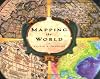
Johnson begins in ancient history with a clay tablet from Babylonia and continues on to the cartography of Ptolemy, the Mercator projection, and to today's Landsat and computer-generated maps. Her explanations are both detailed and clear. She takes a potentially challenging topic with a long history and adeptly weaves a narrative full of fun facts and interesting revelations. It's a wonderful collection of cartography, and I especially like the images that Johnson selected. She uses these show more great examples of past maps to help explain to the reader how maps vary in how and why they are made. For example, religion and worldview heavily influenced the maps of the Middle Ages.
I think this book would be a great addition to a 6th grade classroom. The content is challenging, but Johnson explains it clearly. It seems that in our smartphone era, an ability to use a map and find one's way is losing its relevancy. I think in class it would instructive to make our own maps and to even play around with the different kinds of map projections. For example, we could try to make a flat map from a globe. Or we could ask questions about the social effects that the Mercator projection could have. For instance, if the Mercator maps inaccurately make countries far from the equator larger (i.e., Europe and North America), does this have an impact in how we see these countries as powerful? In an upper-level class, I think we could have some good discussions about the social ramifications like this. show less
I think this book would be a great addition to a 6th grade classroom. The content is challenging, but Johnson explains it clearly. It seems that in our smartphone era, an ability to use a map and find one's way is losing its relevancy. I think in class it would instructive to make our own maps and to even play around with the different kinds of map projections. For example, we could try to make a flat map from a globe. Or we could ask questions about the social effects that the Mercator projection could have. For instance, if the Mercator maps inaccurately make countries far from the equator larger (i.e., Europe and North America), does this have an impact in how we see these countries as powerful? In an upper-level class, I think we could have some good discussions about the social ramifications like this. show less
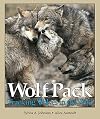
For a juvenile non-fiction book about wolves, this one is pretty thorough. It details how wolves live in the wild, their social structure and pack life, how the pups are raised, what they eat, hunting methods, territory defense and so on. Also conflicts with humans, some folklore and misconceptions about wolves, and how radio-tracking is used to study them (thus the subtitle, which I found a bit odd because it's only one short chapter at the very end that discusses this). It's basic, but show more really informative for all that. I recognized most of the photographs. I think I've seen them before in some older edition of National Geographic magazine.
from the Dogear Diary show less
from the Dogear Diary show less

Such an amazing science book for children. Chock full of pictures and articulate explanations, this book describes fascinating facts and development of this little beetle. This book was interesting to me! (Be aware that age appropriate pictures and text clearly describe mating and egg laying. I found it refreshing, but parents do need to know what they are purchasing.) I have seen several in this series. They are all excellent resources for elementary children and worth tracking down.

Large format, instructive book, with about two illustrative photographs on each page. - 1/2 off star for calling propolis "bee glue". Starts the year at earliest spring check of the hives and ends again in the middle of a Minnesota winter, making sure the weather hasn't damaged the hives or their tar paper covering and exposed the bees to the elements. A great introduction for a starting beekeeper who knows next to nothing about the subject and a good book for kids.
Lists
Sonlight Books (2)
Awards


You May Also Like


Associated Authors
Statistics
- Works
- 51
- Members
- 1,585
- Popularity
- #16,274
- Rating
- 3.5
- Reviews
- 27
- ISBNs
- 75
- Languages
- 1