
Leisha Kelly
Author of Emma's Gift
About the Author
Image credit: Used by permission of Baker Publishing Group, copyright © 2008. All rights to this material are reserved. Materials are not to be distributed to other web locations for retrieval, published(see © info.)
Series
Works by Leisha Kelly
Tahn / Return to Alastair 3 copies
BK 7. Sarah's Promis 1 copy
EMMA’S GIFT 1 copy
Emma's Gift - BK 2 of series 1 copy
Meaning of Marriage, The 1 copy
BK 5. Rachels Prayer 1 copy
BK 1. Julia's Hope 1 copy
Rory's Secret 1 copy
BK 4. Rorey's Secret 1 copy
Tagged
Common Knowledge
- Other names
- Kelly, L. A.
- Gender
- female
Members
Reviews
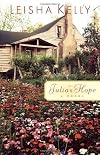
This is the beginning of a series that I can't wait to see what happens next. I loved how the author started each chapter with the name of the person who was sharing their life with you in that chapter; their thoughts, their attitudes, their struggles. It was almost like you were reading a page in their diary. These folks felt like real people, struggling during a real hard time in our history and I felt honored to be let into their life for a few brief moments.
It is the year 1931 and Samuel show more Wortham has lost his job and his wife's inheritance, their home and so much more. He is on the road with his family, wife Julia, and two children. They are trying to hitch rides from Pennsylvania to Illinois. During a sudden storm they seek shelter in what they discover is an abandoned home for the night. Samuel is ready to head out the next day, but Julia feels strongly about the house and insists they find the owner. This will lead them to dear Emma Graham, the most caring and giving person, that would warm anyone's heart. She works out a plan that they can live there as she is now handicapped and can't live their on her own. The Wortham family will eventually offer to bring Emma back to her dearly loved farm and let her live with them and they will take care of her. But many of the neighbor folks don't look kindly on the Wortham's and they will struggle, especially Sam, with being able to provide for his family. Julia though knows how to 'live off the land' and the farm quickly becomes her hope, as she sees the Lord provide again and again for them all. It was so good to see how this family starts to blossom and enjoy the simple things in life and to see the heart of an old lady, who had many lessons to share with this family. This was a heartwarming story and one I will long remember. Anxious now to begin story #2, Emma's Gift. show less
It is the year 1931 and Samuel show more Wortham has lost his job and his wife's inheritance, their home and so much more. He is on the road with his family, wife Julia, and two children. They are trying to hitch rides from Pennsylvania to Illinois. During a sudden storm they seek shelter in what they discover is an abandoned home for the night. Samuel is ready to head out the next day, but Julia feels strongly about the house and insists they find the owner. This will lead them to dear Emma Graham, the most caring and giving person, that would warm anyone's heart. She works out a plan that they can live there as she is now handicapped and can't live their on her own. The Wortham family will eventually offer to bring Emma back to her dearly loved farm and let her live with them and they will take care of her. But many of the neighbor folks don't look kindly on the Wortham's and they will struggle, especially Sam, with being able to provide for his family. Julia though knows how to 'live off the land' and the farm quickly becomes her hope, as she sees the Lord provide again and again for them all. It was so good to see how this family starts to blossom and enjoy the simple things in life and to see the heart of an old lady, who had many lessons to share with this family. This was a heartwarming story and one I will long remember. Anxious now to begin story #2, Emma's Gift. show less
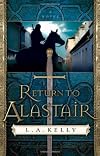
My opinion of this book was sadly torn between more than one viewpoint.
If you are looking for a story with a sound spiritual message about forgiveness and trust then this is it, and the theme is well handled, but the setting, much of the characterisation and certain aspects of the plot are not.
On the one hand in terms of Christian content I cannot fault it, but the Historian in me could barely tolerate the historical inaccuracy and seeming lack of research, and on a purely superficial show more level the story was clichéd, predictable and repetitive in places. For instance, it was not hard to guess that the villains from the first novel would be behind the bad things which happened to the hero's family in the past- just as they behind almost everything last in that novel.
How many times can the hero be seriously wounded, or poisoned whipped come close to death, and yet pull through? Many times in this series it seems, but after the first couple of occasions this really becomes tiresome and predictable, because of course it is obvious that the the hero won't actually die because of who he is.
As a rather too pedantic History student, inaccuracy, shoddy research and lack of faithfulness to the period setting in a book are a source of annoyance for me- and this novel sadly suffers from most of these.
The continued use of the inaccurate and grammatically questionable word 'Baronship' to describe the lands and titles of a Baron instead of the correct term 'Barony' made me feel like throwing the book against the wall (had I not been reading the electronic edition) and really just suggested the author had done little if any research into the Medieval period, and had simply guessed at any unfamiliar terms rather than bothering to look them up.
One of the central suppositions of the plot, that the illegitimate daughter of a Baron and her offspring had a supposedly stronger claim to his lands than his legitimate son also did not ring true- especially not as a justification for the actions of the villains against the hero.
The villain himself is almost laughable in terms of his bungling incompetence, and is so one dimensional he could be made of cardboard. It also seemed to me that he appeared to be based upon the stereotypical depiction of an 'English' nobleman, with his high register language and class-snobbery. Or perhaps more correctly the depiction of him is based what an American who had never met or seen an British person thought they were like- based on what they had seen in movies.
In another place, the novel certainly seems to reflect a typically American view of the aristocracy in which the heroine dismisses all nobles as lazy and spoiled and having never faced hardship or done a day's work in their lives. Anyone who had truly studied the Medieval aristocracy would realise this was not the case, and that Medieval aristocrats spent much of their time fighting, or struggling to run countries and that this was their 'work'.
Altogether, a great Christian story but a very poor Historical novel. show less
If you are looking for a story with a sound spiritual message about forgiveness and trust then this is it, and the theme is well handled, but the setting, much of the characterisation and certain aspects of the plot are not.
On the one hand in terms of Christian content I cannot fault it, but the Historian in me could barely tolerate the historical inaccuracy and seeming lack of research, and on a purely superficial show more level the story was clichéd, predictable and repetitive in places. For instance, it was not hard to guess that the villains from the first novel would be behind the bad things which happened to the hero's family in the past- just as they behind almost everything last in that novel.
How many times can the hero be seriously wounded, or poisoned whipped come close to death, and yet pull through? Many times in this series it seems, but after the first couple of occasions this really becomes tiresome and predictable, because of course it is obvious that the the hero won't actually die because of who he is.
As a rather too pedantic History student, inaccuracy, shoddy research and lack of faithfulness to the period setting in a book are a source of annoyance for me- and this novel sadly suffers from most of these.
The continued use of the inaccurate and grammatically questionable word 'Baronship' to describe the lands and titles of a Baron instead of the correct term 'Barony' made me feel like throwing the book against the wall (had I not been reading the electronic edition) and really just suggested the author had done little if any research into the Medieval period, and had simply guessed at any unfamiliar terms rather than bothering to look them up.
One of the central suppositions of the plot, that the illegitimate daughter of a Baron and her offspring had a supposedly stronger claim to his lands than his legitimate son also did not ring true- especially not as a justification for the actions of the villains against the hero.
The villain himself is almost laughable in terms of his bungling incompetence, and is so one dimensional he could be made of cardboard. It also seemed to me that he appeared to be based upon the stereotypical depiction of an 'English' nobleman, with his high register language and class-snobbery. Or perhaps more correctly the depiction of him is based what an American who had never met or seen an British person thought they were like- based on what they had seen in movies.
In another place, the novel certainly seems to reflect a typically American view of the aristocracy in which the heroine dismisses all nobles as lazy and spoiled and having never faced hardship or done a day's work in their lives. Anyone who had truly studied the Medieval aristocracy would realise this was not the case, and that Medieval aristocrats spent much of their time fighting, or struggling to run countries and that this was their 'work'.
Altogether, a great Christian story but a very poor Historical novel. show less
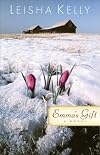
This story is about two families trying to recover from the untimely deaths that affected each family. However, over half the book deals with the children's grief and Julia's questioning of God. There was little plot development and poor character development for the first half of the book - just portrait after portrait of how grief affected the children and how the busy adults did not have time to grieve. Finally the book got moving toward the end with an attempted suicide, which then show more turned unbelievable with how quickly everyone involved recovered from that averted tragedy. The overall theme, trusting in God, was a good message, but the surrounding context did not seem true to life. Such bitter grief does not wash away that easily, even if you are a believer in God. show less
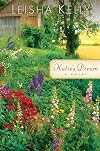
I like that the two families blend together and work as one, sharing with each other. I like the faith that Julia, Samuel, Franky and others exhibit. I like that Julia and Samuel are willing to take in another mouth during times that are difficult--when they aren't even sure they'll have enough to feed their own two children.
Seeing the sibling relationship between Edward and Samuel was tough. I'm glad they came to some sort of understanding by the end of the book. I wish their relationship show more hadn't been so full of anger.
I guessed who Katie's father was long before it was revealed in the book and that's a rare thing for me to have happen.
I also appreciate how the Worthams accept Franky for who he is and how he is. It's disappointing to see that his own father doesn't see beyond the obvious. It's also disappointing that the schoolteacher apparently can't see that Franky can learn, he just learns differently than most. She apparently thinks since he can't write or read that he's stupid and unteachable. But he can do math quicker in his head than most do on paper and he "gets" deep meanings in literature and from the Bible that most people his age don't understand.
I liked this book in some ways better than others in the series, but in other ways I didn't like it as much which is why I rated it one star lower than the other two. Perhaps as another reviewer said, it is because this book contains so much anger and other emotion that it spilled over into how I feel about the book. show less
Seeing the sibling relationship between Edward and Samuel was tough. I'm glad they came to some sort of understanding by the end of the book. I wish their relationship show more hadn't been so full of anger.
I guessed who Katie's father was long before it was revealed in the book and that's a rare thing for me to have happen.
I also appreciate how the Worthams accept Franky for who he is and how he is. It's disappointing to see that his own father doesn't see beyond the obvious. It's also disappointing that the schoolteacher apparently can't see that Franky can learn, he just learns differently than most. She apparently thinks since he can't write or read that he's stupid and unteachable. But he can do math quicker in his head than most do on paper and he "gets" deep meanings in literature and from the Bible that most people his age don't understand.
I liked this book in some ways better than others in the series, but in other ways I didn't like it as much which is why I rated it one star lower than the other two. Perhaps as another reviewer said, it is because this book contains so much anger and other emotion that it spilled over into how I feel about the book. show less
You May Also Like


Statistics
- Works
- 21
- Members
- 2,087
- Popularity
- #12,318
- Rating
- 4.1
- Reviews
- 39
- ISBNs
- 36
- Languages
- 2
- Favorited
- 2