
Yehudi Menuhin (1916–1999)
Author of Unfinished Journey
About the Author
Image credit: Image © ÖNB/Wien
Works by Yehudi Menuhin
La música del hombre 5 copies
Holst : Perfect fool : Ballet music + The planets + St Paul's suite {sound recording} (1980) — Conductor [Perfect Fool, St Paul's suite] — 3 copies
O Livro da Música 3 copies
Yehudi Menuhin 3 copies
A Música do Homem 2 copies
Béla Bartók - Violin Concerto No. 2, Second Suite / Yehudi Menuhin, Antal Dorati, Minneapolis Symphony Orchestra (1995) 2 copies
Bartok: Violin Concertos, Viola Concerto, 6 Duo for 2 Violins, Violin Rhapsodies; Yehudi Menuhin (2003) 2 copies
Play Beethoven & Tchaikovsky 1 copy
La música del hombre 1 copy
J. S. Bach: Concierto para dos violines en re menor. G. F. Handel: Sonata en trío nº 2 en re mayor 1 copy
Vaughan Williams: Concerto in C major for Two Pianos and Orchestra / Symphony No. 5 in D major 1 copy
Menuhin: 75 Birthday Salute 1 copy
Beethoven : Violin Concerto + Vaughan Williams : Dona nobis pacem {sound recording} (1936) — Violin [concerto] — 1 copy
Enescu: Violin Sonata No. 3 / Szymanowski: Notturno e tarantella / Prokofiev: Violin Sonata No. 1 / Ravel: Pièce en forme de habanera & Tzigane [sound recording] (1980) — Composer — 1 copy
The Violin Of The Century 1 copy
Violin Concerto 1 copy
For All Seasons 1 copy
100 Best Menuhin — Artist — 1 copy
Violine und Viola : Yehudi Menuhins Musikführer ; mit einem Abschnitt über die Geschichte der Violine von Denis Stevens (1978) 1 copy
Hall of Fame 1 copy
...Yehudi Menuhin Plays and Conducts: Bach, Mozart, Beethoven, Brahms, Tchaikovsky [10 CD Documents Box Set] (2011) 1 copy
Musica do homem 1 copy
An Autobiography In Music. 1 copy
Yehudi Menuhin (1919-1999) - 1 copy
Beethoven: Violinkonzert 1 copy
Călătorie neterminată 1 copy
Fascinatin' Rhythm 1 copy
Best of Baroque 1 copy
Associated Works
The Art of Practicing: A Guide to Making Music from the Heart (1997) — Foreword — 423 copies, 4 reviews
Violin Concertos Nos.1-3, BWV 1041-1043 [sound recording] (1717) — Artist, some editions — 136 copies, 1 review
On the Firing Line: The Public Life of Our Public Figures (1989) — Contributor — 126 copies, 1 review
Brandenburg Concertos Nos. 1–3: BWV 1046-1048 (sound recording) (1721) — Conductor, some editions — 95 copies
Brandenburg concertos no. 4–6 (sound recording) (1721) — Conductor, some editions — 76 copies, 1 review
Beecham Stories: Anecdotes, Sayings and Impressions of Sir Thomas Beecham (1978) — Foreword — 55 copies, 2 reviews
Instruments of the Orchestra (1977) — Preface, some editions; Contributor, some editions — 23 copies
Variations on an original theme 'Enigma', Op.36 [sound recording] (2002) — Conductor, some editions — 18 copies, 2 reviews
Elgar : Enigma Variations + Violin concerto in B minor, op.61 {sound recording} (1999) — Performer, some editions — 11 copies
Elgar : Enigma variations + In the south + Pomp & circumstance march no.4 in G, Op.39.4 {sound recording} — Conductor, some editions — 3 copies
Berlioz : Le Corsaire : Overture + Chabrier : Gwendoline : Overture + Elgar : Enigma Variations : Finale + Holst : The Planets : Mars + Rachmaninoff : Symphony no.2 : Adagio +… (1955) — Conductor [Enigma Variations], some editions — 2 copies
Orchestral Suites / Musical Offering — Conductor, some editions — 2 copies
Mendelssohn : The Hebrides + Symphony no.4 'Italian' + Violin concerto {sound recording} — Violin [Violin concerto] — 1 copy
Walton : Belshazzar's feast + Partita + Symphony no.1 + Viola concerto + Violin concerto {sound recording} (1959) — Violin; Viola [concertos] — 1 copy
Orchestersuiten No.1-3 — Artist, some editions — 1 copy
Piano Concertos Nos. 1 & 3 / Rhapsodies Nos. 1 & 2 [sound recording] (2003) — Artist, some editions — 1 copy
Tchaikovsky : Nutcracker Op.71a {suite} + Sleeping Beauty {suite} + Swan Lake {suite} [sound recording] — Violin, some editions — 1 copy
Elgar: Music for Strings — Conductor — 1 copy
Tagged
Common Knowledge
- Other names
- Menuhin, Baron
- Birthdate
- 1916-04-22
- Date of death
- 1999-03-12
- Gender
- male
- Education
- privately educated
- Occupations
- violinist
- Awards and honors
- Order of the British Empire (Knight Commander ∙ 1956)
Order of Merit
Life Peerage (Baron Menuhin ∙ 1993)
Kennedy Center Honors (1986)
Wolf Prize (Arts, 1991) - Relationships
- Meagher, Maude (friend)
Menuhin, Diana (wife)
Menuhin, Moshe (father) - Nationality
- USA
Switzerland
UK - Birthplace
- New York, New York, USA
- Places of residence
- New York, New York, USA
San Francisco, California, USA
Paris, France
London, England, UK - Place of death
- Berlin, Germany
Members
Reviews
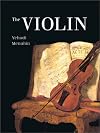
The very plain title of this luminous coffee-table volume does not begin to prepare the reader for the manifold treasures inside. The magnificent reproductions of works of art and historic photos alone would justify the purchase price, but master violinist Menuhin's prose fluid, personal, and engaging is a revelation. For many years a veritable global ambassador for music, Menuhin brings an unusually broad perspective to his subject. His knowledge of the Western tradition is voluminous, but show more his inclusion of learned commentary on jazz, folk, and non-Western music for the violin is particularly welcome. Menuhin also offers perceptive thoughts on the nature of listening distilled from his many multicultural engagements and a Zen-like reflection on emptiness as a prerequisite to communication. Though by no means a scholarly tome there is no bibliography, index, or footnotes this work will still be of great value to professional musicians and amateurs alike. show less

Yehudi Menuhin, the well-known classical violinist, collaborated with Curtis W. Davis to produce an 8-part television series for the Canadian Broadcasting Corporation (CBC) on the history of music. This companion book reproduces the text of the television series, much expanded with detailed notes and many photographs of musical instruments, performers and musical art. The 8 sections correspond to the 8 television episodes:
1) "The Quiver of Life: tracing the origins of music from prehistoric show more times to the first great civilisations of Sumeria, Egypt, China, and classical Greece, including the first musical instruments. Also discusses the evolution of hearing, and the physics of harmonics."
2) "The Flowering of Harmony: the growth of music in Western culture, from early Christian plain chant to Renaissance polyphony. The influence of the Crusades and wars in Spain bring new musical influences from the East, and the notation of music evolves from the first approximate neumes to the present staff and note system. India perfects the art of the single decorated musical line."
3) "New Voices for Man: Monteverdi creates the opera, Corelli creates the sonata and concerto forms, the city of Venice becomes a great musical capital. Colonization of Africa and the New World begins. Violin-making reaches perfection in Cremona Italy. In France, Lully becomes master of music for Louis XIV, and Henry Purcell is the last in line of English renaissance masters, his influence replaced by the German Handel."
4) "The Age of the Composer: Vivaldi, Bach, Mozart, Haydn, Beethoven and Schubert establish music as an idiom, commonly understood throughout the Western world. They begin to produce towering masterpieces, which continue to dominate our present-day classical concerts. Bach establishes the tempered scale and perfects the art of counterpoint; Mozart speaks of human passion with a last gesture of elegant restraint; Beethoven announces the composer as the creator of his own personal idiom; Schubert addresses the inner man."
5) "The Age of the Individual: The industrial age brings with it the modern grand piano, and the huge symphony orchestra, the massive grand opera. Paganini, Chopin, and Liszt become the embodiment of the romantic solo virtuoso. The cities grow, popular and folk music become urbanized, the national anthem emerges. Verdi is the cultural hero of an emerging Italian nation, and Wagner cuts Western music loose from its moorings. Nationalism takes musical shape in Tschaikovsky and other composers, and in popular forms such as the flamenco. Brahms retains his sense of contact with folk roots, and the waltzes of Strauss sweep Europe."
6) "The Parting of the Ways: Immigrants, the willing from Europe and the unwilling from Africa, become the population of North America, where a new music begins to take shape. The songs of Stephen Foster, the rags of Scott Joplin, the marches of John Philip Sousa are part of an America coming of age. Edison's invention of the movies and the phonograph revolutionize the shaping of musical taste. In Europe, old conventions break up under the impact of the impressionism of Debussy, the splendors of Strauss and Mahler. Charles Ives foreshadows the inevitable, and Igor Stravinsky brings on the revolution in music with The Rite of Spring."
7) "The Known and the Unknown: The pace of life in the twentieth century accelerates, and music absorbs new elements with astonishing speed. Jazz breaks like a tidal wave and comes to the concert hall wtih George Gershwin. Arnold Schonberg formulates the twelve-tone system. Edgard Varese creates an abstract music independent of conventions. Aaron Copland forges an American music comparable to that of other nations. The era of the big band is concurrent with Hollywood and Stokowski, radio and Toscanini. The music of Bali is rediscovered. Alban Berg sums up and lets go of the past in his final work, the Violin Concerto."
8) "Sound or Unsound: Junk-heap or compost heap, that is the question: whether music has lost its way, or whether it may flower anew. John Cage questions the validity of music itself, Steve Reich treats it as process, Muzak makes it into subliminal filler. Technology transforms botht he making and mass marketing of music. Canadian pianist Glenn Gould argues that the recording has replaced the concert hall. Popular music is transformed from the sentimental ballads of Sinatra to the driving beat of Presley, the emotional intensity of the Beatles and the street roughness of the Rolling Stones. Young people begin to rediscover the music of the more distant past and of other cultures; and the role of the sentiment returns to both classical and popular music. Bela Bartok is the epitome of the uncompromising artists, one who nonetheless does not lose touch with his roots in the soil and the people."
Clearly Menuhin promotes his own point of view as a traditional classical music performer, in 1979, and the ideas in episode 8 may seem rather narrow and dated. However this is a very accessible and enjoyable introduction to music history for young and old. The video series was excellent, and may still be available from the CBC archives. Recommended. show less
1) "The Quiver of Life: tracing the origins of music from prehistoric show more times to the first great civilisations of Sumeria, Egypt, China, and classical Greece, including the first musical instruments. Also discusses the evolution of hearing, and the physics of harmonics."
2) "The Flowering of Harmony: the growth of music in Western culture, from early Christian plain chant to Renaissance polyphony. The influence of the Crusades and wars in Spain bring new musical influences from the East, and the notation of music evolves from the first approximate neumes to the present staff and note system. India perfects the art of the single decorated musical line."
3) "New Voices for Man: Monteverdi creates the opera, Corelli creates the sonata and concerto forms, the city of Venice becomes a great musical capital. Colonization of Africa and the New World begins. Violin-making reaches perfection in Cremona Italy. In France, Lully becomes master of music for Louis XIV, and Henry Purcell is the last in line of English renaissance masters, his influence replaced by the German Handel."
4) "The Age of the Composer: Vivaldi, Bach, Mozart, Haydn, Beethoven and Schubert establish music as an idiom, commonly understood throughout the Western world. They begin to produce towering masterpieces, which continue to dominate our present-day classical concerts. Bach establishes the tempered scale and perfects the art of counterpoint; Mozart speaks of human passion with a last gesture of elegant restraint; Beethoven announces the composer as the creator of his own personal idiom; Schubert addresses the inner man."
5) "The Age of the Individual: The industrial age brings with it the modern grand piano, and the huge symphony orchestra, the massive grand opera. Paganini, Chopin, and Liszt become the embodiment of the romantic solo virtuoso. The cities grow, popular and folk music become urbanized, the national anthem emerges. Verdi is the cultural hero of an emerging Italian nation, and Wagner cuts Western music loose from its moorings. Nationalism takes musical shape in Tschaikovsky and other composers, and in popular forms such as the flamenco. Brahms retains his sense of contact with folk roots, and the waltzes of Strauss sweep Europe."
6) "The Parting of the Ways: Immigrants, the willing from Europe and the unwilling from Africa, become the population of North America, where a new music begins to take shape. The songs of Stephen Foster, the rags of Scott Joplin, the marches of John Philip Sousa are part of an America coming of age. Edison's invention of the movies and the phonograph revolutionize the shaping of musical taste. In Europe, old conventions break up under the impact of the impressionism of Debussy, the splendors of Strauss and Mahler. Charles Ives foreshadows the inevitable, and Igor Stravinsky brings on the revolution in music with The Rite of Spring."
7) "The Known and the Unknown: The pace of life in the twentieth century accelerates, and music absorbs new elements with astonishing speed. Jazz breaks like a tidal wave and comes to the concert hall wtih George Gershwin. Arnold Schonberg formulates the twelve-tone system. Edgard Varese creates an abstract music independent of conventions. Aaron Copland forges an American music comparable to that of other nations. The era of the big band is concurrent with Hollywood and Stokowski, radio and Toscanini. The music of Bali is rediscovered. Alban Berg sums up and lets go of the past in his final work, the Violin Concerto."
8) "Sound or Unsound: Junk-heap or compost heap, that is the question: whether music has lost its way, or whether it may flower anew. John Cage questions the validity of music itself, Steve Reich treats it as process, Muzak makes it into subliminal filler. Technology transforms botht he making and mass marketing of music. Canadian pianist Glenn Gould argues that the recording has replaced the concert hall. Popular music is transformed from the sentimental ballads of Sinatra to the driving beat of Presley, the emotional intensity of the Beatles and the street roughness of the Rolling Stones. Young people begin to rediscover the music of the more distant past and of other cultures; and the role of the sentiment returns to both classical and popular music. Bela Bartok is the epitome of the uncompromising artists, one who nonetheless does not lose touch with his roots in the soil and the people."
Clearly Menuhin promotes his own point of view as a traditional classical music performer, in 1979, and the ideas in episode 8 may seem rather narrow and dated. However this is a very accessible and enjoyable introduction to music history for young and old. The video series was excellent, and may still be available from the CBC archives. Recommended. show less

A magnificent redcording, one of the many for which we can think the assiduous and tasteful Ward Marston. It is an oddity of performance history that Lekeu's Sonata never has gotten a place in the standard repertory, even with such an apostle as the great (but then young) Yehudi. By comparison, the oft-performed Franck Sonata sounds, well, every minute as long as it is -- perhaps longer, despithe the fine playing by the brother-&-sister act.The Chausson POEME gains an unintentional layer of show more mystery and wonder from the pre-modern sound. For those who care abiut such things, Enescu was a living bridge between Menuhin's generation and that miraculous fin-de-siecle cornucopia which produced both Chausson and Lekeu. show less
For much of the 20th century, Yehudi Menuhin embodied the world's idea of the child prodigy. Born in 1916, he began studying the violin at five; by the age of thirteen, he had appeared in Berlin, London, New York, and Paris, performing with such celebrated conductors as Fritz Busch, Georges Enesco, and Bruno Walter. "He was a child, and yet he was a man and a great artist," Walter would later recall. Virtually everyone who heard the young Menuhin agreed that he was a musician of remarkable show more seriousness and accomplishment, mature far beyond his years.
To be sure, similar things have been said of any number of other prodigies, past and present. But Menuhin was also the first to record extensively in his youth, and not merely encore pieces but sonatas and concertos by major composers. This made it possible for subsequent generations to hear for themselves the artistry that led Albert Einstein to exclaim, "Now I know there is a God in heaven."
As Menuhin grew older, and as the 78's on which his reputation had originally been based went out of print, he re-recorded his repertoire, first for long-playing records and then again in stereo. These later recordings were generally thought to be competent, but inconsistent: a far cry from the playing that had stunned Einstein and Walter. Menuhin responded by cutting back on his solo appearances, turning instead to conducting, teaching, and various other ventures, including politics broadly understood. From the 1960's on, he was seen less as a violinist than as a kind of all-purpose idealist, spouting forth opinions about everything from yoga (good) to nationalism (bad). Meanwhile, new prodigies were starting to perform and to record at even earlier ages, making his once-astonishing childhood career seem almost commonplace. By the time of his death in 1999, he had long since ceased to be a household name.
Starting in the early 90's, though, Menuhin's prewar records began to be transferred to CD, allowing modern-day listeners to hear what he sounded like in the 20's and 30's. show less
To be sure, similar things have been said of any number of other prodigies, past and present. But Menuhin was also the first to record extensively in his youth, and not merely encore pieces but sonatas and concertos by major composers. This made it possible for subsequent generations to hear for themselves the artistry that led Albert Einstein to exclaim, "Now I know there is a God in heaven."
As Menuhin grew older, and as the 78's on which his reputation had originally been based went out of print, he re-recorded his repertoire, first for long-playing records and then again in stereo. These later recordings were generally thought to be competent, but inconsistent: a far cry from the playing that had stunned Einstein and Walter. Menuhin responded by cutting back on his solo appearances, turning instead to conducting, teaching, and various other ventures, including politics broadly understood. From the 1960's on, he was seen less as a violinist than as a kind of all-purpose idealist, spouting forth opinions about everything from yoga (good) to nationalism (bad). Meanwhile, new prodigies were starting to perform and to record at even earlier ages, making his once-astonishing childhood career seem almost commonplace. By the time of his death in 1999, he had long since ceased to be a household name.
Starting in the early 90's, though, Menuhin's prewar records began to be transferred to CD, allowing modern-day listeners to hear what he sounded like in the 20's and 30's. show less
Awards

You May Also Like


Associated Authors
Statistics
- Works
- 134
- Also by
- 34
- Members
- 718
- Popularity
- #35,341
- Rating
- 4.0
- Reviews
- 7
- ISBNs
- 80
- Languages
- 11
