
Robert K. G. Temple
Author of The Sirius Mystery: New Scientific Evidence of Alien Contact 5,000 Years Ago
About the Author
Image credit: Promotional Image from Inner Traditions Books
Works by Robert K. G. Temple
Associated Works
Tagged
Common Knowledge
- Canonical name
- Temple, Robert K. G.
- Birthdate
- 1945
- Gender
- male
- Nationality
- USA
- Birthplace
- Virginia, USA
- Map Location
- Virginia, USA
Members
Reviews
Siiriuse saladus : uued teaduslikud tõendid kontaktidest tulnukatega 5000 aastat tagasi by Robert Temple

Kuidas on võimalik, et mingi Aafrika hõimu salapärimused kätkevad endas üksikasjalikke andmeid täht Siiriusest, mis nüüdisteadlastele on alles hiljuti selgunud?
Miks viivad selle kummalise informatsiooni jäljed veelgi vanemate Sumeri ja Egiptuse tsivilisatsioonide juurde?
Lääne-Aafrikas elava dogonite hõimu kõige iidsemad ja pühamad pärimused kinnitavad, et tsivilisatsioon Maal sündis tänu kontaktidele Siiriuse tähesüsteemi planeetidelt pärit olenditega. Dogonite show more kosmoloogia keskne osa on üksikasjadeni hämmastavalt täpne teadmiste kogum Siiriuse tähesüsteemist; nad valdasid ka spetsiifilist informatsiooni, mis nüüdisteadusele üsna hiljuti teatavaks sai, näiteks kolmanda tähe olemasolu süsteemis, mille olemasolu leidis kinnitust alles 1995. aastal.
Robert Temple'i aukartust äratav uurimus jälgib dogonite ja kolme nendega seotud hõimu pärimusi kuni Vahemere-äärsete Sumeri ja Egiptuse 5000 aasta vanuste kultuuride aega. Ta näitab, et need iidsed tsivilisatsioonid olid rikkad ja targad, kusjuures nende teadmised põhinesid ka füüsikal ja astrofüüsikal, mille külalised Siiriuselt olevat neile toonud. Temple osutab, kuidas need avastused muudavad revolutsiooniliselt meie arusaamu sfinksist.
Siin räägib ta esimest korda sellestki, et kreeklaste ja hiinlaste kõige varasemates müütides on ühesuguseid kirjeldusi, kuidas tsivilisatsiooni rajasid amfiibolendid. Paljud autorid on mõtisklenud Maa-välistest kontaktidest muistsetel aegadel, kuid veel kunagi varem pole esitatud nii üksikasjalikke tõendeid. Rohkem kui kolmkümmend aastat kestnud ning äärmise täpsusega dokumenteeritud uurimuse tulemus «Siiriuse saladus» tähendab tsivilisatsiooni alguse ja muinasajaloo kõige varasemate aegade radikaalset ümberhindamist. Selle materjali tähendus inimkonnale pole vist millegagi mõeldav. show less
Miks viivad selle kummalise informatsiooni jäljed veelgi vanemate Sumeri ja Egiptuse tsivilisatsioonide juurde?
Lääne-Aafrikas elava dogonite hõimu kõige iidsemad ja pühamad pärimused kinnitavad, et tsivilisatsioon Maal sündis tänu kontaktidele Siiriuse tähesüsteemi planeetidelt pärit olenditega. Dogonite show more kosmoloogia keskne osa on üksikasjadeni hämmastavalt täpne teadmiste kogum Siiriuse tähesüsteemist; nad valdasid ka spetsiifilist informatsiooni, mis nüüdisteadusele üsna hiljuti teatavaks sai, näiteks kolmanda tähe olemasolu süsteemis, mille olemasolu leidis kinnitust alles 1995. aastal.
Robert Temple'i aukartust äratav uurimus jälgib dogonite ja kolme nendega seotud hõimu pärimusi kuni Vahemere-äärsete Sumeri ja Egiptuse 5000 aasta vanuste kultuuride aega. Ta näitab, et need iidsed tsivilisatsioonid olid rikkad ja targad, kusjuures nende teadmised põhinesid ka füüsikal ja astrofüüsikal, mille külalised Siiriuselt olevat neile toonud. Temple osutab, kuidas need avastused muudavad revolutsiooniliselt meie arusaamu sfinksist.
Siin räägib ta esimest korda sellestki, et kreeklaste ja hiinlaste kõige varasemates müütides on ühesuguseid kirjeldusi, kuidas tsivilisatsiooni rajasid amfiibolendid. Paljud autorid on mõtisklenud Maa-välistest kontaktidest muistsetel aegadel, kuid veel kunagi varem pole esitatud nii üksikasjalikke tõendeid. Rohkem kui kolmkümmend aastat kestnud ning äärmise täpsusega dokumenteeritud uurimuse tulemus «Siiriuse saladus» tähendab tsivilisatsiooni alguse ja muinasajaloo kõige varasemate aegade radikaalset ümberhindamist. Selle materjali tähendus inimkonnale pole vist millegagi mõeldav. show less
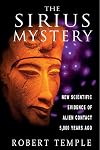
A difficult but very thorough book which elaborates on a hypothesis first proposed by I.S. Shklovskii and Carl Sagan in 1966: that the ancient Babylonian legend of the amphibious god Oannes might represent an instance of paleocontact (i.e., human contact with an extraterrestrial intelligence thousands of years ago). Robert Temple offers the religious and historical traditions of Mali's Dogon tribe as evidence that Oannes and his cohorts came from a planet in the Sirius star system, and that show more the knowledge passed on by these alien beings was the basis for Earth's earliest civilizations.
Does Temple make his case? As effectively as it can be made, yes. He draws upon a wealth of historical resources, and it was quite obvious to this reader that the Dogon could not have known about Sirius B (Sirius's companion star, a white dwarf invisible to the human eye; it was discovered in 1862 and first photographed in 1970) unless their ancestors had encountered someone with advanced astronomical knowledge. The objections to Temple's theory are intellectually suspect, predicated solely on the notion that things just couldn't have happened as he claims they did. It has been proposed, for example, that the Dogon learned about the existence of Sirius B from astronomers who were in the tribe's vicinity for five weeks in 1893 to study a solar eclipse. The trouble is, beings from other star systems are depicted in Dogon statuary which is at least 300 years old, and Temple includes photographs of two examples in the book.
Whether or not you agree with the author's conclusions, The Sirius Mystery is a rigorous scholarly work, and will require a period of adjustment for those whose only previous acquaintance with the subject of Paleo-SETI is muddy claptrap like Chariots of the Gods. Temple provides a summary at the end of each chapter, but be prepared to take notes. show less
Does Temple make his case? As effectively as it can be made, yes. He draws upon a wealth of historical resources, and it was quite obvious to this reader that the Dogon could not have known about Sirius B (Sirius's companion star, a white dwarf invisible to the human eye; it was discovered in 1862 and first photographed in 1970) unless their ancestors had encountered someone with advanced astronomical knowledge. The objections to Temple's theory are intellectually suspect, predicated solely on the notion that things just couldn't have happened as he claims they did. It has been proposed, for example, that the Dogon learned about the existence of Sirius B from astronomers who were in the tribe's vicinity for five weeks in 1893 to study a solar eclipse. The trouble is, beings from other star systems are depicted in Dogon statuary which is at least 300 years old, and Temple includes photographs of two examples in the book.
Whether or not you agree with the author's conclusions, The Sirius Mystery is a rigorous scholarly work, and will require a period of adjustment for those whose only previous acquaintance with the subject of Paleo-SETI is muddy claptrap like Chariots of the Gods. Temple provides a summary at the end of each chapter, but be prepared to take notes. show less
The author might be highly opinionated and have a rather amusing writing style, but he has a very interesting hypothesis here that makes more sense than all those ancient alien and star matching claims. The book lacks "fruit-loopiness", so that is actually a bonus. The book is also stuffed full of sepia/black photographs and illustrations and has information that is new to me (also a bonus) - it isn't just a re-hash of other stuff.
Netherworld: Discovering the Oracle of the Dead and Other Ancient Methods of Divination by Robert K. G. Temple
The author is a cookie, but of the benign variety. The book actually includes some interesting primary source material, especially in the first part about ancient Mediterranean oracles -- the most interesting being the author's own visits to the oracular cave in Baia (Italy). The collection of writings on divination by ancient authors like Pliny (and other, less famous ones) is also interesting.
Unfortunately any original conclusions or extrapolations by the author are to be treated as wild show more speculation, since he seems to lack any ability to approach his sources critically -- or rather, he seems to lose that ability when the extrapolation goes in a direction that he finds fascinating.
At some point in the course of the book, I gave up howling and screeching at him every half page and started becoming amused instead, and this did improve the reading experience.
The second half of the book is cookier. It starts out with Chinese oracles (bones/tortoise shells and the I Ching), gets entranced with the fact that the I Ching, based on a binary system of whole or broken lines, is -- wait for it -- BINARY!!! But the binary system was only discovered in the West by Leibniz in the 17th century!!! (Not discovered, invented. And binary notation is not the same as binary arithmetic: the I Ching is not binary arithmetic. Sorry Mr Temple -- Ed.)
From here he moves on to hexagons, which he seems to find really exciting. After explaining in detail how they are the most economical way of filling a plane, he then proceeds to find it nothing short of miraculous that so many things that need to cover a surface actually and in the real world do so with hexagons. From two-dimensional hexagons he goes on to "economical" solids, which are related to hexagons!!! (And in those cases where they aren't, it is possible to work out hexagons one way or another by combining selected faces. Or at the very least they will be found to contain 60-degree angles somewhere). This all seems to have deep and portentous significance. There's a longish section where every sentence that contains the word "hexagon" seems to end in an exclamation mark.
Also notable is the "they also laughed at Hoyle and Wickramasinghe" part, if nothing else as a true piece of cookie bravura. (This is in connection to comets predicting plague and other disasters. According to the author, Hoyle and Wickramasinghe clearly "demonstrated" that viruses come on Earth from space via cometary debris -- which is also the origin of life on Earth -- and so comets did predict plagues. Even so, he kind of forgets to explain about the other disasters, but hey.)
In his favour, the author is a kook but not a crook: he comes across as honest and genuinely enthusiastic, which can be endearing and makes the book easier to read -- just a bit lacking in the critical-approach department.
In conclusion: the book collects some interesting facts, but does so under wildly speculative theories that really don't stand up, sorry. Worth having a look at if you have an interest in one of the specific areas he touches on. Just don't give it to young and impressionable readers who may themselves lack critical reading skills and may therefore take it too seriously. show less
Unfortunately any original conclusions or extrapolations by the author are to be treated as wild show more speculation, since he seems to lack any ability to approach his sources critically -- or rather, he seems to lose that ability when the extrapolation goes in a direction that he finds fascinating.
At some point in the course of the book, I gave up howling and screeching at him every half page and started becoming amused instead, and this did improve the reading experience.
The second half of the book is cookier. It starts out with Chinese oracles (bones/tortoise shells and the I Ching), gets entranced with the fact that the I Ching, based on a binary system of whole or broken lines, is -- wait for it -- BINARY!!! But the binary system was only discovered in the West by Leibniz in the 17th century!!! (Not discovered, invented. And binary notation is not the same as binary arithmetic: the I Ching is not binary arithmetic. Sorry Mr Temple -- Ed.)
From here he moves on to hexagons, which he seems to find really exciting. After explaining in detail how they are the most economical way of filling a plane, he then proceeds to find it nothing short of miraculous that so many things that need to cover a surface actually and in the real world do so with hexagons. From two-dimensional hexagons he goes on to "economical" solids, which are related to hexagons!!! (And in those cases where they aren't, it is possible to work out hexagons one way or another by combining selected faces. Or at the very least they will be found to contain 60-degree angles somewhere). This all seems to have deep and portentous significance. There's a longish section where every sentence that contains the word "hexagon" seems to end in an exclamation mark.
Also notable is the "they also laughed at Hoyle and Wickramasinghe" part, if nothing else as a true piece of cookie bravura. (This is in connection to comets predicting plague and other disasters. According to the author, Hoyle and Wickramasinghe clearly "demonstrated" that viruses come on Earth from space via cometary debris -- which is also the origin of life on Earth -- and so comets did predict plagues. Even so, he kind of forgets to explain about the other disasters, but hey.)
In his favour, the author is a kook but not a crook: he comes across as honest and genuinely enthusiastic, which can be endearing and makes the book easier to read -- just a bit lacking in the critical-approach department.
In conclusion: the book collects some interesting facts, but does so under wildly speculative theories that really don't stand up, sorry. Worth having a look at if you have an interest in one of the specific areas he touches on. Just don't give it to young and impressionable readers who may themselves lack critical reading skills and may therefore take it too seriously. show less
You May Also Like


Associated Authors
Statistics
- Works
- 17
- Also by
- 2
- Members
- 921
- Popularity
- #27,851
- Rating
- 3.8
- Reviews
- 13
- ISBNs
- 47
- Languages
- 6
