
James Ridgeway (1936–2021)
Author of Blood in the Face: The Ku Klux Klan, Aryan Nations, Nazi Skinheads, and the Rise of a New White Culture
About the Author
Works by James Ridgeway
Blood in the Face: The Ku Klux Klan, Aryan Nations, Nazi Skinheads, and the Rise of a New White Culture (1990) 139 copies, 4 reviews
The 5 Unanswered Questions About 9/11: What the 9/11 Commission Report Failed to Tell Us (2005) 21 copies
Energy-efficient community planning : a guide to saving energy and producing power at the local level (1979) 7 copies, 1 review
Associated Works
Everything You Know Is Wrong: The Disinformation Guide to Secrets and Lies (2002) — Contributor — 1,027 copies, 6 reviews
You Are Being Lied To: The Disinformation Guide to Media Distortion, Historical Whitewashes, and Cultural Myths (2001) — Contributor, some editions — 738 copies, 4 reviews
Tagged
Common Knowledge
- Legal name
- Ridgeway, James Fowler
- Birthdate
- 1936-11-01
- Date of death
- 2021-02-13
- Gender
- male
- Education
- Princeton University (BA - English)
Hackley School - Occupations
- journalist
documentary filmmaker
producer
editor - Organizations
- Ramparts
The Village Voice
The New York Times
The Nation
The New York Review of Books
Hard Times (show all 13)
Mother Jones
The Daily Princetonian
The Wall Street Journal
The Observer
The Guardian
The Economist
The New Republic - Relationships
- Cockburn, Alexander (friend and collaborator)
Kopkind, Andrew (friend and collaborator) - Nationality
- USA
- Birthplace
- Auburn, New York, USA
- Places of residence
- Garrison, New York, USA
- Place of death
- Washington, D.C., USA
- Associated Place (for map)
- New York, USA
Members
Reviews
Best for: People interested in learning more about the real cost of solitary confinement.
In a nutshell: A collection of essays about solitary confinement, with the vast majority being authored by those who have actually experienced it.
Line that sticks with me: “I could see grass through the window at the end of the hall. When they found out I could see it, they put a plate over it. We are way worse than other countries.”
Why I chose it: This was a recommendation from my husband.
Review: show more Each essay written by one of those who has been placed in “SHU” (Secure Housing Units, a.k.a. solitary confinement) is heartbreaking and infuriating in its own way. Solitary confinement has always sounded horrible; these stories confirm it. From the absurd reasons guards – and judges – find to lock people away for 23 hours a day in a tiny cell, to the long-term detriment this causes after just fifteen days, it is all bad.
All of it.
And it’s mortifying that in the U.S., we put more people in these tortuous cells than anywhere else on earth. People are denied human contact. They must jump through absurd hoops just to get access to the occasional book. And some have been in solitary for thirty years.
Can you imagine?
I don’t buy into the idea that people who have committed crimes deserve to be tortured. Yet it seems that so much of the U.S. prison system is focused on revenge fantasies instead of finding ways to rehabilitate people.
The only reason this book isn’t getting five stars is because I didn’t find the final section to be as compelling. It’s a few essays about the psychological and legal concerns about solitary confinement. It felt a bit unnecessary, but I do understand why it was included. It just took away from my experience. show less
In a nutshell: A collection of essays about solitary confinement, with the vast majority being authored by those who have actually experienced it.
Line that sticks with me: “I could see grass through the window at the end of the hall. When they found out I could see it, they put a plate over it. We are way worse than other countries.”
Why I chose it: This was a recommendation from my husband.
Review: show more Each essay written by one of those who has been placed in “SHU” (Secure Housing Units, a.k.a. solitary confinement) is heartbreaking and infuriating in its own way. Solitary confinement has always sounded horrible; these stories confirm it. From the absurd reasons guards – and judges – find to lock people away for 23 hours a day in a tiny cell, to the long-term detriment this causes after just fifteen days, it is all bad.
All of it.
And it’s mortifying that in the U.S., we put more people in these tortuous cells than anywhere else on earth. People are denied human contact. They must jump through absurd hoops just to get access to the occasional book. And some have been in solitary for thirty years.
Can you imagine?
I don’t buy into the idea that people who have committed crimes deserve to be tortured. Yet it seems that so much of the U.S. prison system is focused on revenge fantasies instead of finding ways to rehabilitate people.
The only reason this book isn’t getting five stars is because I didn’t find the final section to be as compelling. It’s a few essays about the psychological and legal concerns about solitary confinement. It felt a bit unnecessary, but I do understand why it was included. It just took away from my experience. show less
Blood in the Face: The Ku Klux Klan, Aryan Nations, Nazi Skinheads, and the Rise of a New White Culture by James Ridgeway
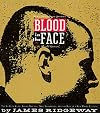
As a very quick history of almost 100 years, this does a good job of an overview. It is not an in-depth history; other books do that better.
Most of the illustrations left me sick to my stomach. That, I suppose, is a good thing. We should be shocked and horrified at violent racist and anti-Semitic rhetoric and violence.
The link between Christian Identity and neo-nazis is something that I wish more people knew about. Re-reading this book today, I was struck by how clearly it shows the seeds show more of the teaparty movement being planted. :( show less
Most of the illustrations left me sick to my stomach. That, I suppose, is a good thing. We should be shocked and horrified at violent racist and anti-Semitic rhetoric and violence.
The link between Christian Identity and neo-nazis is something that I wish more people knew about. Re-reading this book today, I was struck by how clearly it shows the seeds show more of the teaparty movement being planted. :( show less
Blood in the Face: The Ku Klux Klan, Aryan Nations, Nazi Skinheads, and the Rise of a New White Culture by James Ridgeway
A disturbing history of the Dark Side of the American Dream. Profiling such groups like paramilitary militias, Neo-Nazis, and the KKK, the book offers abundant illustrations and lengthy excerpts of their writings / rantings / lunacy. The best way to expose these groups is to let them speak for themselves. Ridgeway uses this method and it is profoundly effective.
It is also worth noting how the racist Christian Identity philosophy and the libertarian extremist political ethos has become show more ingrained into the culture of the Republican Party as it has slid rightward since 1980. Reading the excerpts of the American Nazi, KKK, and militia members, one keeps seeing similar themes and perspectives. The "culture of decline" and the "besieged American Christian" are no longer fringe political ideas, which this book thoroughly documents, but are now mainstream mainline conservative ideology. Both Timothy McVeigh and the GOP see Janet Reno and the Waco debacle with the same perspective, albeit McVeigh used domestic terrorism to strike against the Federal Government, not the propaganda of "tax cuts" and "limited government" (while simultaneously empowering an Imperial Presidency and shredding the Constitution). Pointing out these obvious facts is tantamount to the child telling the blindly obedient adults that the "Emperor has no clothes." Ideologically speaking, how far apart on the political spectrum are McVeigh's paranoid conspiracies of a Zionist-Occupied Government in DC and Grover Norquist wanting to shrink the Federal Government to an smaller size, so he can promptly drown it in the bathtub? Why is their violence in these metaphors? And are they really metaphors or crypto-fascist code to inspire activism within their ranks? (I imagine these questions are what make readers not like this particular review. Then again, we are all spoon-fed nationalist mythologies and once those mythologies are exposed as just that -- mythologies -- people become incensed.)
The "small government" and "Christian Nation" rants one finds on conservative talk radio are oddly similar to the beliefs espoused by small government advocate and Christian Patriot Timothy McVeigh and his distaff avatar Sarah Palin (of Alaska Independence Party fame). After reading this book, it isn't that shocking, since both political conservatism and domestic terrorist groups have found purchase within the downscale socioeconomic strata and the rhetoric of cultural decline. show less
It is also worth noting how the racist Christian Identity philosophy and the libertarian extremist political ethos has become show more ingrained into the culture of the Republican Party as it has slid rightward since 1980. Reading the excerpts of the American Nazi, KKK, and militia members, one keeps seeing similar themes and perspectives. The "culture of decline" and the "besieged American Christian" are no longer fringe political ideas, which this book thoroughly documents, but are now mainstream mainline conservative ideology. Both Timothy McVeigh and the GOP see Janet Reno and the Waco debacle with the same perspective, albeit McVeigh used domestic terrorism to strike against the Federal Government, not the propaganda of "tax cuts" and "limited government" (while simultaneously empowering an Imperial Presidency and shredding the Constitution). Pointing out these obvious facts is tantamount to the child telling the blindly obedient adults that the "Emperor has no clothes." Ideologically speaking, how far apart on the political spectrum are McVeigh's paranoid conspiracies of a Zionist-Occupied Government in DC and Grover Norquist wanting to shrink the Federal Government to an smaller size, so he can promptly drown it in the bathtub? Why is their violence in these metaphors? And are they really metaphors or crypto-fascist code to inspire activism within their ranks? (I imagine these questions are what make readers not like this particular review. Then again, we are all spoon-fed nationalist mythologies and once those mythologies are exposed as just that -- mythologies -- people become incensed.)
The "small government" and "Christian Nation" rants one finds on conservative talk radio are oddly similar to the beliefs espoused by small government advocate and Christian Patriot Timothy McVeigh and his distaff avatar Sarah Palin (of Alaska Independence Party fame). After reading this book, it isn't that shocking, since both political conservatism and domestic terrorist groups have found purchase within the downscale socioeconomic strata and the rhetoric of cultural decline. show less
Blood in the Face: The Ku Klux Klan, Aryan Nations, Nazi Skinheads, and the Rise of a New White Culture by James Ridgeway
Well written and very readable history of racism in the United States. Written as a companion to the film documentary of the same title, it adds details and more historical context to aid in understanding the background behind racist organizations, their members and leaders. Although a small minority, they do constitute a dangerous and potentially violent sub-culture that has seen some increase in numbers and influence in the years since the release of the documentary and this book. This show more same sub-culture produced the Oklahoma City bombers - Timothy McVeigh told investigators and interviewers that he took his inspiration from a science fiction book written by William Pierce, one of the racist leaders profiled in this book. show less
You May Also Like


Associated Authors
Statistics
- Works
- 20
- Also by
- 2
- Members
- 477
- Popularity
- #51,682
- Rating
- 3.5
- Reviews
- 13
- ISBNs
- 39
- Favorited
- 1