
Alexa Albert
Author of Brothel: Mustang Ranch and Its Women
About the Author
Alexa Albert, M.D., is a graduate of Brown University & Harvard Medical School. She has written & lectured widely on issues of public health & prostitution & was named one of "Mirabella's" 1,000 Women for the Nineties for her work with Nevada's legal prostitutes. She currently lives in Seattle, show more where she is completing her residency. (Bowker Author Biography) show less
Image credit: boldType
Works by Alexa Albert
Tagged
Common Knowledge
Members
Reviews

Yes I know I seem to be obsessed with ladies of the demimonde recently. It just happens to be luck of the draw on the unread book stack.
Author Alexa Albert is a Public Health MD and therefore became interested in why legal brothels in Nevada had a minuscule STD rate. Somewhat naively, she sent a series of holiday cards to the public relations man representing the Nevada brothel industry asking if she could come out and do some research. After a series of replies ranging from “No” show more through “Hell, No” to “Hell No until Hell freezes over, and then Hell No on the ice” she was one day surprised by “Well, OK”.
The book is not really going to make anybody happy. Feminists will be disappointed to find that brothel workers are not dissatisfied – usually - with their work. Libertarians will be disappointed to find that working in a brothel is not a free and independent contract between equals. Teenage boys will be disappointed to find that there are no pictures. Minimum wage workers will be disappointed to find that brothel prostitutes can clear $150k/y.
The modern Nevada brothel saga begins with Joe Conforte, an out-and-out stereotype who seems to enjoy playing it that way. The Nevada constitution allowed for a county option on permitting house of prostitution, and Conforte convinced Storey County to allow one. The current licensing rate for a brothel is $100k/y, which is a pretty good chunk of the county’s annual budget. (It was somewhat less when Conforte started). What’s more, the Mustang Ranch was the third largest employer. (Conforte was a fugitive from justice in Brazil for tax evasion when Albert started her research, but Mustang Ranch was still running, and eventually the Feds determined that it was still controlled by Conforte and shut it again). The first reopening provides the only humor in an otherwise fairly serious book – when the Feds first seized Mustang Ranch they sold off all the furnishings; when it reopened the ladies had to re-equip it themselves, leading to a shout when a client turned up: “Come on, girls, we need a toaster!”
The first shock to my libertarian sensibilities was an ugly secret the girls revealed to Albert when they began to trust her: the libertarian theory is that the legalization of sex of money would eliminate pimps, because the prostitutes would no longer need them from protection from the law and from other pimps. This turned out not to be the case; when Conforte was running things directly, the prostitutes were required to have pimps; the pimps were to “keep the girls in line” rather than having Conforte do it directly. With Conforte out of the way, it didn’t really change; although there were now some prostitutes who were entirely independent, most were still giving their money to a husband or boyfriend or – in a couple of surprising cases – a mother or mother-in-law. The mother case was especially grim – Mom essentially said “I don’t want to work anymore”, drove her daughter to the brothel, dropped her off, and then returned every payday to collect all her money.
The ladies' attitudes to each other were interesting; sometimes they treated each other like sisters, and sometimes they didn’t. They were especially hard on other girls if they were especially attractive (because they got all the business); if they “cheated” in the line-up by touching or gesturing to the prospective client (same reason); or if they actually enjoyed having sex (apparently a violation of sisterhood rules). A favorite tactic of expressing disapproval – used once while Albert was there – was to fill the offending girl’s shampoo bottle with hair remover.
At the same time, there was a certain sense of community – the ladies would chip in and help each other out. Author Albert expresses dismay when the Feds shut down the Mustang Ranch again in the middle of her research – “Don’t they realize they are destroying a community?”
Albert’s naivety comes to the fore during some of her descriptions of brothel work, where she discovers the truth of the maxim “Never bet that there’s something so perverted that you can’t find a man who wants to do it”. These are not titillating passages; Albert’s sense of disgust is predominant and she presumably had to keep repeating “I’m doing this for science”. Albert’s friends and relations expressed considerable shock when they discovered what she was researching, and she seems to be doubtful that some of them fully believed her. She also had considerable difficulty interviewing brothel opponents, who all seemed to think her very presence as a researcher lent legitimacy. (I was surprised, but shouldn’t have been, that some of the strongest brothel opponents are casino owners, who see the legal brothels as discouraging tourism).
There is, presumably, a scientific paper out there somewhere about this; the book does volunteer a few of Albert’s conclusions: Nevada brothels really, truly are free of venereal disease; this is accomplished by meticulous condom use and meticulous attention to male genitals for signs of disease. (There has never been a case of HIV transmission in a brothel; prostitutes get frequent checks, and coming down with any STD bans you for life).
Worth a read; probably don’t want to leave it lying around for a SO or kids to find. show less
Author Alexa Albert is a Public Health MD and therefore became interested in why legal brothels in Nevada had a minuscule STD rate. Somewhat naively, she sent a series of holiday cards to the public relations man representing the Nevada brothel industry asking if she could come out and do some research. After a series of replies ranging from “No” show more through “Hell, No” to “Hell No until Hell freezes over, and then Hell No on the ice” she was one day surprised by “Well, OK”.
The book is not really going to make anybody happy. Feminists will be disappointed to find that brothel workers are not dissatisfied – usually - with their work. Libertarians will be disappointed to find that working in a brothel is not a free and independent contract between equals. Teenage boys will be disappointed to find that there are no pictures. Minimum wage workers will be disappointed to find that brothel prostitutes can clear $150k/y.
The modern Nevada brothel saga begins with Joe Conforte, an out-and-out stereotype who seems to enjoy playing it that way. The Nevada constitution allowed for a county option on permitting house of prostitution, and Conforte convinced Storey County to allow one. The current licensing rate for a brothel is $100k/y, which is a pretty good chunk of the county’s annual budget. (It was somewhat less when Conforte started). What’s more, the Mustang Ranch was the third largest employer. (Conforte was a fugitive from justice in Brazil for tax evasion when Albert started her research, but Mustang Ranch was still running, and eventually the Feds determined that it was still controlled by Conforte and shut it again). The first reopening provides the only humor in an otherwise fairly serious book – when the Feds first seized Mustang Ranch they sold off all the furnishings; when it reopened the ladies had to re-equip it themselves, leading to a shout when a client turned up: “Come on, girls, we need a toaster!”
The first shock to my libertarian sensibilities was an ugly secret the girls revealed to Albert when they began to trust her: the libertarian theory is that the legalization of sex of money would eliminate pimps, because the prostitutes would no longer need them from protection from the law and from other pimps. This turned out not to be the case; when Conforte was running things directly, the prostitutes were required to have pimps; the pimps were to “keep the girls in line” rather than having Conforte do it directly. With Conforte out of the way, it didn’t really change; although there were now some prostitutes who were entirely independent, most were still giving their money to a husband or boyfriend or – in a couple of surprising cases – a mother or mother-in-law. The mother case was especially grim – Mom essentially said “I don’t want to work anymore”, drove her daughter to the brothel, dropped her off, and then returned every payday to collect all her money.
The ladies' attitudes to each other were interesting; sometimes they treated each other like sisters, and sometimes they didn’t. They were especially hard on other girls if they were especially attractive (because they got all the business); if they “cheated” in the line-up by touching or gesturing to the prospective client (same reason); or if they actually enjoyed having sex (apparently a violation of sisterhood rules). A favorite tactic of expressing disapproval – used once while Albert was there – was to fill the offending girl’s shampoo bottle with hair remover.
At the same time, there was a certain sense of community – the ladies would chip in and help each other out. Author Albert expresses dismay when the Feds shut down the Mustang Ranch again in the middle of her research – “Don’t they realize they are destroying a community?”
Albert’s naivety comes to the fore during some of her descriptions of brothel work, where she discovers the truth of the maxim “Never bet that there’s something so perverted that you can’t find a man who wants to do it”. These are not titillating passages; Albert’s sense of disgust is predominant and she presumably had to keep repeating “I’m doing this for science”. Albert’s friends and relations expressed considerable shock when they discovered what she was researching, and she seems to be doubtful that some of them fully believed her. She also had considerable difficulty interviewing brothel opponents, who all seemed to think her very presence as a researcher lent legitimacy. (I was surprised, but shouldn’t have been, that some of the strongest brothel opponents are casino owners, who see the legal brothels as discouraging tourism).
There is, presumably, a scientific paper out there somewhere about this; the book does volunteer a few of Albert’s conclusions: Nevada brothels really, truly are free of venereal disease; this is accomplished by meticulous condom use and meticulous attention to male genitals for signs of disease. (There has never been a case of HIV transmission in a brothel; prostitutes get frequent checks, and coming down with any STD bans you for life).
Worth a read; probably don’t want to leave it lying around for a SO or kids to find. show less
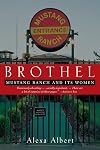
Every time I take the California Zephyr and go through Reno, the On Board Chief of Services, or one of his minions, never fails to point out the famous Mustang Ranch, located in a secluded valley twenty-some miles out of Sparks, Nevada. If you've ever been curious about what goes on, and why, in Nevada's brothels and the Mustang Ranch, in particular, you will find this a fascinating book. I did.
Ms. Albert, a public health specialist, had been interested for years in HIV and STD transmission show more and condom usage. She was curious to measure the impact of legalized prostitution on these parameters. Her first overtures to George Flint, ordained minister, wedding chapel owner, and executive director for the Nevada Brothel Association, were rebuffed, but she didn' give up. Flint realized she was a serious researcher and paved the way for her to spend several weeks living (not working) at the famous Mustang Ranch in Storey County, near Reno — not in Reno, and that distinction is important and has historical roots. Brothels can only be licensed legally in counties, and Reno and Las Vegas have chosen not to do so.
That is itself an interesting story, because one of the staunch opponents of legalized prostitution in Las Vegas has been Steve Wynn, wealthy casino owner, who publicly argues that it tarnishes the image of Las Vegas, gambling and former mob mecca of the world. Privately, many speculate that the real reason is that unlicensed, freelance prostitution, which thrives in Las Vegas, takes place in the hotels that own the casinos and therefore keeps the gamblers in the casinos where they belong. The brothels are all located in remote areas, away from the cities and that takes money away from the casinos. Brothels are prohibited from advertising, yet the freelancers have 140 pages in the Las Vegas Yellow Pages devoted to their activities which are completely unregulated.
A brothel can be a very substantial source of revenue for the county (4% of Storey County's total revenue in the case of the Mustang). Annual license fees in the hundreds of thousands are not rare, and the associated employment brings in needed additional tax revenue. Following the federal seizure of the Mustang Ranch for the failure of the owner to pay appropriate income taxes (he was a fugitive in Brazil and hiding the revenue under a false corporation), the brothel has been shut down until the courts can decide on the legality of the appeal of the conviction. The Feds had thought about running the brothel to bring in some revenue to pay the expenses of the prosecution, but that was deemed politically unwise.
The author came away from the experience a confirmed advocate of legalized prostitution. Customers and prostitutes are safe and the regulation is intense. Condom usage is mandatory, as are regular health checkups, and in fact no licensed prostitute has ever been diagnosed with HIV, although several applicants, who were refused licenses, had been. It's ironic, but the johns have virtually no control over their experience at the brothel except for the selection of the girl, and even that is often out of their control. If the word gets around that a particular john is impolite, routinely abusive, or just generally obnoxious, the word gets around, and the girls will walk him, i.e., quote impossibly high prices (as independent contractors they set their own prices, returning 50% to the brothel), and soon the john leaves, frustrated to say the least. In any case, the girls remain in complete control of the situation and each customer gets a thorough wash and genital examination to look for any sign of an STD. Many of the women see themselves as providing a valuable public service, and from her interviews with many of the clients, Ms. Albert would agree. For many of the men, it's their only form of social contact, and many even become quite addicted to it, even to the point where they subsidize the girls beyond what happens in the building, giving them extra clothes, helping with moving, the rent, etc. But to the majority of the women, a trick is still a trick, and they can be quite good at manipulating these relationships. Most of them are in it for the money, which can be very good. Some were persuaded by husbands, others by mothers!!, most by financial necessity, but many have worked for many years. Several insisted they can completely separate their professional lives from their personal, insisting they maintain a normal life at home with their husbands and families. But despite its legalization, the life lacks legitimacy, and those who work in the brothels as barkeeps, maids, vendors, and prostitutes develop a sense of community and family that provides structure and support that they often lack elsewhere. The brothel "had provided an income as well as friendship, compassion, trust and hope for countless women and men. In many ways, Mustang Ranch picked up where society had dropped the ball. It had provided a safe, nonjudgmental, economically sound work environment and a fair way for a community of several dozen women and their familles to meet their most basic needs. Whatever you think of prostitution and its legalization, this is an essential and very interesting read. show less
Ms. Albert, a public health specialist, had been interested for years in HIV and STD transmission show more and condom usage. She was curious to measure the impact of legalized prostitution on these parameters. Her first overtures to George Flint, ordained minister, wedding chapel owner, and executive director for the Nevada Brothel Association, were rebuffed, but she didn' give up. Flint realized she was a serious researcher and paved the way for her to spend several weeks living (not working) at the famous Mustang Ranch in Storey County, near Reno — not in Reno, and that distinction is important and has historical roots. Brothels can only be licensed legally in counties, and Reno and Las Vegas have chosen not to do so.
That is itself an interesting story, because one of the staunch opponents of legalized prostitution in Las Vegas has been Steve Wynn, wealthy casino owner, who publicly argues that it tarnishes the image of Las Vegas, gambling and former mob mecca of the world. Privately, many speculate that the real reason is that unlicensed, freelance prostitution, which thrives in Las Vegas, takes place in the hotels that own the casinos and therefore keeps the gamblers in the casinos where they belong. The brothels are all located in remote areas, away from the cities and that takes money away from the casinos. Brothels are prohibited from advertising, yet the freelancers have 140 pages in the Las Vegas Yellow Pages devoted to their activities which are completely unregulated.
A brothel can be a very substantial source of revenue for the county (4% of Storey County's total revenue in the case of the Mustang). Annual license fees in the hundreds of thousands are not rare, and the associated employment brings in needed additional tax revenue. Following the federal seizure of the Mustang Ranch for the failure of the owner to pay appropriate income taxes (he was a fugitive in Brazil and hiding the revenue under a false corporation), the brothel has been shut down until the courts can decide on the legality of the appeal of the conviction. The Feds had thought about running the brothel to bring in some revenue to pay the expenses of the prosecution, but that was deemed politically unwise.
The author came away from the experience a confirmed advocate of legalized prostitution. Customers and prostitutes are safe and the regulation is intense. Condom usage is mandatory, as are regular health checkups, and in fact no licensed prostitute has ever been diagnosed with HIV, although several applicants, who were refused licenses, had been. It's ironic, but the johns have virtually no control over their experience at the brothel except for the selection of the girl, and even that is often out of their control. If the word gets around that a particular john is impolite, routinely abusive, or just generally obnoxious, the word gets around, and the girls will walk him, i.e., quote impossibly high prices (as independent contractors they set their own prices, returning 50% to the brothel), and soon the john leaves, frustrated to say the least. In any case, the girls remain in complete control of the situation and each customer gets a thorough wash and genital examination to look for any sign of an STD. Many of the women see themselves as providing a valuable public service, and from her interviews with many of the clients, Ms. Albert would agree. For many of the men, it's their only form of social contact, and many even become quite addicted to it, even to the point where they subsidize the girls beyond what happens in the building, giving them extra clothes, helping with moving, the rent, etc. But to the majority of the women, a trick is still a trick, and they can be quite good at manipulating these relationships. Most of them are in it for the money, which can be very good. Some were persuaded by husbands, others by mothers!!, most by financial necessity, but many have worked for many years. Several insisted they can completely separate their professional lives from their personal, insisting they maintain a normal life at home with their husbands and families. But despite its legalization, the life lacks legitimacy, and those who work in the brothels as barkeeps, maids, vendors, and prostitutes develop a sense of community and family that provides structure and support that they often lack elsewhere. The brothel "had provided an income as well as friendship, compassion, trust and hope for countless women and men. In many ways, Mustang Ranch picked up where society had dropped the ball. It had provided a safe, nonjudgmental, economically sound work environment and a fair way for a community of several dozen women and their familles to meet their most basic needs. Whatever you think of prostitution and its legalization, this is an essential and very interesting read. show less
Though she originally visited the famous Mustang Ranch in Nevada to perform a study about condom use in legal brothels, Albert discovers a fascination with the life of a prostitute, and is in fact invited back to live at the Mustang several times over it last few years in operation. I admit I hadn't given legal prostitution too much thought; after all, what consenting adults do behind closed doors is none of my business. This, however, provided an engrossing look into one of America's last show more remaining taboos. Albert covers all aspects of the business - from legislation and lobbying, to pimps and boyfriends, to traveling salesmen who supply the prostitutes with clothing and makeup, to internet fans, forums, and conventions - and all with both sympathy and blunt honesty, regardless of her personal feelings. This is certainly a book to make one think. show less
I know this seems like a strange read but I really enjoyed it. It gave me a totally different light on Brothels, how they got started, why the women work there and the lives they lead. I thought it was well written by the woman that went in lived with them on and off for a few years. She kept her tone neutral until it was time to take a side. Really interesting book.
Lists
You May Also Like


Statistics
- Works
- 2
- Members
- 535
- Popularity
- #46,548
- Rating
- 3.6
- Reviews
- 20
- ISBNs
- 6