
Elisabeth Eaves
Author of Bare: The Naked Truth About Stripping
About the Author
Works by Elisabeth Eaves
Associated Works
Tagged
Common Knowledge
- Birthdate
- 1971
- Gender
- female
- Education
- Columbia University (MA|International Affairs)
- Occupations
- journalist
- Organizations
- Forbes
- Nationality
- Canada
- Birthplace
- Vancouver, British Columbia, Canada
- Places of residence
- New York, New York, USA
- Associated Place (for map)
- Canada
Members
Reviews

I've spent pretty much my whole life doing whatever it was that other people told me I couldn't do. If you tell me I can't do something, I will definitely do it and better than you - that counts for really cool stuff, but also some self-indulgent self-destructive stuff, none of which I regret. I've had a lot of great experiences in my life because I like to walk out on the edge. My adventures have involved less travel that Ms. Eaves, but I get her desire to live life rather than sit safely show more on the sidelines.
To be honest, travel memoirs by women often suck. I just don't care so much about whoever's personal journey into their spirituality found while in Italy (or wherever) on that neat bus tour. I'm not necessarily saying that I don't want to hear about that at all, but I am saying I want to hear about more than that. Male travel writers write shamelessly about their international conquests (and why shouldn't they?). Female travel writers tend to be more demure as if we all know that you look for strange in all kinds of ways when you adventure - at least I hope you do. I'm not denying the joy of true love and the depth of a long-term relationship, but (as with books) sometimes you want Kobe beef and sometimes a diner meal as you're passing through town will do just fine.
It's nice to see someone writing honestly about their life and their experiences without feeling the need to apologize for them (or for the desire to have them). Ms. Eaves actually reminds me a bit of Elisabeth Wurtzel's Prozac Nation - yeah, I really wanted to smack her through most of the book, but I also got exactly where she was coming from and why it was all so gobsmackingly difficult. Some people may find this kind of brutal honesty unnerving, but I find it refreshing. I remember the eighties when it was all about how evil sex is and that's just not a time I want to live in. Women get to have sex lives and talk about them, too. And they don't have to wait on the sidelines for some nice boy to ask them to dance - yeesh - go pick somebody and dance your ass off! show less
To be honest, travel memoirs by women often suck. I just don't care so much about whoever's personal journey into their spirituality found while in Italy (or wherever) on that neat bus tour. I'm not necessarily saying that I don't want to hear about that at all, but I am saying I want to hear about more than that. Male travel writers write shamelessly about their international conquests (and why shouldn't they?). Female travel writers tend to be more demure as if we all know that you look for strange in all kinds of ways when you adventure - at least I hope you do. I'm not denying the joy of true love and the depth of a long-term relationship, but (as with books) sometimes you want Kobe beef and sometimes a diner meal as you're passing through town will do just fine.
It's nice to see someone writing honestly about their life and their experiences without feeling the need to apologize for them (or for the desire to have them). Ms. Eaves actually reminds me a bit of Elisabeth Wurtzel's Prozac Nation - yeah, I really wanted to smack her through most of the book, but I also got exactly where she was coming from and why it was all so gobsmackingly difficult. Some people may find this kind of brutal honesty unnerving, but I find it refreshing. I remember the eighties when it was all about how evil sex is and that's just not a time I want to live in. Women get to have sex lives and talk about them, too. And they don't have to wait on the sidelines for some nice boy to ask them to dance - yeesh - go pick somebody and dance your ass off! show less
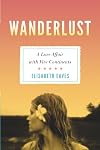
This book is everything I don't usually choose in a book: published in the last 5 years, travel memoir, written by a young woman, in a separate section in the bookstore, recommended in Vogue magazine, etc...
This makes me realize that I have snob tendencies and that I should be ashamed. Granted, I can't help that I like the writings of dead, white European men; maybe that's who I was in my past life. But when I looked at this book in the Vogue books section, I actually read the summary twice show more and found myself intrigued. I blame the emotional hardship I was going through and I found myself relating to this woman. So I took a gamble and decided to go with my gut and purchase this book. And I'm glad I did.
The book is about Elizabeth Eaves wanderlust; her desire for satiation in both travel and love. Now, if someone had described that book to me with that line, I would have said "no, thank you", so I feel bad that I'm using that as my plot line, but there is a reason that she has written a book and I have not. I was instantly hooked with her writing and her compelling storytelling, relating to us snippets of her life as she travels around the world: Egypt, Yemen, Papa New Guinea, Australia, France, England (not in this order).
I followed her journey as she talked about the satisfaction she gets from traveling, from escaping the norm and trite urban rituals like getting a career and getting married. But as the story progresses, she starts to question why she is how she is. Why the need for continuously escaping? Why the need to constantly find a man to be with, only to feel the need to escape when they express longing for her?
It was a great story because this isn't about a pathetic girl (as I feared it might be) who is doing everything against her nature just to try and prove a point. Instead it's a girl who is actually acting as she truly desires and the traveling is her creating her norm, her world.
So, again, I'm very happy to have read this. I did find myself relating of course, going through the same concerns that maybe we're ruining our own lives by always escaping and not choosing the same path as the others. That perhaps this is all a series of bad choices and we're just digging a deeper hole. Although I'm over it now, I also had a moment in my life where men were there for me to do as I pleased. I was honest with them about my intentions, thus there was no deception, and I think that's what I enjoyed about Eaves. there was no deception and no acting like someone else. It was a moment in her life that she needed to live and she knew there was no reason to make excuses for it.
The only part where I waned a bit was when she spent her time in Australia as that turned a bit too much into the stereotypical "boys and girls with dreads, in dirty hostels with no dreams whatsoever" idea I have of young people traveling.
In any case, a real pleasure to read this. show less
This makes me realize that I have snob tendencies and that I should be ashamed. Granted, I can't help that I like the writings of dead, white European men; maybe that's who I was in my past life. But when I looked at this book in the Vogue books section, I actually read the summary twice show more and found myself intrigued. I blame the emotional hardship I was going through and I found myself relating to this woman. So I took a gamble and decided to go with my gut and purchase this book. And I'm glad I did.
The book is about Elizabeth Eaves wanderlust; her desire for satiation in both travel and love. Now, if someone had described that book to me with that line, I would have said "no, thank you", so I feel bad that I'm using that as my plot line, but there is a reason that she has written a book and I have not. I was instantly hooked with her writing and her compelling storytelling, relating to us snippets of her life as she travels around the world: Egypt, Yemen, Papa New Guinea, Australia, France, England (not in this order).
I followed her journey as she talked about the satisfaction she gets from traveling, from escaping the norm and trite urban rituals like getting a career and getting married. But as the story progresses, she starts to question why she is how she is. Why the need for continuously escaping? Why the need to constantly find a man to be with, only to feel the need to escape when they express longing for her?
It was a great story because this isn't about a pathetic girl (as I feared it might be) who is doing everything against her nature just to try and prove a point. Instead it's a girl who is actually acting as she truly desires and the traveling is her creating her norm, her world.
So, again, I'm very happy to have read this. I did find myself relating of course, going through the same concerns that maybe we're ruining our own lives by always escaping and not choosing the same path as the others. That perhaps this is all a series of bad choices and we're just digging a deeper hole. Although I'm over it now, I also had a moment in my life where men were there for me to do as I pleased. I was honest with them about my intentions, thus there was no deception, and I think that's what I enjoyed about Eaves. there was no deception and no acting like someone else. It was a moment in her life that she needed to live and she knew there was no reason to make excuses for it.
The only part where I waned a bit was when she spent her time in Australia as that turned a bit too much into the stereotypical "boys and girls with dreads, in dirty hostels with no dreams whatsoever" idea I have of young people traveling.
In any case, a real pleasure to read this. show less
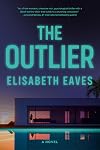
Dr Cate Winter is a neuroscientist and head of a corporation in Seattle which has just discovered a cure for Alzheimers and which is about to make her very very rich. But Cate has a secret. As a young child, she was diagnosed as a psychopath and lived much of her early years in the Cleckley Institute, a research facility which tries to teach children like her to control their impulses to assimilate better into society. It fails in almost every case and Cate has believed she was the only show more success story for most of her life until she learns of another outlier, someone with much the same story as hers and she is determined to find him. She has one of her employees search for him and traces him to Baja, Mexico. After the sale of her company, she heads to Baja to find him. At the same time, in Baja, scores of dead fish are turning up with strange gouges on their sides and Luciana, a marine biologist, is trying to discover the source. Cate’s ex boyfriend, Gabriel, a fisheries researcher, is also there to help uncover the cause but also, at the urging of Cate’s mentor, to reluctantly try to keep Cate safe.
The Outlier is the debut novel by Elisabeth Eaves and it is one slow burning but compelling psychological thriller. Told from several different viewpoints including Cate in first person voice and Luciana and Gabriel in the third person. Eaves combines science, ecology, and psychology with a morally ambiguous but likeable female protagonist and a complex, tense, and twisty plot, to create a very entertaining debut, one guaranteed to keep the reader on the edge of their seat throughout.
Thanks to Netgalley and Penguin Random House Canada for the opportunity to read this book in exchange for an honedt review show less
The Outlier is the debut novel by Elisabeth Eaves and it is one slow burning but compelling psychological thriller. Told from several different viewpoints including Cate in first person voice and Luciana and Gabriel in the third person. Eaves combines science, ecology, and psychology with a morally ambiguous but likeable female protagonist and a complex, tense, and twisty plot, to create a very entertaining debut, one guaranteed to keep the reader on the edge of their seat throughout.
Thanks to Netgalley and Penguin Random House Canada for the opportunity to read this book in exchange for an honedt review show less
Wanderlust A Love Affair with Five Continents by Eaves, Elisabeth ( Author ) ON Jun-16-2011, Paperback by Elisabeth Eaves
It's really, really, really hard not to write off Elisabeth Eaves as an insufferable brat. She whines consistently about her inability to feel at home pretty much anywhere on the planet and flees in the other direction of anything she finds suspiciously boring or domestic or stable. Wanderlust is a bit misleading, I was surprised to discover that a good chunk of the book is devoted to her romantic relationships. It should've been subtitled: Love Affairs in Five Continents
There's an air of show more condescension for us poor folk without the financial means or ambition to travel worldwide that permeates every chapter and can be hard to get by when she's pretty much talking about you, the reader.
As someone who loves to travel, I was expecting more vivid descriptions of where she's been, what she ate and what she saw but she provides only a handful of some colorful, introspective examples mostly during her time in Egypt and sometimes while on a remote beach or hiking in the jungle. Her narrative is a bit robotic with some pages wasted on how she got from point A to point B with little regard for her personal impressions of those destinations. Really, she could've been in the middle of a cornfield in Iowa because it didn't really matter.
Often, I found myself mentally screaming: Oh grow up already. You're in Peru, thousands of feet above seawater with access to brutally awesome hiking trails and stunning ancient Incan remains and you're whining, again, about a boy?!
Still, she's self-aware about her flip-floppy emotions and "gypsy eccentric status" (well put) and that's a refreshing acknowledgement that prevented me from totally giving up on her.
Despite all this, Eaves talent for travel writing is undeniable, I just wished I had read some of her other more travel specific work (for example her piece of Seville Flamenco dancing). Her analogies and metaphors can be charming. Sometimes not very robust, but it leads the reader beautifully - as if she were telling me her abridged life story over dinner. I have to remind myself, Wanderlust is a memoir based on her explorations as a 20-something kid then later into her 30's and hey, we're not all wise scholars at that age. But the explorations were mostly of a sexual, romantic variety and although she tries to explain the connection to travel, I really don't see it.
I really wanted to love Wanderlust because I felt like we could have been kindred spirits but I felt like I was enjoying her travels more than she did. show less
There's an air of show more condescension for us poor folk without the financial means or ambition to travel worldwide that permeates every chapter and can be hard to get by when she's pretty much talking about you, the reader.
As someone who loves to travel, I was expecting more vivid descriptions of where she's been, what she ate and what she saw but she provides only a handful of some colorful, introspective examples mostly during her time in Egypt and sometimes while on a remote beach or hiking in the jungle. Her narrative is a bit robotic with some pages wasted on how she got from point A to point B with little regard for her personal impressions of those destinations. Really, she could've been in the middle of a cornfield in Iowa because it didn't really matter.
Often, I found myself mentally screaming: Oh grow up already. You're in Peru, thousands of feet above seawater with access to brutally awesome hiking trails and stunning ancient Incan remains and you're whining, again, about a boy?!
Still, she's self-aware about her flip-floppy emotions and "gypsy eccentric status" (well put) and that's a refreshing acknowledgement that prevented me from totally giving up on her.
Despite all this, Eaves talent for travel writing is undeniable, I just wished I had read some of her other more travel specific work (for example her piece of Seville Flamenco dancing). Her analogies and metaphors can be charming. Sometimes not very robust, but it leads the reader beautifully - as if she were telling me her abridged life story over dinner. I have to remind myself, Wanderlust is a memoir based on her explorations as a 20-something kid then later into her 30's and hey, we're not all wise scholars at that age. But the explorations were mostly of a sexual, romantic variety and although she tries to explain the connection to travel, I really don't see it.
I really wanted to love Wanderlust because I felt like we could have been kindred spirits but I felt like I was enjoying her travels more than she did. show less
You May Also Like


Associated Authors
Statistics
- Works
- 4
- Also by
- 2
- Members
- 407
- Popularity
- #59,757
- Rating
- 3.6
- Reviews
- 10
- ISBNs
- 12
- Languages
- 1