
Karl P. N. Shuker
Author of Dragons: A Natural History
About the Author
Works by Karl P. N. Shuker
The Unexplained An Illustrated Guide To The World's Natural and Paranormal Mysteries (1996) 102 copies
Mystery Cats of the World Revisited: Blue Tigers, King Cheetahs, Black Cougars, Spotted Lions, and More (2020) 4 copies
ShukerNature (Book 1): Antlered Elephants, Locust Dragons, and Other Cryptic Blog Beasts (2019) 2 copies
ShukerNature (Book 2): Living Gorgons, Bottled Homunculi, and Other Monstrous Blog Beasts (2019) 1 copy
Historic Realms of Marvels and Miracles: Between Myth and Materiality [The Unexplained Series] 1 copy
Dragons A Natural History 1 copy
Associated Works
Fortean Times 97 — Contributor — 3 copies
Fortean Times 90 — Contributor — 2 copies
Fortean Times 91 — Contributor — 2 copies
Fortean Times 92 — Contributor — 2 copies
Fortean Times 93 — Contributor — 2 copies
Fortean Times 94 — Contributor — 2 copies
Fortean Times 95 — Contributor — 2 copies
Fortean Times 96 — Contributor — 2 copies
Fortean Times 89 — Contributor — 2 copies
Fortean Times 98 — Contributor — 2 copies
Fortean Times 99 — Contributor — 2 copies
Fortean Times 100 — Contributor — 2 copies
Fortean Times 101 — Contributor — 2 copies
Fortean Times 102 — Contributor — 2 copies
Fortean Times 103 — Contributor — 2 copies
Fortean Times 105 — Contributor — 2 copies
Fortean Times 88 — Contributor — 2 copies
Tagged
Common Knowledge
Members
Reviews

Karl P. N. Shuker is a scientist, but also a little bit of a nut. Whereas mainstream science is concerned with exploring and finding new animals in a blind, happenstance manner, Shuker starts with the position that folklore and cultural tales about “monsters” are based in fact and these creatures can be found in the wild. In The Search for the Last Undiscovered Animals, he recounts his travels around the world, looking for the animals that have pervaded ancient texts and modern show more fears.
Shuker, luckily, stops himself from going too far off the deep end by trying to explain away a lot of the features of these animals as simple adaptations of known specimens, postulating that the Mongolian Death Worm is really a poisonous snake or that Sea Serpents are really just undiscovered giant eels. The tricky thing with this book is just where the line between scientific inquiry stops and bogus monster tracking begins. But I suppose that’s the charm of Shuker’s search. He legitimately believes that we can’t just summarily write off the legends of certain civilizations because they don’t fit in the modern world. He understands that his searches may bother or even alienate other scientists, but the few that do join him make the hunts worth it. Whether he’s after the hairy lizard of New Guinea or the man-eating tree of Madagascar, the science and the source material make for an interesting combination. The book is entertaining and a great many will learn a lot about zoology and animal behavior, but ultimately it lends credence to the idea that dragons and monsters could be real, which diminishes any real power it could have. show less
Shuker, luckily, stops himself from going too far off the deep end by trying to explain away a lot of the features of these animals as simple adaptations of known specimens, postulating that the Mongolian Death Worm is really a poisonous snake or that Sea Serpents are really just undiscovered giant eels. The tricky thing with this book is just where the line between scientific inquiry stops and bogus monster tracking begins. But I suppose that’s the charm of Shuker’s search. He legitimately believes that we can’t just summarily write off the legends of certain civilizations because they don’t fit in the modern world. He understands that his searches may bother or even alienate other scientists, but the few that do join him make the hunts worth it. Whether he’s after the hairy lizard of New Guinea or the man-eating tree of Madagascar, the science and the source material make for an interesting combination. The book is entertaining and a great many will learn a lot about zoology and animal behavior, but ultimately it lends credence to the idea that dragons and monsters could be real, which diminishes any real power it could have. show less

Dragons: A Natural History dives into how these beasts have been depicted and used in iconography throughout history, as well as including some famous dragon-centric legends told around the world (Maud & the Wyvern, Fafnir, St. George Vs the Dragon, and more). I got this book thinking 'history' meant more describing the various species of dragon and chronicling the cultural appearances of the general creature itself, but this book seems to have more re-tellings of old legends than show more documenting the creature's history itself. Although 'Natural History' is in the title, I suppose I was expecting something a little differently. There are few pages that go into detail concerning dragon's histories outside of the telling of legends.That aside, this book is a fine addition to any dragon lover's library. show less

This book gets excellent reviews, but the information is unfortunately not accurate. For example, an item in the Weltmuseum Wien, the famous early sixteenth-century Aztec ceremonial feather mosaic shield (catalog number MVM Inv. Nr. 43,380) is pictured in detail (p.82-83] stating "Aztekenkönige tragen feierliche Schutzschilde, die mit Motiven - häufig Drachen aus Federn wie etwa dieser - geschmückt waren". [Aztec kings carried ceremonial protective shields - which depicted motives, often show more dragons made of feathers, like this one]. Unfortunately this represents a cayote not a dragon and has absolutely nothing to do with Qzetzalcoatl (the title of the chapter where it is found). For the picture credits, only the Werner Forman Archive is listed for this object, not the museum where it resides. I can only assume that the rest of the book is full of similar mistakes. For infomation on Dragons it is better to look up the individual "entries" in Wikipedia! show less
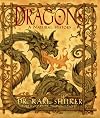
The book is well illustrated and discusses dragons with a cryptozoology slant. The mythology information is a bit rough round the edges. A few things are downright wrong. It's an enjoyable book, but don't rely on it heavily for research work.
Awards

You May Also Like


Associated Authors
Statistics
- Works
- 42
- Also by
- 18
- Members
- 1,022
- Popularity
- #25,208
- Rating
- 3.9
- Reviews
- 7
- ISBNs
- 78
- Languages
- 9
- Favorited
- 1