

Cynthia Bourgeault
Author of Centering Prayer and Inner Awakening
About the Author
Cynthia Bourgeault is a modern-day mystic, Episcopal priest, and theologian. She is a core faculty member at the Center for Action and Contemplation and founding director of an international network of Wisdom School. She is the author of numerous books including The Wisdom Jesus, The Heart of show more Centering Prayer, and The Holy Trinity and the Law of Three. show less
Image credit: Diane Walker
Works by Cynthia Bourgeault
The Wisdom Jesus: Transforming Heart and Mind--A New Perspective on Christ and His Message (2008) 443 copies, 7 reviews
The Meaning of Mary Magdalene: Discovering the Woman at the Heart of Christianity (2010) 319 copies, 5 reviews
The Wisdom Way of Knowing: Reclaiming An Ancient Tradition to Awaken the Heart (2003) 192 copies, 2 reviews
The Heart of Centering Prayer: Nondual Christianity in Theory and Practice (2016) 149 copies, 1 review
The Holy Trinity and the Law of Three: Discovering the Radical Truth at the Heart of Christianity (2013) 137 copies, 1 review
Mystical Courage: Commentaries on Selected Contemplative Exercises by G.I. Gurdjieff, as Compiled by Joseph Azize (2021) 18 copies
Love is the Answer. What is the Question?: Selected Writings and Talks 2016 ~ 2018 (2018) 6 copies, 1 review
Relearning Surrender 2 copies
The Contemplative Journey 1 copy
Cloud Of Unknowing, The 1 copy
A Short Course on Wisdom 1 copy
Tagged
Common Knowledge
- Legal name
- Bourgeault, Cynthia Warren
- Birthdate
- 1947-03-13
- Gender
- female
- Education
- Ohio State University (BA English, 1967)
University of Pennsylvania (PhD)
Episcopal Divinity School - Occupations
- Episcopal priest
retreat leader
professor emeritus - Organizations
- Episcopal Church
Contemplative Society
Vancouver School of Theology
Aspen Wisdom School - Awards and honors
- Contemplative Voices Award
- Relationships
- Griffiths, Bede (colleague)
- Nationality
- USA
- Birthplace
- West Chester, Pennsylvania, USA
- Places of residence
- Philadelphia, Pennsylvania, USA
Salt Spring Island, British Columbia, Canada
Eagle Island, Penobscot Bay, Maine, USA - Associated Place (for map)
- USA
Members
Reviews
The Meaning of Mary Magdalene: Discovering the Woman at the Heart of Christianity by Cynthia Bourgeault
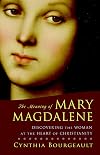
Mary Magdalene is one of the most influential symbols in the history of Christianity—yet, if you look in the Bible, you’ll find only a handful of verses that speak of her. How did she become such a compelling saint in the face of such paltry evidence?
In her effort to answer that question, Cynthia Bourgeault examines the Bible, church tradition, art, legend, and newly discovered texts to see what’s there. She then applies her own reasoning and intuition, informed by the wisdom of the show more ages-old Christian contemplative tradition. What emerges is a radical view of Mary Magdalene as Jesus’s most important disciple, the one he considered to understand his teaching best. That teaching was characterized by a nondualistic approach to the world and by a deep understanding of the value of the feminine. Cynthia shows how an understanding of Mary Magdalene can revitalize contemporary Christianity, how Christians and others can, through her, find their way to Jesus’s original teachings and apply them to their modern lives. show less
In her effort to answer that question, Cynthia Bourgeault examines the Bible, church tradition, art, legend, and newly discovered texts to see what’s there. She then applies her own reasoning and intuition, informed by the wisdom of the show more ages-old Christian contemplative tradition. What emerges is a radical view of Mary Magdalene as Jesus’s most important disciple, the one he considered to understand his teaching best. That teaching was characterized by a nondualistic approach to the world and by a deep understanding of the value of the feminine. Cynthia shows how an understanding of Mary Magdalene can revitalize contemporary Christianity, how Christians and others can, through her, find their way to Jesus’s original teachings and apply them to their modern lives. show less
The Wisdom Way of Knowing: Reclaiming An Ancient Tradition to Awaken the Heart by Cynthia Bourgeault
The core of Bourgeault's book is a reflection on a retreat on the Maine coast in September, 2001. The retreat had been planned before the World Trade Center attack, but took place after it. The retreat was loosely based on the monastic Rule of St. Benedict - prayer and work.
The idea here is basically that of Perennialism, that there is a ancient global tradition that is always largely underground. Bourgeault seems to come out of a Gurdjieff background, but then she is a Christian too. I am show more Buddhist but the Christian aspect of this book hardly got in the way. It's beautifully written. Seems like the perennial wisdom will stay underground for the foreseeable future, but it's still well worth cultivating if you don't mind bucking trends! This is a short book but is a very nice introduction or refresher, and points the reader to some valuable resources for further steps. show less
The idea here is basically that of Perennialism, that there is a ancient global tradition that is always largely underground. Bourgeault seems to come out of a Gurdjieff background, but then she is a Christian too. I am show more Buddhist but the Christian aspect of this book hardly got in the way. It's beautifully written. Seems like the perennial wisdom will stay underground for the foreseeable future, but it's still well worth cultivating if you don't mind bucking trends! This is a short book but is a very nice introduction or refresher, and points the reader to some valuable resources for further steps. show less
The Meaning of Mary Magdalene: Discovering the Woman at the Heart of Christianity by Cynthia Bourgeault
This is an excellent exploration of the real Mary Magdalene and not the stereotypes spread by the church for many years or the innuendo of some pop religion and pseudo historical books. The book is very readable but it is an academic work so it is not to be read like a novel. Bourgeault explores several different texts including both the biblical accounts as well as the non-biblical. She addresses detractors and those who would cast her as either a prostitute or as something other than what show more she was - one of the first proclaimers of the gospel and the one who has been identified often as the apostle to the apostles. If you are interested in an academic approach and are willing to do the work, this one will give you a whole new perspective on following Jesus and on who Mary was. show less
This is the third book on Centering Prayer I've read (four if you count The Cloud of UnKnowing). The first was one of Thomas Keating's (Centering Prayer's guru grand-daddy). This was a while ago and my introduction to the concept. I didn't find it all that exciting. Then I read David Frenette's The Path of Centering Prayer. More helpful (meaning I was in a more receptive place) but almost entering cribbed from Keating. Bourgeault's text is my favorite, though I don't really get what she show more (or anyone else) means when they invoke the concept of nonduality.
The book is divided into three parts. Part one describes the 'how' of Centering Prayer, describing the method of centering prayer and rooting it in the Kenotic pattern of Christ. Part two is more abstract. Here Bourgeault discusses nonduality, the prayer of the heart (drawn from the Orthodox Mysticism St. Symeon the New Theologian) and insights from the neurosciences. Part three gives a partial commentary on The Cloud of Unknowning and what it has to teach us about Centering Prayer (and Christian, apophatic mysticism in general).
I think Part 1 is the best short intro to Centering Prayer I've read, though I am more of a dabbler in the practice than a regular practitioner. Part two has got some ideas worth pondering and part three makes me want to read The Cloud again. On the whole, I love that Bourgeault locates Centering Prayer firmly within the Christian tradition (even though she borrows terms like nonduality from the East and Integral Spirituality). She offers a thoughtful and engaged analysis of the Christian mystical tradition and the ways that it paved the way for the flowering of Centering Prayer. I still have questions about it (as I tend to like a more explicitly Christocentric approach) but found her a good conversation partner. show less
The book is divided into three parts. Part one describes the 'how' of Centering Prayer, describing the method of centering prayer and rooting it in the Kenotic pattern of Christ. Part two is more abstract. Here Bourgeault discusses nonduality, the prayer of the heart (drawn from the Orthodox Mysticism St. Symeon the New Theologian) and insights from the neurosciences. Part three gives a partial commentary on The Cloud of Unknowning and what it has to teach us about Centering Prayer (and Christian, apophatic mysticism in general).
I think Part 1 is the best short intro to Centering Prayer I've read, though I am more of a dabbler in the practice than a regular practitioner. Part two has got some ideas worth pondering and part three makes me want to read The Cloud again. On the whole, I love that Bourgeault locates Centering Prayer firmly within the Christian tradition (even though she borrows terms like nonduality from the East and Integral Spirituality). She offers a thoughtful and engaged analysis of the Christian mystical tradition and the ways that it paved the way for the flowering of Centering Prayer. I still have questions about it (as I tend to like a more explicitly Christocentric approach) but found her a good conversation partner. show less
Lists
You May Also Like


Associated Authors
Statistics
- Works
- 28
- Members
- 2,309
- Popularity
- #11,116
- Rating
- 4.0
- Reviews
- 39
- ISBNs
- 41
- Languages
- 2
- Favorited
- 2
