
Guy Debord (1931–1994)
Author of The Society of the Spectacle
About the Author
Series
Works by Guy Debord
Correspondence: The Foundation of the Situationist International, June 1957-August 1960 (2008) — Author — 33 copies, 2 reviews
Commentaires sur la société du spectacle (1988) / Préface à la quatrième édition italienne de "La Société du Spectacle" (1979) (1992) 29 copies
Guy Debord Presente Potlatch: 1954-1957 (Folio (Gallimard)) (French Edition) (1996) — Foreword — 25 copies
Rapport sur la construction des situations "suivi de, Les situationnistes et les nouvelles formes d'action dans la polit (2000) 16 copies
Crítica del espectáculo y de la vida cotidiana: Antología Guy Debord (Clásicos del pensamiento crítico) (2019) 5 copies
Enganar a Fome 4 copies
EL NACIMIENTO DE LA INTERNACIONAL SITUACIONISTA: CORRESPONDENCIA (JUNIO 1957-AGOSTO 1960) (2021) 1 copy
Contre le cinéma 1 copy
مجتمع الاستعراض 1 copy
Η αισθητική της ανατροπής 1 copy
Sur le passage de quelques personnes a travers une assez courte unité de temps / a propos de l'inter (1989) 1 copy
To Libertarians 1 copy
Urla in favore di Sade 1 copy
Associated Works
Theories and Documents of Contemporary Art: A Sourcebook of Artists' Writings (1995) — Contributor — 419 copies, 1 review
Enragés and Situationists in the Occupation Movement, France, May '68 (1968) — Contributor — 94 copies
Tagged
Common Knowledge
- Canonical name
- Debord, Guy
- Legal name
- Debord, Guy-Ernest
- Birthdate
- 1931-12-28
- Date of death
- 1994-11-30
- Gender
- male
- Education
- University of Paris
- Occupations
- philosopher
filmmaker
hypergraphist - Organizations
- Lettrist International
Situationist International
Socialisme ou Barbarie - Relationships
- Bernstein, Michéle (1st wife)
Becker-Ho, Alice (2nd wife) - Cause of death
- suicide
- Nationality
- France
- Birthplace
- Paris, France
- Places of residence
- Champot, France
- Place of death
- Bellevue-la-Montagne, France
- Associated Place (for map)
- France
Members
Discussions
for the whoevers - what does the word "urbanism" awakes in your mind? in Philosophy and Theory (November 2016)
Reviews
Correspondence: The Foundation of the Situationist International (June 1957-August 1960) by Guy Debord
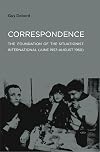
Letters by writer, filmmaker, and cultural revolutionary Guy Debord conjure a vivid picture of the dynamic first years of the Situationist International movement.
Yesterday, the police interrogated me at length about the journal and other Situationist organizations. It was only a beginning. This is, I think, one of the principal threats that came up quickly during the discussion: the police want to consider the S.I. as an association to bring about the destruction of France.—from show more CorrespondenceThis volume traces the dynamic first years of the Situationist International movement—a cultural avant-garde that continues to inspire new generations of artists, theorists, and writers more than half a century later. Debord's letters—published here for the first time in English—provide a fascinating insider's view of just how this seemingly disorganized group drifting around a newly consumerized Paris became one of the most defining cultural movements of the twentieth century. Circumstances, personalities, and ambitions all come into play as the group develops its strategy of anarchic, conceptual, but highly political “intervention.” Brilliantly conceived, this collection of letters offers the best available introduction to the Situationist International movement by detailing, through original documents, how the group formed and defined its cultural mission: to bring about, “by any means possible, even artistic,” a complete transformation of personal life within the Society of the Spectacle. show less
Yesterday, the police interrogated me at length about the journal and other Situationist organizations. It was only a beginning. This is, I think, one of the principal threats that came up quickly during the discussion: the police want to consider the S.I. as an association to bring about the destruction of France.—from show more CorrespondenceThis volume traces the dynamic first years of the Situationist International movement—a cultural avant-garde that continues to inspire new generations of artists, theorists, and writers more than half a century later. Debord's letters—published here for the first time in English—provide a fascinating insider's view of just how this seemingly disorganized group drifting around a newly consumerized Paris became one of the most defining cultural movements of the twentieth century. Circumstances, personalities, and ambitions all come into play as the group develops its strategy of anarchic, conceptual, but highly political “intervention.” Brilliantly conceived, this collection of letters offers the best available introduction to the Situationist International movement by detailing, through original documents, how the group formed and defined its cultural mission: to bring about, “by any means possible, even artistic,” a complete transformation of personal life within the Society of the Spectacle. show less

Two hundred and twenty-one paragraphs in nine chapters on unnumbered pages, with occasional black-and-white photographs only hieroglyphically related to the text, an anonymous translation from the original French boasting a lack of copyright, my copy of Guy Debord's Society of the Spectacle snuggled down into my library and moved with me through seven residences before I finally read it. When I did, it had me from the opening epigram: Ludwig Feuerbach's observation that in modernity "the show more highest degree of illusion comes to be the highest degree of sacredness."
This book is penetrating, provocative, prescient, and probably peerless. Although it seems to share many of the same concerns, it gave me a reading experience diametrically opposed to the one that I had recently with Heidegger (The Question Concerning Technology and Other Essays). Every sentence in Heidegger seemed to be an invitation to dream, accumulating a load of lofty but cloudy impressions with only a remote analogy to the world of daily life. By contrast, each sentence in Debord demanded that I wake up, and appreciate the urgency of my routine inability to see the real conditions of living in which I am immersed.
One might read a passage on modern alienation like paragraphs 24 and 25 and think that Debord was describing a capitalist phase that the Internet is helping us to transcend--that our 21st-century technologies supply the means of real communication among the proletariat. But in truth, his direst observations are now more true than ever. Digital "social media" atomize society into quantifiable, surveilled packets. The 'net habitué who strives to develop his "personal brand" is the epitome of Debord's paragraph 33: "Separated from his product, man himself produces all of the details of his world with increasing power, and thus finds himself ever more separated from his world. The more his life is now his product, the more he is separated from his life." Caught in the Web, a netizen experiences diminishing dialogue, as it is supplanted by podcast (messages strewn from the virtual pods in which we are encased) and other forms of self-monitoring reportage. Real communication is increasingly impoverished by the economizing of bandwidth: telephoning rather than visiting, texting rather than telephoning, we are more and more removed from the humanity, let alone the full expressions, of our interlocutors.
The title of Chapter 4 "The Proletariat as Subject and Representation" contains a clear nod to Schopenhauer, but the substance of that chapter is a comprehensive and devastating critique of socialism, anarchism, and communism from the left. It supplies a clear-headed historical perspective that must have been up-to-the-minute in 1967, and has lost little of its accuracy as a result of later events and revelations. (Debord can be faulted retrospectively for overvaluing the potential of the "revolutionary workers' Councils" of his own day.)
My reading allows me to infer an intimate relationship of this book to subsequent French philosophy. It appears to supply the foundations of Baudrillard's later work. It explains (or perhaps even determined) Foucault's motives in casting himself as "post-Structuralist" (see paragraphs 201 and 202). While Derrida got the term "deconstruction" from Nietzsche, his actual agenda seems to have been fully forecast by the single-sentence paragraph 205 of this book by Debord, which calls for the "necessary destruction" of "existing concrete concepts" in a dialectical process.
So, perhaps it was important for me to wait so long before reading Society of the Spectacle, a book I've owned for years, so that I could really appreciate its import and consequence. In any case, it's good that the wait is over. show less
This book is penetrating, provocative, prescient, and probably peerless. Although it seems to share many of the same concerns, it gave me a reading experience diametrically opposed to the one that I had recently with Heidegger (The Question Concerning Technology and Other Essays). Every sentence in Heidegger seemed to be an invitation to dream, accumulating a load of lofty but cloudy impressions with only a remote analogy to the world of daily life. By contrast, each sentence in Debord demanded that I wake up, and appreciate the urgency of my routine inability to see the real conditions of living in which I am immersed.
One might read a passage on modern alienation like paragraphs 24 and 25 and think that Debord was describing a capitalist phase that the Internet is helping us to transcend--that our 21st-century technologies supply the means of real communication among the proletariat. But in truth, his direst observations are now more true than ever. Digital "social media" atomize society into quantifiable, surveilled packets. The 'net habitué who strives to develop his "personal brand" is the epitome of Debord's paragraph 33: "Separated from his product, man himself produces all of the details of his world with increasing power, and thus finds himself ever more separated from his world. The more his life is now his product, the more he is separated from his life." Caught in the Web, a netizen experiences diminishing dialogue, as it is supplanted by podcast (messages strewn from the virtual pods in which we are encased) and other forms of self-monitoring reportage. Real communication is increasingly impoverished by the economizing of bandwidth: telephoning rather than visiting, texting rather than telephoning, we are more and more removed from the humanity, let alone the full expressions, of our interlocutors.
The title of Chapter 4 "The Proletariat as Subject and Representation" contains a clear nod to Schopenhauer, but the substance of that chapter is a comprehensive and devastating critique of socialism, anarchism, and communism from the left. It supplies a clear-headed historical perspective that must have been up-to-the-minute in 1967, and has lost little of its accuracy as a result of later events and revelations. (Debord can be faulted retrospectively for overvaluing the potential of the "revolutionary workers' Councils" of his own day.)
My reading allows me to infer an intimate relationship of this book to subsequent French philosophy. It appears to supply the foundations of Baudrillard's later work. It explains (or perhaps even determined) Foucault's motives in casting himself as "post-Structuralist" (see paragraphs 201 and 202). While Derrida got the term "deconstruction" from Nietzsche, his actual agenda seems to have been fully forecast by the single-sentence paragraph 205 of this book by Debord, which calls for the "necessary destruction" of "existing concrete concepts" in a dialectical process.
So, perhaps it was important for me to wait so long before reading Society of the Spectacle, a book I've owned for years, so that I could really appreciate its import and consequence. In any case, it's good that the wait is over. show less
Letters by writer, filmmaker, and cultural revolutionary Guy Debord conjure a vivid picture of the dynamic first years of the Situationist International movement.
Yesterday, the police interrogated me at length about the journal and other Situationist organizations. It was only a beginning. This is, I think, one of the principal threats that came up quickly during the discussion: the police want to consider the S.I. as an association to bring about the destruction of France.—from show more CorrespondenceThis volume traces the dynamic first years of the Situationist International movement—a cultural avant-garde that continues to inspire new generations of artists, theorists, and writers more than half a century later. Debord's letters—published here for the first time in English—provide a fascinating insider's view of just how this seemingly disorganized group drifting around a newly consumerized Paris became one of the most defining cultural movements of the twentieth century. Circumstances, personalities, and ambitions all come into play as the group develops its strategy of anarchic, conceptual, but highly political “intervention.” Brilliantly conceived, this collection of letters offers the best available introduction to the Situationist International movement by detailing, through original documents, how the group formed and defined its cultural mission: to bring about, “by any means possible, even artistic,” a complete transformation of personal life within the Society of the Spectacle. show less
Yesterday, the police interrogated me at length about the journal and other Situationist organizations. It was only a beginning. This is, I think, one of the principal threats that came up quickly during the discussion: the police want to consider the S.I. as an association to bring about the destruction of France.—from show more CorrespondenceThis volume traces the dynamic first years of the Situationist International movement—a cultural avant-garde that continues to inspire new generations of artists, theorists, and writers more than half a century later. Debord's letters—published here for the first time in English—provide a fascinating insider's view of just how this seemingly disorganized group drifting around a newly consumerized Paris became one of the most defining cultural movements of the twentieth century. Circumstances, personalities, and ambitions all come into play as the group develops its strategy of anarchic, conceptual, but highly political “intervention.” Brilliantly conceived, this collection of letters offers the best available introduction to the Situationist International movement by detailing, through original documents, how the group formed and defined its cultural mission: to bring about, “by any means possible, even artistic,” a complete transformation of personal life within the Society of the Spectacle. show less
Few works of political and cultural theory have been as enduringly provocative as Guy Debord’s Society of the Spectacle. From its publication amid the social upheavals of the 1960s to the present, the volatile theses of this book have decisively transformed debates on the shape of modernity, capitalism, and everyday life in the late twentieth century. Now finally available in a superb English translation approved by the author, Debord’s text remains as crucial as ever for understanding show more the contemporary effects of power, which are increasingly inseparable from the new virtual worlds of our rapidly changing image / information culture.
“In all that has happened in the last twenty years, the most important change lies in the very continuity of the spectacle. Quite simply, the spectacle’s domination has succeeded in raising a whole generation moulded to its laws. The extraordinary new conditions in which this entire generation has lived constitute a comprehensive summary of all that, henceforth, the spectacle will forbid; and also all that it will permit.”― Guy Debord (1988) show less
“In all that has happened in the last twenty years, the most important change lies in the very continuity of the spectacle. Quite simply, the spectacle’s domination has succeeded in raising a whole generation moulded to its laws. The extraordinary new conditions in which this entire generation has lived constitute a comprehensive summary of all that, henceforth, the spectacle will forbid; and also all that it will permit.”― Guy Debord (1988) show less
Lists
Awards


You May Also Like


Associated Authors
Statistics
- Works
- 78
- Also by
- 4
- Members
- 4,888
- Popularity
- #5,142
- Rating
- 3.9
- Reviews
- 56
- ISBNs
- 183
- Languages
- 19
- Favorited
- 20
