
Carl von Clausewitz (1780–1831)
Author of On War
About the Author
General Carl Von Clausewitz (1780-1831) was born in Burg, Prussia, and entered the Prussian army at the age of twelve. He first experienced combat at age thirteen and was admitted to the War Academy of Berlin in 1801. When Prussia agreed to provide military assistance to Napoleon in 1812, show more Clausewitz joined the Russian army and was involved in the campaign of Moscow. He rejoined the Prussian army in 1814 and took part in the Waterloo campaign in 1815. He later became director of the War Academy in Berlin. show less
Disambiguation Notice:
Please note: abridged editions should not be combined with complete editions. Discussion in Combiners group.
Series
Works by Carl von Clausewitz
The Book of War: Sun-Tzu's "The Art of War" & Karl von Clausewitz's "On War" (2000) 117 copies, 1 review
Clausewitz on Strategy : Inspiration and Insight from a Master Strategist (2001) 75 copies, 1 review
Strategy Six Pack: The Art of War, The Gallic Wars, Life of Charlemagne, The Prince, On War and Battle Studies (2015) 15 copies
On victory and defeat 6 copies
The Coalition Crumbles, Napoleon Returns: The 1799 Campaign in Italy and Switzerland, Volume 2 (2021) 3 copies
What is War? a discussion 3 copies
Napoleon Absent, Coalition Ascendant: The 1799 Campaign in Italy and Switzerland, Volume 1 (2020) 2 copies
Clausewitz in the atomic age 2 copies
Krig och krigföring 2 copies
Della guerra. Vol. II 2 copies
Arte e ciência da guerra 1 copy
De La Guerra 1 copy
Politics, War & Strategy 1 copy
O ratu 1 copy
战争论(第一卷) 1 copy
Abridged Principles of war 1 copy
ARTI I LUFTËS 1 copy
On War 1 copy
DE LA GUERRA TOMO I 1 copy
The Art and Science of War 1 copy
Associated Works
Tagged
Common Knowledge
- Canonical name
- Clausewitz, Carl von
- Legal name
- Clausewitz, Carl Philipp Gottlieb von
- Birthdate
- 1780-07-01
- Date of death
- 1831-11-16
- Gender
- male
- Education
- Kriegsschule, Berlin, Prussia
- Occupations
- soldier
strategist
tactician
general - Organizations
- Kingdom of Prussia
- Nationality
- Prussia
- Birthplace
- Burg bei Magdeburg, Brandenburg, Prussia
- Places of residence
- Burg bei Magdeburg, Prussia
Berlin, Prussia
Breslau, Prussia - Place of death
- Breslau, Silesia, Prussia (now Wrocław, Poland)
- Burial location
- Burg City Cemetery, Burg bei Magdeburg, Jerichower Land, Sachsen-Anhalt, Germany
- Map Location
- Germany
- Disambiguation notice
- Please note: abridged editions should not be combined with complete editions. Discussion in Combiners group.
Members
Reviews
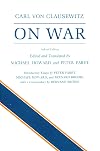
"War is simply the continuation of politics by other means."
Far too many people quote Clausewitz without reading him, but after reading this edition of On War, there is no excuse not to read Clausewitz, and perhaps understand him.
I will speak first to the translation: This is how it should be done. Howard, Paret, and Brodie produce an accurate and highly readable text, with invaluable supplementary essays on the historical impact of Clausewitz and his key points. Accept no other show more translations.
Second, the text itself. I'm a war nerd, and this is one of the best books on strategy that I've read. Compared to The Art of War or Liddell Hart's Strategy, Clausewitz is clear and direct. War is violence used to disarm and enemy and compel him to your will. The best way to achieve this end is to concentrate your forces and destroy the enemy in a decisive battle. But this reading is also simplistic and unfair. Clausewitz has the utmost respect for friction, uncertainty and confusion in war, and the impact of psychological and political factors. He does not advocate for war, merely for clarity in the process of conducting a war. If there is one aphorism that is not in the text but should be, it is "The object of war is to secure a better peace." If more political leaders had a conception of the better peace they aimed at, and the cost and limitations of military means in securing that end, we would have a safer and more secure world.
The philosophy is timeless, but much of the specific detail is tied up in the tactics of Napoleonic arms and armies, and may be of limited interest to anyone aside from the most dedicated history buffs. After reading this book, I just wish that we had a thinker of similar ability and breadth today to clarify the use of modern combined arms, the problems of counter-insurgency warfare, and the features of Cold War style economic, political, and cultural competition. Clausewitz has moved to the top of my post-Singularity Resurrection list. show less
Far too many people quote Clausewitz without reading him, but after reading this edition of On War, there is no excuse not to read Clausewitz, and perhaps understand him.
I will speak first to the translation: This is how it should be done. Howard, Paret, and Brodie produce an accurate and highly readable text, with invaluable supplementary essays on the historical impact of Clausewitz and his key points. Accept no other show more translations.
Second, the text itself. I'm a war nerd, and this is one of the best books on strategy that I've read. Compared to The Art of War or Liddell Hart's Strategy, Clausewitz is clear and direct. War is violence used to disarm and enemy and compel him to your will. The best way to achieve this end is to concentrate your forces and destroy the enemy in a decisive battle. But this reading is also simplistic and unfair. Clausewitz has the utmost respect for friction, uncertainty and confusion in war, and the impact of psychological and political factors. He does not advocate for war, merely for clarity in the process of conducting a war. If there is one aphorism that is not in the text but should be, it is "The object of war is to secure a better peace." If more political leaders had a conception of the better peace they aimed at, and the cost and limitations of military means in securing that end, we would have a safer and more secure world.
The philosophy is timeless, but much of the specific detail is tied up in the tactics of Napoleonic arms and armies, and may be of limited interest to anyone aside from the most dedicated history buffs. After reading this book, I just wish that we had a thinker of similar ability and breadth today to clarify the use of modern combined arms, the problems of counter-insurgency warfare, and the features of Cold War style economic, political, and cultural competition. Clausewitz has moved to the top of my post-Singularity Resurrection list. show less
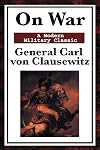
If this classic, foundational text of modern Western military theory has anything to teach us, it’s that we all live in Napoleon’s world. Before the rise of the Corsican corporal, war between Europe’s monarchies was more often than not a wrestling match between dynasties over chunks of territory that were just as likely to be traded back during peace negotiations as retained for exploitation until the next war.
The levée en masse of the French Revolution gave Napoleon the human means show more to wage a total war of extinction on Europe’s dynastic houses. By the time the monarchs finally brought him down, the lessons he had taught the kings had been well learned. Clausewitz represents the most significant attempt to digest those lessons into a manual of strategic generalship that still finds a place in modern studies of war.
Perhaps the most important of Clausewitz’s ideas is the need to wage war in subordination to clearly defined ends. War is not a pastime of princes but the overflow of state policy. The strategic general shapes the battlefield to achieve that policy, and will resist the push or pull of frictions that might lure him toward any aim but the destruction of the enemy’s forces, in order to bring about the desired policy in the peace. This sort of goal-oriented thinking is crucial in war, but it strikes me that you could do worse than adapt this insight to your approach to your own life. show less
The levée en masse of the French Revolution gave Napoleon the human means show more to wage a total war of extinction on Europe’s dynastic houses. By the time the monarchs finally brought him down, the lessons he had taught the kings had been well learned. Clausewitz represents the most significant attempt to digest those lessons into a manual of strategic generalship that still finds a place in modern studies of war.
Perhaps the most important of Clausewitz’s ideas is the need to wage war in subordination to clearly defined ends. War is not a pastime of princes but the overflow of state policy. The strategic general shapes the battlefield to achieve that policy, and will resist the push or pull of frictions that might lure him toward any aim but the destruction of the enemy’s forces, in order to bring about the desired policy in the peace. This sort of goal-oriented thinking is crucial in war, but it strikes me that you could do worse than adapt this insight to your approach to your own life. show less
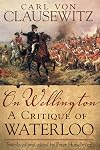
This book got the 4th star from its use as a study of the manner in which military history gets written. "History is written by the winners" is a truism that I have often taken exception to. I prefer to point out that the best history is written by the relative losers on the winning side. This account of the Waterloo campaign, once one has absorbed the particular history of the publication of this essay on Wellington, and Napoleon during the Hundred Days, appears to confirm my theory. show more Clausewitz was relatively low on the Prussian Totem Pole and was not much published in Prussia, or anywhere else until after his death. He became the towering figure in the field of Military theory only after his students had rising to high command, and demonstrated singular success in the Franco-Prussian War of 1870-71. So it was no great surprise that this essay on the Waterloo campaign has taken this long to be translated into English and published in 2010.
Now this was the second translation into English that has been made, but it was done by Lord Liverpool, finishing it in the 1850's. It received no other publication in England. Wellington requested a copy of the translation, received it, and it remained among Wellington's effects until it was unearthed in 1987!
Wellington did remark that the essay was "a lying Work" written by "Mine enemy" (p.17 of the copy I'm reviewing), and it may have been part of the inspiration for Wellington's publication of the "Memorandum" of the battle of Waterloo later written by the Duke.
When one looks into the book by Clausewitz one finds that Wellington may have mis-represented his reaction time and initial dispositions to the message that Napoleon had started from Charleroi into the midst of the dispersed Anglo- Allied and Prussian forces in the Belgian plain. that Wellington gave assurances to Blucher that the British would come to his aid on the day of Ligny, and that Wellington had been caught so flat-footed, as to be of little or no use to his ally on that day, as wellington's army was so dispersed, due to the Duke's inaction, that he could do no better than fight the battle of Quatre Bras with relatively feeble forces. This account also provides much evidence that the actions of the Prussian army, bringing so large and well-organized aid to the battered Anglo allied army, was the truly vital factor in the victory at Waterloo on June 18th. This is a book to stimulate debate and revise the now canonical version of the battle beloved of the British Military historians.
You will have a good time with this version of events and it is a necessary corrective to the accepted wisdom. show less
Now this was the second translation into English that has been made, but it was done by Lord Liverpool, finishing it in the 1850's. It received no other publication in England. Wellington requested a copy of the translation, received it, and it remained among Wellington's effects until it was unearthed in 1987!
Wellington did remark that the essay was "a lying Work" written by "Mine enemy" (p.17 of the copy I'm reviewing), and it may have been part of the inspiration for Wellington's publication of the "Memorandum" of the battle of Waterloo later written by the Duke.
When one looks into the book by Clausewitz one finds that Wellington may have mis-represented his reaction time and initial dispositions to the message that Napoleon had started from Charleroi into the midst of the dispersed Anglo- Allied and Prussian forces in the Belgian plain. that Wellington gave assurances to Blucher that the British would come to his aid on the day of Ligny, and that Wellington had been caught so flat-footed, as to be of little or no use to his ally on that day, as wellington's army was so dispersed, due to the Duke's inaction, that he could do no better than fight the battle of Quatre Bras with relatively feeble forces. This account also provides much evidence that the actions of the Prussian army, bringing so large and well-organized aid to the battered Anglo allied army, was the truly vital factor in the victory at Waterloo on June 18th. This is a book to stimulate debate and revise the now canonical version of the battle beloved of the British Military historians.
You will have a good time with this version of events and it is a necessary corrective to the accepted wisdom. show less
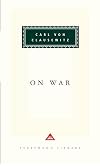
It is the most influential yet incomplete and unrevised book of military history and political theory as its readers developed the opening strategies that would lead to stalemate in 1914. On War by Carl von Clausewitz distilled his experiences in the Revolutionary and Napoleonic Wars as well as his career long study of military history into book of on the nature and meaning of war in all it’s aspects.
Since his widow published his uncompleted work, in which only the first chapter of Book show more One was revised to his satisfaction, Clausewitz’s features discussions on strategic and tactical doctrines, engagements, a military force, and the basics of defense and attack. While many other 19th century military writers covered the same things, Clausewitz however took note of the differences of absolute and limited war, the violence of war, and most importantly that war is “just the continuation of politics by different means”. Clausewitz style is markedly different between the first chapter of Book One and almost the rest of the volume, except Book Eight, due to the unrevised nature of the text that doesn’t reflect the dual focus Clausewitz introduced at the beginning of the book. While numerous chapters deal with what lay readers would take to be military minutia, for those in the military who realize Clausewitz’s overall objective they understand why. Potentially for those like me who are civilians and want to read this book, it’s because of Clausewitz’s tying military theory with political theory with an eye to understanding how it influenced the Western way of war since its publication. Yet this aspect which was covered in essays and commentary by Michael Howard, Peter Paret, and Bernard Brodie informs the reader that the Imperial German generals and their French counterparts in the lead up to the First World War misinterpreted Clausewitz and emphasized the offensive and not the defensive as the author intended nor did they understand the author’s typing in of the political aspect of war. While reading the book with this knowledge it was a great help in understanding what Clausewitz was talking back.
On War is one of the most influential books of the 20th Century due to its use by those in the military who misinterpreted the intentions of author Carl von Clausewitz, even though the book is incomplete and not revised to the author’s satisfaction. The Everyman edition with essays and commentary really helps laymen like me understand what the Prussian intended to leave to future military professionals. show less
Since his widow published his uncompleted work, in which only the first chapter of Book show more One was revised to his satisfaction, Clausewitz’s features discussions on strategic and tactical doctrines, engagements, a military force, and the basics of defense and attack. While many other 19th century military writers covered the same things, Clausewitz however took note of the differences of absolute and limited war, the violence of war, and most importantly that war is “just the continuation of politics by different means”. Clausewitz style is markedly different between the first chapter of Book One and almost the rest of the volume, except Book Eight, due to the unrevised nature of the text that doesn’t reflect the dual focus Clausewitz introduced at the beginning of the book. While numerous chapters deal with what lay readers would take to be military minutia, for those in the military who realize Clausewitz’s overall objective they understand why. Potentially for those like me who are civilians and want to read this book, it’s because of Clausewitz’s tying military theory with political theory with an eye to understanding how it influenced the Western way of war since its publication. Yet this aspect which was covered in essays and commentary by Michael Howard, Peter Paret, and Bernard Brodie informs the reader that the Imperial German generals and their French counterparts in the lead up to the First World War misinterpreted Clausewitz and emphasized the offensive and not the defensive as the author intended nor did they understand the author’s typing in of the political aspect of war. While reading the book with this knowledge it was a great help in understanding what Clausewitz was talking back.
On War is one of the most influential books of the 20th Century due to its use by those in the military who misinterpreted the intentions of author Carl von Clausewitz, even though the book is incomplete and not revised to the author’s satisfaction. The Everyman edition with essays and commentary really helps laymen like me understand what the Prussian intended to leave to future military professionals. show less
Lists
100 (1)
Awards


You May Also Like


Associated Authors
Statistics
- Works
- 97
- Also by
- 3
- Members
- 5,937
- Popularity
- #4,156
- Rating
- 3.8
- Reviews
- 44
- ISBNs
- 318
- Languages
- 18
- Favorited
- 9
