
J. K. Woodward
Author of Star Trek: The Next Generation/Doctor Who: Assimilation², Volume 1
Series
Works by J. K. Woodward
Star Trek: The Next Generation/Doctor Who: Assimilation², Volume 1 (2012) — Illustrator — 178 copies, 9 reviews
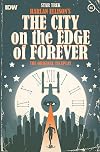
Harlan Ellison's The City on the Edge of Forever [graphic novel] (2015) — Illustrator — 176 copies, 16 reviews
Star Trek: The Next Generation/Doctor Who: Assimilation², Volume 2 (2013) — Illustrator — 119 copies, 6 reviews
Star Trek: The Next Generation/Doctor Who: Assimilation²: The Complete Series (2013) — Illustrator — 57 copies, 1 review
Star Trek: TNG: Mirror Broken #0 [Free Comic Book Day 2017] (2017) — Illustrator — 39 copies, 4 reviews
Star Trek: The Next Generation/Doctor Who: Assimilation² #1 (2012) — Illustrator — 13 copies, 1 review
Associated Works
Tagged
Common Knowledge
- Legal name
- Woodward, James Kenneth
- Gender
- male
- Occupations
- penciller
inker
colourist
artist - Nationality
- USA
- Birthplace
- Northeast USA
- Places of residence
- Los Angeles, California, USA
Germany
Desert Hot Springs, California, USA
Long Beach, California, USA
Long Island, New York, USA - Associated Place (for map)
- California, USA
Members
Reviews
Graphic novelization of Ellison’s original script, or so they say, and if so good on him for making Yeoman Rand kick ass and take names. Otherwise, mainly interesting for the contrast, and it might be familiarity but I can’t help but feel that the ultimate changes were mostly for the better, primarily making McCoy the agent of destruction rather than a redshirt. On the other hand, having the guy who breaks time be a bad guy trying to escape justice does give Edith Keeler’s death show more another level of meaning—he was a bad man but he nonetheless automatically would’ve saved a woman at some risk to himself, because almost no one is just a bad man. show less
I bought this for 2 reasons:
1) it was on sale on the Kindle for $1.99. I can't beat that price for a graphic novel.
2) My dad kickstarted the audio drama they're doing for the original teleplay (funded and over) and it tickled my interest to see this on sale.
I very likely saw the TV episode from the original Trek when I was younger. Dad swears I used to watch (and enjoy) it with him. I've been...less interested in the original Trek, far more fascinated by DS9, but I wanted to compare the two show more so I took out our DVD sets and watched the episode shortly after reading this.
So. Very. Different.
I don't just mean in overall tone--Ellison very clearly had a darker idea about Starfleet (which hey I agree and that's why DS9 is my go to love) then Roddenberry (who was notoriously possessive of his nie on perfect world utopia brainchild)--but in general.
The episode, if you haven't seen it, revolves around Bones McCoy getting himself infected, going batshit crazy and escaping into the mid-20th century past thanks to a somewhat smirky-sarcastic alien portal named the Guardian of Forever* that all but challenges Kirk and Spock to find the right answer OR ELSE.
Not one to let sleeping dogs lie, Kirk and Spock head back in time (not without Spock constantly getting sidetracked by science shit tho), but wind up slightly ahead of when Bones would arrive so they endeavor to live out in pre-WWII America...mostly by stealing, lying and romancing a lady. Yes Kirk gets his Kirk on and argues with Spock, who doesn't understand why Kirk would want to jeopardize their future when their ENTIRE MISSION is to save their future.
That's the episode. With some hijinks, mild racism (mostly Kirk about Spock being a "Chinaman"), and a whole lot of moralizing. Typical TOS Trek.
Ellison's original teleplay (which as I understand wasn't touched up at all really) was like FUCK UTOPIA STARFLEET WE GONNA MAKE THIS REAL WORLD. Drug dealing, insubordination of EVERYONE towards Kirk (including an epic argument between him and Spock), horrible (but accurate) racism, depression era horribleness, fascism (dude look Kirk's Lady was one step away from the bad kind of Socialist) and worst of all plausible morality. In the end, our drug-dealing enterprise crew member --who killed at least one man and was quite happily, and smugly, addicting folk to a really nasty drug -- chose to try and save Kirk's Lady (without knowing its Kirk's Lady) and ultimately died for the effort (so did the Lady).
In the show McCoy attempts to, but Kirk stops him having finally seen the logic of Spock's argument. It a painful scene to watch, as Bones (still rather crazy) accuses Kirk of allowing her to die and not caring. Spock, who was with Kirk that entire week he was seducing the Lady, tells Bones Kirk does understand and the three express a lot in just their tone and body language.
In the original teleplay and now the graphic novel, Spock asks Kirk why the crew man sacrificed himself after exhibiting nothing but selfish, greedy and destructive tendencies. He's puzzled by what prompted the man to try. Kirk says that's what it means to be human basically. We're selfish, greedy and destructive...but sometimes there's something we can't help but see as WRONG and want to correct it. For that crew man watching an innocent woman die when he could possibly prevent it meant he had to try. Despite being directly responsible for another's death.
In both cases I think there's an important emotional impact the other misses. In the televised version we see the direct result of Spock and Kirk's conversation--Kirk understands Spock's reasons and puts the needs of the many first. He does what a Starfleet Captain does--makes a heartbreaking choice knowing it will end in someone's death. In Ellison's version the conversation between Spock and Kirk is powerful--Kirk's condemnation of humanity is said in the same breath as his commendation. Spock's concise summation of "there is good in evil and evil in good" is on point.
While my natural inclination is to enjoy Ellison's original teleplay more, especially with the gorgeous artwork exhibited here, I do have a soft spot for the televised version and recommend both to be read/viewed together.
*Seriously I love the Guardian of Forever (who is a big pest in the formerly canonical tie-in novels--especially [b:Spock vs. Q Collection|18926899|Spock vs. Q Collection (Star Trek)|Cecilia Fannon|https://d.gr-assets.com/books/1389119931s/18926899.jpg|26933682], [b:Imzadi|217890|Imzadi (Star Trek the Next Generation)|Peter David|https://d.gr-assets.com/books/1387669112s/217890.jpg|1192048] and the [b:Millennium Omnibus|131629|Millennium Omnibus (Star Trek Deep Space Nine)|Judith Reeves-Stevens|https://d.gr-assets.com/books/1172002925s/131629.jpg|126773] books for DS9, but that's not here or there). His answer to everything is basically "You didn't ask". show less
1) it was on sale on the Kindle for $1.99. I can't beat that price for a graphic novel.
2) My dad kickstarted the audio drama they're doing for the original teleplay (funded and over) and it tickled my interest to see this on sale.
I very likely saw the TV episode from the original Trek when I was younger. Dad swears I used to watch (and enjoy) it with him. I've been...less interested in the original Trek, far more fascinated by DS9, but I wanted to compare the two show more so I took out our DVD sets and watched the episode shortly after reading this.
So. Very. Different.
I don't just mean in overall tone--Ellison very clearly had a darker idea about Starfleet (which hey I agree and that's why DS9 is my go to love) then Roddenberry (who was notoriously possessive of his nie on perfect world utopia brainchild)--but in general.
The episode, if you haven't seen it, revolves around Bones McCoy getting himself infected, going batshit crazy and escaping into the mid-20th century past thanks to a somewhat smirky-sarcastic alien portal named the Guardian of Forever* that all but challenges Kirk and Spock to find the right answer OR ELSE.
Not one to let sleeping dogs lie, Kirk and Spock head back in time (not without Spock constantly getting sidetracked by science shit tho), but wind up slightly ahead of when Bones would arrive so they endeavor to live out in pre-WWII America...mostly by stealing, lying and romancing a lady. Yes Kirk gets his Kirk on and argues with Spock, who doesn't understand why Kirk would want to jeopardize their future when their ENTIRE MISSION is to save their future.
That's the episode. With some hijinks, mild racism (mostly Kirk about Spock being a "Chinaman"), and a whole lot of moralizing. Typical TOS Trek.
Ellison's original teleplay (which as I understand wasn't touched up at all really) was like FUCK UTOPIA STARFLEET WE GONNA MAKE THIS REAL WORLD. Drug dealing, insubordination of EVERYONE towards Kirk (including an epic argument between him and Spock), horrible (but accurate) racism, depression era horribleness, fascism (dude look Kirk's Lady was one step away from the bad kind of Socialist) and worst of all plausible morality.
In the show McCoy attempts to, but Kirk stops him having finally seen the logic of Spock's argument. It a painful scene to watch, as Bones (still rather crazy) accuses Kirk of allowing her to die and not caring. Spock, who was with Kirk that entire week he was seducing the Lady, tells Bones Kirk does understand and the three express a lot in just their tone and body language.
In the original teleplay and now the graphic novel, Spock asks Kirk why the crew man sacrificed himself after exhibiting nothing but selfish, greedy and destructive tendencies. He's puzzled by what prompted the man to try. Kirk says that's what it means to be human basically. We're selfish, greedy and destructive...but sometimes there's something we can't help but see as WRONG and want to correct it. For that crew man watching an innocent woman die when he could possibly prevent it meant he had to try. Despite being directly responsible for another's death.
In both cases I think there's an important emotional impact the other misses. In the televised version we see the direct result of Spock and Kirk's conversation--Kirk understands Spock's reasons and puts the needs of the many first. He does what a Starfleet Captain does--makes a heartbreaking choice knowing it will end in someone's death. In Ellison's version the conversation between Spock and Kirk is powerful--Kirk's condemnation of humanity is said in the same breath as his commendation. Spock's concise summation of "there is good in evil and evil in good" is on point.
While my natural inclination is to enjoy Ellison's original teleplay more, especially with the gorgeous artwork exhibited here, I do have a soft spot for the televised version and recommend both to be read/viewed together.
*Seriously I love the Guardian of Forever (who is a big pest in the formerly canonical tie-in novels--especially [b:Spock vs. Q Collection|18926899|Spock vs. Q Collection (Star Trek)|Cecilia Fannon|https://d.gr-assets.com/books/1389119931s/18926899.jpg|26933682], [b:Imzadi|217890|Imzadi (Star Trek the Next Generation)|Peter David|https://d.gr-assets.com/books/1387669112s/217890.jpg|1192048] and the [b:Millennium Omnibus|131629|Millennium Omnibus (Star Trek Deep Space Nine)|Judith Reeves-Stevens|https://d.gr-assets.com/books/1172002925s/131629.jpg|126773] books for DS9, but that's not here or there). His answer to everything is basically "You didn't ask". show less
Alternate versions of a well-known story are funny things. One is usually drawn to them based on fond memories or the reputation of the original. Yet, the very reason for their existence is that they are different than the original. Here is a good case in point.
COTEOF is often touted as one of the best, or at least a favorite, episode of the original series. It's a rock solid Kirk and Spock adventure, with bonus time travel, WWII, Joan Collins and drugged-out Dr. McCoy. Who needs to mess show more with that? Apparently, the irascible Ellison, who has repeatedly mourned the changes to his original script.
The differences are many and varied, though the overall plot remains. Which version is better? Everyone is entitled to their opinion. I think the TV producers made the right choice in sending McCoy back, rather than yet-another-Redshirt. And many elements had to be jettisoned due to time and budget constraints. Face it. The finished version of a television show or film cannot be the same as its source material, even if the source is a well-written screenplay. I think both can stand on their own. This version of COTEOF is a worthy addition to the Star Trek universe.
Disclosure: I received a free copy of this book for review. show less
COTEOF is often touted as one of the best, or at least a favorite, episode of the original series. It's a rock solid Kirk and Spock adventure, with bonus time travel, WWII, Joan Collins and drugged-out Dr. McCoy. Who needs to mess show more with that? Apparently, the irascible Ellison, who has repeatedly mourned the changes to his original script.
The differences are many and varied, though the overall plot remains. Which version is better? Everyone is entitled to their opinion. I think the TV producers made the right choice in sending McCoy back, rather than yet-another-Redshirt. And many elements had to be jettisoned due to time and budget constraints. Face it. The finished version of a television show or film cannot be the same as its source material, even if the source is a well-written screenplay. I think both can stand on their own. This version of COTEOF is a worthy addition to the Star Trek universe.
Disclosure: I received a free copy of this book for review. show less
The City on the Edge of Forever has long been my fave Star Trek episode, in part because it was one of the very first times "hell" was said on TV. Life was different back in 1966. I don't remember reading Harlan Ellison's script before, though, and the differences between the script and the broadcast episode are profound.
Ellison's fights with Roddenberry over the script are well known and are summarized on Wikipedia. Ellison's version centers on drug dealing and the moral lesson is that show more good and evil can coexist in a person. Roddenberry's production focuses on love and loss, omitting the drugs.
Looking at the proportions of this comic, I think Ellison's script would not have tracked very well. Too much airtime taken up with the drugs and the Time Keepers in the City with very little left for love and loss. But the long intro may be an artifact of the IDW's earlier division of the script into 5 pieces. David and Scott Tipton, brothers who write comics, worked with Mr. Ellison to transform the screenplay. They certainly know how to pace a comic and this is how they divided a 43 minute script into 5 narrative chunks.
IDW has now gathered the 5 comics together into a single graphic novel with a cover by Juan Ortiz. I'm not too keen on the cover, which seems mechanical and at odds with the dreamlike and emotional artwork of the comic. I think JK Woodward does a great job drawing the comic, although the sight gags (mostly refs to Ellison's fiction) are a bit blunt. For Edith Keeler, Woodward uses the face of Joan Collins who played Edith on screen. He makes her radiant, not that Ms Collins isn't always radiant.
I am not a comic collector and so I can't judge if $25 is a good price to pay for this book but I certainly would not mind at all if someone gave it to me as a gift.
I received an electronic review copy of "Star Trek: The City on the Edge of Forever" by Harlan Ellison with David and Scott Tipton, art by JK Woodward and Juan Ortiz (IDW Publishing) through NetGalley.com. show less
Ellison's fights with Roddenberry over the script are well known and are summarized on Wikipedia. Ellison's version centers on drug dealing and the moral lesson is that show more good and evil can coexist in a person. Roddenberry's production focuses on love and loss, omitting the drugs.
Looking at the proportions of this comic, I think Ellison's script would not have tracked very well. Too much airtime taken up with the drugs and the Time Keepers in the City with very little left for love and loss. But the long intro may be an artifact of the IDW's earlier division of the script into 5 pieces. David and Scott Tipton, brothers who write comics, worked with Mr. Ellison to transform the screenplay. They certainly know how to pace a comic and this is how they divided a 43 minute script into 5 narrative chunks.
IDW has now gathered the 5 comics together into a single graphic novel with a cover by Juan Ortiz. I'm not too keen on the cover, which seems mechanical and at odds with the dreamlike and emotional artwork of the comic. I think JK Woodward does a great job drawing the comic, although the sight gags (mostly refs to Ellison's fiction) are a bit blunt. For Edith Keeler, Woodward uses the face of Joan Collins who played Edith on screen. He makes her radiant, not that Ms Collins isn't always radiant.
I am not a comic collector and so I can't judge if $25 is a good price to pay for this book but I certainly would not mind at all if someone gave it to me as a gift.
I received an electronic review copy of "Star Trek: The City on the Edge of Forever" by Harlan Ellison with David and Scott Tipton, art by JK Woodward and Juan Ortiz (IDW Publishing) through NetGalley.com. show less
Lists
You May Also Like


Associated Authors
Statistics
- Works
- 22
- Also by
- 6
- Members
- 958
- Popularity
- #26,894
- Rating
- 3.8
- Reviews
- 49
- ISBNs
- 24
- Languages
- 3