
Mark Zuehlke
Author of Ortona: Canada's Epic World War II Battle
About the Author
Mark Zuehlke is Canada's Leading Writer of popular military history Holding Juno won the City of Victoria Butler Book Prize in 2006. In 2014, Zuehlke won the prestigious Governor General's History Award for Popular Media, also known as the Pierre Berton Award. Zuehlke lives in Victoria, British show more Columbia, where he is at work on his next book in the Canadian Battle Series. show less
Series
Works by Mark Zuehlke
Holding Juno: Canada's Heroic Defence of the D-Day Beaches: June 7-12, 1944 (2005) 93 copies, 3 reviews
Terrible Victory: First Canadian Army and the Scheldt Estuary Campaign: September 13 - November 6, 1944 (2007) 88 copies, 1 review
On to Victory: The Canadian Liberation of the Netherlands, March 23-May 5, 1945 (Canadian Battle) (2010) 84 copies
Breakout from Juno: First Canadian Army and the Normandy Campaign, July 4-August 21, 1944 (Canadian Battle) (2011) 58 copies, 2 reviews
Brave Battalion: The Remarkable Saga of the 16th Battalion (Canadian Scottish) in the First World War (2008) 39 copies
The Cinderella Campaign: First Canadian Army and the Battles for the Channel Ports (2017) 38 copies, 1 review
The River Battles: Canada’s Final Campaign in World War II Italy (Canadian Battle Series) (2019) 26 copies
Scoundrels, Dreamers & Second Sons: British Remittance Men in the Canadian West (1994) 25 copies, 1 review
Through Blood and Sweat: A Remembrance Trek Across Sicily's World War II Battlegrounds (2016) 9 copies, 1 review
The Juno Beach Trilogy: First Canadian Army and the Normandy Campaign, June 6th - August 21, 1944 (2012) 8 copies, 1 review
Tagged
Common Knowledge
- Legal name
- Zuehlke, Mark Wayde
- Birthdate
- 1955-08-27
- Gender
- male
- Awards and honors
- Canadian Authors Association Lela Common Award for Canadian History 2007
Arthur Ellis Award for Best First Novel 2000
City of Victoria Butler Book Prize 2006 - Agent
- Carolyn Swayze Literary Agency
- Relationships
- Backhouse, Frances (partner)
- Short biography
- On January 1, 1981, Mark Zuehlke walked away from a journalism career to pursue magazine and book writing fulltime. He has never looked back. In 1992, Mark published his first book—Magazine Writing From the Boonies (co-authored with Louise Donnelly)—and now concentrates almost exclusively on writing of books.
Fascinated by Canada’s military heritage, Mark first set to writing about the role Canadians played in World War II after discussing the Battle of Ortona with several veterans in a Royal Canadian Legion following a Remembrance Day Ceremony in Kelowna, B.C. Discovering no book had been written on this pivotal battle, Mark decided to fill that gap. Ortona: Canada’s Epic World War II Battle was the result. The book’s success encouraged him to develop The Canadian Battle Series, which documents the Canadian World War II experience and has resulted in his being declared by Jack Granatstein as the nation’s leading popular military historian.
Mark is also an award winning mystery writer, whose popular Elias McCann series has garnered much critical praise. Set in storm-swept west coast Vancouver Island village of Tofino, the series follows the investigations of reluctant community coroner Elias McCann. Hands Like Clouds, the debut title in this series, won the Crime Writers of Canada’s Arthur Ellis Award for the 2000 Best First Novel and the third instalment, Sweep Lotus, was nominated for the 2004 Arthur Ellis Best Novel.
When not writing, this Victoria, British Columbia resident can often be found tinkering around the Fernwood heritage house he shares with partner and fellow writer Frances Backhouse. He enjoys hiking, backpacking, cycling, kayaking, travelling, and cooking.
- Nationality
- Canada
- Places of residence
- Victoria, British Columbia, Canada
- Associated Place (for map)
- British Columbia, Canada
Members
Reviews

Having not read anything substantial about the Dieppe Raid since Brian Villa's contentious book back in the day, I was in the mood to check out some new scholarship on the topic. What most impressed me with this book is how the author dissects with great precision the train of bad decisions that created the disaster. While there is no shortage of blame to go around (with the sense being that Alan Brooke, Crerar & Monty have all probably escaped their share), the basic problem is that once show more Mountbatten's raiding reached a certain scale it was inevitable that the British Army high command would want the lion's share of the action. Mountbatten's saving grace is that he appreciated that he was undertaking high risk/low reward operations almost for their own sake, a point that the Army generals really didn't seem to comprehend. This led to the creation of a set-piece operation which depended on clockwork precision and surprise, and which fell apart almost immediately on contact with the enemy; the poor damn Canadians then lacking the support firepower to redeem the situation at the point of attack. In the end, Zuehlke is of the opinion that it in no way denigrates Canadian valor to conclude that this operation should never have been mounted in the first place. show less
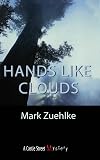
Elias is the coroner in the small town of Tofino, on Vancouver Island in British Columbia. When a local environmentalist/activist (or “ecoterrorist”) is found hanging from a tree, the initial thought is suicide, but Elias quickly figures out that Ian was strangled before he was hung. The local RCMP, though, is busy preparing for a US Senator to tour the area, looking at the ancient rainforest (and the already clear-cut sections) that the logging companies want to continue to raze. show more
Especially with the environmental angle, I had hoped this would draw me in more. The mystery itself was interesting, but the characters weren’t as much so – at least to me – until at least the second half of the book. Zuehlke puts a lot of description in the book, which does paint a clear picture of Vancouver Island, but it’s a bit too much for me, overall. I did love the setting, though. show less
Especially with the environmental angle, I had hoped this would draw me in more. The mystery itself was interesting, but the characters weren’t as much so – at least to me – until at least the second half of the book. Zuehlke puts a lot of description in the book, which does paint a clear picture of Vancouver Island, but it’s a bit too much for me, overall. I did love the setting, though. show less
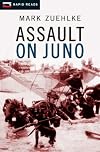
Well, there are other military histories out there. I am thinking specifically of Cornelius Ryan and the Longest Day. Admittedly that takes a broader look at D-Day and not just Juno Beach.
Here we have a Canadian writer who has written several books on the subject. This seems to be a heavily edited piece for the Rapid Reads imprint.
The editors need to take a look at their formatting process for there are several places where the kerning causes a word to be formed from several as a giant super show more word.
The tale itself honors many of the fallen, some 366 in the Canadian forces according to the numbers Zuehlke gives us. Not that every single one is mentioned. But a good many are. What we need to make this piece work though is more maps that drill down and relate to the chapters. A timeline that is consistent and does not jump as one unit's deeds are related to dusk, and then we are back on the beach at noon.
A table of organization so we can keep track of which major and captain and Colonel all work together. Of where the tanks were assigned.
In the end, what I feel I have read is secondary research. That Zuehlke took the works of others who interviewed the survivors of the battle and put them together, now 60+ years later. Unlike Ryan and authors closer to the source, who actually interviewed the combatants. I also sense we lose a lot by only hearing of the Canadians and not those whom they fought, killed and captured. Hearing what the Germans were doing before, during and after the prepatory bombardment and then during the assault, would have made this a true piece of history. Instead, just telling us about the Canadians is a man, writing history from the point of view of the victors. Or rewriting history. And as i mentioned, it seems like he has taken his material from the shoulders of others.
So I can do no better than saying that I am left thinking this average. It would score much better if just the editing gave us better maps, the TOO, and a better timeline. show less
Here we have a Canadian writer who has written several books on the subject. This seems to be a heavily edited piece for the Rapid Reads imprint.
The editors need to take a look at their formatting process for there are several places where the kerning causes a word to be formed from several as a giant super show more word.
The tale itself honors many of the fallen, some 366 in the Canadian forces according to the numbers Zuehlke gives us. Not that every single one is mentioned. But a good many are. What we need to make this piece work though is more maps that drill down and relate to the chapters. A timeline that is consistent and does not jump as one unit's deeds are related to dusk, and then we are back on the beach at noon.
A table of organization so we can keep track of which major and captain and Colonel all work together. Of where the tanks were assigned.
In the end, what I feel I have read is secondary research. That Zuehlke took the works of others who interviewed the survivors of the battle and put them together, now 60+ years later. Unlike Ryan and authors closer to the source, who actually interviewed the combatants. I also sense we lose a lot by only hearing of the Canadians and not those whom they fought, killed and captured. Hearing what the Germans were doing before, during and after the prepatory bombardment and then during the assault, would have made this a true piece of history. Instead, just telling us about the Canadians is a man, writing history from the point of view of the victors. Or rewriting history. And as i mentioned, it seems like he has taken his material from the shoulders of others.
So I can do no better than saying that I am left thinking this average. It would score much better if just the editing gave us better maps, the TOO, and a better timeline. show less
 This review was written for LibraryThing Early Reviewers.
Edwin St. Andrew St. John, the first character introduced in [b:Sea of Tranquility|58446227|Sea of Tranquility|Emily St. John Mandel|https://i.gr-assets.com/images/S/compressed.photo.goodreads.com/books/1626710416l/58446227._SX50_.jpg|92408226], is a "remittance man." Emily St. John Mandel cites this book as her source for information about the men who were sent overseas when England no longer seemed big enough for all the sons of nobility. It was a strange period in history, from the 1880s show more until the start of the first world war, when suddenly the men had value to their country again.
Mark Zuehlke explores the impact these men had on Canada: some trying to recreate Canada in the image of England, some trying to recreate themselves in the image of cowboys. Some of the stories are humorous; most are tragic. Their attempts to turn wasteland into utopian communities in places like Carrington Manor and Walhachin are particularly fascinating.
My only issue with this book is the organization. Especially in the first few chapters, Mr. Zuehlke blends the stories of these men into one narrative, jumping back and forth between individuals who came to Canada at completely different times (1880s and 1910s) with very different experiences. A chronological organization would be easier to follow. Otherwise, a very interesting glimpse of a strange period of history. show less
Mark Zuehlke explores the impact these men had on Canada: some trying to recreate Canada in the image of England, some trying to recreate themselves in the image of cowboys. Some of the stories are humorous; most are tragic. Their attempts to turn wasteland into utopian communities in places like Carrington Manor and Walhachin are particularly fascinating.
My only issue with this book is the organization. Especially in the first few chapters, Mr. Zuehlke blends the stories of these men into one narrative, jumping back and forth between individuals who came to Canada at completely different times (1880s and 1910s) with very different experiences. A chronological organization would be easier to follow. Otherwise, a very interesting glimpse of a strange period of history. show less
Lists
Awards


You May Also Like


Associated Authors
Statistics
- Works
- 33
- Members
- 1,336
- Popularity
- #19,273
- Rating
- 4.0
- Reviews
- 42
- ISBNs
- 104
- Languages
- 1
- Favorited
- 5

