
Ted Barris
Author of Juno
About the Author
Ted Barris is an author, journalist and broadcaster. He is a full-time professor of journalism at Centennial College in Toronto. He has written more than fifteen non-fiction books including Victory at Vimy: Canada Comes of Age, April 9-12, 1917; Juno: Canadians at D-Day June 6, 1944; and The Great show more Escape: A Canadian Story. (Bowker Author Biography) show less
Works by Ted Barris
Tagged
Common Knowledge
- Canonical name
- Barris, Ted
- Legal name
- Barris, Theodore
- Birthdate
- 1949-07-12
- Gender
- male
- Occupations
- radio host
journalist
professor - Relationships
- Barris, Alex (father)
- Nationality
- Canada
- Places of residence
- Uxbridge, Ontario, Canada
- Associated Place (for map)
- Ontario, Canada
Members
Reviews

This is the second book I have read by Ted Barris and he uses the same format in both. Thar format consists of picking the topic, in this case the experiences of Canadians in World War II, dividing it up in sub topics such as the experiences of war correspondents, war time entertainers, women in the armed forces, children and of course the men who did the fighting. Then he collects hundred of interviews, consults memoirs, magazines and newspapers of the War period and turns this collection show more of anecdotes into a very entertaining book. Not only do we read about the usual horrors and incompetence of war, but the humour as well. For this title, Ted joined forces with his father who was a popular writer and broadcaster in Canada. show less

Using the format he has so successfully used in the past to tell the history of Canada's military's greatest achievements, Barris does the same for Canadian airmen's contribution to the battle. When the German forces successfully chased the British army out of France after the French surrender in 1940, Hitler and Goering put in place plans for a sea invasion of the British Isles. However, first they had to destroy the RAF.
They unleashed the German air force on Channel shipping followed by show more attacking airdromes and radar towers. Eventually assuming because of their huge superiority in numbers of aircraft, Goering predicted that in two to four weeks, the RAF would be destroyed. However, the Germans did not understand the impact of the radar on allowing British forces to know when and where the Luftwaffe was headed and be there above them to break up their forces.
Barris fills out the story with anecdotes from letters, books, interviews and other sources to tell the story in the words of the men and women who lived the Blitz. Very readable and entertaining. show less
They unleashed the German air force on Channel shipping followed by show more attacking airdromes and radar towers. Eventually assuming because of their huge superiority in numbers of aircraft, Goering predicted that in two to four weeks, the RAF would be destroyed. However, the Germans did not understand the impact of the radar on allowing British forces to know when and where the Luftwaffe was headed and be there above them to break up their forces.
Barris fills out the story with anecdotes from letters, books, interviews and other sources to tell the story in the words of the men and women who lived the Blitz. Very readable and entertaining. show less

Barris' background in journalism is very evident in this volume as it is very readable. He has spent hours interviewing Canadian veterans of the Korean War in order to share their many anecdotes he includes with us.
As he did in his previous book, Behind the Glory, he again criticizes the Canadian Government for its poor treatment of Canadian Veterans. Many Korean Vets receive little or no support for the treatment of their injuries whether mental or physical. The only way a National show more Memorial to their efforts was built was after the Vets financed themselves. They also had to encourage municipalities across Canada to add Korea to their War memorials.
This is another wonderful addition to Canada's military history by someone who is passionate about telling us about it and who is able to do so whether via the written word or in public lectures. show less
As he did in his previous book, Behind the Glory, he again criticizes the Canadian Government for its poor treatment of Canadian Veterans. Many Korean Vets receive little or no support for the treatment of their injuries whether mental or physical. The only way a National show more Memorial to their efforts was built was after the Vets financed themselves. They also had to encourage municipalities across Canada to add Korea to their War memorials.
This is another wonderful addition to Canada's military history by someone who is passionate about telling us about it and who is able to do so whether via the written word or in public lectures. show less
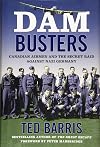
Another first rate effort from Ted Barris. He gives the background on how Barnes Wallis, a British inventor, came up with the idea of destroying the dams and how the RAF finally agreed to pursue the idea. Guy Gibson was assigned the job of creating and leading the special squadron. Gibson hand picked what he considered the best pilots, navigators and gunners to make up 617 Squadron and then drilled them in low level flying and bombing.
Barris also describes the creation of the special show more bouncing bomb that would be required to destroy the dams. Then there was the modifications to the Lancasters to enable them to carry the special bomb and and the creation of the modified bomb sights that were necessary to be able to drop the bomb at the right distance from the dam.
Of the nineteen planes that started the mission, eight did not return costing the lives of 53 airmen. Two of the three dams targeted were breached. Was the cost worth it since the the Germans rebuilt the dams in less than a 10 days? The opinion is that it was since the Germans had to pull 1000's of workers from other projects including the Atlantic wall to pull it off as well as the boost to British morale in finally hitting Germany with something big.
Barris includes a chapter on efforts to keep the story alive including the making of the British film, The Dam Busters and the many books including Paul Brickhill's 1951 The Dam Busters on which the film was based. Included as well are the efforts by Canadians in Canada to preserve the story for succeeding generations especially by the Nanton Lancaster Society in Alberta. show less
Barris also describes the creation of the special show more bouncing bomb that would be required to destroy the dams. Then there was the modifications to the Lancasters to enable them to carry the special bomb and and the creation of the modified bomb sights that were necessary to be able to drop the bomb at the right distance from the dam.
Of the nineteen planes that started the mission, eight did not return costing the lives of 53 airmen. Two of the three dams targeted were breached. Was the cost worth it since the the Germans rebuilt the dams in less than a 10 days? The opinion is that it was since the Germans had to pull 1000's of workers from other projects including the Atlantic wall to pull it off as well as the boost to British morale in finally hitting Germany with something big.
Barris includes a chapter on efforts to keep the story alive including the making of the British film, The Dam Busters and the many books including Paul Brickhill's 1951 The Dam Busters on which the film was based. Included as well are the efforts by Canadians in Canada to preserve the story for succeeding generations especially by the Nanton Lancaster Society in Alberta. show less
Lists
Awards

You May Also Like


Statistics
- Works
- 14
- Members
- 565
- Popularity
- #44,254
- Rating
- 4.0
- Reviews
- 17
- ISBNs
- 53
- Languages
- 1
- Favorited
- 1