
Beth L. Bailey
Author of A History of Our Time: Readings on Postwar America
About the Author
Works by Beth L. Bailey
Associated Works
Tagged
Common Knowledge
- Canonical name
- Bailey, Beth L.
- Birthdate
- 1957-12-29
- Gender
- female
- Education
- University of Chicago (MA|1982|Ph.D|1986)
Northwestern University (BA|1979) - Occupations
- historian
professor - Organizations
- University of Kansas
Temple University
University of New Mexico
Columbia University - Awards and honors
- Society of American Historians (2017)
- Relationships
- Farber, David (spouse)
- Nationality
- USA
- Birthplace
- Atlanta, Georgia, USA
- Associated Place (for map)
- Georgia, USA
Members
Reviews
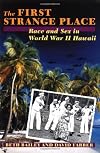
This is a really interesting, thoughtful book about Hawaii during the Second World War. The island chain was seen as unimaginably foreign by servicepeople, both white and black, stationed there from the U.S. mainland—its ethnic diversity and the degree to which the different populations interacted, while far from making Hawaii a bastion of racial harmony and equality, marked it out as being entirely unlike the still provincial and segregated Lower 48. Yet Hawaii was still an American show more territory, and seen as being on the front lines of the war.
Bailey and Farber don't attempt any radically new arguments (as far as I know; neither U.S. nor Hawaiian history are my forte) or innovative methodology here, but they write with a quiet empathy which is very pleasant to read. The use of copious primary sources—taken from letters, diaries, and interviews—really helps the reader to conjure up the claustrophobic, overcrowded nature of Hawaii, in particular Oahu, from '41 to '45. There are some very interesting and revealing anecdotes, which show both the absurdity, the cruelty, and the real world ramifications of classification by race. For example, the fact that in the pre-war census, the tiny black population on the islands was largely of Puerto Rican descent. However, Puerto Ricans were mostly of white Hispanic descent, and were classed as such on the census, so almost the entire black population of Hawaii was classified as Caucasian, according to the census—in other words, there were officially no black people!
A highly readable book, and definitely recommended if you have an interest in its subjects. show less
Bailey and Farber don't attempt any radically new arguments (as far as I know; neither U.S. nor Hawaiian history are my forte) or innovative methodology here, but they write with a quiet empathy which is very pleasant to read. The use of copious primary sources—taken from letters, diaries, and interviews—really helps the reader to conjure up the claustrophobic, overcrowded nature of Hawaii, in particular Oahu, from '41 to '45. There are some very interesting and revealing anecdotes, which show both the absurdity, the cruelty, and the real world ramifications of classification by race. For example, the fact that in the pre-war census, the tiny black population on the islands was largely of Puerto Rican descent. However, Puerto Ricans were mostly of white Hispanic descent, and were classed as such on the census, so almost the entire black population of Hawaii was classified as Caucasian, according to the census—in other words, there were officially no black people!
A highly readable book, and definitely recommended if you have an interest in its subjects. show less
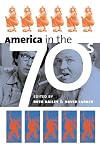
The lighthearted cover of this one, with photos of Archie and Edith Bunker, Farrah Fawcett and John Travolta's disco stance, is a bit misleading. This is not a light read, geared toward the fad culture of the seventies. Instead, this is a studied look at the politics, social movements and major influences of the decade.
I found some of the writing in these essays dry, even for nonfiction. Others, like 'She "can bring home the bacon"', which covered the women's liberation movement and "Adults show more Only", which talked about the so-called sexual revolution, fascinated me.
Whether you grew up during the seventies, as I did, were an older adult or a glimmer in your parents' eyes, this book offers a perspective of the much overlooked decade that can only be seen in hindsight. show less
I found some of the writing in these essays dry, even for nonfiction. Others, like 'She "can bring home the bacon"', which covered the women's liberation movement and "Adults show more Only", which talked about the so-called sexual revolution, fascinated me.
Whether you grew up during the seventies, as I did, were an older adult or a glimmer in your parents' eyes, this book offers a perspective of the much overlooked decade that can only be seen in hindsight. show less
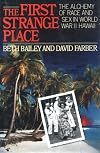
As the forward base and staging area for all U.S. military operations in the Pacific during World War II, Hawaii was the "first strange place" for close to a million soldiers, sailors, and marines on their way to the horrors of war. But Hawaii was also the first strange place on another kind of journey, toward the new American society that would begin to emerge in the postwar era. Unlike the rigid and static social order of prewar America, this was to be a highly mobile and volatile society show more of mixed racial and cultural influences, one above all in which women and minorities would increasingly demand and receive equal status. Drawing on documents, diaries, memoirs, and interviews, Beth Bailey and David Farber show how these unprecedented changes were tested and explored in the highly charged environment of wartime Hawaii show less
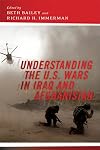
Understanding the U.S. Wars in Iraq and Afghanistan edited by Beth Bailey and Richard H. Immerman is a collection of essays examining America's last decade and half of war. Bailey is Professor of History at Temple University. Immerman is Professor of History, Edward Buthusiem Distinguished Faculty Fellow, and Marvin Wachman Director of the Center for the Study of Force and Diplomacy at Temple University and the Francis W. De Serio Chair of Strategic and Theater Intelligence at the Army War show more College.
The collected essays are an in-depth and scholarly report of America’s involvement in Afghanistan and Iraq. The essays cover all aspects of America’s involvement including historical interventions going back to the installation of the Shah. America's twentieth-century involvement and mis-involvement in the region are covered and set the stage for twenty-first-century participation. The interconnectedness of the Shah, the Iranian hostage situation, the Iran- Iraq War, support for the Muhajireen, Desert Shield, form the knot tying the United States to the current wars.
Reasons for invading Iraq and putting Afghanistan on the back burner are explained in practical political terms. It’s easier to focus a nation’s attention on an evil leader bunkered down in a defined nation than on a transnational terror group whose leader evaded successfully evaded US capture. Other aspects of the war that are discussed are the treatment of veterans and the "I support the troops" (until they come home and need help) campaign. The veterans who returned came back with a variety of disabilities both physical and mental and how these issues are being covered are part of an essay. With each war, we fight we see a greater number of returning veterans with problem adapting back to society. Mechanization and killing from a distance does little to curb these issues.
On the home front, the war had its own effect. America loves media and although several movies made on the two recent wars none of them were successful. The first-hand account of Rolling Stone reporter Evan Wright’s Generation Kill comes first to my mind. It seemed to capture being a Marine much more than portraying the war as a noble cause. Novels took a rather bleak look at the war also. The Yellow Birds and Billy Lynn's Long Halftime Walk are not the rally around the flag type books that support a nation's war. Perhaps news reporting was enough to remind America of the war.
Understanding the US Wars covers all aspects of the America's 21st-century wars. Scholars write on more than just the physical war, but at ancillary aspects of the war. The use of different essays on different topics help give a complete picture of the war and its effects. Very well done and an enlightening read. show less
The collected essays are an in-depth and scholarly report of America’s involvement in Afghanistan and Iraq. The essays cover all aspects of America’s involvement including historical interventions going back to the installation of the Shah. America's twentieth-century involvement and mis-involvement in the region are covered and set the stage for twenty-first-century participation. The interconnectedness of the Shah, the Iranian hostage situation, the Iran- Iraq War, support for the Muhajireen, Desert Shield, form the knot tying the United States to the current wars.
Reasons for invading Iraq and putting Afghanistan on the back burner are explained in practical political terms. It’s easier to focus a nation’s attention on an evil leader bunkered down in a defined nation than on a transnational terror group whose leader evaded successfully evaded US capture. Other aspects of the war that are discussed are the treatment of veterans and the "I support the troops" (until they come home and need help) campaign. The veterans who returned came back with a variety of disabilities both physical and mental and how these issues are being covered are part of an essay. With each war, we fight we see a greater number of returning veterans with problem adapting back to society. Mechanization and killing from a distance does little to curb these issues.
On the home front, the war had its own effect. America loves media and although several movies made on the two recent wars none of them were successful. The first-hand account of Rolling Stone reporter Evan Wright’s Generation Kill comes first to my mind. It seemed to capture being a Marine much more than portraying the war as a noble cause. Novels took a rather bleak look at the war also. The Yellow Birds and Billy Lynn's Long Halftime Walk are not the rally around the flag type books that support a nation's war. Perhaps news reporting was enough to remind America of the war.
Understanding the US Wars covers all aspects of the America's 21st-century wars. Scholars write on more than just the physical war, but at ancillary aspects of the war. The use of different essays on different topics help give a complete picture of the war and its effects. Very well done and an enlightening read. show less
You May Also Like


Associated Authors
Statistics
- Works
- 11
- Also by
- 1
- Members
- 679
- Popularity
- #37,220
- Rating
- 3.7
- Reviews
- 6
- ISBNs
- 41