
Józef Czapski (1896–1993)
Author of Lost Time: Lectures on Proust in a Soviet Prison Camp (New York Review Books Classics)
About the Author
Image credit: Józef Czapski, Berlin, 1950
Works by Józef Czapski
Lost Time: Lectures on Proust in a Soviet Prison Camp (New York Review Books Classics) (1987) 267 copies, 6 reviews
Inhuman Land: Searching for the Truth in Soviet Russia, 1941-1942 (New York Review Books) (1987) 115 copies
Memories of Starobielsk: Essays Between Art and History (New York Review Books Classics) (2022) 35 copies
Wspomnienia starobielskie 1 copy
Tagged
Common Knowledge
- Canonical name
- Czapski, Józef
- Legal name
- Czapski, Józef Maria Franciszek, count Hutten-Czapski
- Other names
- Sienny, Marek, pseud.
- Birthdate
- 1896-04-03
- Date of death
- 1993-01-12
- Gender
- male
- Education
- Law, Petersburg
Fine arts, Warsaw, 1918 (interrupted)
Fine arts, Cracow, 1922-24
Academy of Fine Arts, Warsaw - Occupations
- painter
art critic
essayist
military officer
count - Awards and honors
- Order of Virtuti Militari
- Relationships
- Czapska, Maria (sister)
- Short biography
- Józef Czapski was born in Prague, Bohemia, then part of the Austro-Hungarian Empire, to an aristocratic family. He spent most of his childhood on his family's estate near Minsk. In 1915, he graduated from gymnasium in St. Petersburg and was studying law at the Imperial University at the outbreak of the Russian Revolution. Although he was a pacifist, he served briefly as a cavalry officer in World War I and was decorated for bravery in the Polish-Soviet War of 1920-1921. Czapski attended the Academy of Fine Arts in Warsaw and Kraków and then moved to Paris to paint. A few years later, in 1931, he returned to Warsaw, and began exhibiting his paintings. He was active in the city's artistic life and began writing art criticism. In 1939, when Germany invaded Poland at the start of World War II, Czapski again did military duty, and was captured by the Germans, who handed him over to the Soviets as a prisoner of war. He gave lectures to other prisoners and later wrote a book about his experiences, Lost Time: Lectures on Proust in a Soviet Prison Camp. When Germany invaded the Soviet Union in 1941, he was among the tens of thousands of starving Poles released from Soviet prison camps; the men were allowed to join the Polish army of General Władysław Anders being formed to fight alongside the Red Army. Gen. Anders gave Czapski the task of investigating the fate of 22,000 missing Polish military officers. Blocked at every level by the Soviet authorities, Czapski was unaware that in April 1940, all the officers had been shot and killed in Katyn Forest and elsewhere. He was one of the few to survive, for reasons that remain unknown. Czapski described his experiences in two books, Memories of Starobielsk (1945) and Inhuman Land: Searching for the Truth in Soviet Russia, 1941-1942 (1949). Czapski traveled with Gen. Anders' army on a trek through Central Asia to the Middle East, finally arriving in Baghdad, where he began publishing articles in newly-created Polish newspapers. After the war, unwilling to live in Communist Poland, he moved to Rome and then back to France. He helped found the the Polish émigré publishing community at the Instytut Literacki (Literary Institute) in Maisons-Laffitte, a suburb of Paris. He published political commentary in Kultura, its intellectual journal, as well as essays about art.
- Nationality
- Poland
France - Birthplace
- Prague, Bohemia, Austro-Hungarian Empire
- Places of residence
- Prague, Bohemia, Austro-Hungarian Empire
Petersburg, Russia
Cracow, Poland
Chmielek, Poland (as POW)
Starobilsk, Ukraine (as POW)
Pavlishchev Bor, nr Smolensk, Russia (as POW) (show all 9)
Gryazovets, Russia (as POW)
Paris, France
Maison-Laffite, France - Place of death
- Maison-Lafitte, France
- Burial location
- Le Mesnil-le-Roi, France
Members
Reviews
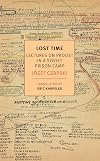
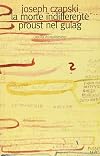
I read this book when it first came out in French, and just re-read it in Karpeles's English translation. A Proust scholar will find perhaps little that they would consider new in terms of research, and the main interest of the book may be its context. While imprisoned in Gryazovets, a Russian camp near Vologda, located in a bombed-out monastery, Czapski participated in a series of sometimes authorized, sometimes clandestine lectures: inmates would discourse from memory on any topic dear to show more them, whether literature, sports, geography... Czapski gave a series of talks on the history of painting (and, as we learn from Karpeles's biography of Czapski, "Almost Nothing," even drafted an art historical volume, but the notes were lost, confiscated...). As he worked on his topic, another idea came to haunt him: to present to his fellow prisoners the work of Proust -- whom he saw as a sort of prisoner, locked in his "corked bedroom," in disregard of his health, entirely devoted to his work. Proust's "In Search of Lost Time" brought hope of a time regained into a place so remote and seemingly antithetical to the aristocratic world he describes. Speaking to Polish fellows in arms, Czapski nevertheless gave his lectures in French. His notes, some of which are reproduced and translated (with only a handful of very slight errors) in the plate section, are a visual map to his interpretation of Proust, drafted mainly in Polish, with a sprinkling of French, German, Latin, as required by the origin of the references. The French edition of these talks presents perhaps a more fragile text as it preserves some grammatical errors and omissions made in the surviving transcripts of these lectures. (The journey from the original conception to the published text is in itself fascinating: it's not clear whether Czapski had detailed notes or whether he spoke based on the mental map in the form of visual diagrams recorded in the notebooks; afterwards, he dictated the lectures in abridged form to two inmates who transcribed it on a typewriter -- as Karpeles points out, mystery envelops the circumstances of the creation of this typescript [a typewriter in a gulag?]. Eventually a second typescript was created. Both bear some handwritten corrections made by Czapski, perhaps others. Karpeles's version relies on a comparison between the two versions; whereas the French publication had access to only one typescript.) Perhaps because of publishing costs, the NYRB edition reproduces only a few select pages with the draft diagrams, accompanied by a translation on the facing page. The French version doesn't offer translations of its plates, but includes color photographs of the entire notebook, including the two tattered covers with the title "Tyetrad" [Exercise Book], printed in Cyrillics.
Let not the Proust scholar be too disappointed or walk away too early, however. While Czapski may seem to add little to the "scholarship," doesn't encountering Proust in the gulag tell us something about Proust we may have previously overlooked? And plain and "unscholarly" as Czapski's interpretation may appear, it brings in his unique erudition by setting Proust side by side Dostoevsky, Tolstoy, Zeromski, Conrad in ways that to a discerning eye might indeed suggest new avenues of exploration! show less
Let not the Proust scholar be too disappointed or walk away too early, however. While Czapski may seem to add little to the "scholarship," doesn't encountering Proust in the gulag tell us something about Proust we may have previously overlooked? And plain and "unscholarly" as Czapski's interpretation may appear, it brings in his unique erudition by setting Proust side by side Dostoevsky, Tolstoy, Zeromski, Conrad in ways that to a discerning eye might indeed suggest new avenues of exploration! show less
This is a short and excellent book. Thoughts about Proust through the memories and thoughts of a Polish artist/soldier speaking in a Soviet prison camp. There is something extremely moving about the circumstances of this book, and the hand-drawn dog picture at the back nearly finished me off - just the simple humanity of someone doing the best for himself and his fellow inmates.
Memory as survival, memory to forget the hostile environment. A fascinating book, as compelling in it own mental way to any survival story. You think as your read it 'the author is barely surviving in a frozen work camp and he's thinking about a book of high end French life in the belle epoch'. Those men coming together for their solace in the world of ideas is very uplifting. Few books do this. Yet you have to imagine the entire scene. Its the bits left out that make it so fascinating.
I show more came to this book by a circuitous path. I had first heard about the murders of the Polish officers by the soviets and their burial in the Katyn forest through a friend whose father served in the German army. Every soldier knew the story of the Katyn forest apparently. Then, I read Field Grey by Philip Kerr, not realising it was set in the historical moment of its discovery. Then I read Proust, or most of Proust. Then I read an article about Czapski that mentioned this book, because once something is in your head it is very hard to get it out. As Swann discovers when he falls in love with Odette. show less
I show more came to this book by a circuitous path. I had first heard about the murders of the Polish officers by the soviets and their burial in the Katyn forest through a friend whose father served in the German army. Every soldier knew the story of the Katyn forest apparently. Then, I read Field Grey by Philip Kerr, not realising it was set in the historical moment of its discovery. Then I read Proust, or most of Proust. Then I read an article about Czapski that mentioned this book, because once something is in your head it is very hard to get it out. As Swann discovers when he falls in love with Odette. show less
Lost Time: Lectures on Proust in a Soviet Prison Camp (New York Review Books Classics) by Józef Czapski
Five stars for the back-story, three stars for general Proustiana, but really, unless you're obsessed with Proust, this is not even remotely worth reading. You can get the back story from a solid goodreads review. If you are obsessed with Proust, on the other hand, this is a delightful little squib.
Awards


You May Also Like


Associated Authors
Statistics
- Works
- 29
- Members
- 470
- Popularity
- #52,370
- Rating
- 3.9
- Reviews
- 6
- ISBNs
- 48
- Languages
- 9
- Favorited
- 1
