
Maxim Osipov
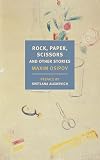
Author of Rock, Paper, Scissors: And Other Stories (New York Review Books Classics)
About the Author
Image credit: Maxim Ossipow
Works by Maxim Osipov
Rock, Paper, Scissors: And Other Stories (New York Review Books Classics) (2019) 170 copies, 4 reviews
Associated Works
And We Came Outside and Saw the Stars Again: Writers from Around the World on the COVID-19 Pandemic (2020) — Contributor — 16 copies
Voorlopige resultaten. Gedichten uit het tijdschrift '5th Wave' — Foreword — 1 copy
Tagged
Common Knowledge
- Legal name
- О́сипов, Максим Александрович
- Other names
- Osipov, Maxim
- Birthdate
- 1963-10-04
- Gender
- male
- Occupations
- writer
cardiologist - Nationality
- Russia
- Birthplace
- Moscow, Russia
- Associated Place (for map)
- Moscow, Russia
Members
Reviews

Many of the characters in Maxim Osipov’s first collection of stories to be translated into English have suffered grievous losses. Others seem to be adrift, trapped in a life that lacks meaning and searching for something to fill the void. Osipov, a practicing doctor, writes briskly paced, unsentimental, loosely structured stories packed with incident that roam freely across geographies and make liberal use of flashback to fill in gaps and flesh out characters’ backstories. Like Chekhov, show more to whom he has been compared, Osipov’s stories examine the lives of ordinary people and tend to zero in on a transformative moment in a character’s life. In “Moscow-Petrozavodsk” a young doctor traveling by train is left shaken after witnessing what he regards as a needlessly brutal arrest by local police. In “Rock, Paper, Scissors” it is International Women’s Day and Ksenia, still mourning the death of her daughter Verochka, is stunned when a favourite employee of her restaurant, who has been arrested and charged with murder, refuses her help. The wealthy businessman in “Renaissance Man,” obsessively pursues a variety of activities in an effort to distract himself from the emptiness of his life, but is never satisfied, never feels complete, and only awakens from his torpor after committing an act of senseless violence. And in “On the Banks of the Spree” Elizaveta has traveled to Berlin to meet her sister Elsa for the first time, because her dying father had always kept his life as a spy in the GDR a secret from her. But the meeting does not go as planned because Elsa, who always thought her father was dead, is suspicious and refuses to believe her. The vast Russian landscape is often evoked in these stories, and the reader frequently senses, hovering behind the action, empty vistas stretching in all directions, the huge distances that separate people from one another. There is nothing overtly political here, but the reader is left with an impression of a country where mistrust of the government is endemic. For anyone interested in contemporary Russia, Maxim Osipov’s collection provides a fascinating window on provincial life in a land of stark contrasts and puzzling contradictions. show less
Osipov stories could only exist in Russia. There train journeys offer an extensive view of the fabric of Russian life. There's no such thing as just a train journey, you go to meet your fate or your fate follows you. When I recently read Vasilly Grossman's Everything Flows it too describes a long journey and I wondered if I was reading Osipov. Or that Grossman influenced Osipov.
The short story in the hands of some can feel like a saga, a whole town, a whole region, a whole country feels show more like its part of it.
Worth reading. show less
The short story in the hands of some can feel like a saga, a whole town, a whole region, a whole country feels show more like its part of it.
Worth reading. show less
Good book All the russians like him because he ix a practicing doctor and reminds them of Chekhov,

Het nieuwe Rusland, met aanwezigheid van mobieltjes, PC's.... Maar in kleinere gemeenten en steden is nog niet veel veranderd na het uiteenvallen van de USSR : veel kenmerken van het communisme zijn nog duidelijk aanwezig: corruptie, tegenstelling arm/rijk, weinig veerkracht noch perspectieven bij de bevolking. De mensen zijn gelaten, zijn niet bang om te lijden maar wel voor de dood. De schrijver is een arts die de Russische mens beschrijft met een zekere ironie. Met deze ironie benadert show more hij ook de religie, de lokale politiek met de corruptie en, beroepshalve, ook de eerder primitieve geneeskundige toestanden in de kleine 'ziekenhuizen' , buiten Moskou. Stijl: Ironisch geschreven met toch met een bepaalde humor. Hij vertelt vlot en gemakkelijk over het leven, net zoals de oude Russische auteurs (Tsjechov...). Vroeger en vandaag : vandaar de verklaring van de titel van deze knappe verhalenbundel. show less
Lists
Awards


You May Also Like


Associated Authors
Statistics
- Works
- 21
- Also by
- 3
- Members
- 417
- Popularity
- #58,442
- Rating
- 3.6
- Reviews
- 10
- ISBNs
- 40
- Languages
- 7
- Favorited
- 1