
Sasha Miller
Author of To The King a Daughter
About the Author
Series
Works by Sasha Miller
One Too Many Cats 1 copy
Ede's Earrings 1 copy
Sit By The Fire 1 copy
Associated Works
The Pendragon Chronicles: Heroic Fantasy From the Time of King Arthur (1989) — Contributor — 325 copies, 2 reviews
GURPS Grimoire: Tech Magic, Gate Magic, and Hundreds of Spells for All Colleges (1998) — Contributor — 113 copies
Tagged
Common Knowledge
- Legal name
- Miller, Georgia Myrle
- Other names
- Benedict, Myrle
Sallaska, Georgia - Birthdate
- 1933-10-15
- Gender
- female
- Education
- Central State College, Edmond, Oklahoma (BA)
- Occupations
- advertising copywriter
- Organizations
- Science Fiction and Fantasy Writers of America
Authors Guild
Oklahoma Writer's Federation - Awards and honors
- Oklahoma Writer's Federation. Tepee Award (1969)
Friends of American Writers award of achievement (1970) - Nationality
- USA
- Birthplace
- Erick, Oklahoma, USA
- Places of residence
- Erick, Oklahoma, USA
Oklahoma City, Oklahoma, USA - Associated Place (for map)
- Oklahoma, USA
Members
Discussions
Found: Asian Fantasy about a girl becoming a "Son" to be the new Lord in Name that Book (July 2021)
Reviews
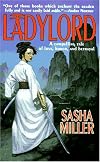
"Ladylord" brings something to the world of Fantasy that is rare and truly brilliant. It is nearly impossible to find fantasy books that are based in an Asian-style world alive with a culture vastly different from what may be found in the majority of what is out there.
Javerre is the very image of the strong, willful and motivated female protagonist that is exceedingly popular, but she does not break the mold in which her culture-centered world fixes her in. Her journey is epic enough to show more satisfy the adventure-junkies out there, and her self reflections and introverted nature will please those who seek a subtle psychological level to their stories. Put together, "Ladylord" is a gem that is denied the credit it is due.
I greatly enjoyed this story both as a female and as a fantasy reader -- not something that happens on a regular basis. My thanks to Sasha Miller. show less
Javerre is the very image of the strong, willful and motivated female protagonist that is exceedingly popular, but she does not break the mold in which her culture-centered world fixes her in. Her journey is epic enough to show more satisfy the adventure-junkies out there, and her self reflections and introverted nature will please those who seek a subtle psychological level to their stories. Put together, "Ladylord" is a gem that is denied the credit it is due.
I greatly enjoyed this story both as a female and as a fantasy reader -- not something that happens on a regular basis. My thanks to Sasha Miller. show less

Quite a decent historical novel from the POV of Cassandra which also deals with the subservient position of women at that time/culture.
***** 2023 update - re-read as part of a 'theme' read of Trojan War and other Greek mythology related novels. The style is more 'old fashioned' in that, although it is Cassandra's first person viewpoint, there is quite a lot of reportage where she recounts things she's been told about - mainly the fighting - by other people. However, the author has an show more interesting take on things. In a foreword, she was going by some then-current research, which was disputed even at the time, but which lends the story an interesting and more realistic background. For example, the Mycenaeans led by Agamemnon and Menelaus have been raiding cities adjacent to Troy for years while pretending that pirates are doing it. They want to seize its wealth in a rather stupid 'killing the goose that lays the golden eggs' attitude, as it is the success of the city as a trading hub for both West and East that has made it wealthy in the first place, and its destruction can only render both communities poorer. Helen is a self-centred primping woman who comes to Troy through the connivance of her husband and Agamemnon, who use her presence at the pretext for the war, when they are really only after the wealth.
This changed premise means that the actual fighting around Troy occurs over the space of a year, much more realistic for a state of siege warfare. Similarly, the Trojans send a lot of their non-combatants away to a remote stronghold before the Greeks can lay siege, and the bulk of those remaining are fighting men, both Trojans and their allies, with only the royal women and their servants remaining out of the female population. Even so, food is running short by the end. There is a very interesting take on Hektor's supposed cowardice in running away from Achilles, and circling the city three times, where it is revealed on the contrary to be an act of courage. And the downfall of Troy does not involve a wooden horse - that is a story later put around by the Greeks - but instead is tied in with the theories about the excavated site of the city.
Cassandra is an interesting character who is 'touched by Apollo' in the sense that she has premonitions and feelings about things. The gods however do not appear in the story: they are more a construct of their worshippers though there is definitely 'something' divine or supernatural in the background. So it is not Apollo who curses Cassandra's prophetic gift so that most people don't take her warnings seriously, but an abusive priest of his. Similarly, where certain characters are protected by gods on the battlefield in Homer's Iliad, here they are protected by brave heralds who hold the symbol of that god over the person, a protection mostly honoured by the opposition apart from Achilles who is a law unto himself.
The position of women is subservient but female characters, including Cassandra, are nevertheless strong and as far as they can carve out roles for themselves in the spaces they can find in such a patriarchal culture, especially when in captivity.
The story extends beyond the fall of Troy and Agamemnon's return to Mycenae with a lot of material that doesn't appear in the myth, but is an interesting take on things. I don't want to say more to avoid spoilers, but I found the ending very touching. I thoroughly enjoyed the re-read, especially in contrast to some of the other retellings I've encountered lately, and have managed to obtain second-hand copies of a couple of the author's other stories based on Greek mythology on the strength of this one. So I'm actually raising my original four star rating to five stars. show less
***** 2023 update - re-read as part of a 'theme' read of Trojan War and other Greek mythology related novels. The style is more 'old fashioned' in that, although it is Cassandra's first person viewpoint, there is quite a lot of reportage where she recounts things she's been told about - mainly the fighting - by other people. However, the author has an show more interesting take on things. In a foreword, she was going by some then-current research, which was disputed even at the time, but which lends the story an interesting and more realistic background. For example, the Mycenaeans led by Agamemnon and Menelaus have been raiding cities adjacent to Troy for years while pretending that pirates are doing it. They want to seize its wealth in a rather stupid 'killing the goose that lays the golden eggs' attitude, as it is the success of the city as a trading hub for both West and East that has made it wealthy in the first place, and its destruction can only render both communities poorer. Helen is a self-centred primping woman who comes to Troy through the connivance of her husband and Agamemnon, who use her presence at the pretext for the war, when they are really only after the wealth.
This changed premise means that the actual fighting around Troy occurs over the space of a year, much more realistic for a state of siege warfare. Similarly, the Trojans send a lot of their non-combatants away to a remote stronghold before the Greeks can lay siege, and the bulk of those remaining are fighting men, both Trojans and their allies, with only the royal women and their servants remaining out of the female population. Even so, food is running short by the end. There is a very interesting take on Hektor's supposed cowardice in running away from Achilles, and circling the city three times, where it is revealed on the contrary to be an act of courage. And the downfall of Troy does not involve a wooden horse - that is a story later put around by the Greeks - but instead is tied in with the theories about the excavated site of the city.
Cassandra is an interesting character who is 'touched by Apollo' in the sense that she has premonitions and feelings about things. The gods however do not appear in the story: they are more a construct of their worshippers though there is definitely 'something' divine or supernatural in the background. So it is not Apollo who curses Cassandra's prophetic gift so that most people don't take her warnings seriously, but an abusive priest of his. Similarly, where certain characters are protected by gods on the battlefield in Homer's Iliad, here they are protected by brave heralds who hold the symbol of that god over the person, a protection mostly honoured by the opposition apart from Achilles who is a law unto himself.
The position of women is subservient but female characters, including Cassandra, are nevertheless strong and as far as they can carve out roles for themselves in the spaces they can find in such a patriarchal culture, especially when in captivity.
The story extends beyond the fall of Troy and Agamemnon's return to Mycenae with a lot of material that doesn't appear in the myth, but is an interesting take on things. I don't want to say more to avoid spoilers, but I found the ending very touching. I thoroughly enjoyed the re-read, especially in contrast to some of the other retellings I've encountered lately, and have managed to obtain second-hand copies of a couple of the author's other stories based on Greek mythology on the strength of this one. So I'm actually raising my original four star rating to five stars. show less
8/10
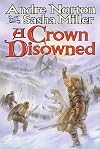
It’s hard to know where this story can go from here. Norton and Miller do a good job of wrapping up the story that arced through the first 3 books of the Cycle of Oak, Yew, Ash, and Rowan, and it feels like this is a fitting conclusion to a trilogy. Yet there are 2 more books in the Cycle—which I will read, and I hope they are not just tacked on appendages.
As for this volume—the various plot threads are untangled and resolved.I was surprised how easy it was for Flavielle the show more Sorceress to be overcome. In fact, I was sure she had somehow escaped her body and didn’t believe she was truly dead until the Great One Whom All Served himself acknowledged that she had died. And I was surprised that Rohan went back to the Sea-Rovers with his wife, but I think he will bring some changes to their traditions. I was pleased with the change to Tusser and the other Bog-men, even before the Great Foulness was defeated. This book was the best of the first 3 in the series. show less
It’s hard to know where this story can go from here. Norton and Miller do a good job of wrapping up the story that arced through the first 3 books of the Cycle of Oak, Yew, Ash, and Rowan, and it feels like this is a fitting conclusion to a trilogy. Yet there are 2 more books in the Cycle—which I will read, and I hope they are not just tacked on appendages.
As for this volume—the various plot threads are untangled and resolved.
7/10
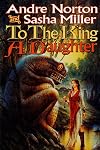
This is a story with lots of promise and a few really intriguing elements, but it also is somewhat flawed. The timeline, especially in the last third of the book or so, seems a bit askew. The characters don’t have a lot of depth—most are cardboard role-players. Even those characters who are more fleshed out seem to exist, not as individuals, but as game pieces. And while I know this is fantasy, there should be some sense of reality. Ashen, having been raised in the Bale-Bog, is an show more amazingly quick study at courtly manners, speech, dress, and pursuits like music, dancing, and needlework. She, Oberon of the Sea-Rovers, and the men of Rendel converse easily despite speaking different languages. Even with these weaknesses, the story is interesting and I look forward to seeing what happens next in this series. I also hope for stronger writing in the rest of the series. show less
This is a story with lots of promise and a few really intriguing elements, but it also is somewhat flawed. The timeline, especially in the last third of the book or so, seems a bit askew. The characters don’t have a lot of depth—most are cardboard role-players. Even those characters who are more fleshed out seem to exist, not as individuals, but as game pieces. And while I know this is fantasy, there should be some sense of reality. Ashen, having been raised in the Bale-Bog, is an show more amazingly quick study at courtly manners, speech, dress, and pursuits like music, dancing, and needlework. She, Oberon of the Sea-Rovers, and the men of Rendel converse easily despite speaking different languages. Even with these weaknesses, the story is interesting and I look forward to seeing what happens next in this series. I also hope for stronger writing in the rest of the series. show less
Lists
The Trojan War (1)
Awards

You May Also Like


Associated Authors
Statistics
- Works
- 17
- Also by
- 8
- Members
- 1,309
- Popularity
- #19,618
- Rating
- 3.7
- Reviews
- 8
- ISBNs
- 26