
Phil Hester
Author of Green Arrow: Quiver
About the Author
Image credit: Phil Hester. Photo by "5of7" (flickr).
Series
Works by Phil Hester
The Flash: Season Zero (2014-) #19 3 copies
Mythic #2 3 copies
Black Terror (2008) #5 3 copies
The Thrilling Adventure Hour Presents: Sparks Nevada, Marshal on Mars #4 (2015) — Illustrator — 2 copies
Green Hornet 15: Death and Rebirth — Author — 2 copies
Green Arrow [2001] #15 2 copies
Green Hornet 14: Idols, Part Four: Deathmask — Author — 2 copies
Green Hornet 13: Idols, Part Three: The Saint — Author — 2 copies
Green Hornet 12: Idols, Part Two: Unmasked — Author — 2 copies
Green Hornet 11: Idols, Part One: Los Hijos De La Muerte — Author — 2 copies
Black Terror (2008) #8 2 copies
El Diablo (2008-) #1 2 copies
Quick Stops: Anecdotes From the Annals of the Askewniverse (2023) — Illustrator — 2 copies, 1 review
Green Hornet 19: The Devil You Know, Part Four — Author — 1 copy
Titans: Titans Together #4 1 copy
Swamp Thing: New Roots #8 1 copy
Swamp Thing: New Roots #7 1 copy
Black Terror (2008) #13 1 copy
The Darkness (2007) #07 1 copy
The Darkness (2007) #02 1 copy
Black Terror (2008) #14 1 copy
Black Terror (2008) #12 1 copy
The Darkness (2007) #05A 1 copy
The Anchor #3 1 copy
The Picture Taker #1 1 copy
The Crow: Waking Nightmares 1 copy
The Anchor #1 1 copy
The Anchor #2 1 copy
Titans: Titans Together #2 1 copy
The Anchor #4 1 copy
The Anchor #5 1 copy
The Anchor #6 1 copy
The Anchor #7 1 copy
The Anchor #8 1 copy
Black Terror (2008) #9 1 copy
Titans: Titans Together #1 1 copy
The Darkness (2007) #06A 1 copy
El Diablo (2008-) #4 1 copy
Future Quest Presents #7 — Author — 1 copy
Guarding the Globe Vol. 2 #1 1 copy
Guarding the Globe Vol. 2 #2 1 copy
Guarding the Globe Vol. 2 #3 1 copy
Guarding the Globe Vol. 2 #4 1 copy
Guarding the Globe Vol. 2 #5 1 copy
Guarding the Globe Vol. 2 #6 1 copy
El Diablo (2008-) #5 1 copy
El Diablo (2008-) #3 1 copy
Future Quest Presents #5 — Author — 1 copy
El Diablo (2008-) #2 1 copy
Future Quest Presents #6 — Author — 1 copy
El Diablo (2008-) #6 1 copy
Invasão dos Mortos 1 copy
The Atheist #4 1 copy
Atheist #3 1 copy
Associated Works
9-11: The World's Finest Comic Book Writers & Artists Tell Stories to Remember (2002) — Illustrator — 256 copies, 1 review
Heroes: The World's Greatest Super Hero Creators Honor The World's Greatest Heroes 9-11-2001 (2001) — Illustrator — 25 copies, 1 review
Swamp Thing Annual #7 (A Child's Garden Revisited/Rise and Fall/Beauty and the Beast) (1993) — Illustrator — 13 copies
Deadline USA vol. 2 # 5 — Contributor — 2 copies
Giant-Size Action Planet Halloween Special — Contributor — 1 copy
Mother Panic #3 — Illustrator — 1 copy
Green Hornet 17: The Devil You Know: Part 2 — Cover artist, some editions — 1 copy
Green Hornet 23: Outcast, Part Two of Six — Cover artist, some editions — 1 copy
Tagged
Common Knowledge
- Legal name
- Hester, Phillip
- Birthdate
- 1966
- Gender
- male
- Occupations
- Comics artist and illustrator
- Nationality
- USA
- Associated Place (for map)
- USA
Members
Reviews
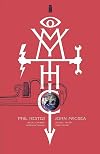
Gods and mythological creatures are real, both good and bad. Mythic Lore is an agency that works to keep the bad in check and earth still turning, and have recruited much of the good into its ranks. The ensemble cast of characters include Cassandra (yes, that Cassandra), an ancient immortal who can change places with his dead and monstrous War Twin, Venus (yes, that Venus), a ghost of a scientist who was too much of a skeptic to cross over into the afterlife, a two-eyed Cyclops, and Asha, show more the head of Mythic Lore and a giant baby.
Yeah, this book is weird. But it's a good weird. Promise.
Mythic Lore is under attack by a strange force concerned with order and reason. It wants to wipe out chaos, particularly humans, and Mythic Lore, who protect the humans and embody chaos and superstition. In order to do so, the enemy decides to bring about Ragnarok. In the battle between good and evil (and in this case, imagination and reason), Asha's ragtag group are on the frontlines.
I love the world building in this book. This is a world where superstition is real and science is a lie. Droughts are caused whenever the wind and rock spirits don't have sex, cows need to have their udders tickled by dwarves in order to produce milk, and the sun is a ghost elephant led by ghost children across the sky. Myth rules the world. This is amazing for a world-building junkie like me.
The story is fantastic. It reveals slowly and then snowballs into a climatic final battle that is devastating and terrible. Things that are introduced earlier are important to the plot later, and everything fits together at the end nicely. And there is just enough plot left over to open up a new story arc, which I'm very much looking forward to.
The art is gritty and on the darker side, perfect for the story. My only complaint is that due to the nature of the art, reading this in electronic format does not work very well. The storyboarding occurs over two pages at a time, instead of just one, so many times, I had to flip back and forth between two pages in order to follow the storyboards, or to take in a panel that crosses both pages. A minor complaint, given how engaging the story was.
Review copy courtesy of the publisher via NetGalley. show less
Yeah, this book is weird. But it's a good weird. Promise.
Mythic Lore is under attack by a strange force concerned with order and reason. It wants to wipe out chaos, particularly humans, and Mythic Lore, who protect the humans and embody chaos and superstition. In order to do so, the enemy decides to bring about Ragnarok. In the battle between good and evil (and in this case, imagination and reason), Asha's ragtag group are on the frontlines.
I love the world building in this book. This is a world where superstition is real and science is a lie. Droughts are caused whenever the wind and rock spirits don't have sex, cows need to have their udders tickled by dwarves in order to produce milk, and the sun is a ghost elephant led by ghost children across the sky. Myth rules the world. This is amazing for a world-building junkie like me.
The story is fantastic. It reveals slowly and then snowballs into a climatic final battle that is devastating and terrible. Things that are introduced earlier are important to the plot later, and everything fits together at the end nicely. And there is just enough plot left over to open up a new story arc, which I'm very much looking forward to.
The art is gritty and on the darker side, perfect for the story. My only complaint is that due to the nature of the art, reading this in electronic format does not work very well. The storyboarding occurs over two pages at a time, instead of just one, so many times, I had to flip back and forth between two pages in order to follow the storyboards, or to take in a panel that crosses both pages. A minor complaint, given how engaging the story was.
Review copy courtesy of the publisher via NetGalley. show less
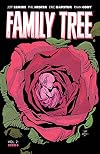
Grandpa continues to kick tree-hater butt as the rest of the family tries to hightail it away with the daughter who is becoming a tree.
Flee, tree, flee!
Between the fistfights and gunplay, we get some hints of where this is leading, and it doesn't look like it's going end well for any of us who are not super serious tree huggers.
I think this book works for me because I find plants to be truly horrifying and inscrutable things.
Flee, tree, flee!
Between the fistfights and gunplay, we get some hints of where this is leading, and it doesn't look like it's going end well for any of us who are not super serious tree huggers.
I think this book works for me because I find plants to be truly horrifying and inscrutable things.

The sixth volume of the Green Arrow series is the thickest yet, encompassing a few story arcs. In the first, "New Blood", Oliver Queen has to deal with the aftermath of City Walls in more ways than one-- a new crime lord named Brick has arisen to replace those killed off in that story, and Mia is becoming the new Speedy more and more. The latter of these plot lines is quite good-- and the reveal of Mia's HIV-positive status is handled fantastically well-- but the former I find hard to buy. show more Brick has a tough hide, yeah, but I have hard time seeing why he's so dang hard for two Green Arrows to beat. (Also: Brick keeps on saying he'll do something really awful if GA interferes again, but GA keeps on doing things... and Brick suddenly stops caring.) In "Teamwork", Mia joins the Teen Titans, a story which for some reason has Mia taking the exact opposite stance on being HIV-positive as in the previous story. Okay, then. The final part of the book is taken up by "New Business", where Constantine Drakon and the Riddler take on Team Arrow, and the Outsiders show up. It was fun to see Drakon again (his opening scene was fabulous), but otherwise, this is a bit of an explosion-and-punching fest. Roy "Arsenal" Harper steps into the role of GA-dependent-character-beat-to-within-an-inch-of-his-life-to-prove-the-situation-is-serious in this one, giving Connor Hawke a break for once.
The biggest event of note here is that penciller Phil Hester and inker Ande Parks leave the title for good after "New Blood". Sometimes you don't quite realize what you've got 'til it's gone, and though I always sang their praises, their skill was sure made apparent by appearing right alongside their replacements. The sense of mood is all gone, panels are busy, and people are impossible to tell apart. Worst of all are the facial expressions; everyone here looks angry and ugly.
Green Arrow: « Previous in sequence | Next in sequence » show less
The biggest event of note here is that penciller Phil Hester and inker Ande Parks leave the title for good after "New Blood". Sometimes you don't quite realize what you've got 'til it's gone, and though I always sang their praises, their skill was sure made apparent by appearing right alongside their replacements. The sense of mood is all gone, panels are busy, and people are impossible to tell apart. Worst of all are the facial expressions; everyone here looks angry and ugly.
Green Arrow: « Previous in sequence | Next in sequence » show less
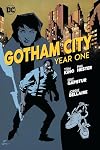
Tom King gets all noir with Bruce Wayne's grandparents and one of DC's earliest private detective characters, Slam Bradley.
Bradley is a nifty choice to lead the series since he is already a forerunner of Batman, having debuted in Detective Comics #1 in 1937, a couple of years before Bruce first dons the cowl in #27. But this character is named Samuel Taylor Bradley, not Samuel Emerson Bradley, so I'm a little unclear if it is supposed to be the same Slam Bradley from Detective #1, the father show more of that Slam, or a multiverse doppelganger on whatever Earth is currently the prime stage for the DCU.
Regardless of who he is, Bradley finds himself dropped into the midst of a kidnapping plot that kicks off with echoes of the Lindbergh baby snatch. While Gotham City of the early 1960s presents itself as an exemplar city with a low crime rate, Bradley's investigation quickly reveals the have-nots and the racial tensions that are suppressed and the police brutality that makes it so.
It's a fairly typical bit of crime fiction with femme fatales and numerous betrayals and twists. The biggest twist plays against the very perception of Bradley as a character from his inception, but before it is over the tale also tarnishes the sterling Wayne family reputation and has some implications for how blue their blood really is.
I might have enjoyed this more if I hadn't just read King's noirish treatment of the Human Target recently, but my biggest problem is the stupidity of pairing a trigger warning with grawlix. The title page has fine print that reads in part, "This comic contains language of a racially offensive nature and may not be suitable for all age groups." The book then proceeds to unrealistically not use the actual N-word, but a dated word down a notch or two on the offensiveness scale. But while using that word openly and often, the writer and editor then proceed to use grawlix -- you know, stuff life @#$& -- instead of Geroge Carlin's seven words -- you know, stuff like shit and fuck. If you're going to use grawlix anyway, why not use it for the racially offensive language also? Or why not include "mature language" in the title page disclaimer also and be done with the ridiculous symbols? Does this has something to do with Florida's censorship law? (And having ranted, do I now find myself in a similar situation by using "N-word" and "fuck" in the same paragraph?)
Also, one of my least favorite Batman continuity implants was having Bruce Wayne's father, Thomas, wearing a Batman costume the Halloween before his death. This series doubles down on that corniness by having the kidnapper use a bat symbol on the ransom letters and being referred to as the Bat-Man. Ugh! show less
Bradley is a nifty choice to lead the series since he is already a forerunner of Batman, having debuted in Detective Comics #1 in 1937, a couple of years before Bruce first dons the cowl in #27. But this character is named Samuel Taylor Bradley, not Samuel Emerson Bradley, so I'm a little unclear if it is supposed to be the same Slam Bradley from Detective #1, the father show more of that Slam, or a multiverse doppelganger on whatever Earth is currently the prime stage for the DCU.
Regardless of who he is, Bradley finds himself dropped into the midst of a kidnapping plot that kicks off with echoes of the Lindbergh baby snatch. While Gotham City of the early 1960s presents itself as an exemplar city with a low crime rate, Bradley's investigation quickly reveals the have-nots and the racial tensions that are suppressed and the police brutality that makes it so.
It's a fairly typical bit of crime fiction with femme fatales and numerous betrayals and twists. The biggest twist plays against the very perception of Bradley as a character from his inception, but before it is over the tale also tarnishes the sterling Wayne family reputation and has some implications for how blue their blood really is.
I might have enjoyed this more if I hadn't just read King's noirish treatment of the Human Target recently, but my biggest problem is the stupidity of pairing a trigger warning with grawlix. The title page has fine print that reads in part, "This comic contains language of a racially offensive nature and may not be suitable for all age groups." The book then proceeds to unrealistically not use the actual N-word, but a dated word down a notch or two on the offensiveness scale. But while using that word openly and often, the writer and editor then proceed to use grawlix -- you know, stuff life @#$& -- instead of Geroge Carlin's seven words -- you know, stuff like shit and fuck. If you're going to use grawlix anyway, why not use it for the racially offensive language also? Or why not include "mature language" in the title page disclaimer also and be done with the ridiculous symbols? Does this has something to do with Florida's censorship law? (And having ranted, do I now find myself in a similar situation by using "N-word" and "fuck" in the same paragraph?)
Also, one of my least favorite Batman continuity implants was having Bruce Wayne's father, Thomas, wearing a Batman costume the Halloween before his death. This series doubles down on that corniness by having the kidnapper use a bat symbol on the ransom letters and being referred to as the Bat-Man. Ugh! show less
Lists
Awards


You May Also Like


Associated Authors
Statistics
- Works
- 211
- Also by
- 48
- Members
- 2,455
- Popularity
- #10,442
- Rating
- 3.5
- Reviews
- 52
- ISBNs
- 144
- Languages
- 7
- Favorited
- 1