
Richard Marcinko (1940–2021)
Author of Rogue Warrior
About the Author
Author, businessman and motivational speaker Richard Marcinko joined the Navy in 1958, eventually working his way up to captain and becoming commander of two celebrated counter-terrorist units, Seal Team Six and Red Cell. He attended the Navy Post Graduate School and Auburn University. Marcinko has show more mined his military experience to write books such as Rogue Warrior, which formed the basis for the fictional Rogue Warrior series, written with John Weisman. He has also written business books such as Leadership Secrets of the Rogue Warrior and The Rogue Warrior's Strategy for Success. (Bowker Author Biography) Richard Marcinko retired from the Navy as a full commander after more than thirty years of service. He is currently CEO of SOS TEMPS, his private security consulting firm whose clients are governments & corporations. (Publisher Provided) Richard Marcinko, Richard Marcinko enlisted in the Navy and worked his way up to the rank of captain. He was the first commanding officer and founder of the counter-terrorist units Seal Team Six and Red Cell. He is a special operations expert in areas that include counter-terrorism, intelligence and special operations. His counter-terrorist units have engaged in missions from Central America to the Middle East. The Red Cell infiltrated the impenetrable and highly secured bases, nuclear submarines and ships. Writing from his experiences, Marcinko's autobiography "Rogue Warrior" was a New York Times best seller. He has other Rogue Warrior fiction books that were co-written with John Weisman. Some of the titles include "Rogue Warrior: Option Delta" and "Rogue Warrior: Seal Force Alpha". He has also written non-fiction books on business strategy and leadership: "The Rogue Warrior's Strategy for Success" and "Leadership Secrets of the Rogue Warrior", which was a New York Times best seller. Marcinko is also the CEO of SOS Temps Inc. a private security-consulting firm. Marcinko resides in Rogue Manor in Washington, D.C. with his wife and children. (Bowker Author Biography) show less
Image credit: Richard Marcinko
Series
Works by Richard Marcinko
Associated Works
American Soldier: Stories of Special Forces from Iraq to Afghanistan (Adrenaline) (2002) — Contributor — 22 copies
Tagged
Common Knowledge
- Canonical name
- Marcinko, Richard
- Other names
- Marcinko, Dick
- Birthdate
- 1940-11-21
- Date of death
- 2021-12-25
- Gender
- male
- Education
- Naval Postgraduate School (MA ∙ International Relations)
Auburn University (BA ∙ Political Science) - Occupations
- U.S. Navy Seal
businessman - Organizations
- United States Navy
- Awards and honors
- Legion of Merit
Silver Star
Bronze Star with Combat V (4 times)
Navy Commendation Medal (2 times)
Vietnamese Cross of Gallantry with Silver Star - Cause of death
- heart attack
- Nationality
- USA
- Birthplace
- Lansford, Pennsylvania, USA
- Places of residence
- Lansford, Pennsylvania, USA (birth)
Naples, Italy
Monterey, California, USA
Cambodia
Montgomery, Alabama, USA
Washington, D.C., USA - Place of death
- Fauquier County, Virginia
- Associated Place (for map)
- USA
Members
Reviews
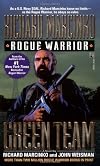
My longest posts are always the ones I liked the least.
I'm pretty sure this is the worst book I've read this year at least. Oh my god, it's just packed full of testosterone laden drivel. It's not that he's a macho doofus, I'm a macho doofus. It's that they are painfully juvenile.
This is the way it works. Dick Marchencko was a SEAL and did all these tough guy things. No problem. Sounds like the Yank version of Andy Mcnab. However, this series is Dick writing a fictional men's adventure show more series, like Remo Williams the Destroyer, or Mack Bolan the Executioner (both of which I have read an embarrassingly large amount of, so I'm not new to the realm of men's adventure fiction) except Dick is writing himself as a fictional character. To me, this is just daft as bats.
So this whole real person/fictional person thing is weird enough, but they are also written really really badly. They are a lot like the adventure fiction I wrote when I was in high school and I was able to rebel on paper by killing a lot of fictional characters and writing "fuckwad" a lot. Yes, very fierce. Oh, and his "Heart of the Warrior" speeches are as tiresome as when I first heard them in the SCA. Similar to the "What is best in life" speech in Conan.
The last pitiful element of the writing is that Dick is always right, and EVERYONE else is always wrong. Not only wrong, but in disagreeing with Dick, they also become evil, weak and cowardly. He isn't sophisticated enough to realize that when all your opponents are pussies, victory is not impressive. This is why I quit fencing in the Outlands.
I want my time back. show less
I'm pretty sure this is the worst book I've read this year at least. Oh my god, it's just packed full of testosterone laden drivel. It's not that he's a macho doofus, I'm a macho doofus. It's that they are painfully juvenile.
This is the way it works. Dick Marchencko was a SEAL and did all these tough guy things. No problem. Sounds like the Yank version of Andy Mcnab. However, this series is Dick writing a fictional men's adventure show more series, like Remo Williams the Destroyer, or Mack Bolan the Executioner (both of which I have read an embarrassingly large amount of, so I'm not new to the realm of men's adventure fiction) except Dick is writing himself as a fictional character. To me, this is just daft as bats.
So this whole real person/fictional person thing is weird enough, but they are also written really really badly. They are a lot like the adventure fiction I wrote when I was in high school and I was able to rebel on paper by killing a lot of fictional characters and writing "fuckwad" a lot. Yes, very fierce. Oh, and his "Heart of the Warrior" speeches are as tiresome as when I first heard them in the SCA. Similar to the "What is best in life" speech in Conan.
The last pitiful element of the writing is that Dick is always right, and EVERYONE else is always wrong. Not only wrong, but in disagreeing with Dick, they also become evil, weak and cowardly. He isn't sophisticated enough to realize that when all your opponents are pussies, victory is not impressive. This is why I quit fencing in the Outlands.
I want my time back. show less
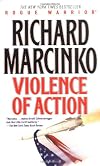
If you're like me, you are a terminal fan of spy thrillers and action flicks. So there is a long list of authors and directors whose works you don't miss. Add Marcinko without Weisman to the top of the list. I've just been reading Red Cell and Violence of Action simultaneously. What Weisman adds is clear and unnecessary at this point in the series. If like me, you dig the intrigue of a Littel or a Ludlum (OK early Ludlum), then you know where to get that flavor. What was so appealing about show more the Rogue Warrior series in the first place was the unabashed raw energy of it. Here, in Violence of Action is the rawest Marcinko yet. In this way it's a proper evolution to the series. He goes straight to the jugular.
Marcinko going solo doesn't dwell on the characters and scenarios as his collaborative work does. Here it's all Marcinko and one or two others. In Red Cell we were introduced to Pinky da Turd, Wynken, Blynken, Nod, Duck Foot, Manny Tanto and whole other galaxy of now forgettable characters. In VOA we get introduced to Leupold scopes, Emerson knives, H&K USP Compacts, the tools of the trade and their deadly effects. Marcinko's writing expresses the tunnel vision of a hunter. Self, Tools, Objective, with a little peripheral vision for allies.
There are three golden jewels in this book aside from the very engaging opening chapter. First, it's all post-September 11. You know and I know we've all been waiting to hear what Marcinko has to say about terrorism and our nation's response to it. It's all here. I'll only say one thing on that score. Marcinko gives new meaning to defending the Constitution against all foes, foreign and domestic.
Secondly, he goes for the throat in terms of drama. Three days, one suitcase nuke, assassinations, ambushes and in your face confrontation. This has blockbuster action flick written all over it, and it's really about time somebody put a Marcinko novel on film. There is raw action written all over this. (Who should play Marcinko, that's the question.)
Thirdly, Marcinko has invented the most memorable and deadly character of all. If you thought Manny Tanto was a monster, wait until you meet Demo Dick's new female squad member. She is completely devastating and the last person on earth you'd want to tangle with. Among other things, she is the, uhm 'interrogator'. This one scene in this book is unforgettable and I have to say, even for one who is jaded by decades of spy and action books and films, there is one place none of those fictions have never gone. Marcinko goes there. Talk about full-on sphincter pucker factor. In about 4 pages, Dick Marcinko delivers text that will make you wince, blink rapidly, hyperventilate and bite your lip in half if not puke up your guts. It's ghastly, thought provoking, shocking and pornographic all at once, and it gives a meaty example of what actually goes on in the cold cruel world, and what a lot of Americans would do considering their feelings about 9/11. Robert DeNiro saying "Don't get caught" has got nothing on this.
All in all, the book is a hard rock, fast food, adrenaline rush, with an old Rogue we have come to know and love. It's raw and fresh, and it's about time for a movie. show less
Marcinko going solo doesn't dwell on the characters and scenarios as his collaborative work does. Here it's all Marcinko and one or two others. In Red Cell we were introduced to Pinky da Turd, Wynken, Blynken, Nod, Duck Foot, Manny Tanto and whole other galaxy of now forgettable characters. In VOA we get introduced to Leupold scopes, Emerson knives, H&K USP Compacts, the tools of the trade and their deadly effects. Marcinko's writing expresses the tunnel vision of a hunter. Self, Tools, Objective, with a little peripheral vision for allies.
There are three golden jewels in this book aside from the very engaging opening chapter. First, it's all post-September 11. You know and I know we've all been waiting to hear what Marcinko has to say about terrorism and our nation's response to it. It's all here. I'll only say one thing on that score. Marcinko gives new meaning to defending the Constitution against all foes, foreign and domestic.
Secondly, he goes for the throat in terms of drama. Three days, one suitcase nuke, assassinations, ambushes and in your face confrontation. This has blockbuster action flick written all over it, and it's really about time somebody put a Marcinko novel on film. There is raw action written all over this. (Who should play Marcinko, that's the question.)
Thirdly, Marcinko has invented the most memorable and deadly character of all. If you thought Manny Tanto was a monster, wait until you meet Demo Dick's new female squad member. She is completely devastating and the last person on earth you'd want to tangle with. Among other things, she is the, uhm 'interrogator'. This one scene in this book is unforgettable and I have to say, even for one who is jaded by decades of spy and action books and films, there is one place none of those fictions have never gone. Marcinko goes there. Talk about full-on sphincter pucker factor. In about 4 pages, Dick Marcinko delivers text that will make you wince, blink rapidly, hyperventilate and bite your lip in half if not puke up your guts. It's ghastly, thought provoking, shocking and pornographic all at once, and it gives a meaty example of what actually goes on in the cold cruel world, and what a lot of Americans would do considering their feelings about 9/11. Robert DeNiro saying "Don't get caught" has got nothing on this.
All in all, the book is a hard rock, fast food, adrenaline rush, with an old Rogue we have come to know and love. It's raw and fresh, and it's about time for a movie. show less
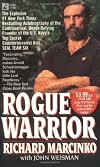
Badass. That's about the only way to describe Richard Marcinko a retired Navy Seal and founder of the most elite team of Seal, 6. Well, badass, reckless, and full of himself. However, I can forgive him his insanely high opinion of himself considering some of the stuff he accomplished during his long, but often troubled, military career.
When I was in the Army I really, really, wanted to join the Special Forces which is sort of like the Army's version of Seals. However, I didn't and that alone show more is a big difference between myself and Marcinko. When he wanted to do something in he went after it full bore and nothing would get in his way; including regulations and/or his chain of command. In fact, his utter disregard for his chain of command turned out to be his downfall.
This book was full of hoorah stories that really pumped me up and, quite honestly, inspired me to be a bit more kickass myself. Mr. Marcinko really does have something postive to teach everyone even if his approach to doing it may turn off many readers. He writes much as he talks; like a sailor so if rough language is a problem for you get over it. He worked in a world where death was a constant possibility; a few fucks scattered around really isn't too bad in comparision. No matter your background you should read this book simply to experience the raw power of a personality as strong as Marcinkos.
As bad ass as he came across he is also extremely selfish and, at times, deluded into thinking everything that happened to him, or his troops, was someone else's fault. First and foremost he was a horrendous husband. He sort of admits to it but at the same time he also doesn't seem to have any remorse for his overall neglect of his family. In fact, he seems proud of it. He also tended to act with his own sense of glory in mind rather than the welfare of his troops. Now, it may be that this is just a part of the SEAL psyche I can't understand; but, when his decisions as a leader led to his troops being in unnecessary and extreme harms way he just blames others for not supporting him. He never seems to realize it was his decision that put his boys up against 100 north Vietnamese on the night of the Tet Offensive for example. Instead he blames an incompetent and drunk Special Forces commander.
Marcinko does give good credit where it is due however and he frequently cites soldiers he served with who helped him or made him a better soldier. However, no matter how much those other guys tried to teach him there were some things, like tact, that Marcinko never learned; and it was this lack of tact; along with his disregard for the chain of command, that ultimately killed his career.
A prime example of his lack of tact comes late in the book when he is leading the super secret, bad ass team called Red Cell. These guys have what, to me, seems like the greatest job on earth. They are tasked with testing and breaking the security of naval installations around the world so that those bases can learn and improve. However, in his reports to the base commander's Marcinko doesn't care how he tells the commander that his post is screwed. Instead he just slams the guy regardless of the ego he is dealing with. I would think that in 30 years of naval service he would have learned he wasn't the only proud sailor around. I'm not saying that he should have softened his message but he certainly could have delivered them in a much more convincing manner. Instead he was an ass.
The ends may justify the means; but by delivering his message like a jerk he hurt not only himself but he undermined Red Cell's mission. Sure, the base's security flaws were illuminated but they certainly weren't addressed because the post commander had his feathers ruffled and he would turtle up and attack Marcinko instead of accepting the evaluation as a critique of the post and not of the commander. I don't know if I could have handled it any better but, considering the job he had, I certainly would have tried.
In the end Marcinko was still an excellent soldier who did his job, taking out the enemy, well and I'm going to try to take away some of his strengths from reading it. From now on, when I'm faced with a difficult obstacle that I think is too great to overcome, I might even ask myself, "What would Marcinko Do" - then I'll run through the damn thing and kick it's ass.
Even with all his failings and the books often awkward writing I enjoyed it and give it a 3.5 out of 5 star review. show less
When I was in the Army I really, really, wanted to join the Special Forces which is sort of like the Army's version of Seals. However, I didn't and that alone show more is a big difference between myself and Marcinko. When he wanted to do something in he went after it full bore and nothing would get in his way; including regulations and/or his chain of command. In fact, his utter disregard for his chain of command turned out to be his downfall.
This book was full of hoorah stories that really pumped me up and, quite honestly, inspired me to be a bit more kickass myself. Mr. Marcinko really does have something postive to teach everyone even if his approach to doing it may turn off many readers. He writes much as he talks; like a sailor so if rough language is a problem for you get over it. He worked in a world where death was a constant possibility; a few fucks scattered around really isn't too bad in comparision. No matter your background you should read this book simply to experience the raw power of a personality as strong as Marcinkos.
As bad ass as he came across he is also extremely selfish and, at times, deluded into thinking everything that happened to him, or his troops, was someone else's fault. First and foremost he was a horrendous husband. He sort of admits to it but at the same time he also doesn't seem to have any remorse for his overall neglect of his family. In fact, he seems proud of it. He also tended to act with his own sense of glory in mind rather than the welfare of his troops. Now, it may be that this is just a part of the SEAL psyche I can't understand; but, when his decisions as a leader led to his troops being in unnecessary and extreme harms way he just blames others for not supporting him. He never seems to realize it was his decision that put his boys up against 100 north Vietnamese on the night of the Tet Offensive for example. Instead he blames an incompetent and drunk Special Forces commander.
Marcinko does give good credit where it is due however and he frequently cites soldiers he served with who helped him or made him a better soldier. However, no matter how much those other guys tried to teach him there were some things, like tact, that Marcinko never learned; and it was this lack of tact; along with his disregard for the chain of command, that ultimately killed his career.
A prime example of his lack of tact comes late in the book when he is leading the super secret, bad ass team called Red Cell. These guys have what, to me, seems like the greatest job on earth. They are tasked with testing and breaking the security of naval installations around the world so that those bases can learn and improve. However, in his reports to the base commander's Marcinko doesn't care how he tells the commander that his post is screwed. Instead he just slams the guy regardless of the ego he is dealing with. I would think that in 30 years of naval service he would have learned he wasn't the only proud sailor around. I'm not saying that he should have softened his message but he certainly could have delivered them in a much more convincing manner. Instead he was an ass.
The ends may justify the means; but by delivering his message like a jerk he hurt not only himself but he undermined Red Cell's mission. Sure, the base's security flaws were illuminated but they certainly weren't addressed because the post commander had his feathers ruffled and he would turtle up and attack Marcinko instead of accepting the evaluation as a critique of the post and not of the commander. I don't know if I could have handled it any better but, considering the job he had, I certainly would have tried.
In the end Marcinko was still an excellent soldier who did his job, taking out the enemy, well and I'm going to try to take away some of his strengths from reading it. From now on, when I'm faced with a difficult obstacle that I think is too great to overcome, I might even ask myself, "What would Marcinko Do" - then I'll run through the damn thing and kick it's ass.
Even with all his failings and the books often awkward writing I enjoyed it and give it a 3.5 out of 5 star review. show less
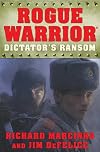
I'd bet that I'm the first person to ever take a break from Dickens to knock out a Rogue Warrior book. On an impulse while at the library, I decided to see what Demo Dick has been up to in the last several years since I last read one of his tales. When I got home that night I saw an ad for the new Rogue Warrior video game during the CMU/Ohio MAC Championship game. At first, I thought, 'Great. Another shoot-em-up war game.' But then I said to myself, 'That looked just like Marcinko!' And so show more it was. Just another odd quinkydink.
Anyway, Mr. Marcinko is an ex-SeAL (yes, like that, for Sea Air and Land) who wrote a great autobiography while in federal prison serving time for defrauding the Navy, which he denies doing to this day. Dink accountant admirals will do that when his six man SeAL Team shot more ammunition practicing hostage takedown scenarios in one year than the entire Marine Corps. Or hijacking Air Force One, just to show the Admirals how lax base security is in the US military. Embarrassed Admirals plus bad attitude equals the brig. For my money, the autobiographic Rogue Warrior is his best, but his other pseudo-fictional mission accounts are also really fun reads. Part of his parole from Fort Leavenworth (I think) was that he could no longer write non-fictional accounts of his service. So, in true F-U Red Cell fashion, he wrote seven or eight fictional stories intertwining missions he had been on and news stories where SeAL intervention were called for. This one is his newest and probably least entertaining. Kim Jong Il invites Dick to North Korea with the intention of using him to recover his missing son, as part of a peace negotiation. No son, no treaty. So off goes Dick into the meat grinder again. Secure compounds are infiltrated, ships are boarded via HAHO parachute jump (High Altitude High Opening), Koreans are shot, stuff is blown up, and Dick destroys both the hidden nuclear bomb and KJI's private bunker/mansion.
This one just seemed to reach a bit too far into the realm of fantasy, but maybe the others are like that too. I haven't read one in a good seven or eight years. Rogue Warrior is highly recommended as an insight into how the military really is ran, both by patriotic warriors defending our country and career officers who are in it for prestige, perks and retirement benefits. Now back to Great Expectations. show less
Anyway, Mr. Marcinko is an ex-SeAL (yes, like that, for Sea Air and Land) who wrote a great autobiography while in federal prison serving time for defrauding the Navy, which he denies doing to this day. Dink accountant admirals will do that when his six man SeAL Team shot more ammunition practicing hostage takedown scenarios in one year than the entire Marine Corps. Or hijacking Air Force One, just to show the Admirals how lax base security is in the US military. Embarrassed Admirals plus bad attitude equals the brig. For my money, the autobiographic Rogue Warrior is his best, but his other pseudo-fictional mission accounts are also really fun reads. Part of his parole from Fort Leavenworth (I think) was that he could no longer write non-fictional accounts of his service. So, in true F-U Red Cell fashion, he wrote seven or eight fictional stories intertwining missions he had been on and news stories where SeAL intervention were called for. This one is his newest and probably least entertaining. Kim Jong Il invites Dick to North Korea with the intention of using him to recover his missing son, as part of a peace negotiation. No son, no treaty. So off goes Dick into the meat grinder again. Secure compounds are infiltrated, ships are boarded via HAHO parachute jump (High Altitude High Opening), Koreans are shot, stuff is blown up, and Dick destroys both the hidden nuclear bomb and KJI's private bunker/mansion.
This one just seemed to reach a bit too far into the realm of fantasy, but maybe the others are like that too. I haven't read one in a good seven or eight years. Rogue Warrior is highly recommended as an insight into how the military really is ran, both by patriotic warriors defending our country and career officers who are in it for prestige, perks and retirement benefits. Now back to Great Expectations. show less
Awards

You May Also Like


Associated Authors
Statistics
- Works
- 27
- Also by
- 1
- Members
- 3,722
- Popularity
- #6,806
- Rating
- 3.7
- Reviews
- 32
- ISBNs
- 146
- Languages
- 6
- Favorited
- 7


