
Robert Traver (1) (1903–1991)
Author of Anatomy of a Murder
For other authors named Robert Traver, see the disambiguation page.
Works by Robert Traver
Associated Works
Tagged
Common Knowledge
- Legal name
- Voelker, John D.
- Birthdate
- 1903-06-19
- Date of death
- 1991-03-19
- Gender
- male
Members
Reviews
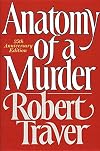
This was difficult to read as a female attorney in 2021. Sure, it was interesting that a legal novel actually got into the strategy of jury instructions and the order that witnesses are called and when to stop questioning. But, it is so (hopefully) dated it mostly serves as a window into the good old boys club era of legal practice. When secretaries are patted on the butt and women were put on the jury because they are pretty to look at. I presume some of the popularity was due to the show more description of a rape and so many references to where the semen ended up and the details of vaginal smears. Let this molder in the dust bin. show less
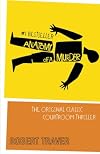
First Lieutenant Frederic Manion is awakened by the screams and sobs of his wife Laura who has been allegedly raped by the bar manager who offered her a ride home. Manny tries to calm her as she sobs out her story, then takes a souvenir German luger, goes to the bar, and pumps five well-placed bullets into Barney Quill, killing him instantly. End of story? Nope, just the beginning. The real story is how local lawyer Paul Biegler accepts the case and pieces together his legal defense. This show more book and the subsequent movie adaptation were groundbreaking hot items back in the late 1950s because of the scandalous talk of rape which Mr. Biegler promoted as justification for his “irresistible impulse” argument.
The author wrote as if he were in the middle of the unfolding drama. No wonder… Robert Traver is the pen name of John Voelker who was the defense attorney for the real murder which took place in Big Bay, Michigan in 1952 and upon which the book and movie are based. This was his first book. He painstakingly brought out the ambiguous nature of the law and the human elements of a trial by jury. The courtroom sparring between Biegler and the “assistant” defense counsel Claude Dancer, a ringer from the Attorney General’s office in Lansing, is quite a “2-step” between two brilliant legal minds. Traver’s characterization is spot on. He gives some insight into how an attorney can defend someone he dislikes and also gives much credit to his behind-the-scene allies, the crusty retired lawyer Parnell who does much of the meticulous legal research and his feisty secretary Maida.
Travers has captured the isolation and beauty of the Upper Peninsula of Michigan which hasn’t diminished all that much in the past fifty years. The defense’s psychiatrist was brought in fom downstate because “either nobody in the UP is insane or else all of us are nuts” leading to an absence of local mental health experts. His first words after getting off the small plane were: “An amazing trip. Your scattered towns are nothing but occasional scars set amongst the lakes and woods. I didn’t dream of the remoteness and wild beauty of this place.” (335) I would be remiss if I didn’t include one of the many lovely descriptions of Lake Superior which we share with our Canadian neighbor to the north: “How incredibly beautiful…Whole rivers of liquid moonlight seemed to be coursing and flowing across the broad expanse of glittering lake; the scene was invested with a kind of awesome otherworldly grandeur.” (275)
Some reviewers have called this book slow and trite. I prefer to think of it as more of a journey back in time to look at the scrupulous building of a legal defense by an underdog small town lawyer. I got caught up in the fascinating anatomy of courtroom drama that follows the painstaking preparation work. I left most of the details for the reader to explore along with the ultimate resolution. Do the law and justice go hand in hand? You be the judge. show less
The author wrote as if he were in the middle of the unfolding drama. No wonder… Robert Traver is the pen name of John Voelker who was the defense attorney for the real murder which took place in Big Bay, Michigan in 1952 and upon which the book and movie are based. This was his first book. He painstakingly brought out the ambiguous nature of the law and the human elements of a trial by jury. The courtroom sparring between Biegler and the “assistant” defense counsel Claude Dancer, a ringer from the Attorney General’s office in Lansing, is quite a “2-step” between two brilliant legal minds. Traver’s characterization is spot on. He gives some insight into how an attorney can defend someone he dislikes and also gives much credit to his behind-the-scene allies, the crusty retired lawyer Parnell who does much of the meticulous legal research and his feisty secretary Maida.
Travers has captured the isolation and beauty of the Upper Peninsula of Michigan which hasn’t diminished all that much in the past fifty years. The defense’s psychiatrist was brought in fom downstate because “either nobody in the UP is insane or else all of us are nuts” leading to an absence of local mental health experts. His first words after getting off the small plane were: “An amazing trip. Your scattered towns are nothing but occasional scars set amongst the lakes and woods. I didn’t dream of the remoteness and wild beauty of this place.” (335) I would be remiss if I didn’t include one of the many lovely descriptions of Lake Superior which we share with our Canadian neighbor to the north: “How incredibly beautiful…Whole rivers of liquid moonlight seemed to be coursing and flowing across the broad expanse of glittering lake; the scene was invested with a kind of awesome otherworldly grandeur.” (275)
Some reviewers have called this book slow and trite. I prefer to think of it as more of a journey back in time to look at the scrupulous building of a legal defense by an underdog small town lawyer. I got caught up in the fascinating anatomy of courtroom drama that follows the painstaking preparation work. I left most of the details for the reader to explore along with the ultimate resolution. Do the law and justice go hand in hand? You be the judge. show less

I can't believe I've never seen this book's movie; I love James Stewart. But at least this way I had no idea what was going to happen next in the book; that was nice. And, funnily enough, I still had the odd little perk of being able to hear Jimmy's voice in my head for a lot of the lines. (Oh, and Lee Remick is perfect as Laura Manion.) I have a *cough* irresistible impulse to rent the movie. Soon. (Actually, the dvd might be in my mailbox now; I just can't get to it because of ALL THE show more SNOW.)
This is a book that requires the right mindset. 21st century feminist prickliness has to be firmly suppressed; all the tv and movie images of young and zealous lawyers working flat out eighteen hours a day to get their clients acquitted have to be put aside. The other images from popular media, though, the ones of lawyers seizing on any slender possibility that could remotely work in their favor? Those can stay.
Well, no, the second par of that's not fair; once it gets going, everyone begins putting in those eighteen-+-hour days and falling asleep at their desks. It's only in the very beginning that the main character keeps sloping off to go fishing.
None of which is to say this isn't a terrifically fun book. It had to be made into a movie; every page screams it. It is so very late 50's, from the dialogue pattering as easy and funny and sharp as a Gene Kelly – Donald O'Connor dance routine, to Laura Manion's tight sweaters, to the big old chrome-and-fins cars you just know everyone's driving. And, of course, former DA Paul Biegler (Jimmy Stewart) (well, not in the book, except in my head) said it himself: "The case has everything. Rape, murder. Even a little dog." It's a fictionalized account of an actual trial, "written by Michigan Supreme Court Justice John D. Voelker under the pen name Robert Traver. Voelker based the novel on a 1952 murder case in which he was the defense attorney." (What husband worth his salt wouldn't kill the man who did that to his wife? Problem is, while perfectly human and understandable, it was still murder, and Manny's been in jail ever since, trial pending.
Former DA Paul Biegler is pulled away from his fishing to consider taking the case for the defense. He needs a case; he's not the only defense attorney in his small Michigan town, and the other one's flashier; his secretary, Maida, would like to be paid her salary, thank you. So he puts down his fishing rod and goes to the jail, and finds it a tough call: the Manions have no money. And it seems like it could be a tough sell: Laura is very frank (too frank) about Manny's jealousy, and however much empathy there can be for a man going after someone who raped his wife, within the strict letter of the law it simply was not justifiable homicide. It was revenge. Unless… Biegler's got a few tricks up his sleeve, and his old buddy Parnell has more up both of his, and between them – and some surprising items turned up as they look into the details of the case – they're ready to put up a fight to get the Lieutenant free.
I tend to doubt very many writers nowadays would quite have the gall to use phrases like Traver does. A "blouseful" indeed. And the handling of the rape and the discussion of it is … interesting, a blend of euphemism and clinical directness from everyone concerned, with almost no emotion whatsoever. The prosecution – trying to set the victim in as positive a light as possible – has no problem dismissing the rape as either irrelevant or imaginary, whichever's more convenient, and to tarnish her reputation in any way possible; the defense is concerned that Laura's beauty might tell against them, but otherwise is determined to stick her on the stand come what may. Her own reactions are the only real weak point of the book, perhaps excusable by the male first person point of view: clueless. I'd be curious to see a more impersonal viewpoint of Laura's testimony, if such a thing were possible, because if she really did exhibit the level of sang-froid that she seems to in the book, she was a stunningly tough – or toughened – woman.
That being said – and being allowed to take off a half star from the rating – I enjoyed the hell out of this book. The film version was directed and produced by Otto Preminger, but – rape aside – I could easily see this as a Capra film. The blurring of right and wrong – who's lying? And why? What exactly is the truth, and should this man be allowed out of jail? – side by side with the sort of fervent idealism Jimmy Stewart should have had a patent on … again, whoever was at the helm, it's the perfect 50's movie. In a book.
Because Jimmy Stewart plays our hero in the movie, there may be little doubt going in as to how the case will turn out – but it's not that simple. It's a pitched battle, this trial, a bare-knuckle no-holds-barred brawl in which just about anything goes as long as you word it right. I've never seen or read a better revelation of the nuts and bolts of the US trial system – the mechanics of getting people to say – on and off the stand – what you as either the defense or the prosecutor need them to say, without letting out details that tip things to the other side. The head-to-head expert witnesses, the careful manipulation of the witnesses and the jury, the role of the judge and the use and formation of precedent – so that's what draws some people to the law. It has to be exhilarating. And it all comes down to a nail-biter, complete with a last-minute curveball and an epilogue that will leave you blinking.
It was terrific.
Side note: I find this other comment from the Wikipedia entry for the movie nauseatingly unsettling: "The Lumberjack Tavern is still in existence today. The murder scene body outline is still there, although it is possibly a restoration and not the original outline." There's a picture, captioned "where the body fell". Seriously?? show less
This is a book that requires the right mindset. 21st century feminist prickliness has to be firmly suppressed; all the tv and movie images of young and zealous lawyers working flat out eighteen hours a day to get their clients acquitted have to be put aside. The other images from popular media, though, the ones of lawyers seizing on any slender possibility that could remotely work in their favor? Those can stay.
Well, no, the second par of that's not fair; once it gets going, everyone begins putting in those eighteen-+-hour days and falling asleep at their desks. It's only in the very beginning that the main character keeps sloping off to go fishing.
None of which is to say this isn't a terrifically fun book. It had to be made into a movie; every page screams it. It is so very late 50's, from the dialogue pattering as easy and funny and sharp as a Gene Kelly – Donald O'Connor dance routine, to Laura Manion's tight sweaters, to the big old chrome-and-fins cars you just know everyone's driving. And, of course, former DA Paul Biegler (Jimmy Stewart) (well, not in the book, except in my head) said it himself: "The case has everything. Rape, murder. Even a little dog." It's a fictionalized account of an actual trial, "written by Michigan Supreme Court Justice John D. Voelker under the pen name Robert Traver. Voelker based the novel on a 1952 murder case in which he was the defense attorney." (What husband worth his salt wouldn't kill the man who did that to his wife? Problem is, while perfectly human and understandable, it was still murder, and Manny's been in jail ever since, trial pending.
Former DA Paul Biegler is pulled away from his fishing to consider taking the case for the defense. He needs a case; he's not the only defense attorney in his small Michigan town, and the other one's flashier; his secretary, Maida, would like to be paid her salary, thank you. So he puts down his fishing rod and goes to the jail, and finds it a tough call: the Manions have no money. And it seems like it could be a tough sell: Laura is very frank (too frank) about Manny's jealousy, and however much empathy there can be for a man going after someone who raped his wife, within the strict letter of the law it simply was not justifiable homicide. It was revenge. Unless… Biegler's got a few tricks up his sleeve, and his old buddy Parnell has more up both of his, and between them – and some surprising items turned up as they look into the details of the case – they're ready to put up a fight to get the Lieutenant free.
I tend to doubt very many writers nowadays would quite have the gall to use phrases like Traver does. A "blouseful" indeed. And the handling of the rape and the discussion of it is … interesting, a blend of euphemism and clinical directness from everyone concerned, with almost no emotion whatsoever. The prosecution – trying to set the victim in as positive a light as possible – has no problem dismissing the rape as either irrelevant or imaginary, whichever's more convenient, and to tarnish her reputation in any way possible; the defense is concerned that Laura's beauty might tell against them, but otherwise is determined to stick her on the stand come what may. Her own reactions are the only real weak point of the book, perhaps excusable by the male first person point of view: clueless. I'd be curious to see a more impersonal viewpoint of Laura's testimony, if such a thing were possible, because if she really did exhibit the level of sang-froid that she seems to in the book, she was a stunningly tough – or toughened – woman.
That being said – and being allowed to take off a half star from the rating – I enjoyed the hell out of this book. The film version was directed and produced by Otto Preminger, but – rape aside – I could easily see this as a Capra film. The blurring of right and wrong – who's lying? And why? What exactly is the truth, and should this man be allowed out of jail? – side by side with the sort of fervent idealism Jimmy Stewart should have had a patent on … again, whoever was at the helm, it's the perfect 50's movie. In a book.
Because Jimmy Stewart plays our hero in the movie, there may be little doubt going in as to how the case will turn out – but it's not that simple. It's a pitched battle, this trial, a bare-knuckle no-holds-barred brawl in which just about anything goes as long as you word it right. I've never seen or read a better revelation of the nuts and bolts of the US trial system – the mechanics of getting people to say – on and off the stand – what you as either the defense or the prosecutor need them to say, without letting out details that tip things to the other side. The head-to-head expert witnesses, the careful manipulation of the witnesses and the jury, the role of the judge and the use and formation of precedent – so that's what draws some people to the law. It has to be exhilarating. And it all comes down to a nail-biter, complete with a last-minute curveball and an epilogue that will leave you blinking.
It was terrific.
Side note: I find this other comment from the Wikipedia entry for the movie nauseatingly unsettling: "The Lumberjack Tavern is still in existence today. The murder scene body outline is still there, although it is possibly a restoration and not the original outline." There's a picture, captioned "where the body fell". Seriously?? show less
When I was young this was a popular bestseller that I saw my parents reading, so curious about its contents, I read it some 57 years later. The story has authenticity because the author worked as a prosecuting attorney and as a defense lawyer and because some elements of this story were based on a real case. The book revolves around the themes of truth, self-interest, sanity, and the ability of the legal system to deliver justice. Many of the main character's colorful and acerbic asides are show more worthy of H. L. Mencken. The details of the dialog often reveal what the witnesses are tempted to say, as well as what they do say. These conflicting motives make for a multi-dimensional reading experience. The plot is gripping throughout. This may become a classic of American literature, but at this point awaits a revival. show less
Lists
Awards


You May Also Like
Associated Authors
Statistics
- Works
- 14
- Also by
- 3
- Members
- 1,417
- Popularity
- #18,146
- Rating
- 3.9
- Reviews
- 33
- ISBNs
- 59
- Languages
- 4


